Ibneiah
Who was Ibneiah in the Bible?
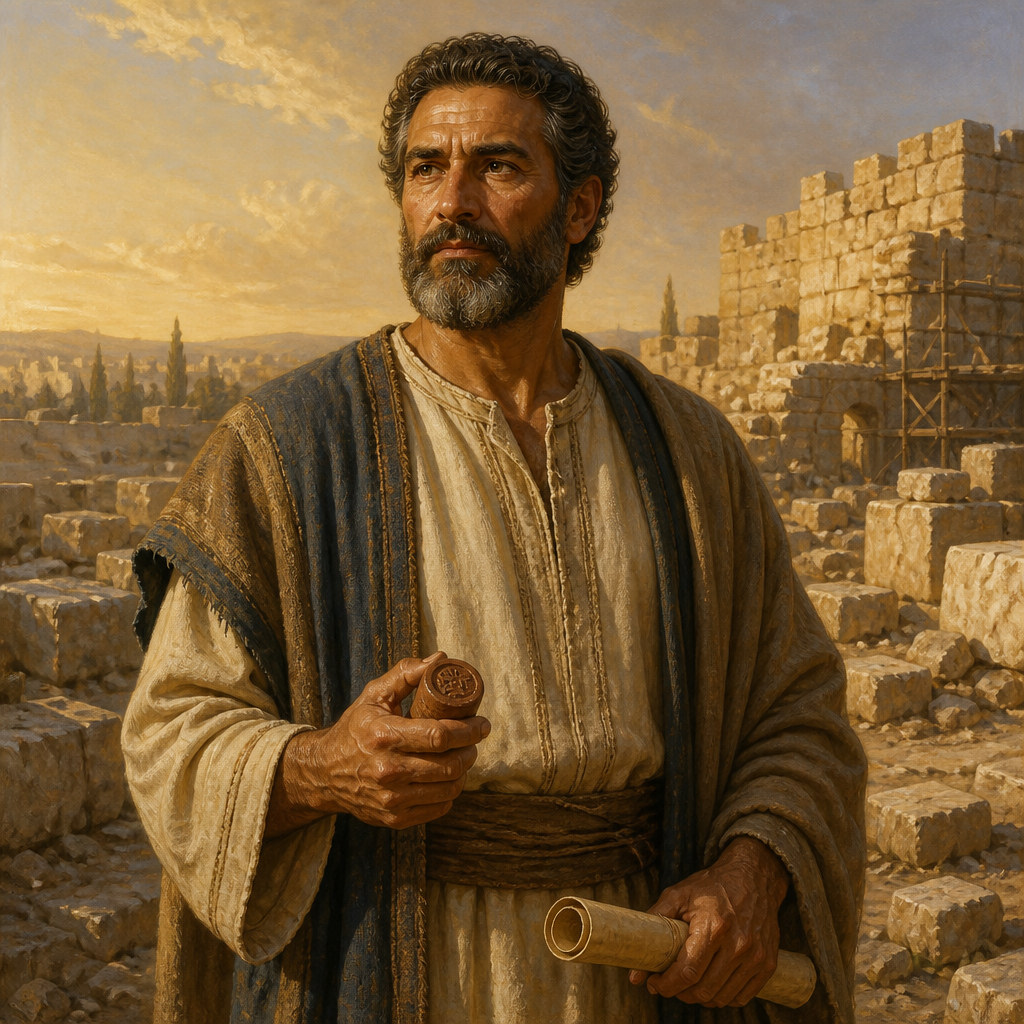
Ibneiah was a Benjamite leader who was among the first of the returned exiles to resettle in Jerusalem after the Babylonian captivity.
Ibneiah is a figure mentioned in the genealogical records of 1 Chronicles, specifically within the context of the Post-Exilic Period. As the son of Jeroham, he is identified as a head of a father's house belonging to the tribe of Benjamin. His inclusion in the biblical record serves to document the specific families who took the initiative to reclaim their ancestral heritage in Jerusalem following the decree of Cyrus the Great.
While the biblical text provides limited narrative detail regarding his personal life or specific deeds, his presence in the chronicles of the returning exiles signifies his status as a community leader. The records in 1 Chronicles 9 are intended to establish the continuity of the covenant people and the restoration of the social and religious order in the holy city after the trauma of the Babylonian exile.
Background and Family
Ibneiah is introduced in the biblical record as the son of Jeroham (1 Chronicles 9:8). His lineage is firmly rooted in the tribe of Benjamin, one of the two tribes that formed the southern kingdom of Judah and remained largely distinct throughout the exile and return. The text places him among the "heads of their fathers' houses," a title indicating that he held a position of patriarchal authority and responsibility over an extended family unit. The record identifies his residence as Jerusalem, marking him as part of the initial wave of settlers who sought to rebuild the city's population while its walls and temple were in various stages of reconstruction.
Major Life Events
The life of Ibneiah is defined by the era of the Exile and Return. Following the Babylonian destruction of Jerusalem in 586 BC, the Jewish people were displaced for seventy years. Upon the rise of the Persian Empire, a remnant was permitted to return to Judea. Ibneiah is listed among those who took up residence in Jerusalem during this critical period of restoration. The chronicler notes that the first inhabitants to dwell again in their possessions in their cities included Israelites, priests, Levites, and the Nethinim, with Ibneiah specifically counted among the Benjamites (1 Chronicles 9:3-8).
Relationship to Other Biblical Figures
Ibneiah is mentioned alongside other Benjamite leaders, including Elah son of Uzzi and Meshullam son of Shephatiah. These men represented the core leadership of the tribe of Benjamin during the resettlement. While the text does not detail their specific interactions, the grouping suggests a collaborative effort among these heads of houses to organize the civil and social life of the returning community. His father, Jeroham, is the only direct ancestor named for him in this specific lineage, distinguishing him from other individuals in the biblical record who share the name Jeroham.
Spiritual Significance
The spiritual significance of Ibneiah lies in his role as a "living stone" in the restoration of Israel. By choosing to live in Jerusalem—a city that was still largely in ruins and surrounded by hostile neighbors—Ibneiah demonstrated a commitment to the promises of God regarding the restoration of the Davidic center of worship. His inclusion in the formal genealogy of 1 Chronicles 9 highlights the importance of individual and familial identity in the eyes of God. For the post-exilic community, such lists were not merely administrative; they were proof that God had preserved a remnant and that the ancestral lines necessary for the community's legal and religious functioning remained intact.
Ibneiah represents the faithfulness of the remnant that returned to Zion. His inclusion in the sacred genealogies underscores the theme of restoration and the preservation of the tribal identity of Benjamin after the Babylonian judgment. In the context of 1 Chronicles, Ibneiah is a testament to the fact that despite the exile, the structure of the Hebrew family and its connection to the Land of Promise were not permanently severed.
Frequently Asked Questions
Which tribe did Ibneiah belong to?
Ibneiah was a member of the tribe of Benjamin.
Where did Ibneiah live?
He was among the first of the returned exiles to settle in the city of Jerusalem.
Who was Ibneiah's father?
According to 1 Chronicles 9:8, Ibneiah was the son of Jeroham.
In what time period did Ibneiah live?
He lived during the Post-Exilic Period (c. 6th to 5th century BC), during the return of the Jewish people from Babylon.
Family & Relationships
Parents
 Jeroham, Father of IbneiahFather1 Chronicles 9:8Stated
 IbneiahThis page
Connected Figures
Family
Father · 1 Chronicles 9:8
A man whose son, Ibneiah, was identified as a tribal leader among those who resettled Jerusalem following the Babylonian exile.
Categories
Mentions by Book
- 1 Chronicles1
Scripture References
All 1 indexed verse, in canonical order, from the Berean Standard Bible.
1 Chronicles · 1
- 1 Chronicles 9:8
Ibneiah son of Jeroham; Elah son of Uzzi, the son of Michri; Meshullam son of Shephatiah, the son of Reuel, the son of Ibnijah;