Jeroham, Father of Ibneiah
Who was Jeroham, Father of Ibneiah, in the Bible?
A man whose son, Ibneiah, was identified as a tribal leader among those who resettled Jerusalem following the Babylonian exile.
This is one of 7 people named Jeroham in the Bible. See all 7 →
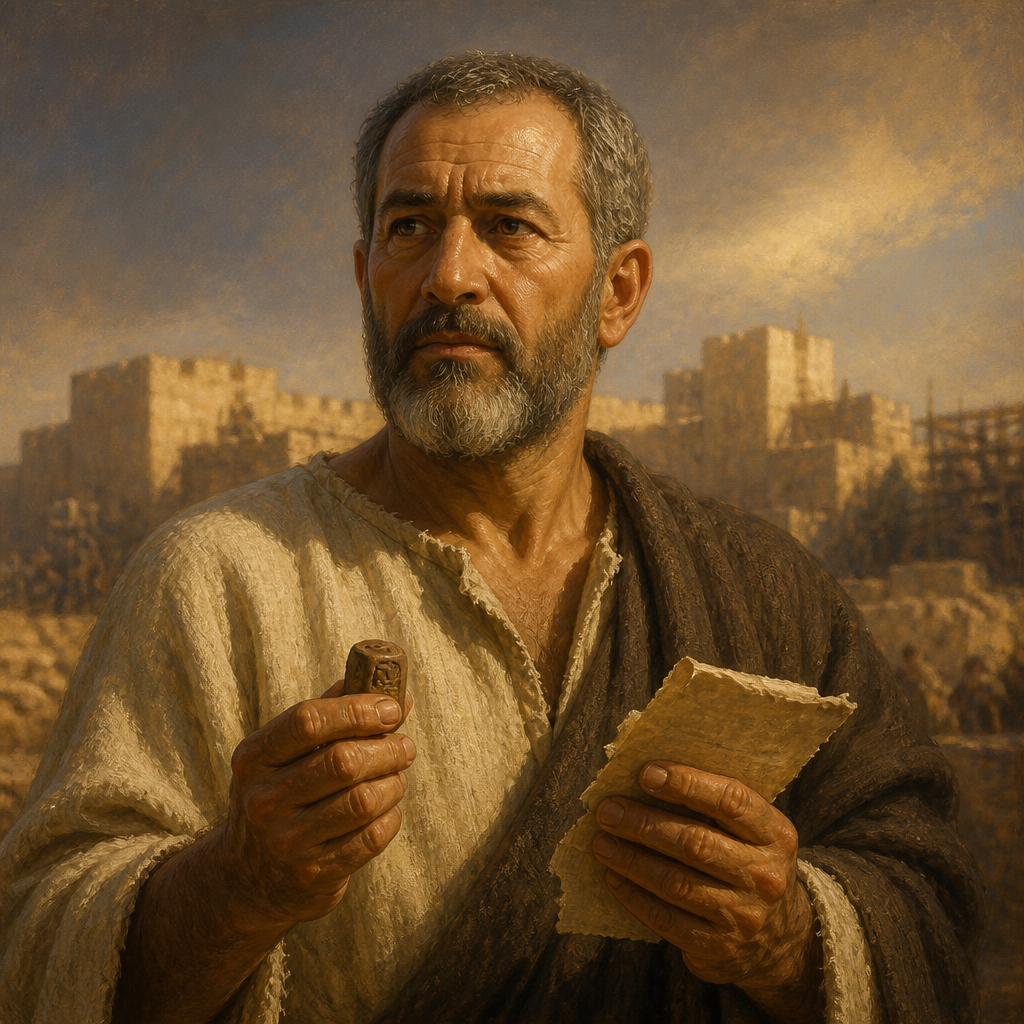
Jeroham is an individual mentioned in the genealogical records of the book of 1 Chronicles. His historical context is situated within the era of the Exile and Return, specifically during the period when the Jewish people were reclaiming and repopulating the city of Jerusalem after the Babylonian captivity. While the biblical text provides limited personal details about Jeroham himself, his significance is anchored in his role as a progenitor of a leadership lineage within the restored community.
He is recorded specifically as the father of Ibneiah. This relationship is preserved in the lists of the first inhabitants to return to the ancestral lands, highlighting the importance of family continuity and tribal heritage during the reconstruction of the Jewish state. His name, which means "he will find compassion" or "may he be shown mercy," reflects a common linguistic theme in Hebrew nomenclature involving divine favor.
Background and Family
Jeroham appears in the biblical record within the specific context of the post-exilic resettlement of Jerusalem. Following the decree of Cyrus the Great, various families returned from Babylon to Judea to rebuild the Temple and the city walls. In 1 Chronicles 9, the Chronicler provides a detailed list of the families who were the first to dwell again in their possessions in their cities. Jeroham is identified within this registry as the father of Ibneiah.
While the text does not explicitly name Jeroham's specific tribe in the immediate clause of 1 Chronicles 9:8, he is situated among individuals associated with the tribes of Benjamin and Judah who took up residence in Jerusalem. The record emphasizes his paternal role, ensuring that his son Ibneiah’s legal and social standing was validated through his lineage.
Major Life Events
The biblical text does not record specific events or biographical anecdotes from the life of Jeroham. His inclusion in the Holy Scriptures is strictly genealogical. Based on the era of the Exile and Return (c. 538 BC and following), Jeroham would have been a member of the generation that either experienced the captivity in Babylon or participated in the early stages of the return to Zion. His life was defined by the transition from displacement back to the Promised Land.
Relationship to Other Biblical Figures
The primary relationship attributed to Jeroham is his fatherhood of Ibneiah. Ibneiah is listed alongside other heads of fathers' houses, such as Elah son of Uzzi and Meshullam son of Shephatiah. These men represented the leadership of the returning exiles. By being named as the father of Ibneiah, Jeroham is established as a link in the chain of continuity between the pre-exilic identity of Israel and the post-exilic community.
Spiritual Significance
In the context of 1 Chronicles, genealogies like Jeroham’s serve a profound spiritual purpose. They demonstrate God’s faithfulness in preserving a remnant of His people through the judgment of the exile. Although Jeroham is a minor figure, his presence in the text signifies that no individual or family was lost to God’s memory during the years of wandering. For the returning community, knowing one’s father—such as Ibneiah knowing he was the son of Jeroham—was essential for claiming ancestral inheritance and participating in the religious life of the restored Temple. Jeroham represents the quiet continuity of the faithful whose names are etched into the foundations of the restored Jerusalem.
Ibneiah son of Jeroham; Elah son of Uzzi, the son of Michri; Meshullam son of Shephatiah, the son of Reuel, the son of Ibnijah; (1 Chronicles 9:8)
Jeroham serves as a representative of the 'hidden' generation that bridged the gap between the destruction of the first temple and the building of the second. His significance lies in his inclusion in the sacred genealogies, which were vital for establishing the legitimacy of the returning exiles. By preserving his name, the Chronicler reinforces the idea that the restoration of Israel was not merely a national movement but a collection of specific families and individuals restored by divine providence.
Theological emphasis is placed on the survival of the family unit through the Babylonian judgment. Jeroham’s name, meaning 'mercy' or 'compassion,' provides a thematic backdrop to the return from exile, symbolizing the mercy shown to the descendants of Israel as they were permitted to return to their spiritual home.
Frequently Asked Questions
Who was Jeroham's son?
Jeroham was the father of Ibneiah, who was among the first to return to Jerusalem after the Babylonian exile.
What tribe did Jeroham belong to?
While not explicitly stated in 1 Chronicles 9:8, he is listed among the residents of Jerusalem which primarily consisted of the tribes of Judah and Benjamin.
When did Jeroham live?
Jeroham lived during the period of the Exile and Return, roughly the 6th century BC.
What does the name Jeroham mean?
The name Jeroham is Hebrew for 'he will find compassion' or 'may he be shown mercy'.
How many times is this specific Jeroham mentioned in the Bible?
This specific Jeroham is mentioned once, in 1 Chronicles 9:8.
Family & Relationships
 Jeroham, Father of IbneiahThis page
Children
 IbneiahSon1 Chronicles 9:8Stated
Connected Figures
Family
Son · 1 Chronicles 9:8
Ibneiah was a Benjamite leader who was among the first of the returned exiles to resettle in Jerusalem after the Babylonian captivity.
Categories
Mentions by Book
- 1 Chronicles1
Scripture References
All 1 indexed verse, in canonical order, from the Berean Standard Bible.
1 Chronicles · 1
- 1 Chronicles 9:8
Ibneiah son of Jeroham; Elah son of Uzzi, the son of Michri; Meshullam son of Shephatiah, the son of Reuel, the son of Ibnijah;
Others Named Jeroham
Compare all 7 bearers →Jeroham, Father of Benjaminite Leaders1 Chronicles 8:27
A prominent Benjaminite patriarch whose sons were recorded as heads of their households in the tribal genealogies of 1 Chronicles.
Jeroham, Father of Azarel1 Chronicles 27:22
Served as the tribal leader of Dan under the administration of King David.
Jeroham, Father of Azariah2 Chronicles 23:1
A man of the tribe of Judah during the Divided Monarchy whose son, Azariah, was a military commander who helped restore the Davidic line to the throne.
Jeroham, Grandfather of Samuel1 Samuel 1:1
A Levite of the era of the conquest and the judges, notable as the father of Elkanah and the grandfather of the prophet Samuel.
Jeroham of Gedor1 Chronicles 12:7
Jeroham of Gedor was the father of Joelah and Zebadiah, two of the Benjaminite warriors who joined David at Ziklag during his flight from King Saul.
Jeroham, Ancestor of a Post-Exilic Priest1 Chronicles 9:12
A Levite of the tribe of Levi whose descendant, Adaiah, served as a prominent priest in the rebuilt temple following the return from the Babylonian exile.