Meshullam, Supporter of Ezra’s Assembly
A prominent Jewish leader who stood at the left hand of Ezra the scribe during the public reading of the Law in Jerusalem.
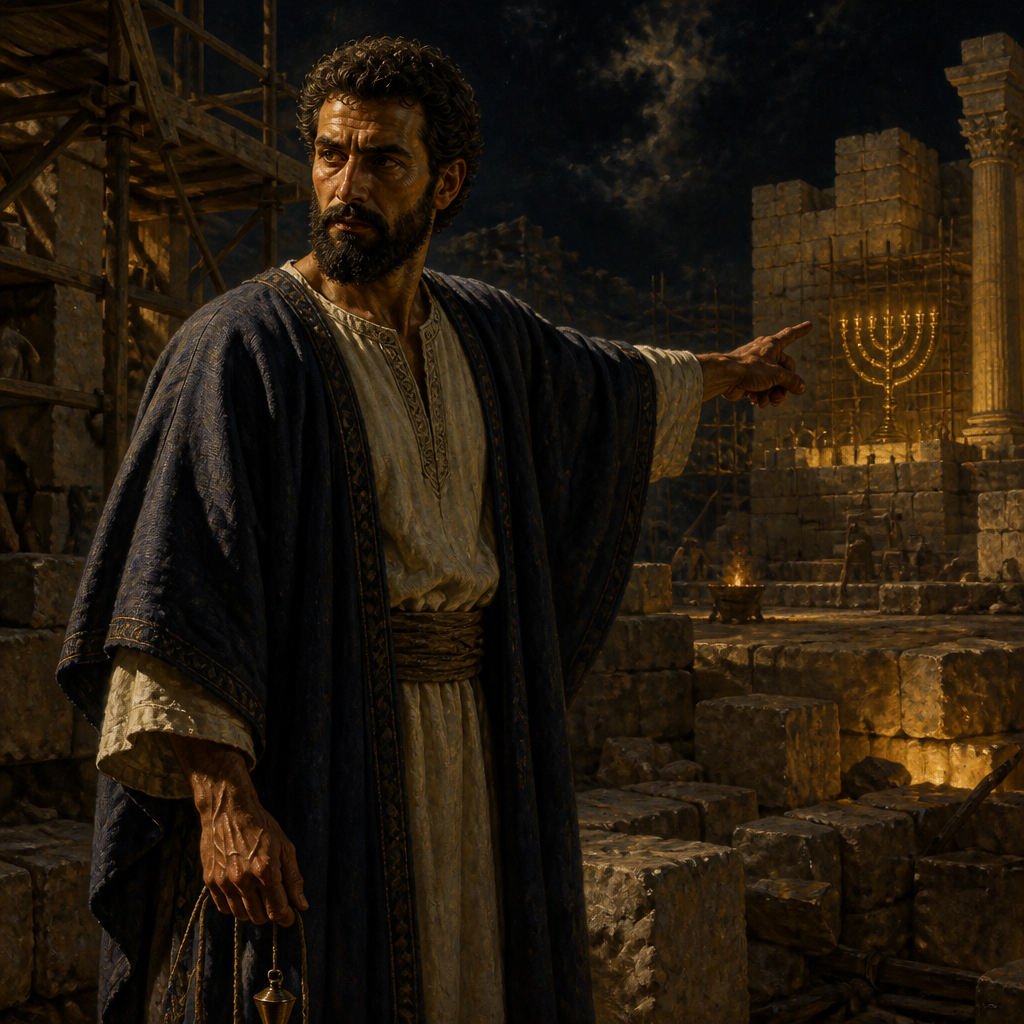
Meshullam was a Jewish official or leader during the Post-Exilic period who participated in one of the most significant spiritual reformations in Israel’s history. He is specifically identified in the Book of Nehemiah as one of the men selected to stand upon the wooden platform alongside Ezra during the public reading and explanation of the Law of Moses. This event occurred in the fifth century BC, following the return of the Jewish exiles from Babylon and the completion of the walls of Jerusalem.
His presence on the platform indicates a position of high social or religious standing within the community. While the biblical text provides no genealogical data for this specific Meshullam, his inclusion in this select group suggests he was a man of recognized integrity and authority, entrusted with supporting the scribe Ezra as he re-established the covenant foundations of the nation.
Background and Family
The identity of Meshullam is situated within the specific historical context of the return from the Babylonian Exile. The era of the Post-Exilic Period (c. 538–400 BC) was defined by the reconstruction of the Jewish identity through the rebuilding of the Temple and the city walls of Jerusalem. Meshullam appears during the climax of this restoration under the leadership of Nehemiah the governor and Ezra the priest.
While the name Meshullam—meaning "devoted," "friend," or "recompensed"—was common during this period, the biblical record for this specific individual is constrained to his public function in Nehemiah 8. There is no mention of his tribe, his father, or his specific occupation, though scholars often infer from the company he kept that he was likely a leader among the laypeople or a lower-level official within the administrative structure of the restoration community.
Major Life Events
The sole recorded event in the life of Meshullam occurs in Nehemiah 8:4. Following the completion of Jerusalem's walls, the people gathered "as one man" at the Square before the Water Gate. Ezra the scribe stood on a specially constructed high wooden platform to read the Book of the Law. Meshullam is listed as one of the seven men standing at Ezra’s left hand, alongside Pedaiah, Mishael, Malchijah, Hashum, Hash-baddanah, and Zechariah.
"Ezra the scribe stood on a high wooden platform built for this occasion. At his right side stood Mattithiah, Shema, Anaiah, Uriah, Hilkiah, and Maaseiah, and at his left were Pedaiah, Mishael, Malchijah, Hashum, Hash-baddanah, Zechariah, and Meshullam." (Nehemiah 8:4, BSB)
Meshullam’s role was to provide a visible, authoritative presence during the reading. As Ezra opened the scrolls, the entire assembly stood up, and the men on the platform served as witnesses to the reading and the subsequent teaching provided by the Levites. This assembly led to a national confession of sin and a renewed commitment to the Mosaic Covenant.
Relationship to Other Biblical Figures
Meshullam’s primary biblical connection is his association with Ezra. Being selected to stand on the platform suggests a direct working relationship with the scribe and likely with Nehemiah. He stood among a total of thirteen named individuals who flanked Ezra—six on the right and seven on the left. This collective group represented the leadership of the returned exiles, presenting a unified front as the Law was reintroduced as the supreme governing authority for the Jewish people.
Spiritual Significance
The presence of Meshullam on the platform carries symbolic and practical weight. It demonstrates the necessity of corporate support for the ministry of the Word. Even a figure like Ezra, who was a skilled scribe and priest, did not stand alone; he was surrounded by men like Meshullam who validated the message and participated in the communal act of worship. Meshullam’s inclusion in the narrative, despite the brevity of the mention, serves as a testament to the importance of the "witness" in the restoration of Israel’s spiritual life. He stands as a representative of the faithful remnant who prioritized the Word of God during a time of national rebuilding.
Spiritual Significance
Meshullam’s significance lies in his role as a witness and supporter during the formal re-establishment of the Mosaic Law in post-exilic Jerusalem. By standing with Ezra, he helped bridge the gap between the priestly leadership and the general populace, signaling that the move toward spiritual reform was supported by the community's leaders. His presence is part of a larger theme in Nehemiah where the restoration of the physical walls is followed by the restoration of the people's spiritual identity.
Theologically, Meshullam represents the 'silent' participants in God’s work—those who may not have recorded speeches or long biographies but whose presence and support are essential for the public ministry of the Word. His placement at the left hand of Ezra in the sacred assembly marks him as a permanent part of the biblical record regarding the Great Assembly of the Return.
Frequently Asked Questions
Who was Meshullam in the book of Nehemiah?
He was a Jewish leader who stood on the wooden platform to the left of Ezra the scribe during the public reading of the Law in the Square before the Water Gate.
What does the name Meshullam mean?
The name Meshullam is derived from a Hebrew root meaning 'devoted,' 'recompensed,' or 'friend.'
In what year did Meshullam stand with Ezra?
While the exact year is debated, the event likely occurred around 444 BC, following the completion of Jerusalem's walls under Nehemiah's governorship.
Was Meshullam a priest or a Levite?
The biblical text in Nehemiah 8:4 does not explicitly state his tribe or office, though he is listed among other prominent men who supported Ezra's public ministry.
What happened during the assembly where Meshullam was present?
The Law was read aloud from daybreak until noon, the people wept in conviction, and then they celebrated the Feast of Tabernacles with great joy.
Connected Figures
Ezra
Leader and Scribe
Nehemiah
Governor of Judah
Zechariah
Peer standing on the platform
Pedaiah
Peer standing on the platform
Categories
Mentions by Book
- Nehemiah1
Others Named Meshullam
Meshullam, Signer of the CovenantNehemiah 10:20
A Jewish leader during the Post-Exilic period who joined Nehemiah in signing the firm covenant to follow God's Law.
Meshullam, Grandfather of Shaphan2 Kings 22:3
A man of the Divided Monarchy period known solely as the grandfather of Shaphan the scribe during King Josiah's reign.
Meshullam, son of JoedNehemiah 11:7
A Benjamite whose descendants settled in Jerusalem during the Post-Exilic period after the return from Babylon.
Meshullam, Priest of the ReturnNehemiah 10:7
A priest during the Post-Exilic period who signed the covenant with Nehemiah and participated in the dedication of the rebuilt walls of Jerusalem.
Meshullam, Levite of the Return1 Chronicles 9:12
A Levite priest during the Post-Exilic period who served in the priestly lineage of Immer, contributing to the re-establishment of Jerusalem.
Meshullam, Son of Abihail1 Chronicles 5:13
A prominent head of a household within the tribe of Gad who lived during the era of the Divided Monarchy.
Meshullam, Son of Shephatiah1 Chronicles 9:8
A descendant of Reuel and son of Shephatiah who was among the heads of households to settle in Jerusalem following the return from the Babylonian exile.
Meshullam, Son of Zerubbabel1 Chronicles 3:19
A member of the Davidic line and the eldest son of Zerubbabel, the governor of Judah during the restoration period.
Meshullam, Levite of the Divided Monarchy2 Chronicles 34:12
A Levite of the Kohathite family who served as a faithful overseer during King Josiah’s restoration of the Temple in Jerusalem.
Meshullam, Son of Hodaviah1 Chronicles 9:7
A Benjamite who returned from the Babylonian exile and settled in Jerusalem as a head of a household.
Meshullam, Leader of the ReturnEzra 8:16
A prominent Jewish leader summoned by Ezra at the Ahava Canal to assist in recruiting Levites for the return to Jerusalem in 458 BC.
Meshullam, son of BesodeiahNehemiah 3:6
A Jewish returnee who collaborated with Joiada to repair the Old Gate of Jerusalem's wall during the governorship of Nehemiah.
Meshullam, Son of BaniEzra 10:29
A descendant of Bani who lived during the return from the Babylonian exile and was recorded for having taken a foreign wife.
Meshullam, Head of the House of GinnethonNehemiah 12:16
A Jewish priest and head of the ancestral house of Ginnethon during the post-exilic high priesthood of Joiakim.
Meshullam, Son of Elpaal1 Chronicles 8:17
A member of the tribe of Benjamin and son of Elpaal mentioned within the genealogical records of the Divided Monarchy.
Meshullam, Gatekeeper of the ReturnNehemiah 12:25
A Levite gatekeeper during the post-exilic period who was responsible for guarding the storerooms at the gates of Jerusalem.
Meshullam, Son of BerechiahNehemiah 3:4
A prominent wall-rebuilder under Nehemiah who maintained a complex, controversial alliance with the Ammonite official Tobiah.
Meshullam, Priest of Ezra's LineageNehemiah 12:13
A prominent post-exilic priest and head of the ancestral house of Ezra during the high priesthood of Joiakim.
Meshullam, Supporter of Jonathan son of AsahelEzra 10:15
A man who supported the opposition led by Jonathan son of Asahel regarding Ezra's plan for investigating foreign marriages in the post-exilic community.