Salmon
Who was Salmon in the Bible?
A prominent member of the tribe of Judah and a crucial link in the Davidic and Messianic genealogies, noted for being the father of Boaz.
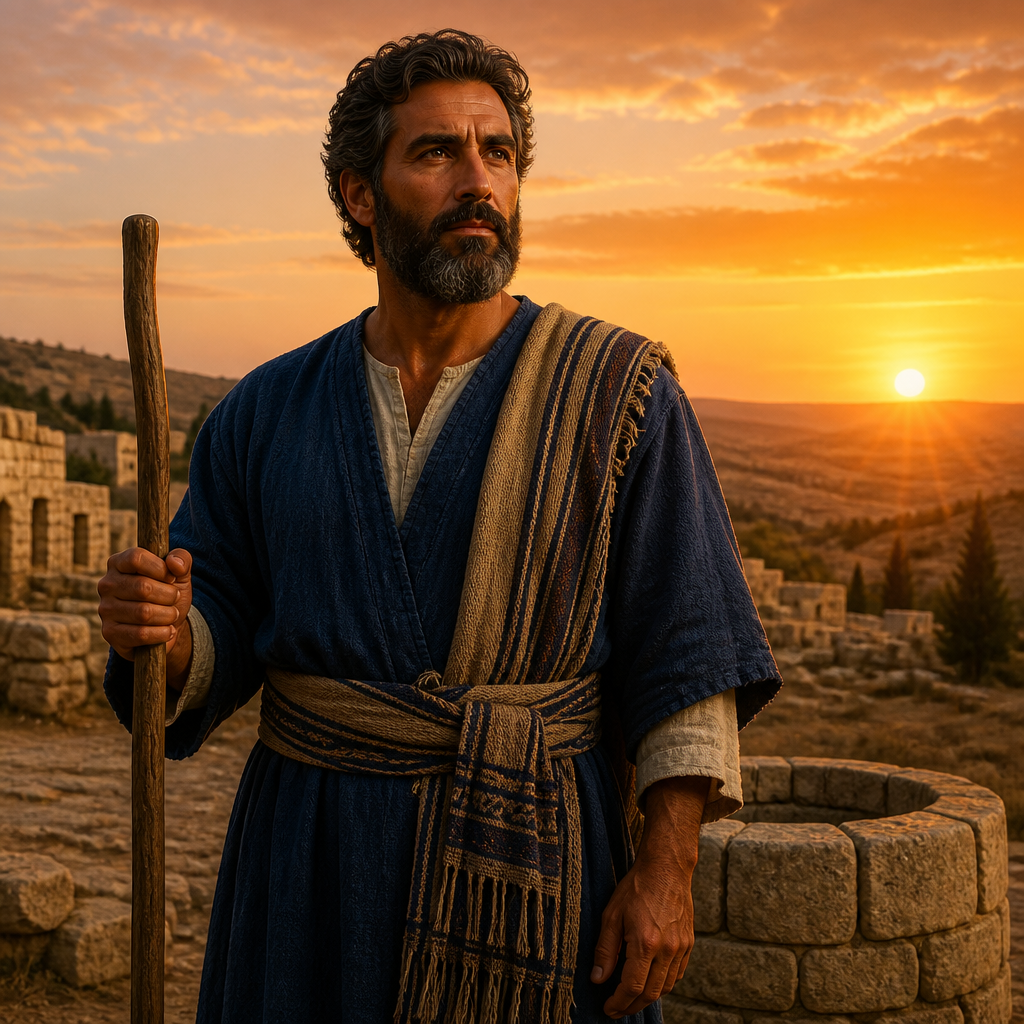
Salmon was a significant patriarch of the tribe of Judah during the period surrounding the Israelite conquest of Canaan. While his personal narrative is not detailed with the same expansive storytelling afforded to figures like Abraham or David, his genealogical position marks him as a pivotal ancestor in the line leading to King David and, ultimately, Jesus Christ. According to the biblical record, he was the son of Nahshon, the leader of the tribe of Judah during the wilderness wanderings.
Salmon is perhaps most frequently discussed in biblical scholarship due to his marriage to Rahab, the woman from Jericho who aided the Israelite spies. This union represents a significant moment in the history of Israel, symbolizing the inclusion of faithful Gentiles into the covenant line. As the father of Boaz, who would later marry Ruth the Moabite, Salmon stands at the center of a family line characterized by providential unions and the expansion of the tribe of Judah.
Background and Family
Salmon's heritage is deeply rooted in the leadership of the tribe of Judah. According to the genealogies recorded in 1 Chronicles 2:11 and Ruth 4:20-21, Salmon was the son of Nahshon. Nahshon himself was a man of considerable influence, identified in the Pentateuch as the leader (nasi) of the children of Judah during the census and the wilderness journey (Numbers 1:7). This lineage suggests that Salmon was born into a family of high status and responsibility during the pivotal years of Israel's transition from Egyptian bondage to the occupation of the Promised Land.
Salmon’s place in the family tree is consistent across both Old and New Testament records. He is listed as the great-great-grandson of Hezron and the grandson of Amminadab. His role as a bridge between the wilderness generation and the early settlement period in Bethlehem is vital for establishing the legal and bloodline descent of the Judean aristocracy.
Major Life Events
The biblical text does not provide a narrative account of Salmon's life in the same manner as his son Boaz. However, the Gospel of Matthew provides a crucial detail regarding his personal life that is omitted from the Old Testament genealogies. Matthew 1:5 states that "Salmon was the father of Boaz by Rahab." This identifies Salmon as the husband of Rahab, the woman who famously hid the two spies sent by Joshua into the city of Jericho (Joshua 2).
Although the book of Joshua does not explicitly name Rahab’s husband, the genealogical record in Matthew confirms the union. This event places Salmon’s adulthood during the time of the Conquest of Canaan (c. 1400 BC or 1200 BC, depending on the dating of the Exodus). It suggests that Salmon was among the generation of Israelites who crossed the Jordan River and witnessed the fall of Jericho. His marriage to a Canaanite woman who had confessed faith in the LORD highlights a period of significant social and spiritual integration within the tribe of Judah.
Relationship to Other Biblical Figures
Salmon serves as the indispensable link between the leaders of the Exodus and the royalty of the United Monarchy. As the son of Nahshon, he inherited the legacy of a man who stood beside Moses. As the father of Boaz, he sired the protagonist of the Book of Ruth. This makes Salmon the great-great-grandfather of King David (Ruth 4:21-22).
His relationship with Rahab is of particular interest to theologians. Rahab’s inclusion in the lineage of Judah through Salmon is one of the few instances where a woman—and a non-Israelite—is specifically mentioned in a Hebrew genealogy. This connection links the military conquest of Jericho with the domestic and agricultural setting of Bethlehem, where Salmon’s descendants eventually settled and became the leading family of the town.
Spiritual Significance
The spiritual significance of Salmon lies primarily in his contribution to the Messianic line. In the New Testament, both Matthew and Luke include Salmon (referred to as Sala in some translations of Luke 3:32) in their respective genealogies of Jesus. This confirms that the promise made to the tribe of Judah—that the scepter would not depart from them (Genesis 49:10)—was carried through Salmon during the turbulent years of the conquest.
Furthermore, Salmon’s household represents the grace-filled nature of the biblical narrative. By taking Rahab as his wife, Salmon participated in the redemption of a woman who was once a social and religious outsider. This theme of redemption and the inclusion of the "foreigner" is a precursor to the story of his son Boaz and Ruth. Salmon’s life, though sparsely documented, functions as a testament to the continuity of God's covenant through the generations of the Patriarchs.
Salmon's primary theological importance is his role in the genealogy of Jesus Christ. As a descendant of Judah and the father of Boaz, he ensures the continuity of the Messianic line through the period of the Conquest. His marriage to Rahab, a Gentile convert, is seen by many scholars as an early indication of the universal reach of God's salvation, demonstrating that the lineage of the Messiah was not purely biological but also defined by faith and the inclusion of those outside the initial covenant community.
In the context of the Hebrew Bible, Salmon represents the transition from the wilderness wandering to the settled life of the Israelites in Canaan. His descendants would become the 'Ephrathites of Bethlehem,' providing the geographical and familial setting for the birth of David and, eventually, the birth of Jesus. His presence in four different books of the Bible (Ruth, 1 Chronicles, Matthew, and Luke) underscores his essential place in the structural framework of salvation history.
Frequently Asked Questions
Who was Salmon's father?
Salmon was the son of Nahshon, who was the leader of the tribe of Judah during the time of Moses.
Who was Salmon's wife?
According to Matthew 1:5, Salmon's wife was Rahab, the woman from Jericho who assisted the Israelite spies.
How is Salmon related to King David?
Salmon was the great-great-grandfather of King David; he was the father of Boaz, who was the grandfather of Jesse, David's father.
In which books of the Bible is Salmon mentioned?
Salmon is mentioned in the books of Ruth, 1 Chronicles, Matthew, and Luke.
Was Salmon a king?
No, Salmon was not a king. He lived during the Patriarchal/Conquest period, long before the establishment of the Israelite monarchy, though he was an ancestor of the kings of Judah.
Family & Relationships
Parents
 NahshonFatherRuth 4:20Stated
 RahabWifeMatthew 1:5
Inferred
Matthew 1:5 says Salmon was the father of Boaz by Rahab. No marriage is recorded.Evidence: Matthew 1:5
 SalmonThis page
Children
 BoazSonRuth 4:21Stated
Extended family
 DavidGreat-Great-GrandsonRuth 4:17
Inferred
Reconstructed through Boaz and Obed: Ruth 4:21 ties Salmon to Boaz; Ruth 4:21 ties Boaz to Obed; Ruth 4:17 ties Obed to David (itself an inferred link). No verse states the great-great-grandson link between Salmon and David directly.Evidence: Ruth 4:17
Connected Figures
Family
Father · Ruth 4:20
The designated prince of the tribe of Judah during the Exodus and a direct ancestor of King David and Jesus Christ.
Egypt and WildernessFirst: Exodus 6:2313 versesPrince of JudahJudah
Wife · Matthew 1:5
A resident of Jericho who aided Israelite spies and became an ancestor of King David and Jesus Christ.
Son · Ruth 4:21
A prominent landowner from Bethlehem and a kinsman-redeemer who married Ruth, becoming a pivotal ancestor in the Davidic line and the genealogy of Jesus Christ.
Conquest and JudgesFirst: Ruth 2:123 versesJudge-era ElderJudah
Great-Great-Grandson · Ruth 4:17
The second king of the United Monarchy of Israel, a shepherd-warrior and psalmist known as a man after God's own heart.
United MonarchyFirst: Ruth 4:17998 versesKing of Israel, Shepherd, Musician, WarriorJudah
Categories
Mentions by Book
- Ruth5
- 1 Chronicles1
- Matthew2
- Luke1
Scripture References
All 9 indexed verses, in canonical order, from the Berean Standard Bible.
Ruth · 5
- Ruth 4:17Partial
The neighbor women said, “A son has been born to Naomi,” and they named him Obed. He became the father of Jesse, the father of David.
Cited as evidence on a family card; added so References, Key Verses and Mentions by Book share one index.
- Ruth 4:18Partial
Now these are the generations of Perez: Perez was the father of Hezron,
Cited as evidence on a family card; added so References, Key Verses and Mentions by Book share one index.
- Ruth 4:19Partial
Hezron was the father of Ram, Ram was the father of Amminadab,
Cited as evidence on a family card; added so References, Key Verses and Mentions by Book share one index.
- Ruth 4:20
Amminadab was the father of Nahshon, Nahshon was the father of Salmon,
- Ruth 4:21
Salmon was the father of Boaz, Boaz was the father of Obed,
1 Chronicles · 1
- 1 Chronicles 2:11Partial
Nahshon was the father of Salmon, and Salmon was the father of Boaz.
Matthew · 2
- Matthew 1:4
Ram was the father of Amminadab, Amminadab the father of Nahshon, and Nahshon the father of Salmon.
- Matthew 1:5
Salmon was the father of Boaz by Rahab, Boaz the father of Obed by Ruth, Obed the father of Jesse,
Luke · 1
- Luke 3:32Partial
the son of Jesse, the son of Obed, the son of Boaz, the son of Sala, the son of Nahshon,
Cited as a key verse; added so References, Key Verses and Mentions by Book share one index.