Jonathan, Priest to the Tribe of Dan
A Levite during the Period of the Judges who established a hereditary priesthood for an idolatrous shrine in the northern territory of Dan.
Jonathan, a Levite belonging to the era of the Conquest and Judges, is a figure of significant controversy in the history of Israel’s religious evolution. While many individuals in the biblical text bear this name, this Jonathan is uniquely identified by his role in establishing the cultic practices of the tribe of Dan. His actions represent a period of profound spiritual fragmentation in Israel, where tribal identity often eclipsed national adherence to the Mosaic Law.
His primary mention occurs at the conclusion of the migration of the Danites. According to the record in Judges 18, Jonathan accepted a position as a tribal priest for an image of silver, creating a religious center that stood in direct competition with the central sanctuary at Shiloh. His lineage is particularly noteworthy, as the text identifies him as a direct descendant of Gershom, connecting him to the highest echelons of Israelite leadership, though his ministry was defined by syncretism rather than orthodox devotion.
Background and Family
The identity of Jonathan is defined by a lineage that is both prestigious and problematic. According to Judges 18:30, he was the son of Gershom. The Masoretic Text frequently features a "suspended nun" in the name of his grandfather, making it read as "Manasseh." However, most scholars and ancient translations (such as the Septuagint) recognize this as a scribal emendation intended to protect the reputation of Moses. Thus, Jonathan is widely understood to be the grandson of the great lawgiver, Moses.
Despite this noble heritage, Jonathan lived during the chaotic Era of the Judges, a time summarized by the refrain that "everyone did what was right in his own eyes." As a Levite, Jonathan was expected to be a guardian of the Law, yet he appears in the narrative as a wandering professional available for hire, eventually finding his way into the service of the Danites.
Major Life Events
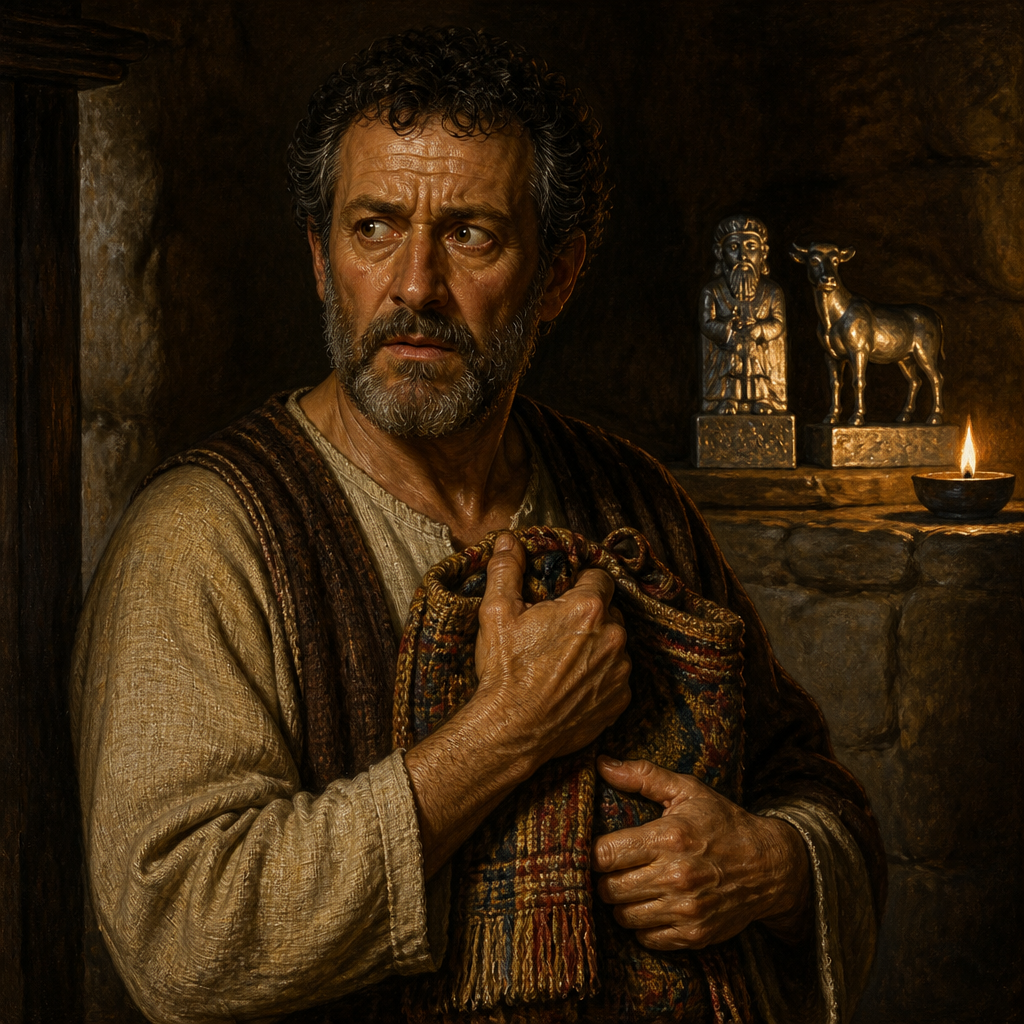
Jonathan first emerges as an unnamed Levite from Bethlehem in Judah who was traveling to find a place to stay. He was initially hired by a man named Micah in the hill country of Ephraim to serve as a private priest for a household shrine containing a carved image. During this time, five spies from the tribe of Dan, seeking new territory, encountered Jonathan and recognized his voice. They asked him to inquire of God regarding their journey, to which he offered a favorable response.
When the Danite army later passed through Ephraim to conquer Laish, they forcibly (though with Jonathan's eventually willing participation) took Micah’s cultic objects—the ephod, the household gods, and the idol. They persuaded Jonathan that it was better to be a priest to a whole tribe than to a single household. Jonathan joined them, and after the successful conquest of Laish (renamed Dan), he was formally established as the tribal priest.
Relationship to Other Biblical Figures
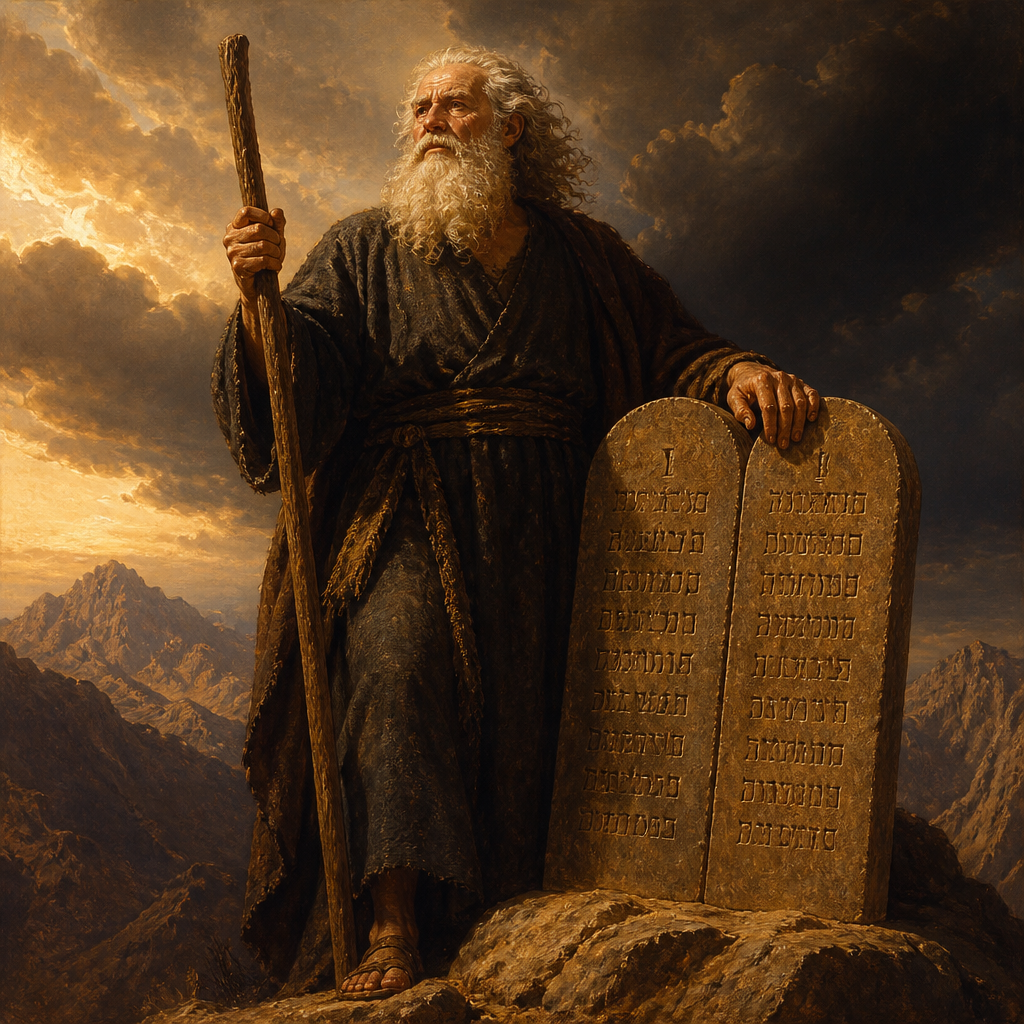
Jonathan’s primary relationship is his ancestry. Being the son of Gershom and the grandson of Moses places him in a direct line of the Levite priesthood. However, his actions stand in stark contrast to the legacy of Moses. While Moses delivered the Ten Commandments—including the prohibition against graven images—Jonathan spent his career officiating before a silver idol. The text notes that his sons succeeded him in this role, creating a hereditary dynasty of priests for the Danites that lasted "until the day of the captivity of the land."
Spiritual Significance
The account of Jonathan serves as a cautionary tale regarding the corruption of the priesthood. His willingness to sell his services to the highest bidder and his participation in idolatry illustrate the depth of Israel's spiritual decline during the Judges period. By naming him as a descendant of Moses, the biblical author highlights how quickly a godly legacy can be abandoned. His shrine in Dan became a precursor to the later golden calf worship established by Jeroboam I, marking the northernmost point of Israel's departure from the worship of Yahweh at the Temple in Jerusalem.
Spiritual Significance
Jonathan serves as a primary example of the religious syncretism that plagued Israel before the establishment of the Monarchy. His story illustrates the transition of the Levites from communal teachers to opportunistic cultic officials. By establishing a rival priesthood in Dan, he contributed to the long-term geographic and spiritual division of the nation.
Theological reflection on Jonathan often focuses on the irony of his lineage. As a grandson of Moses, he represents the potential for even the most sacred families to succumb to cultural pressures and apostasy. His presence in the book of Judges provides the historical 'root' for the idolatry that would eventually lead to the Assyrian captivity of the northern tribes.
Frequently Asked Questions
Was Jonathan really the grandson of Moses?
Yes, Judges 18:30 identifies him as the son of Gershom, who was the son of Moses. Some ancient manuscripts use the name 'Manasseh' to avoid connecting Moses to an idolater, but scholarly consensus points to Moses.
What was the 'captivity of the land' mentioned in his story?
This refers to the Assyrian invasion in 722 BC, implying that the priesthood established by Jonathan continued for several centuries until the Northern Kingdom of Israel was destroyed.
Why did Jonathan leave Bethlehem?
The text states he was a Levite staying in Bethlehem who departed to find a place where he could settle, suggesting he was looking for employment or a permanent residence.
Did Jonathan serve God or an idol?
While he used the name of the Lord (Yahweh) when speaking to the Danite spies, he functioned as a priest for a silver idol and household gods, representing a syncretistic mix of true and false worship.
How did the tribe of Dan treat Jonathan?
Initially, they stole his cultic objects, but they then offered him a higher status, inviting him to be a 'father and a priest' to their entire tribe rather than just one man's house.
Connected Figures
Categories
Mentions by Book
- Judges1
Family & Relationships
Parent
Gershom, Son of MosesDisputed
Exodus 2:22
Others Named Jonathan
Jonathan, Son of Shammah1 Chronicles 11:34
An elite Judean warrior and one of King David's 'Mighty Men' who achieved high military distinction during the United Monarchy.
Jonathan of the MalluchiNehemiah 12:14
A member of the house of Malluchi who served during the Post-Exilic Period during the reorganization of the priesthood under Nehemiah.
Jonathan, Son of Abiathar the Priest1 Kings 1:42
A loyal priest of the tribe of Levi who served as a courier and intelligence agent for King David during the rebellions of Absalom and Adonijah.
Jonathan, Father of EbedEzra 8:6
A descendant of Adin during the Post-Exilic Period whose son, Ebed, led a group of fifty men back to Jerusalem under the leadership of Ezra.
Jonathan, Son of Uzziah1 Chronicles 27:25
An administrator during the Divided Monarchy who managed the royal agricultural and strategic storehouses for the Davidic kingdom.
Jonathan, Son of AsahelEzra 10:15
A Judean man during the post-exilic period who formally opposed Ezra’s specific procedure for dissolving foreign marriages.
Jonathan, Son of King Saul1 Samuel 14:6
A prince of Israel and renowned warrior of the Tribe of Benjamin, famous for his profound covenantal friendship with David and his loyalty to God over his own royal succession.
Jonathan, Son of ShemaiahNehemiah 12:35
A Levite of the post-exilic period and a descendant of Asaph whose lineage was instrumental in the musical and liturgical restoration of Jerusalem.
Jonathan, Son of Jada1 Chronicles 2:32
A descendant of Jerahmeel within the Tribe of Judah, known for his inclusion in the post-exilic genealogical records of the Divided Monarchy period.
Jonathan, Son of KareahJeremiah 40:8
Jonathan, son of Kareah, was a Judean military officer who joined the governor Gedaliah at Mizpah after the fall of Jerusalem to the Babylonians.
Jonathan the ScribeJeremiah 37:15
A government official in Jerusalem during the reign of King Zedekiah who converted his private residence into a dungeon for the prophet Jeremiah.