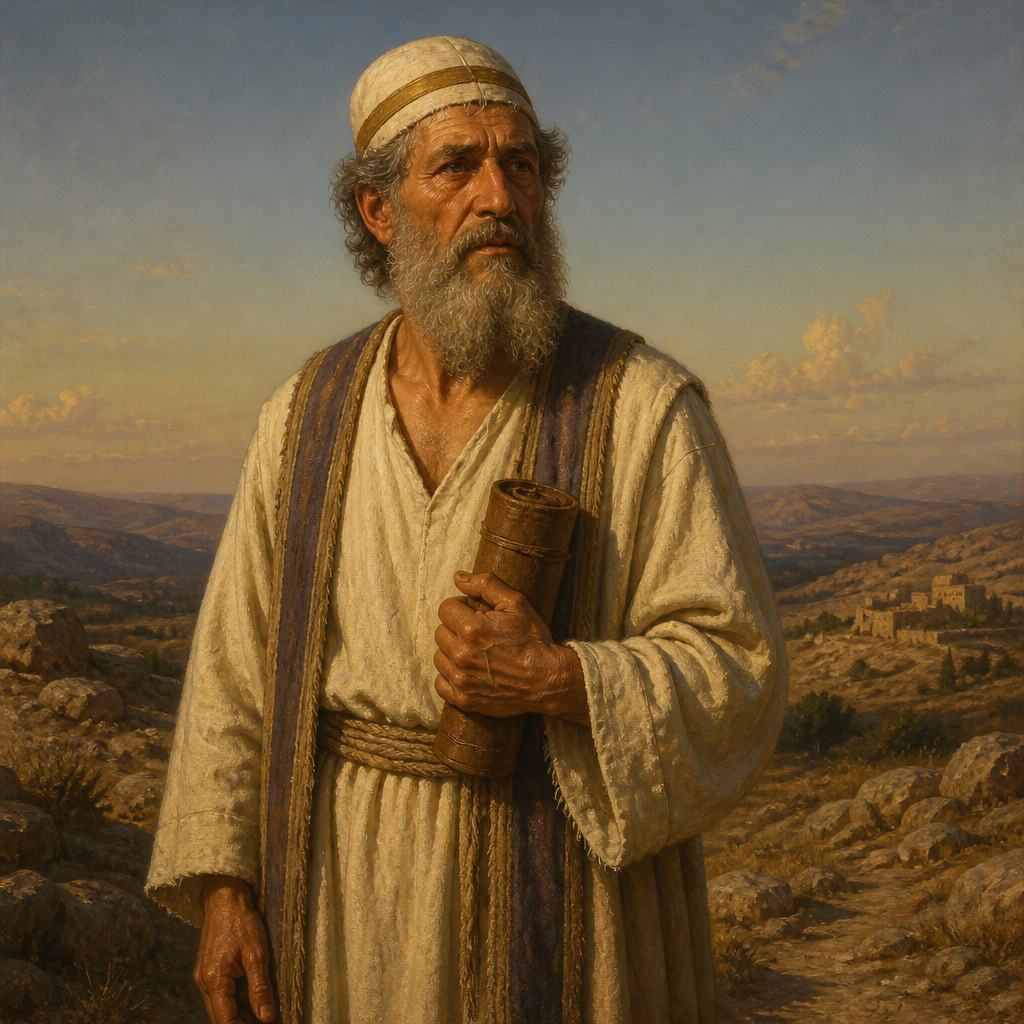
Jonathan, Son of Abiathar the Priest
A loyal priest of the tribe of Levi who served as a courier and intelligence agent for King David during the rebellions of Absalom and Adonijah.
Jonathan, the son of Abiathar the priest, was a significant figure within the ecclesiastical and political landscape of Israel’s United Monarchy. As a member of the Tribe of Levi, he functioned not only within the religious structures of the tabernacle but also as a vital strategic asset to King David. His service was characterized by high-stakes espionage and rapid communication during two of the most volatile transitions of power in the Davidic dynasty: the insurrection of David’s son Absalom and the later attempt by Adonijah to seize the throne.
While often overshadowed by the high-profile military leaders of the era, Jonathan’s role as a trusted messenger required exceptional bravery and physical stamina. The biblical narrative highlights him as a 'man of valor,' a title usually reserved for warriors, suggesting that his duties as a priestly son were fraught with danger. His loyalty to the established Davidic line, inherited from his father Abiathar, placed him at the center of the intelligence network that ultimately preserved David’s life and ensured the succession of King Solomon.
Background and Family
Jonathan was born into the Tribe of Levi, specifically within the high-priestly line of Eli. His father was Abiathar, one of the two primary high priests during the reign of King David. The biblical record also mentions his brother, Ahimelech, though Jonathan is most frequently paired in the text with Ahimaaz, the son of Zadok. Growing up in the priestly household during the United Monarchy, Jonathan would have been trained in the liturgical and sacrificial duties of the Levites, but the political instability of David’s reign forced him into a more clandestine role.
Major Life Events
The Rebellion of Absalom
Jonathan first emerges as a key figure during the crisis of Absalom’s coup (2 Samuel 15). When King David fled Jerusalem to avoid a massacre, he commanded the high priests Zadok and Abiathar to remain in the city with the Ark of the Covenant. Their task was to act as eyes and ears for the king, utilizing their sons, Ahimaaz and Jonathan, as couriers to carry vital intelligence to David’s camp in the wilderness.
The danger of this assignment is illustrated in 2 Samuel 17. Jonathan and Ahimaaz stayed at En-rogel, a spring outside the city walls, to avoid detection. A servant girl acted as the link between the high priests inside the city and the sons waiting outside. However, their presence was discovered by a young man who reported them to Absalom. In a narrow escape, the two men hid in a well in Bahurim. A local woman covered the mouth of the well and spread grain over it, successfully deceiving Absalom’s search party. Once the coast was clear, Jonathan and Ahimaaz traveled to David to deliver the message that he must cross the Jordan River immediately, a warning that saved the king’s life.
The Succession of Solomon
Years later, as David approached death, his son Adonijah attempted to usurp the throne (1 Kings 1). Jonathan’s father, Abiathar, supported Adonijah, but Jonathan himself appears in the narrative as the bearer of news rather than a conspirator. While Adonijah was celebrating his self-proclaimed kingship, Jonathan arrived at the banquet. Adonijah welcomed him as a 'man of valor' who surely brought good news. Instead, Jonathan delivered the crushing report that David had already anointed Solomon as king. Jonathan’s detailed account of the coronation and the city’s celebration effectively ended Adonijah’s coup as the guests fled in terror.
Relationship to Other Biblical Figures
Jonathan is defined primarily by his relationship with his father, Abiathar, and his partnership with Ahimaaz. While the two fathers, Zadok and Abiathar, represented the dual priesthood of Israel, the two sons represented the next generation of loyalty to the crown. However, their paths diverged following the Solomon succession. While Zadok’s line (through Ahimaaz) remained in high favor, Abiathar was eventually exiled by Solomon, which likely impacted Jonathan’s subsequent standing in the Jerusalem priesthood.
Spiritual Significance
Jonathan’s life reflects the biblical theme of the 'faithful messenger.' In the Ancient Near East, the arrival of a messenger could mean the life or death of a kingdom. Jonathan’s reliability ensured that the Davidic covenant—the promise that David’s line would rule—was protected from internal threats. Though he was a Levite by birth, his service was rendered through his feet and his voice, demonstrating that devotion to God’s anointed king often requires practical, courageous action outside the sanctuary walls. His story also serves as a poignant conclusion to the house of Eli; as the son of Abiathar, he is one of the last members of that specific priestly line to play a prominent role in the biblical history of the United Monarchy.
Spiritual Significance
Jonathan, son of Abiathar, serves as a bridge between the religious and political spheres of the United Monarchy. His presence in the text reinforces the legitimacy of David's reign, as the priesthood was divinely mandated to support the true king. His role as a scout and courier highlights the providential nature of David's survival during Absalom’s rebellion, where human cunning and divine protection worked in tandem.
Theologically, Jonathan represents the 'bearer of truth.' Whether delivering the warning that saved David or the decree that solidified Solomon’s reign, his words functioned to align the people's reality with God's established will. Despite the eventual downfall of his father’s house, Jonathan’s recorded actions are those of a diligent and brave servant of the kingdom.
Frequently Asked Questions
What tribe did Jonathan belong to?
Jonathan was a member of the Tribe of Levi, as he was the son of Abiathar the high priest.
How did Jonathan help King David during Absalom's rebellion?
He served as a secret courier, staying at En-rogel to receive intelligence from his father and then running to inform David of Absalom's plans.
Where did Jonathan hide from Absalom's servants?
He and Ahimaaz hid inside a well in a house at Bahurim. A woman covered the well and spread grain over it to conceal them.
What news did Jonathan bring to Adonijah?
He informed Adonijah that King David had officially made Solomon king, causing Adonijah's supporters to flee in fear.
Is this the same Jonathan who was friends with David?
No. This Jonathan is the son of Abiathar the priest. The friend of David was the son of King Saul.
Connected Figures
Abiathar
Father
Ahimaaz
Close associate and fellow courier

David
King he served as a messenger
Adonijah
The prince to whom he delivered news of Solomon's kingship
Categories
Mentions by Book
- 2 Samuel4
- 1 Kings2
Family & Relationships
Sibling
2 Samuel 15:27
Parent
1 Samuel 22:20
Sibling
2 Samuel 8:17
Others Named Jonathan
Jonathan, Son of Shammah1 Chronicles 11:34
An elite Judean warrior and one of King David's 'Mighty Men' who achieved high military distinction during the United Monarchy.
Jonathan of the MalluchiNehemiah 12:14
A member of the house of Malluchi who served during the Post-Exilic Period during the reorganization of the priesthood under Nehemiah.
Jonathan, Priest to the Tribe of DanJudges 18:30
A Levite during the Period of the Judges who established a hereditary priesthood for an idolatrous shrine in the northern territory of Dan.
Jonathan, Father of EbedEzra 8:6
A descendant of Adin during the Post-Exilic Period whose son, Ebed, led a group of fifty men back to Jerusalem under the leadership of Ezra.
Jonathan, Son of Uzziah1 Chronicles 27:25
An administrator during the Divided Monarchy who managed the royal agricultural and strategic storehouses for the Davidic kingdom.
Jonathan, Son of AsahelEzra 10:15
A Judean man during the post-exilic period who formally opposed Ezra’s specific procedure for dissolving foreign marriages.
Jonathan, Son of King Saul1 Samuel 14:6
A prince of Israel and renowned warrior of the Tribe of Benjamin, famous for his profound covenantal friendship with David and his loyalty to God over his own royal succession.
Jonathan, Son of ShemaiahNehemiah 12:35
A Levite of the post-exilic period and a descendant of Asaph whose lineage was instrumental in the musical and liturgical restoration of Jerusalem.
Jonathan, Son of Jada1 Chronicles 2:32
A descendant of Jerahmeel within the Tribe of Judah, known for his inclusion in the post-exilic genealogical records of the Divided Monarchy period.
Jonathan, Son of KareahJeremiah 40:8
Jonathan, son of Kareah, was a Judean military officer who joined the governor Gedaliah at Mizpah after the fall of Jerusalem to the Babylonians.
Jonathan the ScribeJeremiah 37:15
A government official in Jerusalem during the reign of King Zedekiah who converted his private residence into a dungeon for the prophet Jeremiah.