Gershom, Son of Moses
Gershom was the firstborn son of the prophet Moses and Zipporah, born in Midian during Moses' exile from Egypt.
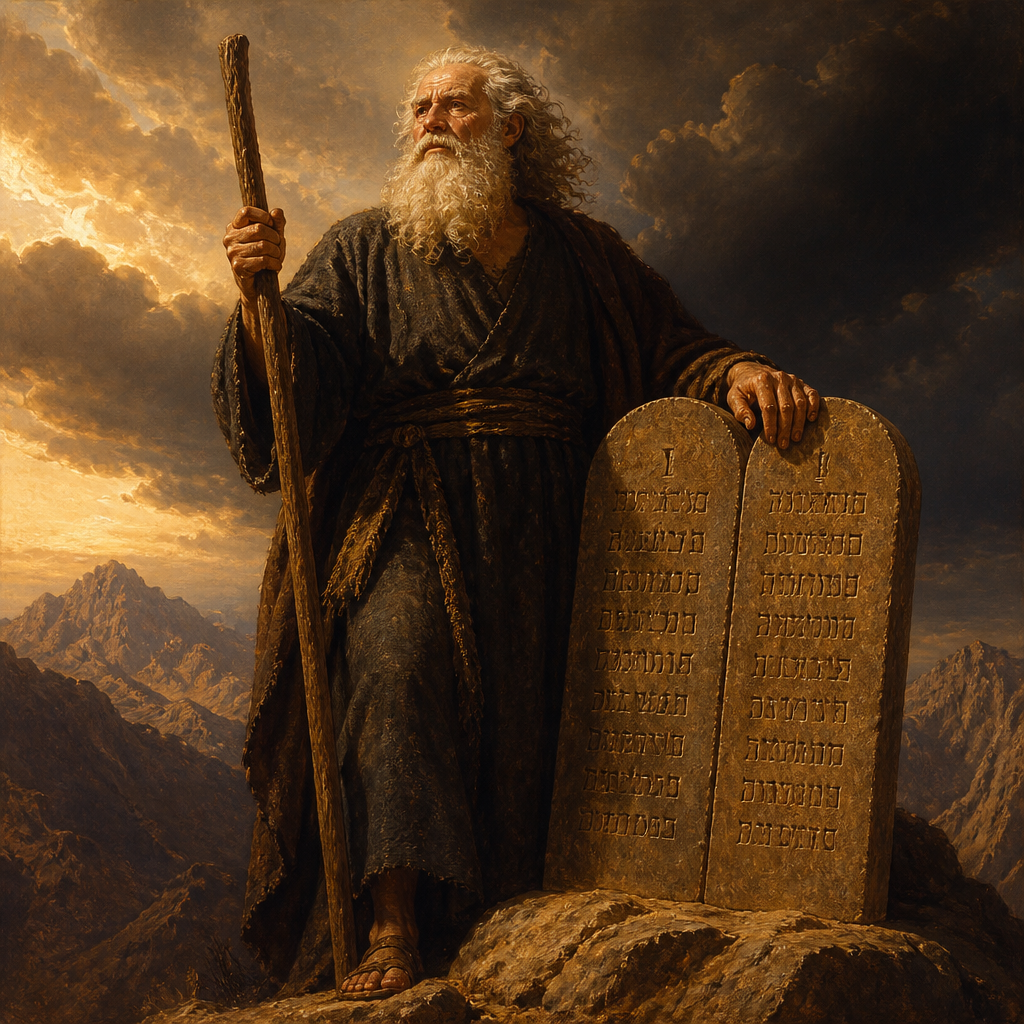
Gershom was the eldest son of Moses, the central figure of the Exodus, and Zipporah, the daughter of Reuel (also known as Jethro), the priest of Midian. Born during Moses’ forty-year sojourn in the land of Midian, Gershom’s birth and naming marked a significant turning point in his father’s life. After fleeing from Pharaoh’s court in Egypt and settling among the Midianites, Moses established a family, with Gershom being the first tangible sign of his new life in the wilderness.
His presence in the biblical narrative serves as a bridge between Moses’ princely upbringing in Egypt and his eventual calling as the liberator of Israel. While Gershom does not take on a primary leadership role like his father, his lineage is carefully recorded in the priestly genealogies of the tribe of Levi. His descendants, including his son Shebuel, held positions of trust and responsibility in the religious administration of Israel during the reigns of King David and his successors.
Background and Family
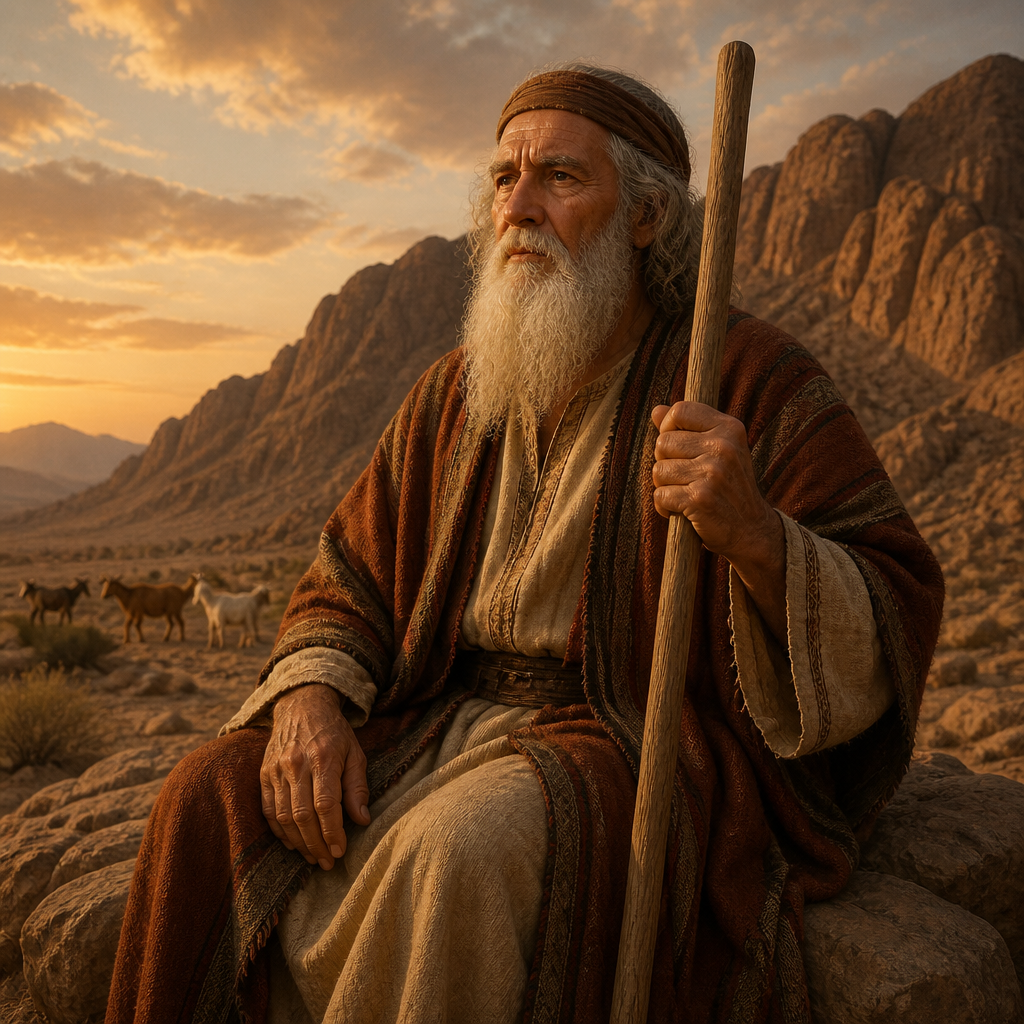
Gershom was born during a period of transition and isolation for his father, Moses. After Moses killed an Egyptian taskmaster and fled from the wrath of Pharaoh, he settled in the desert of Midian. There, he assisted the daughters of Jethro at a well, eventually entering Jethro’s service and marrying his daughter Zipporah. Gershom was the first child of this union.
His name is profoundly symbolic. According to Exodus 2:22, Moses named him Gershom because he said, “I have become a foreigner in a foreign land.” The name is traditionally understood to be derived from the Hebrew words ger (sojourner/foreigner) and sham (there). This etymology reflects Moses’ internal state at the time—a man caught between his Hebrew heritage, his Egyptian upbringing, and his current Midianite reality. Gershom had one younger brother, Eliezer, whose name similarly reflected Moses' spiritual state, meaning "God is my helper."
Major Life Events
While the biblical record provides few details regarding Gershom’s personal actions or character, he is present during one of the most enigmatic episodes in the life of Moses. In Exodus 4, as Moses returned to Egypt with Zipporah and his sons to confront Pharaoh, a "bridegroom of blood" incident occurred at a lodging place. While the text focuses on the circumcision of Moses’ son (likely Gershom or Eliezer) by Zipporah to avert divine wrath, it underscores Gershom's inclusion in the covenant community even while raised in Midian.
Later, during the Exodus, it appears that Zipporah and her two sons were sent back to Jethro for safety. In Exodus 18, Jethro brought Zipporah, Gershom, and Eliezer to the Israelite camp at the mountain of God to reunite with Moses. This reunion served as a public acknowledgement of Moses’ family standing before the elders of Israel.
Relationship to Other Biblical Figures
Gershom is primarily defined by his relationship to his father, Moses, the lawgiver of Israel. However, his genealogical footprint extends into the era of the Israelite monarchy. The Chronicler notes that Gershom’s son, Shebuel (also called Shubael), was a prominent figure during the time of King David. 1 Chronicles 26:24 identifies Shebuel as the "officer in charge of the treasuries," a role of significant financial and civic trust. This indicates that while the descendants of Moses did not inherit the political leadership of Israel (which passed to Joshua) or the High Priesthood (which passed to Aaron), they remained influential members of the Levite tribe.
There is a controversial mention in Judges 18:30 regarding a man named Jonathan, son of Gershom, son of Moses (some manuscripts read "Manasseh" to protect Moses' reputation, but "Moses" is widely accepted by scholars). This Jonathan became a priest to the tribe of Dan, presiding over an unauthorized cultic site involving idols. If this refers to the direct son of the Gershom born in Midian, it presents a tragic irony where the grandson of the great Lawgiver became a leader in Israelite idolatry.
Spiritual Significance
The primary spiritual significance of Gershom lies in his name. He represents the "sojourner" status of the people of God. Just as Moses felt like a foreigner in Midian, the nation of Israel was reminded through the Levite genealogies that their identity was rooted in a God who delivers his people from foreign lands.
Furthermore, the lack of a grand narrative for Gershom despite being the son of the greatest prophet in Hebrew history serves as a theological lesson in the sovereignty of God's choice. Leadership in Israel was not strictly hereditary in the way of the surrounding nations; God chose Joshua to lead and Aaron to be priest, showing that the grace and calling of God are not merely matters of biological descent. Gershom’s life, spent largely in the shadow of his father, highlights the distinction between the office of the Prophet and the biological family of the man holding that office.
Spiritual Significance
Gershom serves as a living testament to Moses' years of exile and the formative period before the Burning Bush. His name preserves the memory of Moses' alienation and God's providence in providing a family in the wilderness. Theologically, he represents the transition of the Hebrew people from a family into a nation, where even the sons of the greatest leader are subsumed into the broader service of the Tabernacle.
His lineage also provides a cautionary or descriptive tale of the Levite experience in early Israel. Whether through the faithful service of his son Shebuel in the royal treasuries or the potential apostasy of his descendant Jonathan in Dan, Gershom’s progeny reflect the spiritual fluctuations of the nation itself. He remains a vital link in the Levitical genealogies that establish the order and history of Israel’s religious life.
Frequently Asked Questions
What does the name Gershom mean?
The name Gershom means 'a stranger there' or 'foreigner in a foreign land,' derived from the Hebrew words 'ger' (sojourner) and 'sham' (there).
Who was Gershom's mother?
His mother was Zipporah, the daughter of Jethro (Reuel), the priest of Midian.
Did Gershom become the leader of Israel after Moses?
No. Leadership of the nation passed to Joshua, and the priesthood was established through the line of Moses' brother, Aaron. Gershom's descendants served as Levites.
Who were Gershom's children?
The Bible explicitly names Shebuel (1 Chronicles 23:16) as a descendant and first son of Gershom. Judges 18:30 also identifies Jonathan as a son (or descendant) of Gershom.
Was Gershom present at the Ten Commandments?
While the Bible does not record his specific presence at the giving of the Law, Exodus 18:5-7 states that Jethro brought Gershom and his brother to Moses at the mountain of God (Sinai) shortly before the Law was given.
Connected Figures

Categories
Mentions by Book
- 1 Chronicles3
- Exodus2
- Judges1
Family & Relationships
Child
Jonathan, Priest to the Tribe of DanDisputed
Exodus 2:22
Child
Exodus 2:22
Sibling
Exodus 2:22
Sibling
Exodus 18:4
Parent
Exodus 2:10
Parent
Exodus 2:21
Others Named Gershom
Gershom, Returnee from the ExileEzra 8:2
A descendant of the high priest Phinehas who returned to Jerusalem from the Babylonian exile under the leadership of Ezra.