Hananiah, Priest under Joiakim
A priestly head of the family of Jeremiah who served during the tenure of the High Priest Joiakim in post-exilic Jerusalem.
Hananiah was a Jewish priest belonging to the era of the Exile and Return. He functioned as a foundational leader within the ecclesiastical structure of the restored community in Judah. Specifically, he is identified as the head of the priestly family of Jeremiah during the days of Joiakim, the son of Jeshua. His role was central to the re-establishment of the sacrificial and liturgical life of the Jewish people following the Babylonian captivity.
While Hananiah appears in only a single verse within the Book of Nehemiah, his inclusion in the genealogical records signifies his status as a legitimate heir to the Aaronic priesthood and a recognized leader among the returnees. He represents the continuity of the covenant between God and the house of Levi through the tumultuous transition from exile back to the Promised Land.
Background and Family
Hananiah lived during the critical period of the Post-Exilic restoration, a time when the Jewish remnant returned from Babylon to rebuild the Temple and the walls of Jerusalem. According to the record in Nehemiah 12, he was a member of the priestly class. The text specifically identifies him as the head of the family of Jeremiah (Nehemiah 12:12). This 'Jeremiah' refers to a priestly line that had returned from Babylon with Zerubbabel and Jeshua (Nehemiah 12:1), rather than the famous prophet of the same name.
Hananiah served during the high priesthood of Joiakim. Joiakim was the son of Jeshua, the High Priest who returned with the first wave of exiles. This placement situates Hananiah's ministry in the generation following the initial return, likely during the early to mid-5th century BC, as the community worked to stabilize its religious and social identity.
Major Life Events
The primary historical contribution of Hananiah is his service as a 'head of the priestly families' (Nehemiah 12:12). In the post-exilic community, these heads were responsible for the administration of the Temple, the oversight of the Levites, and the preservation of the law. His leadership ensured that the specific lineage of Jeremiah maintained its duties and standing within the broader assembly of Israel.
His mention occurs within a list intended to document the legitimate succession of the priesthood. During this era, maintaining accurate genealogical records was not merely a matter of pride but a requirement for service; those who could not prove their lineage were excluded from the priesthood (Ezra 2:62). Hananiah’s presence in this list confirms his undisputed standing as a sanctified leader in the service of Yahweh.
Relationship to Other Biblical Figures
Hananiah is directly linked to Joiakim, the High Priest, under whose authority he served. As the head of a priestly house, he would have collaborated with other family heads mentioned in the same context, such as Meraiah (head of the family of Seraiah) and Meshullam (head of the family of Ezra). His life was governed by the ecclesiastical reforms initiated by the earlier generation of Zerubbabel and later reinforced by the arrivals of Ezra and Nehemiah.
Spiritual Significance
The spiritual significance of Hananiah lies in his role as a bridge between the trauma of the exile and the hope of the restoration. By serving as a priest, he participated in the daily reminders of God’s holiness and the necessity of atonement. His inclusion in the biblical text highlights the importance of institutional faithfulness. While he performed no recorded miracles, his consistent leadership within the family of Jeremiah contributed to the survival of the Jewish faith during a period of extreme vulnerability and external pressure.
Spiritual Significance
Hananiah serves as a testament to the preservation of the Aaronic priesthood through the Babylonian Exile. His inclusion in the register of Nehemiah 12 emphasizes the biblical theme of God's faithfulness to His promises regarding the tribe of Levi and the house of Aaron. Even in the aftermath of national judgment, individuals like Hananiah were raised up to maintain the holy ordinances and lead the people in worship.
Theologically, his life illustrates the importance of the 'remnant'—the small group of faithful individuals who returned to the land to rebuild what was lost. As a family head, Hananiah was responsible for passing down the traditions and laws of the Torah to the next generation, ensuring that the light of Israel's unique calling did not flicker out in the post-exilic world.
Frequently Asked Questions
What was Hananiah’s role in Jerusalem?
Hananiah was a priest and the head of the family of Jeremiah during the time of the High Priest Joiakim.
In which book of the Bible is this Hananiah mentioned?
He is mentioned exclusively in the Book of Nehemiah, specifically in chapter 12, verse 12.
When did Hananiah live?
He lived during the Post-Exilic period (Exile and Return), serving during the tenure of Joiakim, who was the son of the High Priest Jeshua.
Was he related to the prophet Jeremiah?
No, the 'Jeremiah' mentioned as his family head was a priest who returned with Zerubbabel, not the major prophet who wrote the Book of Jeremiah.
Connected Figures
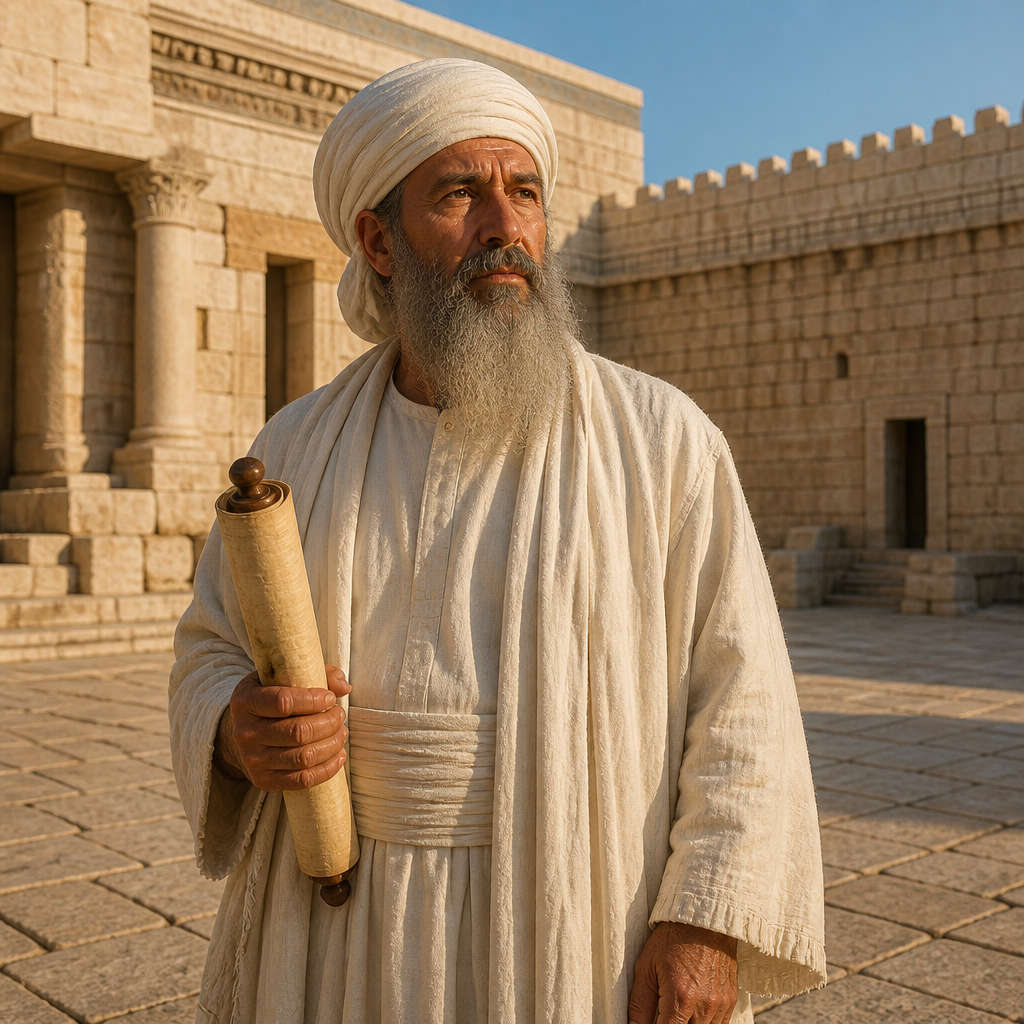
Joiakim
High Priest under whom he served
Jeshua
Father of the High Priest Joiakim
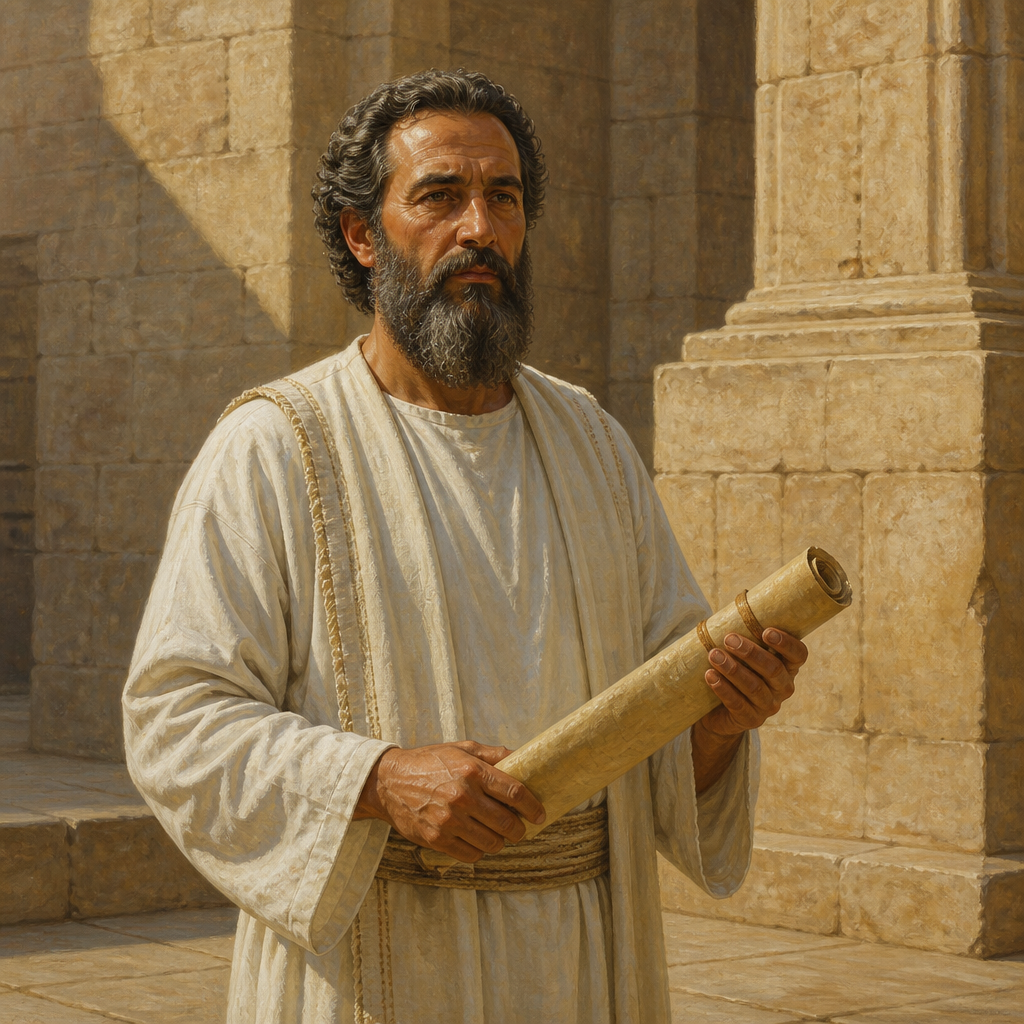
Meraiah
Contemporary priestly head of the family of Seraiah
Categories
Mentions by Book
- Nehemiah1
Others Named Hananiah
Hananiah, Son of Shashak1 Chronicles 8:24
A Benjamite leader and son of Shashak listed among the heads of households dwelling in Jerusalem during the Divided Monarchy.
Hananiah, Son of Zerubbabel1 Chronicles 3:19
Hananiah was a descendant of the royal line of David and a son of Zerubbabel, the governor of Judah during the restoration of the Jewish people after the exile.
Hananiah, Priest and TrumpeterNehemiah 12:41
A Jewish priest and musician who participated in the joyous dedication of the rebuilt walls of Jerusalem under Nehemiah.
Hananiah, a Leader of the PeopleNehemiah 10:23
A leader of the Jewish people during the post-exilic period who participated in the formal sealing of the covenant under Nehemiah.
Hananiah, Commander of the FortressNehemiah 7:2
A faithful official appointed by Nehemiah to govern Jerusalem during the post-exilic restoration due to his exceptional devotion and fear of God.
Hananiah, Father of ZedekiahJeremiah 36:12
Hananiah was a Judean official during the Divided Monarchy, best known as the father of Zedekiah, an official in the court of King Jehoiakim.
Hananiah, Son of the PerfumerNehemiah 3:8
A skilled laborer and son of a perfumer who assisted in the reconstruction and fortification of the Jerusalem wall as far as the Broad Wall during the post-exilic return.
Hananiah, Grandfather of IrijahJeremiah 37:13
A Judean man of the Divided Monarchy known as the grandfather of Irijah, the guard who arrested the prophet Jeremiah.
Hananiah, Friend of DanielDaniel 1:6
One of four Judean youths taken into Babylonian exile, known by the Babylonian name Shadrach, who survived the blazing fiery furnace.
Hananiah, Descendant of BebaiEzra 10:28
A Judean man of the post-exilic period who was among those instructed to dissolve foreign marriages according to the reforms of Ezra.
Hananiah, Royal Officer of Uzziah2 Chronicles 26:11
A high-ranking military official and royal officer who oversaw the mobilization of King Uzziah's divisions in the Kingdom of Judah.
Hananiah, Levite Musician of the Divided Monarchy1 Chronicles 25:4
Hananiah was a Levite musician and son of Heman who served as the leader of the sixteenth division of temple musicians during the reign of King David.
Hananiah, Prophet of GibeonJeremiah 28:1
A false prophet who opposed Jeremiah during the reign of Zedekiah by predicting a swift end to the Babylonian exile.
Hananiah, Son of ShelemiahNehemiah 3:30
A Judean laborer who assisted in the reconstruction of the walls of Jerusalem under the leadership of Nehemiah during the post-exilic return.