Hananiah, Prophet of Gibeon
A false prophet who opposed Jeremiah during the reign of Zedekiah by predicting a swift end to the Babylonian exile.
Hananiah, son of Azzur, was a prophet from Gibeon who rose to prominence during the critical final years of the Divided Monarchy, specifically during the reign of King Zedekiah of Judah (c. 597–586 BC). He is primarily known for his public confrontation with the prophet Jeremiah in the Temple at Jerusalem. While Jeremiah preached a message of submission to the Babylonian yoke as divine judgment, Hananiah offered a message of immediate national restoration, claiming that God would break the power of Nebuchadnezzar within two years.
Hananiah’s career serves as a stark biblical example of the conflict between true and false prophecy. His optimistic predictions were met with a severe divine response, leading to his sudden death just months after his confrontation with Jeremiah. His life is recorded exclusively in the book of Jeremiah, chapter 28, providing a snapshot of the intense political and spiritual tensions in Jerusalem before its final fall to Babylon.
Background and Family
Hananiah was the son of Azzur and hailed from Gibeon, a city approximately six miles north of Jerusalem. Gibeon was historically a priestly city (Joshua 21:17), which may suggest that Hananiah came from a background of religious or social standing. He is identified by the title "the prophet" (Jeremiah 28:1), indicating that he held a recognized public office or role within the Judean community during the Divided Monarchy.
He emerged onto the biblical stage in the fourth year of the reign of King Zedekiah, in the fifth month. This was a period of extreme geopolitical instability, as the Kingdom of Judah was a vassal to the Neo-Babylonian Empire. The populace was desperate for hope and liberation, creating a fertile environment for voices that promised a return to national sovereignty.
Major Life Events
The defining moment of Hananiah's life occurred in the house of the LORD in Jerusalem. In the presence of the priests and all the people, Hananiah delivered a bold prophecy in direct opposition to Jeremiah. He declared, “This is what the LORD says: ‘In this way, within two years I will break the yoke of Nebuchadnezzar king of Babylon off the neck of all the nations’” (Jeremiah 28:11). To further emphasize his message, Hananiah took a wooden yoke that Jeremiah was wearing—a symbolic representation of Babylonian servitude—and broke it.
Hananiah’s prophecy included the specific promise that Jeconiah (Jehoiachin), the exiled king of Judah, would be returned from Babylon along with all the temple vessels that had been looted. This message was highly popular and stood in contrast to Jeremiah’s warning that the exile would last seventy years. Jeremiah’s initial response was a cautious “Amen,” stating that he hoped Hananiah’s words would come true, but he reminded the people that the test of a prophet who prophesies peace is whether his word actually comes to pass.
Following Hananiah’s act of breaking the wooden yoke, the word of the LORD came to Jeremiah. God instructed Jeremiah to tell Hananiah that while he had broken a yoke of wood, he had fashioned in its place a yoke of iron. This signified that the Babylonian oppression would be far more inescapable than before because of the people's refusal to heed God's true word.
Relationship to Other Biblical Figures
Hananiah’s primary relationship in the biblical text is one of antagonism toward Jeremiah. While Jeremiah served as the voice of uncomfortable truth and divine judgment, Hananiah acted as his foil, representing the professional prophetic class that sought to please the royal court and the public. Jeremiah explicitly accused Hananiah of teaching rebellion against the LORD and persuading the people to trust in a lie (Jeremiah 28:15-16).
His interactions were not limited to Jeremiah; he spoke in the presence of the priests and the common people, wielding significant influence over the national mood. By publicly challenging Jeremiah, Hananiah likely bolstered the false confidence of King Zedekiah’s administration, contributing to the political decisions that eventually led to the destruction of Jerusalem in 586 BC.
Spiritual Significance
The account of Hananiah is a foundational study in the nature of false prophecy. His message was not characterized by a call to repentance or a recognition of Judah's spiritual failings; rather, it was a message of unconditional peace and nationalistic triumph. The Bible uses Hananiah to illustrate that a prophet’s popularity or the apparent "positivity" of their message is not a metric for divine truth.
The spiritual consequences for Hananiah were immediate and terminal. Because he had preached rebellion against the LORD, Jeremiah prophesied that Hananiah would die within the year. The text records that in the seventh month of that same year—only two months after his confrontation in the Temple—Hananiah died. His death served as a grim confirmation of Jeremiah’s authority and a warning against those who would speak falsely in the name of God.
Spiritual Significance
Hananiah represents the classic 'false prophet' who provides a message of comfort and peace when the divine word calls for repentance and submission to judgment. His life underscores the principle found in Deuteronomy 18:22—that the fulfillment of a prophecy is the ultimate test of its source. By predicting a two-year window for restoration, he placed himself in direct competition with the sovereign timeline of God, resulting in his swift removal from the scene.
His role in the narrative of Jeremiah serves to highlight the isolation of the true prophet. Hananiah’s ability to sway the crowd and even the priests demonstrates the danger of religious leaders who prioritize nationalistic fervor over spiritual obedience. His legacy is one of caution: he is the prophet who 'persuaded this people to trust in a lie,' leading them toward the very destruction he promised would not come.
Frequently Asked Questions
Where was Hananiah from?
Hananiah was from Gibeon, a town located in the territory of Benjamin, known for being a city assigned to the Levites.
What was the 'yoke' that Hananiah broke?
Jeremiah had been wearing a wooden yoke on his neck as a symbolic prophecy of Judah's coming submission to Babylon. Hananiah physically removed and broke this yoke to symbolize the breaking of Babylon's power.
How long did Hananiah say the exile would last?
Hananiah prophesied that God would break the yoke of Nebuchadnezzar and return the temple vessels and the king within two years.
How did Hananiah die?
Hananiah died of natural but divinely appointed causes in the seventh month of the same year he confronted Jeremiah, exactly as Jeremiah had predicted.
Who was Hananiah's father?
Hananiah was the son of Azzur.
Connected Figures
Jeremiah
Prophetic Rival
Zedekiah
King of Judah during his activity
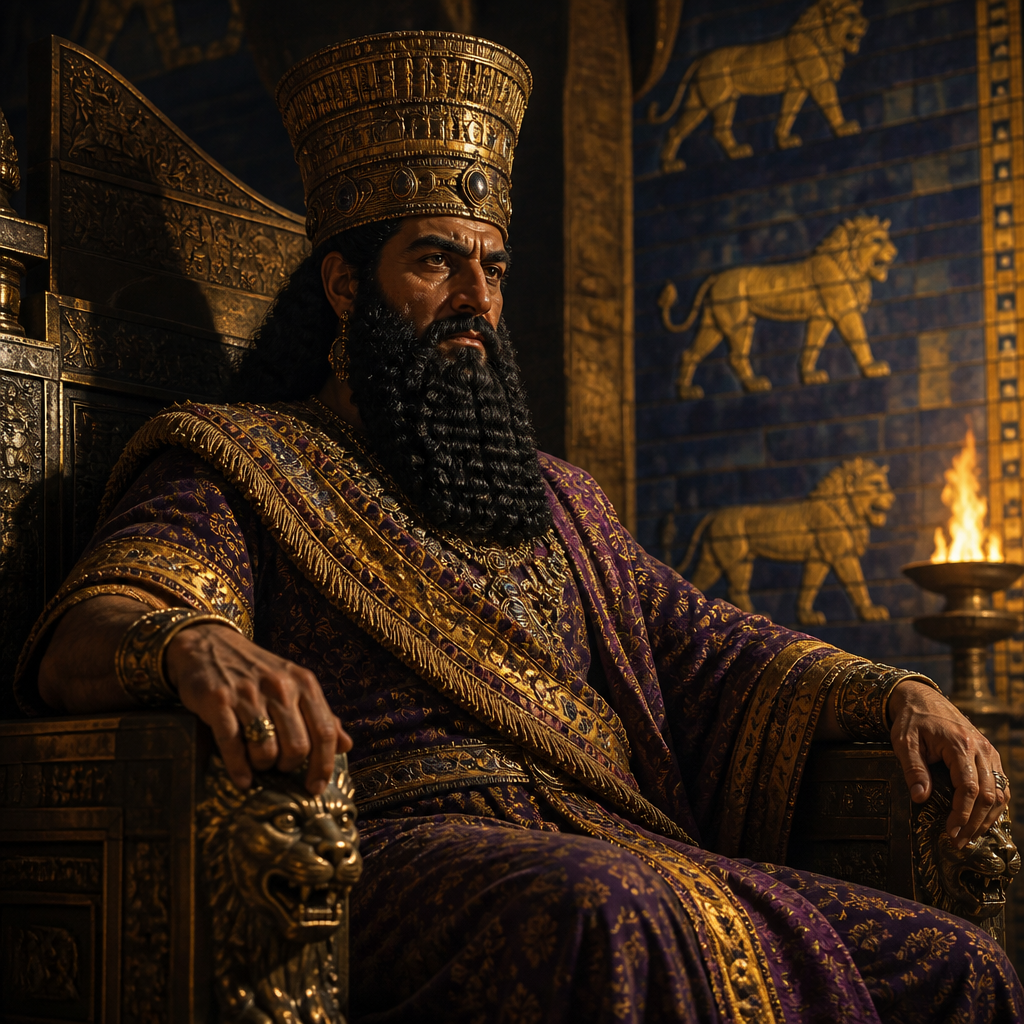
Nebuchadnezzar
King of Babylon mentioned in his prophecy
Azzur
Father
Categories
Mentions by Book
- Jeremiah8
Family & Relationships
Parent
Jeremiah 28:1
Others Named Hananiah
Hananiah, Son of Shashak1 Chronicles 8:24
A Benjamite leader and son of Shashak listed among the heads of households dwelling in Jerusalem during the Divided Monarchy.
Hananiah, Son of Zerubbabel1 Chronicles 3:19
Hananiah was a descendant of the royal line of David and a son of Zerubbabel, the governor of Judah during the restoration of the Jewish people after the exile.
Hananiah, Priest and TrumpeterNehemiah 12:41
A Jewish priest and musician who participated in the joyous dedication of the rebuilt walls of Jerusalem under Nehemiah.
Hananiah, a Leader of the PeopleNehemiah 10:23
A leader of the Jewish people during the post-exilic period who participated in the formal sealing of the covenant under Nehemiah.
Hananiah, Commander of the FortressNehemiah 7:2
A faithful official appointed by Nehemiah to govern Jerusalem during the post-exilic restoration due to his exceptional devotion and fear of God.
Hananiah, Father of ZedekiahJeremiah 36:12
Hananiah was a Judean official during the Divided Monarchy, best known as the father of Zedekiah, an official in the court of King Jehoiakim.
Hananiah, Priest under JoiakimNehemiah 12:12
A priestly head of the family of Jeremiah who served during the tenure of the High Priest Joiakim in post-exilic Jerusalem.
Hananiah, Son of the PerfumerNehemiah 3:8
A skilled laborer and son of a perfumer who assisted in the reconstruction and fortification of the Jerusalem wall as far as the Broad Wall during the post-exilic return.
Hananiah, Grandfather of IrijahJeremiah 37:13
A Judean man of the Divided Monarchy known as the grandfather of Irijah, the guard who arrested the prophet Jeremiah.
Hananiah, Friend of DanielDaniel 1:6
One of four Judean youths taken into Babylonian exile, known by the Babylonian name Shadrach, who survived the blazing fiery furnace.
Hananiah, Descendant of BebaiEzra 10:28
A Judean man of the post-exilic period who was among those instructed to dissolve foreign marriages according to the reforms of Ezra.
Hananiah, Royal Officer of Uzziah2 Chronicles 26:11
A high-ranking military official and royal officer who oversaw the mobilization of King Uzziah's divisions in the Kingdom of Judah.
Hananiah, Levite Musician of the Divided Monarchy1 Chronicles 25:4
Hananiah was a Levite musician and son of Heman who served as the leader of the sixteenth division of temple musicians during the reign of King David.
Hananiah, Son of ShelemiahNehemiah 3:30
A Judean laborer who assisted in the reconstruction of the walls of Jerusalem under the leadership of Nehemiah during the post-exilic return.