Hananiah, Priest and Trumpeter
A Jewish priest and musician who participated in the joyous dedication of the rebuilt walls of Jerusalem under Nehemiah.
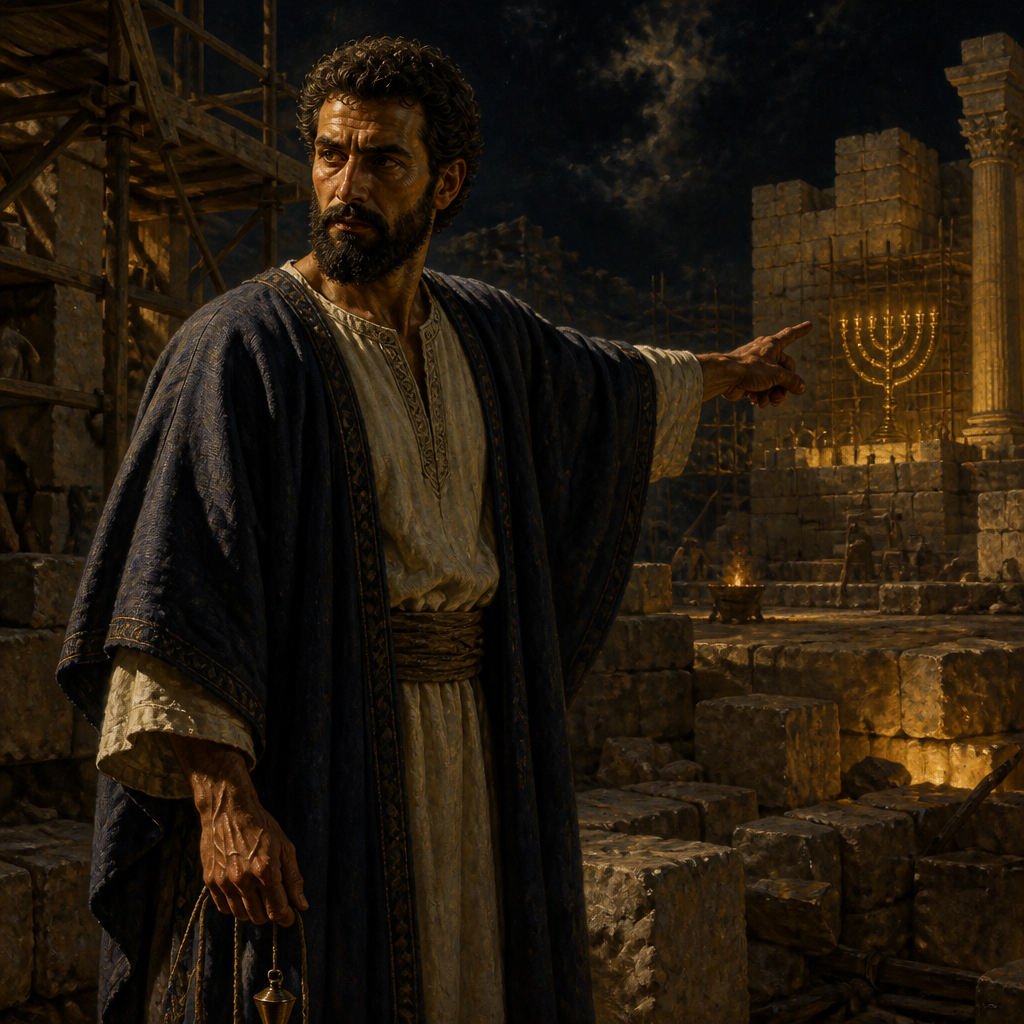
Hananiah was a member of the Aaronic priesthood who lived during the critical period of the Jewish return from Babylonian exile. He is specifically documented as one of the liturgical musicians—specifically a trumpeter—who participated in the grand ceremonial dedication of the walls of Jerusalem. This event served as the spiritual and political culmination of Nehemiah’s efforts to secure the holy city.
While the biblical record provides only a snapshot of his life, his inclusion in the list of priests highlights his active role in the restoration of the Temple cultus and the public worship of Yahweh. His service occurred at a time when the identity of the returning exiles was being solidified through the re-establishment of ancient rituals and the physical fortification of their ancestral capital.
Background and Family
The biblical record identifies Hananiah as a priest during the era of the Exile and Return. While his specific genealogy is not detailed in Nehemiah 12:41, his presence among the assembly of priests indicates his lineage traced back to Aaron, as was required for those serving in the sanctuary. He lived in the mid-5th century BC, a period characterized by the reconstruction of the Jewish community in Judah after decades of captivity in Babylon. As a priest, Hananiah would have been among those responsible for the spiritual instruction of the people and the maintenance of the sacrificial system, though his most prominent mention involves his musical contribution to the state.
Major Life Events
The single recorded event of Hananiah’s life is his participation in the dedication of the wall of Jerusalem. After Nehemiah successfully organized the people to rebuild the city's fortifications in just fifty-two days, he orchestrated a massive celebration to consecrate the structure. This was not merely a civic event but a profoundly religious one.
Nehemiah appointed two large thanksgiving choirs to give thanks. One went to the right on the wall toward the Dung Gate, while the other proceeded in the opposite direction. Hananiah is listed among the priests who carried trumpets during this processional (Nehemiah 12:41). The blowing of trumpets was a sacred duty, often used to signal the presence of God, the commencement of a festival, or a call to praise. Hananiah stood alongside other prominent priests of the era, including Eliakim, Maaseiah, Miniamin, Micaiah, Elioenai, and Zechariah, as they marched atop the newly completed walls, filling the air with sound that "was heard far away."
Relationship to Other Biblical Figures
Hananiah’s service was performed under the leadership of Nehemiah the governor and alongside the spiritual oversight of Ezra the scribe. The text lists him in a specific group of seven priests (excluding the choir leaders) who functioned as the primary instrumentalists for the southern processional. This grouping suggests a shared status and responsibility among these men, who together represented the continuity of the priesthood from the pre-exilic era into the restoration period.
Spiritual Significance
The presence of Hananiah in the biblical text, though brief, underscores the importance of the priesthood in the restoration of Israel. The dedication of the wall was an act of reclaiming the city as a holy site. By sounding the trumpet, Hananiah participated in the declaration that Jerusalem was once again under the protection and sovereignty of God. His role demonstrates that in the post-exilic community, the physical security of the city (the wall) and the spiritual vitality of the city (the priesthood and music) were inextricably linked. Hananiah represents the faithful remnant who returned to their homeland to offer their skills—whether in administration, construction, or music—to the service of the Lord.
Spiritual Significance
Hananiah represents the restoration of the liturgical order in Jerusalem. His role as a trumpeter in Nehemiah 12:41 is significant because it marks the fulfillment of the promise that the sounds of joy and worship would return to the streets of Jerusalem after the desolation of the exile. The use of the trumpet by priests like Hananiah was a scriptural mandate dating back to the Mosaic Law, symbolizing the re-establishment of the covenant relationship between God and His people in their own land.
Frequently Asked Questions
What was Hananiah’s role in the book of Nehemiah?
He was a priest who played the trumpet during the formal dedication ceremony of the rebuilt walls of Jerusalem.
What tools or instruments did Hananiah use?
According to Nehemiah 12:41, Hananiah used a trumpet (chatsotsrah), which was an instrument typically reserved for the priesthood.
When did Hananiah live?
He lived during the Post-Exilic Period, specifically during the time when Nehemiah was governor of Judah, around 445–430 BC.
Which tribe did Hananiah belong to?
As a priest, he belonged to the tribe of Levi and was a descendant of Aaron.
Connected Figures
Nehemiah
Governor and leader of the wall dedication
Eliakim
Fellow priest and trumpeter
Zechariah
Fellow priest and trumpeter
Categories
Mentions by Book
- Nehemiah1
Others Named Hananiah
Hananiah, Son of Shashak1 Chronicles 8:24
A Benjamite leader and son of Shashak listed among the heads of households dwelling in Jerusalem during the Divided Monarchy.
Hananiah, Son of Zerubbabel1 Chronicles 3:19
Hananiah was a descendant of the royal line of David and a son of Zerubbabel, the governor of Judah during the restoration of the Jewish people after the exile.
Hananiah, a Leader of the PeopleNehemiah 10:23
A leader of the Jewish people during the post-exilic period who participated in the formal sealing of the covenant under Nehemiah.
Hananiah, Commander of the FortressNehemiah 7:2
A faithful official appointed by Nehemiah to govern Jerusalem during the post-exilic restoration due to his exceptional devotion and fear of God.
Hananiah, Father of ZedekiahJeremiah 36:12
Hananiah was a Judean official during the Divided Monarchy, best known as the father of Zedekiah, an official in the court of King Jehoiakim.
Hananiah, Priest under JoiakimNehemiah 12:12
A priestly head of the family of Jeremiah who served during the tenure of the High Priest Joiakim in post-exilic Jerusalem.
Hananiah, Son of the PerfumerNehemiah 3:8
A skilled laborer and son of a perfumer who assisted in the reconstruction and fortification of the Jerusalem wall as far as the Broad Wall during the post-exilic return.
Hananiah, Grandfather of IrijahJeremiah 37:13
A Judean man of the Divided Monarchy known as the grandfather of Irijah, the guard who arrested the prophet Jeremiah.
Hananiah, Friend of DanielDaniel 1:6
One of four Judean youths taken into Babylonian exile, known by the Babylonian name Shadrach, who survived the blazing fiery furnace.
Hananiah, Descendant of BebaiEzra 10:28
A Judean man of the post-exilic period who was among those instructed to dissolve foreign marriages according to the reforms of Ezra.
Hananiah, Royal Officer of Uzziah2 Chronicles 26:11
A high-ranking military official and royal officer who oversaw the mobilization of King Uzziah's divisions in the Kingdom of Judah.
Hananiah, Levite Musician of the Divided Monarchy1 Chronicles 25:4
Hananiah was a Levite musician and son of Heman who served as the leader of the sixteenth division of temple musicians during the reign of King David.
Hananiah, Prophet of GibeonJeremiah 28:1
A false prophet who opposed Jeremiah during the reign of Zedekiah by predicting a swift end to the Babylonian exile.
Hananiah, Son of ShelemiahNehemiah 3:30
A Judean laborer who assisted in the reconstruction of the walls of Jerusalem under the leadership of Nehemiah during the post-exilic return.