Serah
Who was Serah in the Bible?
The daughter of Asher who is uniquely listed among the descendants of Jacob migrating to Egypt and again in the census taken on the plains of Moab.
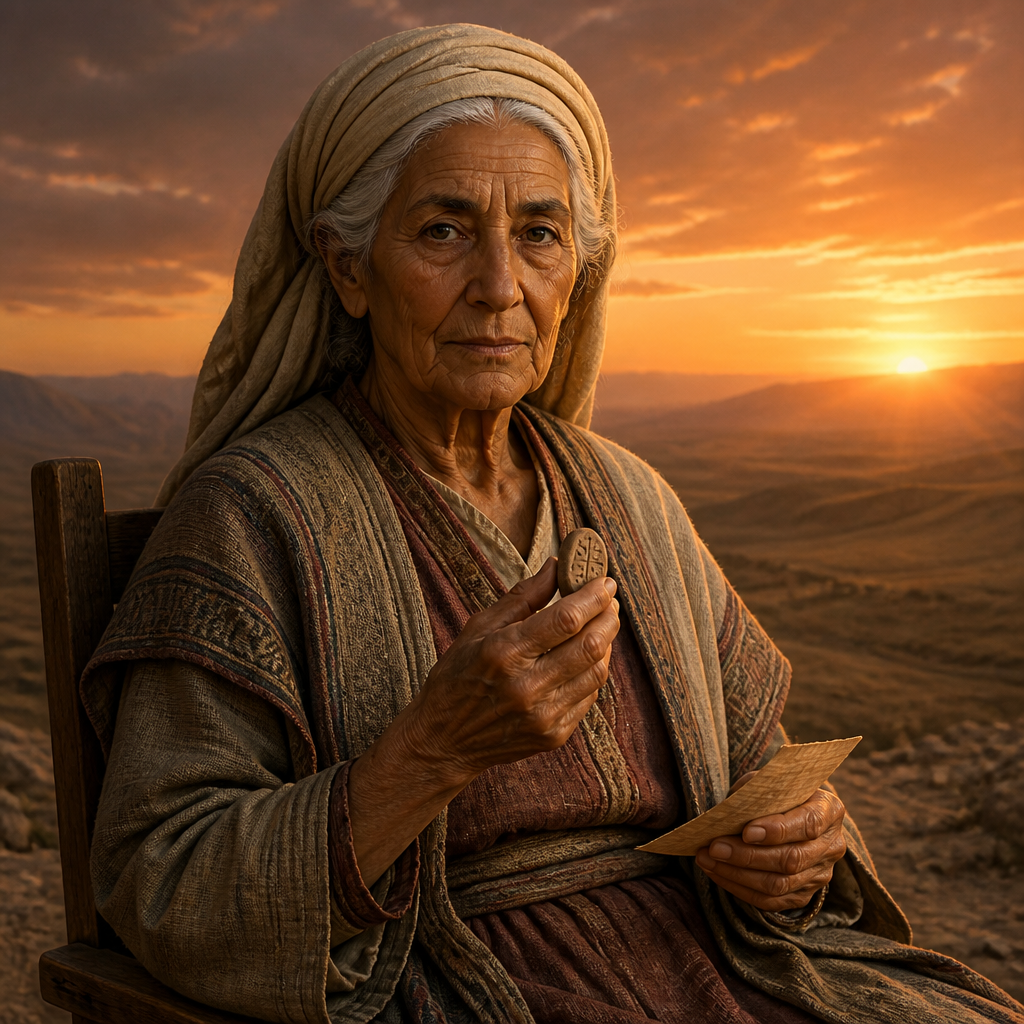
Serah was a prominent woman within the Tribe of Asher, identified specifically as the daughter of Asher and the sister of Imnah, Ishvah, Ishvi, and Beriah. Her inclusion in the biblical record is highly unusual for the patriarchal genealogical style of the Torah, as she is one of the very few women named in the lists of those who went down to Egypt with Jacob.
Her presence in the biblical narrative spans the two most critical demographic records of the early Israelite nation: the initial migration to Egypt and the final census before entering the Promised Land. This placement suggests she held a significant, though largely unvoiced, position within the tribal memory and structure of Asher during the long period of the Egyptian sojourn and the subsequent wilderness wanderings.
Background and Family
Serah was the daughter of Asher, making her a granddaughter of the patriarch Jacob and his wife Zilpah's handmaid, Leah. According to Genesis 46:17, she had four brothers: Imnah, Ishvah, Ishvi, and Beriah. The biblical record does not name her mother or any sisters, highlighting her unique status as a named female descendant. Her family was part of the seventy persons of the house of Jacob who migrated from Canaan to Egypt to escape a severe famine during the time when Joseph served as Vizier of Egypt.
Major Life Events
The biblical record identifies Serah in three specific instances. The first occurs in Genesis 46:17, where she is listed among the family members who entered Egypt (c. 1876 BC). The second mention is found in 1 Chronicles 7:30, which recapitulates the genealogy of Asher, reaffirming her place among his primary heirs.
The third and most striking mention is found in Numbers 26:46. During the census conducted by Moses and Eleazar the priest on the plains of Moab (c. 1406 BC), Serah is mentioned by name: "And the name of Asher’s daughter was Serah." This census was taken at the end of the forty years of wandering in the wilderness, just before the Israelites crossed the Jordan River into Canaan. The inclusion of her name here, centuries after the initial migration, has led scholars to note her extraordinary longevity or her significant status as a tribal matriarch whose name remained essential to the identity of the Asherite clans.
Relationship to Other Biblical Figures
Serah is defined primarily through her relationship to her father, Asher, and her brothers. She is uniquely positioned as a bridge between the generation that entered Egypt and the generation that prepared to leave the wilderness for the Promised Land. While the text does not record her having children or a husband, her name is preserved alongside the male heads of the clans of Asher, suggesting she may have held legal or social standing comparable to the male heirs of her tribe.
Spiritual Significance
In the context of the biblical text, Serah’s significance lies in her presence within the genealogies. The Torah rarely names daughters unless their inclusion is necessary for legal reasons (such as the daughters of Zelophehad) or to signal a point of historical importance. Serah’s name serves as a marker of continuity for the Tribe of Asher. Her mention in the final census of Numbers 26 highlights the faithfulness of God in preserving the families of Israel throughout the centuries of Egyptian bondage and the subsequent trials of the wilderness. She stands as a representative of the female line of the patriarchs, ensuring that the history of Asher was not recorded solely through its sons.
Serah's significance is primarily genealogical and structural. By being named in both the entry to Egypt and the census before entering Canaan, she represents the survival and continuity of the Israelite people. Her inclusion breaks the standard patriarchal pattern, signaling that she was a figure of enough importance that her name could not be omitted from the tribal record of Asher.
Theologically, her presence in the census of the new generation in Numbers 26 suggests a link to the original promise made to the patriarchs. She is a living or symbolic witness to the transition from a family of seventy individuals to a vast nation ready to inherit the land of Canaan.
Frequently Asked Questions
Who was Serah's father?
Serah was the daughter of Asher, one of the twelve sons of Jacob.
In which books of the Bible is Serah mentioned?
Serah is mentioned in three books: Genesis, Numbers, and 1 Chronicles.
Why is Serah significant in the Bible?
She is significant because she is one of the few women named in the genealogies of Israel, appearing both in the list of those who went to Egypt and in the census taken 430 years later.
Who were Serah's siblings?
Her recorded brothers were Imnah, Ishvah, Ishvi, and Beriah.
Did Serah enter the Promised Land?
The Bible mentions her in the census taken on the plains of Moab just before the entry into Canaan, but it does not explicitly record her death or her entry into the land.
Family & Relationships
Parents
 AsherFatherGenesis 46:17Stated
 SerahThis page
 Beriah, Son of AsherBrotherGenesis 46:17Stated
 Imnah, Son of AsherBrotherGenesis 46:17Stated
 IshvahBrotherGenesis 46:17Stated
 IshviBrotherGenesis 46:17Stated
Connected Figures
Family
Father · Genesis 46:17
Asher was the eighth son of Jacob, the second born to Zilpah, and the ancestral patriarch of the Tribe of Asher, known for the fertile lands and prosperity promised in his father's blessing.
PatriarchsFirst: Genesis 30:1315 versesPatriarchAsher
Brother · Genesis 46:17
A son of the patriarch Asher and founder of the Beriite clan, who traveled to Egypt with Jacob and established a prominent lineage within the Tribe of Asher.
Brother · Genesis 46:17
Imnah was the firstborn son of the patriarch Asher and the founder of the Imnite clan during the Egyptian sojourn and the Exodus.
Brother · Genesis 46:17
Ishvah was the second son of Asher and a grandson of the patriarch Jacob, identified as a member of the generation that entered Egypt.
Egypt and WildernessFirst: Genesis 46:172 versesNomadic pastoralistAsher
Brother · Genesis 46:17
Ishvi was a son of Asher, a grandson of Jacob, and the foundational ancestor of the Ishvite clan within the tribe of Asher.
Categories
Mentions by Book
- Genesis1
- Numbers1
- 1 Chronicles1
Scripture References
All 3 indexed verses, in canonical order, from the Berean Standard Bible.
Genesis · 1
- Genesis 46:17
The children of Asher: Imnah, Ishvah, Ishvi, Beriah, and their sister Serah. The sons of Beriah: Heber and Malchiel.
Numbers · 1
- Numbers 26:46
And the name of Asher’s daughter was Serah.
1 Chronicles · 1
- 1 Chronicles 7:30
The children of Asher: Imnah, Ishvah, Ishvi, Beriah, and their sister Serah.