Gideon
Who was Gideon in the Bible?
A reluctant judge and military leader of Israel who defeated the Midianites with a small band of three hundred men after seeking divine signs.
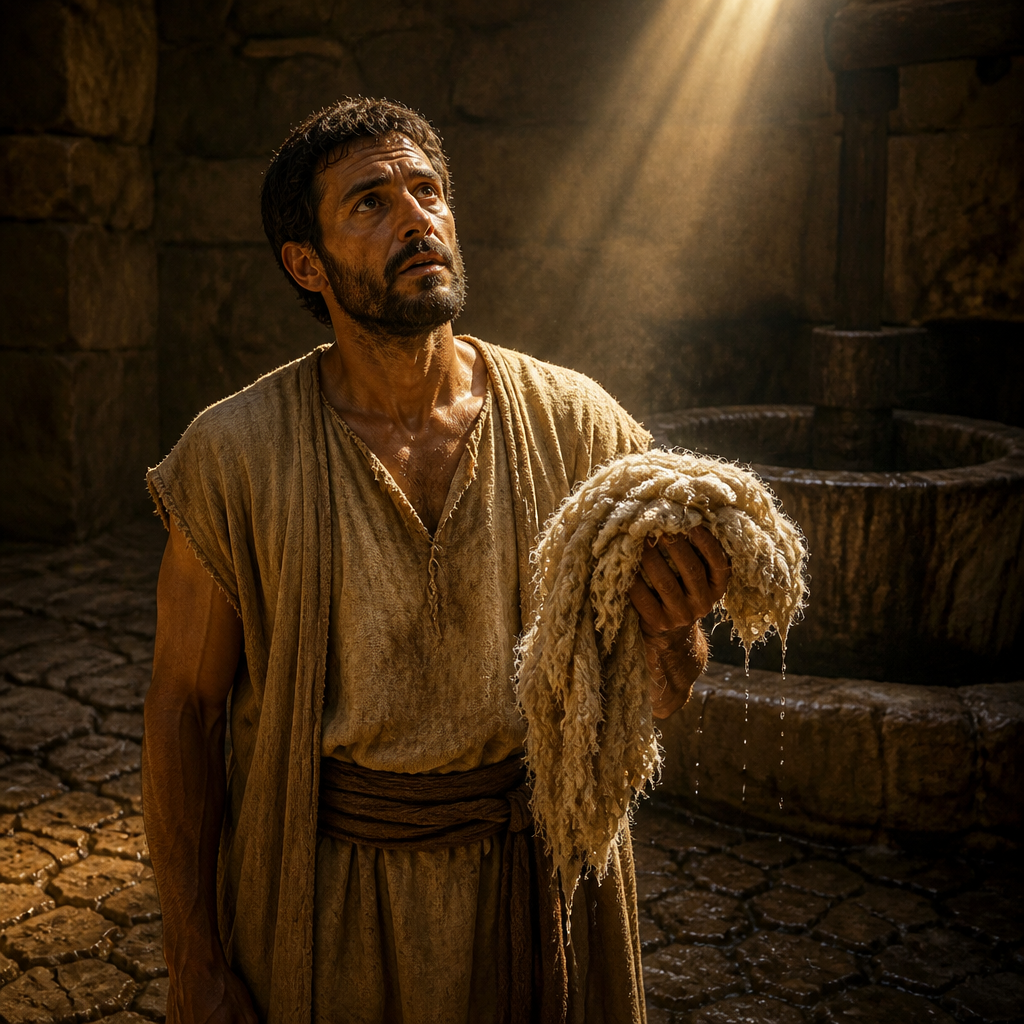
Gideon, also known as Jerubbaal, was a significant figure in the history of pre-monarchic Israel, serving as a judge during a period of severe oppression by the Midianites. His story, recorded primarily in the Book of Judges, begins with a divine encounter while he was hiding in a winepress to protect his harvest. Gideon is characterized by his initial hesitation and his repeated requests for signs from God to confirm his calling, most notably the miracle of the fleece.
Despite his initial fears, Gideon became a powerful instrument of deliverance for his people. He is famously credited with reducing his army from thousands to just three hundred men under divine instruction to ensure that the victory would be attributed to the LORD rather than human strength. His leadership brought forty years of peace to Israel, though his later years were marked by the creation of a controversial cultic object that became a snare to his family and the nation.
Background and Family
Gideon was the son of Joash the Abiezrite, residing in Ophrah. His family belonged to the tribe of Manasseh (implied by the Abiezrite lineage). At the time of his calling, Israel was under the heavy hand of Midian, who, along with the Amalekites and other eastern peoples, would ravage the land and destroy the crops. The biblical account introduces Gideon in a moment of vulnerability; he was threshing wheat in a winepress—a pit typically used for treading grapes—rather than on an open threshing floor, in a desperate attempt to hide the food from Midianite raiders (Judges 6:11).
Gideon’s family life was complex. He had many wives and fathered seventy sons. Among his named children were Jether, his firstborn; Jotham, his youngest; and Abimelech, a son born to his concubine in Shechem. His father, Joash, appears to have held some local influence, as he owned an altar to Baal and an Asherah pole, which Gideon was eventually commanded to destroy.
Major Life Events
The Call and the Fleece
Gideon’s public ministry began with an appearance by the angel of the LORD. When addressed as a "mighty warrior," Gideon responded with skepticism, questioning why Israel was suffering if God was truly with them. After offering a sacrifice that was miraculously consumed by fire, Gideon accepted his mission. His first act was a nighttime raid to tear down his father’s altar to Baal, earning him the name "Jerubbaal," meaning "Let Baal contend with him" (Judges 6:32).
To confirm his mandate to lead the army, Gideon famously put God to the test using a wool fleece. He first asked that the fleece be wet with dew while the ground remained dry, and then requested the reverse. God granted both signs, solidifying Gideon’s resolve to face the vast Midianite coalition.
The Victory of the Three Hundred
The military campaign at the Spring of Harod is one of the most distinctive tactical narratives in the Bible. Gideon initially gathered an army of 32,000 men. However, the LORD commanded him to reduce the force so that Israel could not boast in its own power. After dismissing those who were afraid and further sifting the group based on how they drank water from a stream, only three hundred men remained (Judges 7:4-7).
Gideon utilized psychological warfare and surprise. Equipped only with horns, jars, and torches, the small band surrounded the Midianite camp at night. Upon Gideon’s signal, they blew their horns and smashed the jars, revealing the torches and shouting, "A sword for the LORD and for Gideon!" The resulting chaos caused the Midianites to turn on one another and flee. Gideon then pursued the kings of Midian, Zebah and Zalmunna, eventually executing them after his son Jether hesitated to do so.
Later Years and the Ephod
Following the victory, the men of Israel attempted to establish a hereditary monarchy with Gideon as king. Gideon refused, stating, "The LORD shall rule over you" (Judges 8:23). However, he requested gold earrings from the plunder, which he used to fashion an ephod. This object was placed in Ophrah and eventually became an object of idolatrous worship for Israel and a "snare" to Gideon’s household. Despite this, the land enjoyed forty years of rest during his lifetime. Gideon died at a "ripe old age" and was buried in the tomb of his father.
Relationship to Other Biblical Figures
Gideon’s primary relationships were within his large household. His son Jotham is noted for his survival and his prophetic parable against Abimelech, Gideon's son by a concubine who would later attempt to seize power through the murder of his brothers. In the broader biblical canon, Gideon is remembered alongside other judges such as Barak, Jephthah, and Samson. In 1 Samuel 12:11, the prophet Samuel identifies Gideon (Jerubbaal) as one sent by God to deliver the nation. In the New Testament, Gideon is listed in the "Hall of Faith" in Hebrews 11:32 as one who, through faith, conquered kingdoms and gained strength out of weakness.
Spiritual Significance
Gideon’s narrative serves as a profound study in the relationship between human weakness and divine power. His constant need for reassurance (the fleece, the winepress, the overhearing of a Midianite’s dream) portrays him as an "everyman" figure rather than a naturally bold hero. His story emphasizes that God’s deliverance is not dependent on numerical superiority or innate courage, but on obedience to divine instruction. However, Gideon’s story also provides a cautionary tale regarding the dangers of syncretism. Even a leader who successfully deposes Baal can inadvertently create a new stumbling block for the people, illustrating the fragility of spiritual reform in the Period of the Judges.
Theologically, Gideon represents the concept of divine strength perfected in human weakness. His selection as a judge demonstrates that God often chooses the 'least' in a family or tribe to accomplish significant tasks. The reduction of his army to three hundred men remains a central biblical illustration of God’s sovereignty over military and political outcomes, ensuring that glory is directed toward the Creator rather than human agency.
Additionally, Gideon’s later failure with the gold ephod serves as a warning about the persistence of idolatry. Even after witnessing great miracles, the tendency toward self-made religion remained a constant threat to Israel's covenant relationship with God. His inclusion in Hebrews 11 affirms his status as a man of faith, despite his personal flaws and the eventual decline of his household following his death.
Frequently Asked Questions
Why was Gideon called Jerubbaal?
He was given the name Jerubbaal, which means 'Let Baal contend,' after he destroyed his father's altar to Baal. His father, Joash, defended him by saying that if Baal were really a god, he should be able to defend his own altar.
What was the significance of the fleece signs?
Gideon used the fleece of wool to ask God for physical proof of His promise. By making the fleece wet while the ground was dry, and then the ground wet while the fleece was dry, God confirmed that He would indeed save Israel by Gideon's hand.
How did Gideon choose his 300 soldiers?
Under God's direction, Gideon took his men to the water. Those who knelt to drink were sent home, while those who lapped water with their tongues like a dog—bringing the water to their mouths—were selected for the battle.
Did Gideon become a king?
No. When the Israelites offered him a hereditary monarchy, Gideon refused, declaring that only the LORD should rule over them. However, his son Abimelech later tried to claim kingship by force.
What happened to Gideon's sons?
Gideon had seventy sons. After his death, his son Abimelech murdered sixty-nine of them on a single stone to eliminate competition for power. Only the youngest, Jotham, escaped.
Family & Relationships
Parents
 Joash, Father of GideonFatherJudges 6:11Stated
 GideonThis page
Children
 Abimelech, Son of GideonSonJudges 9:1Stated
 Jether, Son of GideonSonJudges 8:20–21Stated
 Jotham, Son of GideonSonJudges 9:5Stated
Extended family
 Abiezer, Son of GileadAncestorJudges 6:11
Inferred
No verse names Gideon and Abiezer together; the ancestor link is carried from the surrounding genealogy and is not stated in Scripture.Evidence: Judges 6:11
Connected Figures
Family
Father · Judges 6:11
Joash was an Abiezrite patriarch and father of the judge Gideon, best known for his clever defense of his son against the devotees of Baal.
Conquest and JudgesFirst: Judges 6:118 versesPatriarchManasseh
Son · Judges 9:1
A son of Gideon who usurped power as a king in Shechem after murdering his brothers, only to die in battle when a woman dropped a millstone on his head.
Conquest and JudgesFirst: Judges 8:3139 versesSelf-proclaimed King of ShechemManasseh
Son · Judges 8:20–21
The eldest son of the judge Gideon who, as a youth, was commanded by his father to execute the Midianite kings Zebah and Zalmunna.
Conquest and JudgesFirst: Judges 8:204 versesSon of a JudgeManasseh
Son · Judges 9:5
The youngest of Gideon's seventy sons and the sole survivor of Abimelech's massacre, known for his prophetic parable against the leaders of Shechem.
Conquest and JudgesFirst: Judges 9:55 versesProphetic voice, sole survivor of the house of GideonManasseh
Ancestor · Judges 6:11
Abiezer was a descendant of Manasseh and the ancestral founder of the Abiezrite clan, notably producing the judge Gideon during the period of the Judges.
Categories
Mentions by Book
- Judges49
- 1 Samuel1
- 2 Samuel1
- Hebrews1
Scripture References
All 52 indexed verses, in canonical order, from the Berean Standard Bible.
- Judges 6:11
Then the angel of the LORD came and sat down under the oak in Ophrah that belonged to Joash the Abiezrite, where his son Gideon was threshing wheat in a winepress to hide it from the Midianites.
- Judges 6:12
And the angel of the LORD appeared to Gideon and said, “The LORD is with you, O mighty man of valor.”
Cited as a key verse; added so References, Key Verses and Mentions by Book share one index.
- Judges 6:13
“Please, my Lord,” Gideon replied, “if the LORD is with us, why has all this happened to us? And where are all His wonders of which our fathers told us, saying, ‘Has not the LORD brought us up out of Egypt?’ But now the LORD has forsaken us and delivered us into the hand of Midian.”
- Judges 6:19
So Gideon went in and prepared a young goat and unleavened bread and an ephah of flour. He placed the meat in a basket and the broth in a pot and brought them out to present to Him under the oak.
- Judges 6:22Partial
When Gideon realized that it was the angel of the LORD, he said, “Oh no, Lord GOD! I have seen the angel of the LORD face to face!”
- Judges 6:24
So Gideon built an altar to the LORD there and called it The LORD Is Peace. To this day it stands in Ophrah of the Abiezrites.
- Judges 6:27
So Gideon took ten of his servants and did as the LORD had told him. But because he was too afraid of his father’s household and the men of the city, he did it by night rather than in the daytime.
- Judges 6:29
“Who did this?” they said to one another. And after they had investigated thoroughly, they were told, “Gideon son of Joash did it.”
- Judges 6:32
So on that day Gideon was called Jerubbaal, that is to say, “Let Baal contend with him,” because he had torn down Baal’s altar.
- Judges 6:34
So the Spirit of the LORD came upon Gideon, who blew the ram’s horn and rallied the Abiezrites behind him.
- Judges 6:36
Then Gideon said to God, “If You are going to save Israel by my hand, as You have said,
- Judges 6:39
Then Gideon said to God, “Do not be angry with me; let me speak one more time. Please allow me one more test with the fleece. This time let it be dry, and the ground covered with dew.”
- Judges 7:1
Early in the morning Jerubbaal (that is, Gideon) and all the men with him camped beside the spring of Harod. And the camp of Midian was north of them in the valley near the hill of Moreh.
- Judges 7:2
Then the LORD said to Gideon, “You have too many men for Me to deliver Midian into their hands, lest Israel glorify themselves over Me, saying, ‘My own hand has saved me.’
- Judges 7:4
Then the LORD said to Gideon, “There are still too many men. Take them down to the water, and I will sift them for you there. If I say to you, ‘This one shall go with you,’ he shall go. But if I say, ‘This one shall not go with you,’ he shall not go.”
- Judges 7:5
So Gideon brought the men down to the water, and the LORD said to him, “Separate those who lap the water with their tongues like a dog from those who kneel to drink.”
- Judges 7:7
Then the LORD said to Gideon, “With the three hundred men who lapped the water I will save you and deliver the Midianites into your hand. But all the others are to go home.”
- Judges 7:13
And as Gideon arrived, a man was telling his friend about a dream. “Behold, I had a dream,” he said, “and I saw a loaf of barley bread come tumbling into the Midianite camp. It struck the tent so hard that the tent overturned and collapsed.”
- Judges 7:14
His friend replied: “This is nothing less than the sword of Gideon son of Joash, the Israelite. God has delivered Midian and the whole camp into his hand.”
- Judges 7:15
When Gideon heard the dream and its interpretation, he bowed in worship. He returned to the camp of Israel and said, “Get up, for the LORD has delivered the camp of Midian into your hand.”
- Judges 7:18
When I and all who are with me blow our horns, then you are also to blow your horns from all around the camp and shout, ‘For the LORD and for Gideon!’”
- Judges 7:19
Gideon and the hundred men with him reached the outskirts of the camp at the beginning of the middle watch, just after the changing of the guard. They blew their horns and broke the jars that were in their hands.
- Judges 7:20
The three companies blew their horns and shattered their jars. Holding the torches in their left hands and the horns in their right hands, they shouted, “A sword for the LORD and for Gideon!”
- Judges 7:24
Gideon sent messengers throughout the hill country of Ephraim to say, “Come down against the Midianites and seize the waters of the Jordan ahead of them as far as Beth-barah.” So all the men of Ephraim were called out, and they captured the waters of the Jordan as far as Beth-barah.
- Judges 7:25
They also captured Oreb and Zeeb, the two princes of Midian; and they killed Oreb at the rock of Oreb and Zeeb at the winepress of Zeeb. So they pursued the Midianites and brought the heads of Oreb and Zeeb to Gideon on the other side of the Jordan.
- Judges 8:4
Then Gideon and his three hundred men came to the Jordan and crossed it, exhausted yet still in pursuit.
- Judges 8:7
“Very well,” Gideon replied, “when the LORD has delivered Zebah and Zalmunna into my hand, I will tear your flesh with the thorns and briers of the wilderness!”
- Judges 8:11
And Gideon went up by way of the caravan route east of Nobah and Jogbehah, and he attacked their army, taking them by surprise.
- Judges 8:13
After this, Gideon son of Joash returned from the battle along the Ascent of Heres.
- Judges 8:20Partial
So he said to Jether, his firstborn, “Get up and kill them.” But the young man did not draw his sword; he was fearful because he was still a youth.
Cited as evidence on a family card; added so References, Key Verses and Mentions by Book share one index.
- Judges 8:21
Then Zebah and Zalmunna said, “Get up and kill us yourself, for as the man is, so is his strength.” So Gideon got up and killed Zebah and Zalmunna, and he took the crescent ornaments from the necks of their camels.
- Judges 8:22
Then the Israelites said to Gideon, “Rule over us—you and your son and grandson—for you have saved us from the hand of Midian.”
- Judges 8:23
But Gideon replied, “I will not rule over you, nor will my son. The LORD shall rule over you.”
- Judges 8:24
Then he added, “Let me make a request of you, that each of you give me an earring from his plunder.” (For the enemies had gold earrings because they were Ishmaelites.)
- Judges 8:27Partial
From all this Gideon made an ephod, which he placed in Ophrah, his hometown. But soon all Israel prostituted themselves by worshiping it there, and it became a snare to Gideon and his household.
- Judges 8:28
In this way Midian was subdued before the Israelites and did not raise its head again. So the land had rest for forty years in the days of Gideon,
- Judges 8:29
and he—Jerubbaal son of Joash—returned home and settled down.
- Judges 8:30
Gideon had seventy sons of his own, since he had many wives.
- Judges 8:32
Later, Gideon son of Joash died at a ripe old age and was buried in the tomb of his father Joash in Ophrah of the Abiezrites.
- Judges 8:33
And as soon as Gideon was dead, the Israelites turned and prostituted themselves with the Baals, and they set up Baal-berith as their god.
- Judges 8:35
They did not show kindness to the house of Jerubbaal (that is, Gideon) for all the good things he had done for Israel.
- Judges 9:1
Now Abimelech son of Jerubbaal went to his mother’s brothers at Shechem and said to them and to all the clan of his mother,
- Judges 9:2
“Please ask all the leaders of Shechem, ‘Is it better for you that seventy men, all the sons of Jerubbaal, rule over you, or just one man?’ Remember that I am your own flesh and blood.”
- Judges 9:5Partial
He went to his father’s house in Ophrah, and on one stone murdered his seventy brothers, the sons of Jerubbaal. But Jotham, the youngest son of Jerubbaal, survived, because he hid himself.
- Judges 9:16
Now if you have acted faithfully and honestly in making Abimelech king, if you have done well by Jerubbaal and his family, and if you have done to him as he deserves—
- Judges 9:19
if you have acted faithfully and honestly toward Jerubbaal and his house this day, then may you rejoice in Abimelech, and he in you.
- Judges 9:24
in order that the crime against the seventy sons of Jerubbaal might come to justice and their blood be avenged on their brother Abimelech and on the leaders of Shechem, who had helped him murder his brothers.
- Judges 9:28
Then Gaal son of Ebed said, “Who is Abimelech, and who is Shechem, that we should serve him? Is he not the son of Jerubbaal, and is not Zebul his officer? You are to serve the men of Hamor, the father of Shechem. Why should we serve Abimelech?
- Judges 9:57
And God also brought all the wickedness of the men of Shechem back upon their own heads. So the curse of Jotham son of Jerubbaal came upon them.
- 1 Samuel 12:11
So the LORD sent Jerubbaal, Barak, Jephthah, and Samuel, and He delivered you from the hands of your enemies on every side, and you dwelt securely.
- 2 Samuel 11:21
Who struck Abimelech son of Jerubbesheth? Was it not a woman who dropped an upper millstone on him from the wall, so that he died in Thebez? Why did you get so close to the wall?’ If he asks you this, then you are to say, ‘Your servant Uriah the Hittite is dead as well.’”
- Hebrews 11:32
And what more shall I say? Time will not allow me to tell of Gideon, Barak, Samson, Jephthah, David, Samuel, and the prophets,