Samson
Who was Samson in the Bible?
A judge of Israel endowed with supernatural strength by the LORD to initiate the deliverance of his people from Philistine oppression.
Samson is one of the most singular figures in the biblical narrative, serving as the final major judge mentioned in the Book of Judges. His life is characterized by a unique paradox: he was a man chosen by God from the womb and blessed with extraordinary physical power, yet he frequently struggled with personal impulsiveness and foreign entanglements. His strength was not inherent to his physique but was a direct manifestation of the Spirit of the LORD, tied to his status as a Nazirite.
Throughout his career, Samson did not lead a conventional army like Gideon or Deborah. Instead, he engaged in a series of personal vendettas and miraculous feats of strength that weakened the Philistine hegemony over Israel. His narrative concludes with a dramatic act of self-sacrifice that resulted in the deaths of thousands of Philistine leaders, fulfilling the divine promise that he would begin the work of saving Israel from their enemies.
Background and Family
The account of Samson begins with a divine intervention. His father, Manoah, was a man from the tribe of Dan, living in Zorah. Manoah’s wife was barren, but the Angel of the LORD appeared to her, announcing that she would conceive and bear a son. This child was to be a Nazirite from birth, meaning he was set apart for God’s service. According to the divine instructions, his hair was never to be cut, and his mother was to abstain from wine and unclean foods during her pregnancy. The boy was born and named Samson, and the text notes that as he grew, the LORD blessed him and the Spirit of the LORD began to stir within him (Judges 13:24).
Major Life Events
Samson’s adulthood was marked by a series of confrontations with the Philistines, often sparked by his attraction to Philistine women. His first major conflict arose when he sought to marry a woman from Timnah. On the way to visit her, he was attacked by a young lion, which he tore apart with his bare hands through the power of the Spirit. Later, finding honey in the lion’s carcass, he posed a riddle to thirty Philistine companions during his wedding feast. When the Philistines threatened his bride to obtain the answer, Samson’s anger led to a cycle of violence. He slew thirty men of Ashkelon to pay the debt of the riddle and later used three hundred foxes with torches tied to their tails to burn the Philistine grain fields after his wife was given to another man.
Following these events, the Philistines attempted to capture Samson at the rock of Etam. Though the men of Judah bound him to hand him over to their oppressors, Samson snapped the ropes and killed a thousand Philistines using only the fresh jawbone of a donkey. His prowess was further demonstrated in Gaza, where, after being surrounded by enemies, he tore the city gates from their posts and carried them to a hilltop overlooking Hebron.
Samson’s downfall came through his relationship with a woman named Delilah in the Valley of Sorek. The Philistine lords bribed her to discover the secret of his strength. After three failed attempts where Samson misled her, he finally revealed that his strength lay in his Nazirite vow, symbolized by his uncut hair. While he slept, Delilah had his seven braids shaved. The LORD departed from him, and the Philistines captured him, gouged out his eyes, and set him to work grinding grain in a prison in Gaza.
Relationship to Other Biblical Figures
Samson’s primary recorded relationships were familial or adversarial. His parents, Manoah and his wife, are depicted as faithful but often bewildered by their son's choices, particularly his insistence on marrying outside the covenant people. His interactions with the men of Judah reveal a period of profound national spiritual decay; rather than rallying behind their judge, the Israelites attempted to betray him to the Philistines to maintain a fragile peace. His most famous association, however, was with Delilah, whose betrayal led to his final imprisonment.
Spiritual Significance
The life of Samson serves as a complex illustration of God’s sovereignty. Despite Samson's personal failures and his disregard for the traditional boundaries of his Nazirite vow, God used him as a tool for judgment against the Philistines. His inclusion in the "Hall of Faith" in Hebrews 11:32 suggests that, despite his flaws, his ultimate reliance on God was recognized.
His final act is his most significant spiritual moment. Humiliated and blind, Samson was brought into the temple of Dagon to entertain the Philistine elite. He called out to the LORD for strength one last time, asking to be remembered. By pushing against the central pillars of the temple, he brought the structure down, killing himself along with approximately three thousand Philistines. The text concludes that he killed more in his death than he had during his life, effectively breaking the momentum of Philistine oppression and paving the way for future leaders like Samuel and David.
Samson represents the 'wild' aspect of the Spirit's work in the era of the Judges, where the Spirit of the LORD comes upon individuals to accomplish specific physical deliverances. Theologically, he serves as a warning against the squandering of divine gifts through lack of discipline, while simultaneously demonstrating that God's purposes for His people can still be accomplished through imperfect vessels. His story highlights the cost of compromise and the power of sincere repentance at the end of one's life.
In the New Testament, Samson is listed among the heroes of faith in Hebrews 11. This canonization of his legacy focuses not on his moral lapses, but on his role as a deliverer who, through faith, 'conquered kingdoms' and 'gained strength out of weakness.' His life mirrors the state of Israel during the period—chosen by God, yet frequently straying and suffering the consequences, only to be rescued through divine mercy when they called out in their distress.
Frequently Asked Questions
What was the source of Samson's strength?
Samson's strength was not natural, but was given by the Spirit of the LORD. It was tied to his Nazirite vow, specifically his uncut hair, which served as a sign of his consecration to God.
Who betrayed Samson to the Philistines?
Delilah betrayed Samson. After he finally revealed the secret of his strength to her, she had his hair shaved while he slept and alerted the Philistine lords.
How did Samson die?
Samson died when he pushed down the pillars of the Temple of Dagon in Gaza. The temple collapsed, killing Samson and about three thousand Philistines who were present.
What is a Nazirite?
A Nazirite was a person set apart for God under a special vow. Requirements included not cutting one's hair and abstaining from wine or anything made from grapes.
What riddle did Samson pose to the Philistines?
Samson's riddle was: 'Out of the eater came something to eat, and out of the strong came something sweet.' It referred to the honey he found inside the carcass of the lion he had killed.
Family & Relationships
Parents
 ManoahFatherJudges 16:31Stated
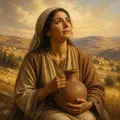 Samson's MotherMotherJudges 13:24Stated
 Samson's Timnite WifeWifeJudges 14:15Stated
 DelilahLoverJudges 16:4Stated
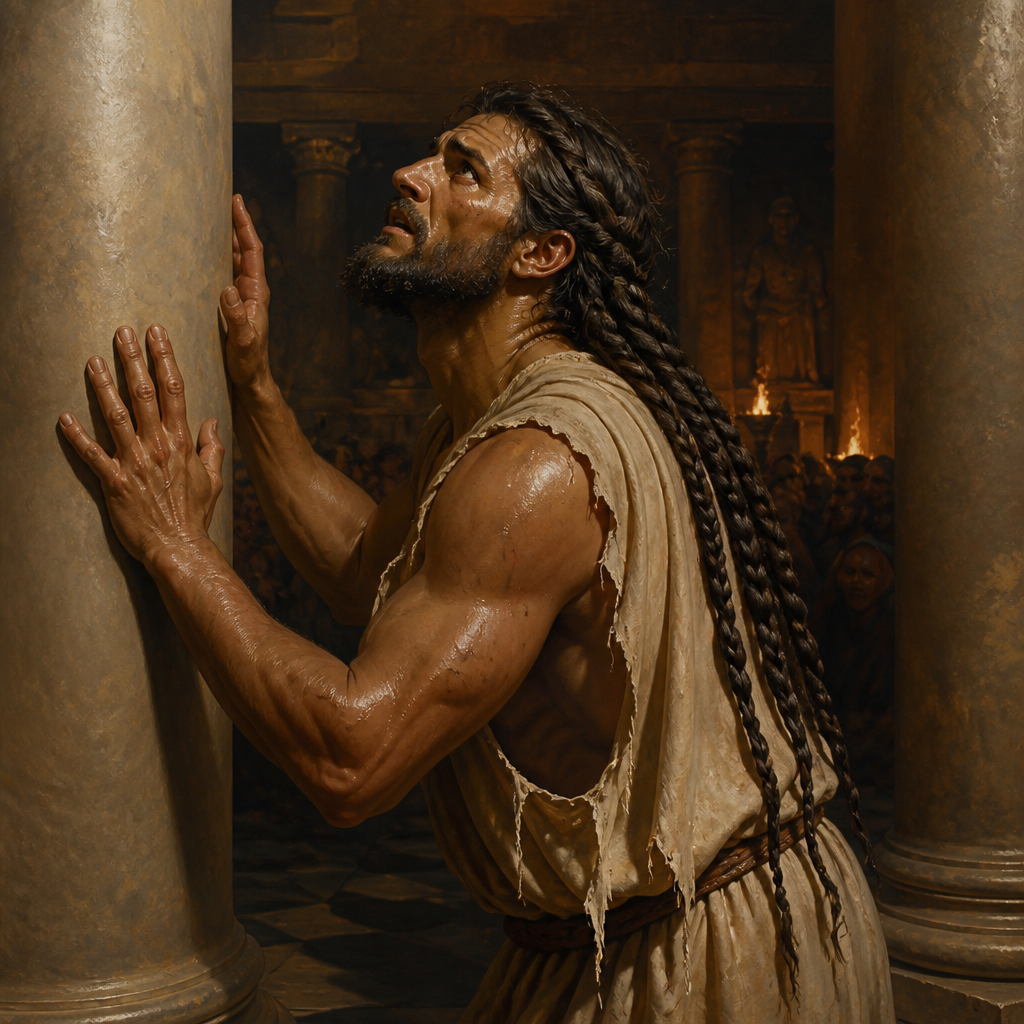 SamsonThis page
Connected Figures
Family
Father · Judges 16:31
A man of the tribe of Dan and the father of Samson, who received a divine visitation announcing the birth of a son who would begin to deliver Israel from the Philistines.
Conquest and JudgesFirst: Judges 13:214 versesPatriarchDan
Mother · Judges 13:24
The wife of Manoah and mother of Samson, she was an unnamed woman chosen by the Angel of the LORD to bear a child dedicated as a Nazirite for the deliverance of Israel.
Conquest and JudgesFirst: Judges 13:224 versesHomemakerDan
Wife · Judges 14:15
A Philistine woman from Timnah whose marriage to Samson sparked a cycle of violence between Israel and the Philistines during the Period of the Judges.
Associates
Lover · Judges 16:4
A woman from the Valley of Sorek who entered a relationship with Samson and ultimately discovered the secret of his strength for the Philistine lords.
Categories
Mentions by Book
- Judges39
- Hebrews1
Scripture References
All 40 indexed verses, in canonical order, from the Berean Standard Bible.
- Judges 13:24
So the woman gave birth to a son and named him Samson. The boy grew, and the LORD blessed him.
- Judges 14:1
One day Samson went down to Timnah, where he saw a young Philistine woman.
- Judges 14:3
But his father and mother replied, “Can’t you find a young woman among your relatives or among any of our people? Must you go to the uncircumcised Philistines to get a wife?” But Samson told his father, “Get her for me, for she is pleasing to my eyes.”
- Judges 14:5
Then Samson went down to Timnah with his father and mother and came to the vineyards of Timnah. Suddenly a young lion came roaring at him,
- Judges 14:7
Then Samson continued on his way down and spoke to the woman, because she was pleasing to his eyes.
- Judges 14:10
Then his father went to visit the woman, and Samson prepared a feast there, as was customary for the bridegroom.
- Judges 14:12
“Let me tell you a riddle,” Samson said to them. “If you can solve it for me within the seven days of the feast, I will give you thirty linen garments and thirty sets of clothes.
- Judges 14:15
So on the fourth day they said to Samson’s wife, “Entice your husband to explain the riddle to us, or we will burn you and your father’s household to death. Did you invite us here to rob us?”
- Judges 14:16
Then Samson’s wife came to him, weeping, and said, “You hate me! You do not really love me! You have posed to my people a riddle, but have not explained it to me.” “Look,” he said, “I have not even explained it to my father or mother, so why should I explain it to you?”
- Judges 14:20
and his wife was given to one of the men who had accompanied him.
- Judges 15:1
Later on, at the time of the wheat harvest, Samson took a young goat and went to visit his wife. “I want to go to my wife in her room,” he said. But her father would not let him enter.
- Judges 15:3
Samson said to them, “This time I will be blameless in doing harm to the Philistines.”
- Judges 15:4
Then Samson went out and caught three hundred foxes. And he took torches, turned the foxes tail-to-tail, and fastened a torch between each pair of tails.
- Judges 15:6
“Who did this?” the Philistines demanded. “It was Samson, the son-in-law of the Timnite,” they were told. “For his wife was given to his companion.” So the Philistines went up and burned her and her father to death.
- Judges 15:7
And Samson told them, “Because you have done this, I will not rest until I have taken vengeance upon you.”
- Judges 15:10
“Why have you attacked us?” said the men of Judah. The Philistines replied, “We have come to arrest Samson and pay him back for what he has done to us.”
- Judges 15:11
In response, three thousand men of Judah went to the cave at the rock of Etam, and they asked Samson, “Do you not realize that the Philistines rule over us? What have you done to us?” “I have done to them what they did to me,” he replied.
- Judges 15:12
But they said to him, “We have come down to arrest you and hand you over to the Philistines.” Samson replied, “Swear to me that you will not kill me yourselves.”
- Judges 15:16
Then Samson said: “With the jawbone of a donkey I have piled them into heaps. With the jawbone of a donkey I have slain a thousand men.”
- Judges 16:1
One day Samson went to Gaza, where he saw a prostitute and went in to spend the night with her.
- Judges 16:2
When the Gazites heard that Samson was there, they surrounded that place and lay in wait for him all night at the city gate. They were quiet throughout the night, saying, “Let us wait until dawn; then we will kill him.”
- Judges 16:3
But Samson lay there only until midnight, when he got up, took hold of the doors of the city gate and both gateposts, and pulled them out, bar and all. Then he put them on his shoulders and took them to the top of the mountain overlooking Hebron.
- Judges 16:4
Some time later, Samson fell in love with a woman in the Valley of Sorek, whose name was Delilah.
Cited as evidence on a family card; added so References, Key Verses and Mentions by Book share one index.
- Judges 16:6
So Delilah said to Samson, “Please tell me the source of your great strength and how you can be tied up and subdued.”
- Judges 16:7
Samson told her, “If they tie me up with seven fresh bowstrings that have not been dried, I will become as weak as any other man.”
- Judges 16:9
While the men were hidden in her room, she called out, “Samson, the Philistines are here!” But he snapped the bowstrings like a strand of yarn seared by a flame. So the source of his strength remained unknown.
- Judges 16:10
Then Delilah said to Samson, “You have mocked me and lied to me! Now please tell me how you can be tied up.”
- Judges 16:12
So Delilah took new ropes, tied him up with them, and called out, “Samson, the Philistines are here!” But while the men were hidden in her room, he snapped the ropes off his arms like they were threads.
- Judges 16:13
Then Delilah said to Samson, “You have mocked me and lied to me all along! Tell me how you can be tied up.” He told her, “If you weave the seven braids of my head into the web of a loom and tighten it with a pin, I will become as weak as any other man.”
- Judges 16:14
So while he slept, Delilah took the seven braids of his hair and wove them into the web. Then she tightened it with a pin and called to him, “Samson, the Philistines are here!” But he awoke from his sleep and pulled out the pin with the loom and the web.
- Judges 16:20
Then she called out, “Samson, the Philistines are here!” When Samson awoke from his sleep, he thought, “I will escape as I did before and shake myself free.” But he did not know that the LORD had departed from him.
- Judges 16:23
Now the lords of the Philistines gathered together to offer a great sacrifice to their god Dagon. They rejoiced and said, “Our god has delivered Samson our enemy into our hands.”
- Judges 16:25Partial
And while their hearts were merry, they said, “Call for Samson to entertain us.” So they called Samson out of the prison to entertain them. And they stationed him between the pillars.
- Judges 16:26
Samson said to the servant who held his hand, “Lead me where I can feel the pillars supporting the temple, so I can lean against them.”
- Judges 16:27
Now the temple was full of men and women; all the lords of the Philistines were there, and about three thousand men and women were on the roof watching Samson entertain them.
- Judges 16:28
Then Samson called out to the LORD: “O Lord GOD, please remember me. Strengthen me, O God, just once more, so that with one vengeful blow I may pay back the Philistines for my two eyes.”
- Judges 16:29
And Samson reached out for the two central pillars supporting the temple. Bracing himself against them with his right hand on one pillar and his left hand on the other,
- Judges 16:30
Samson said, “Let me die with the Philistines.” Then he pushed with all his might, and the temple fell on the lords and all the people in it. So in his death he killed more than he had killed in his life.
- Judges 16:31
Then Samson’s brothers and his father’s family came down, carried him back, and buried him between Zorah and Eshtaol in the tomb of his father Manoah. And he had judged Israel twenty years.
Cited as evidence on a family card; added so References, Key Verses and Mentions by Book share one index.
- Hebrews 11:32
And what more shall I say? Time will not allow me to tell of Gideon, Barak, Samson, Jephthah, David, Samuel, and the prophets,