Joash, Father of Gideon
Who was Joash, Father of Gideon, in the Bible?
Joash was an Abiezrite patriarch and father of the judge Gideon, best known for his clever defense of his son against the devotees of Baal.
This is one of 8 people named Joash in the Bible. See all 8 →
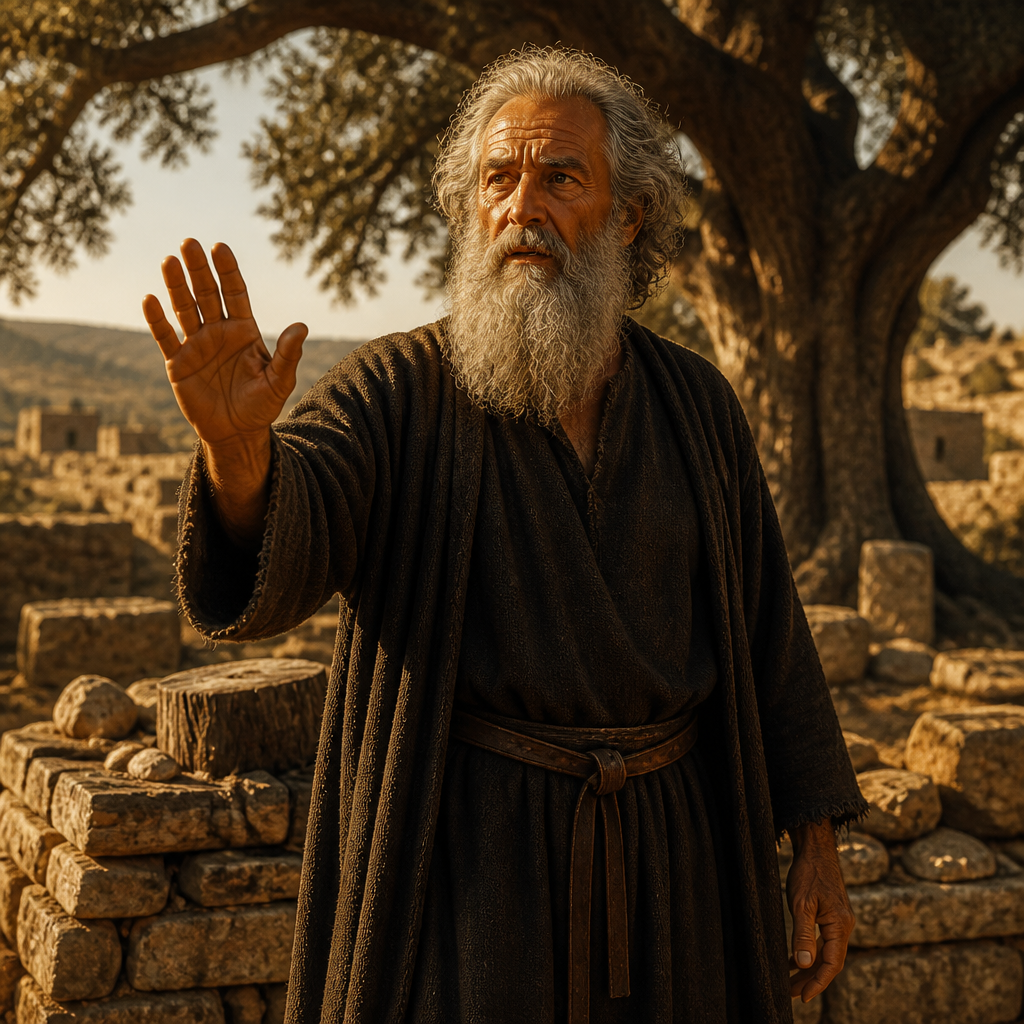
Joash, an Abiezrite of the tribe of Manasseh, is a significant patriarchal figure appearing in the Book of Judges during the era of Midianite oppression. Residing in Ophrah, he was a man of substantial local influence and property, evidenced by his ownership of a notable oak tree and an altar dedicated to the Canaanite deity Baal. His household served as the epicenter for the divine calling of his son, Gideon, who would eventually become a prominent judge of Israel.
Historically situated during the transition from tribal settlement to the period of the Judges, Joash represents the complex religious landscape of early Israel. His character is defined by a pivotal moment of domestic and spiritual crisis: when his son destroyed the community's pagan idols, Joash was forced to choose between local tradition and the protection of his family. His subsequent intervention not only saved Gideon's life but also challenged the perceived power of the Canaanite pantheon in a way that resonated throughout the region.
Background and Family
Joash was a member of the clan of Abiezer, which was a part of the tribe of Manasseh. He resided in Ophrah, a location historically associated with the northern central highlands of Israel. The biblical record establishes Joash as a man of means and status within his community. He is introduced in Judges 6:11 as the owner of a great oak tree where the Angel of the LORD appeared to his son, Gideon.
At the time of Joash's appearance in the narrative, Israel was suffering under severe oppression from the Midianites, who frequently raided the land and destroyed crops. The text suggests that Joash's household, like many in Israel at the time, had succumbed to syncretism. While identifying as Israelites, the family maintained a significant altar to Baal and an Asherah pole. The presence of these cultic objects on Joash’s property indicates that he may have served as a custodian of the local pagan shrine, reflecting the spiritual decay that preceded the rise of the judges.
Major Life Events
The Destruction of the Altar
The most critical event in the life of Joash occurred after his son Gideon, acting on divine command, destroyed the altar of Baal and the accompanying Asherah pole during the night. Gideon replaced these idols with an altar to Yahweh, sacrificing one of his father’s bulls upon it. When the men of the city discovered the destruction the following morning, they traced the act back to Gideon. A mob formed and confronted Joash, demanding that he surrender his son for execution to appease the offended deity.
The Defense of Gideon
In a moment of profound courage and logical wit, Joash refused to yield to the mob. Rather than debating the merits of the God of Israel, Joash utilized a pragmatic theological argument to silence his neighbors. He questioned why they felt the need to defend a god; if Baal were truly a god, he argued, he should be capable of defending himself.
"But Joash said to all who stood against him, ‘Are you contending for Baal? Are you trying to save him? Whoever pleads his case will be put to death by morning! If Baal is a god, let him contend for himself with the one who has torn down his altar.’" (Judges 6:31)
This response not only protected Gideon but also exposed the impotence of the idols the community worshipped. As a result of this encounter, Gideon was given the name Jerubbaal, meaning "Let Baal contend."
Relationship to Other Biblical Figures
Joash's primary biblical relationship is with his son, Gideon. While the narrative focuses on Gideon’s transformation from a fearful thresher of wheat into a mighty warrior, Joash provides the necessary social and paternal cover that allows Gideon to begin his mission. The text mentions that Gideon was "threshing wheat in a winepress" on Joash’s land to hide it from the Midianites, suggesting a shared struggle for survival within the family unit.
After Gideon’s successful military campaigns against the Midianites and his long period of leadership over Israel, the biblical record returns to the house of Joash one final time. Judges 8:32 notes that Gideon died at a "ripe old age" and was buried in the tomb of his father, Joash, in Ophrah. This mention of a family tomb further reinforces Joash’s status as a patriarch and a man of established lineage.
Spiritual Significance
Joash serves as a literary and spiritual foil to the surrounding culture. His story illustrates the power of a single individual to halt the momentum of a mob through reason and faith. While Joash began as a man who allowed pagan worship on his property, his decisive action to side with his son and challenge the power of Baal marks a turning point in the narrative of Judges. He represents the potential for repentance and the reclamation of Israelite identity from the encroaching influence of Canaanite religion. By mocking the helplessness of Baal, Joash cleared the path for the restoration of Yahwistic worship in his household and, eventually, his nation.
Theologically, Joash is significant for his role in the 'polemic against idols.' His argument—that a true god should not require human defense—remains one of the most succinct critiques of idolatry in the Old Testament. He stands as a transitional figure who bridges the gap between a compromised, oppressed Israel and an Israel led by a divinely appointed judge. His protection of Gideon was essential for the survival of the man who would eventually deliver the nation from Midianite rule.
Furthermore, Joash’s involvement in the naming of Jerubbaal serves as a lasting testimony to the victory of Yahweh over Baal. By refusing to punish his son for an act of religious iconoclasm, Joash effectively sanctioned the religious reformation of his household. His burial in a family tomb at the end of the narrative signifies the restoration of order and the honoring of the patriarchal line within the tribe of Manasseh.
Frequently Asked Questions
Was Joash a worshipper of Baal?
The Bible indicates that Joash had an altar to Baal and an Asherah pole on his property, suggesting he participated in or facilitated the pagan worship common in Israel at that time. However, he ultimately defended his son's destruction of these idols.
How did Joash save Gideon's life?
When the men of the city demanded Gideon's death for destroying the altar of Baal, Joash challenged them, arguing that if Baal were a real god, he could defend himself. This logic successfully silenced the mob.
What tribe did Joash belong to?
Joash was an Abiezrite, which was a clan within the tribe of Manasseh.
What is the meaning of the name Jerubbaal?
It means 'Let Baal contend.' Joash gave this name to Gideon after the destruction of the altar, challenging the idol to take action against the one who destroyed its shrine.
Where was Joash buried?
Joash was buried in a family tomb in Ophrah of the Abiezrites, where his son Gideon was later buried alongside him.
Family & Relationships
 Joash, Father of GideonThis page
Children
 GideonSonJudges 6:11Stated
Connected Figures
Family
Son · Judges 6:11
A reluctant judge and military leader of Israel who defeated the Midianites with a small band of three hundred men after seeking divine signs.
Conquest and JudgesFirst: Judges 6:1152 versesJudge and Military LeaderManasseh
Categories
Mentions by Book
- Judges8
Scripture References
All 8 indexed verses, in canonical order, from the Berean Standard Bible.
Judges · 8
- Judges 6:11
Then the angel of the LORD came and sat down under the oak in Ophrah that belonged to Joash the Abiezrite, where his son Gideon was threshing wheat in a winepress to hide it from the Midianites.
- Judges 6:29
“Who did this?” they said to one another. And after they had investigated thoroughly, they were told, “Gideon son of Joash did it.”
- Judges 6:30
Then the men of the city said to Joash, “Bring out your son. He must die, because he has torn down Baal’s altar and cut down the Asherah pole beside it.”
- Judges 6:31
But Joash said to all who stood against him, “Are you contending for Baal? Are you trying to save him? Whoever pleads his case will be put to death by morning! If Baal is a god, let him contend for himself with the one who has torn down his altar.”
- Judges 7:14
His friend replied: “This is nothing less than the sword of Gideon son of Joash, the Israelite. God has delivered Midian and the whole camp into his hand.”
- Judges 8:13
After this, Gideon son of Joash returned from the battle along the Ascent of Heres.
- Judges 8:29
and he—Jerubbaal son of Joash—returned home and settled down.
- Judges 8:32Partial
Later, Gideon son of Joash died at a ripe old age and was buried in the tomb of his father Joash in Ophrah of the Abiezrites.
Others Named Joash
Compare all 8 bearers →Joash, Official of David1 Chronicles 27:28
An administrative official in King David's government responsible for managing the kingdom's stores of olive oil.
Joash, Son of Ahab1 Kings 22:26
A prince of the Northern Kingdom of Israel and son of King Ahab who held custodial authority over political prisoners during his father's reign.
Joash, Son of Shelah1 Chronicles 4:22
A descendant of Judah through Shelah who achieved dominion in the region of Moab during the era of the Egyptian sojourn and early wilderness records.
Joash, King of Israel2 Kings 13:9
The twelfth king of the Northern Kingdom of Israel, Joash was a military leader who defeated the Arameans three times and successfully conquered Jerusalem during a conflict with Judah.
Joash, Son of Becher1 Chronicles 7:8
Joash was a son of Becher and a grandson of the patriarch Benjamin, recorded as a tribal leader and head of a father's house during the Egyptian sojourn.
Joash, Son of Shemaah the Gibeathite1 Chronicles 12:3
A Benjamite warrior and son of Shemaah the Gibeathite who joined David’s forces at Ziklag during the United Monarchy.
Joash, King of Judah2 Kings 11:2
The lone survivor of a royal massacre, Joash was hidden in the Temple for six years before becoming the seventh king of Judah, initially reigning with piety before a tragic moral decline.