Mallothi
Who was Mallothi in the Bible?
Mallothi was a Levite musician and son of Heman the king's seer, appointed to lead the nineteenth division of sanctuary singers during the United Monarchy.
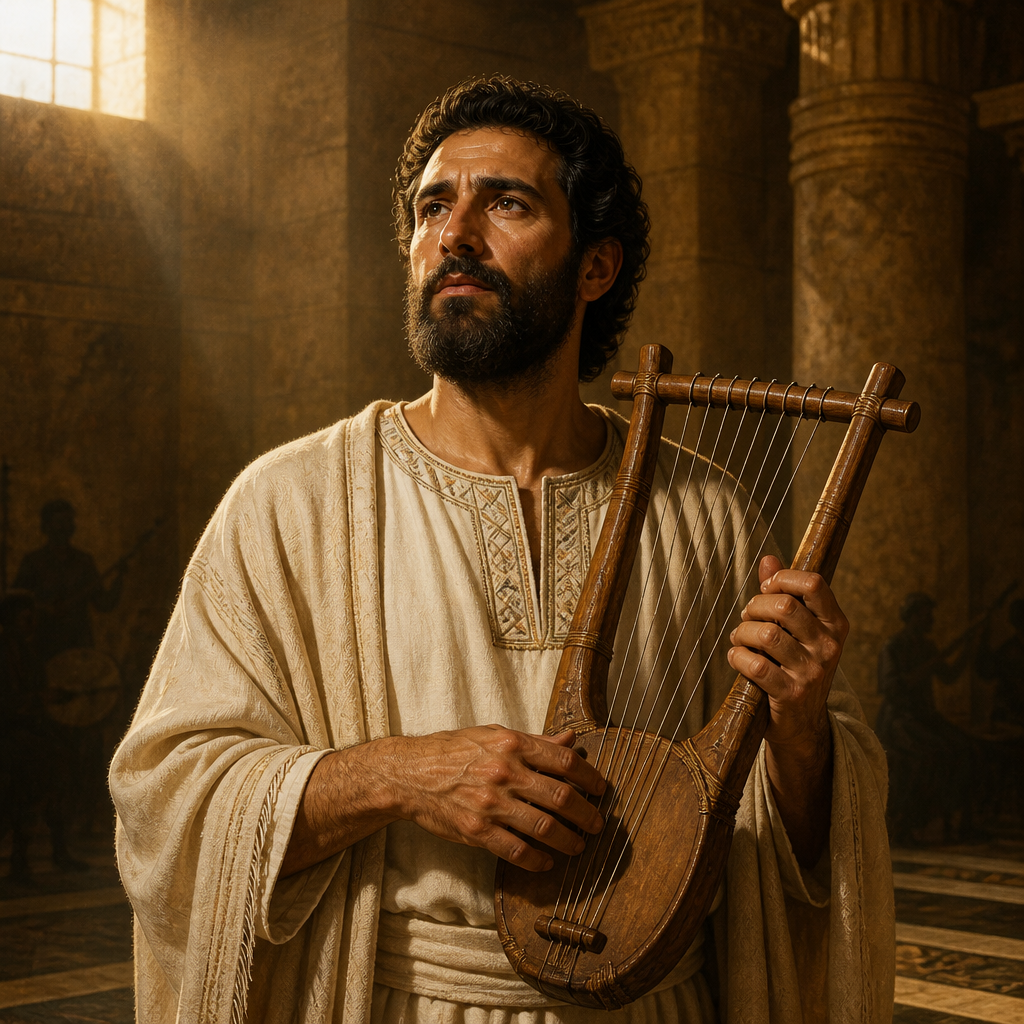
Mallothi was a member of the tribe of Levi who served as a prominent musician in the Jerusalem Temple during the era of the United Monarchy. As one of the fourteen sons of Heman, the king’s seer, Mallothi was part of a lineage specifically set apart by King David to facilitate the ministry of music and prophecy within the house of the LORD. His inclusion in the biblical record underscores the highly organized nature of Hebrew worship and the hereditary responsibilities of the Levites.
His role was formalized through the casting of lots, a practice used to ensure that the various duties of the sanctuary were distributed fairly and according to divine will. Mallothi was designated as the leader of the nineteenth of twenty-four musical divisions. In this capacity, he oversaw a group of twelve skilled musicians consisting of his own sons and brothers, contributing to the continuous cycle of praise and liturgical service that characterized the spiritual life of Israel.
Background and Family
Mallothi was a descendant of Levi, the son of Jacob, placing him within the priestly caste of Israel. Specifically, he was the son of Heman, who is identified in 1 Chronicles 25:5 as the “king’s seer in the matters of God.” Heman, along with Asaph and Jeduthun, was one of the three primary musical directors appointed by King David to oversee the sanctuary music.
Mallothi was part of a large and musically gifted family. The biblical text notes that God gave Heman fourteen sons and three daughters to exalt his horn, a metaphor for strengthening his house and status. Mallothi’s brothers included Bukkiah, Mattaniah, Uzziel, Shebuel, Jerimoth, Hananiah, Hanani, Eliathah, Giddalti, Romamti-ezer, Joshbekashah, Hothir, and Mahazioth. This specific grouping of brothers is noteworthy in the biblical text as they were all under the direct supervision of their father for the service of the house of the LORD.
Major Life Events
The primary event recorded in the life of Mallothi is his appointment to a leadership role in the Temple's musical rotation. As King David reached the end of his life, he organized the Levites, priests, and musicians into divisions to ensure the stability of the cultic worship in the future Temple to be built by Solomon.
According to 1 Chronicles 25, the musicians were divided by lot. Mallothi was selected for the nineteenth lot. The scripture states: “the nineteenth to Mallothi, his sons, and his brothers—12 in all” (1 Chronicles 25:26). This indicates that Mallothi acted as a choirmaster or ensemble leader, responsible for a specific cohort of twelve men. This structure ensured that the musical service of the Temple remained professional, disciplined, and perpetual.
Relationship to Other Biblical Figures
Mallothi’s most significant relationship was to his father, Heman. Heman was not only a musician but a seer, suggesting that the music Mallothi participated in was closely linked to prophetic utterance. He also served alongside his thirteen brothers, who each led their own respective divisions of twelve. This created a massive, coordinated guild of 288 trained musicians (24 divisions of 12) who were all “instructed in the songs of the LORD” and were “all skillful” (1 Chronicles 25:7).
Spiritual Significance
The life of Mallothi represents the biblical principle of service and order. While his individual biographical details are sparse, his inclusion in the sacred genealogies highlights the importance of every individual’s role in the communal worship of God. Mallothi did not serve alone; he served within a family unit and a larger tribal structure.
Furthermore, the names of Heman’s sons, including Mallothi, have been noted by some scholars for their potential meaning when read together in Hebrew, possibly forming a liturgical prayer. However, within the direct biblical context, Mallothi stands as a representative of the “skillful” servant—one who is trained, appointed by God, and dedicated to the ministry of praise. His role in the nineteenth division ensured that the “sacrifice of praise” was offered continually in the sanctuary, bridging the gap between the era of David and the long history of the United Monarchy.
Mallothi is significant as a representative of the formalization of Hebrew worship. His role demonstrates that music in the biblical tradition was not merely spontaneous but was a disciplined, professional, and hereditary ministry. By being chosen by lot, Mallothi's service was viewed as a divine appointment, validating the structure of the Levite musical guilds.
His presence in the text also reinforces the fulfillment of God's promise to Heman, the king's seer. The specific mention of Mallothi and his twelve kinsmen in the nineteenth division illustrates the meticulous record-keeping of the chronicler, emphasizing that God values the specific contributions of individuals within the larger assembly of Israel.
Frequently Asked Questions
Who was Mallothi's father?
Mallothi was the son of Heman the Singer, who was also known as the king's seer.
What was Mallothi's specific role in the Temple?
He was the leader of the nineteenth division of musicians, overseeing a group of twelve singers and instrumentalists.
Which tribe did Mallothi belong to?
Mallothi belonged to the Tribe of Levi, the tribe set apart for religious and sanctuary service.
How many brothers did Mallothi have?
Mallothi had thirteen brothers who were also appointed as leaders of musical divisions.
Where is Mallothi mentioned in the Bible?
Mallothi is mentioned in the genealogy and musical appointments of 1 Chronicles 25:4 and 1 Chronicles 25:26.
Family & Relationships
Parents
 Heman the SingerFather1 Chronicles 25:4Stated
 MallothiThis page
 BukkiahBrother1 Chronicles 25:4Stated
 EliathahBrother1 Chronicles 25:4Stated
 GiddaltiBrother1 Chronicles 25:4Stated
 Hanani, Musician of the United MonarchyBrother1 Chronicles 25:4Stated
 Hananiah, Levite Musician of the United MonarchyBrother1 Chronicles 25:4Stated
 HothirBrother1 Chronicles 25:4Stated
 Jerimoth, Levite Musician of the United MonarchyBrother1 Chronicles 25:4Stated
 JoshbekashahBrother1 Chronicles 25:4Stated
 MahaziothBrother1 Chronicles 25:4Stated
 Mattaniah, Son of Heman the SingerBrother1 Chronicles 25:4Stated
 Romamti-ezerBrother1 Chronicles 25:4Stated
 Shebuel, Son of Heman the SingerBrother1 Chronicles 25:4Stated
 Uzziel, Son of Heman the SingerBrother1 Chronicles 25:4Stated
Connected Figures
Family
Father · 1 Chronicles 25:4
A prominent Levite singer, musician, and king's seer during the United Monarchy, appointed by David to lead the worship in the house of the LORD.
United MonarchyFirst: 1 Chronicles 6:3311 versesMusician, Singer, King's SeerLevi
Brother · 1 Chronicles 25:4
A Levite musician and son of Heman the Singer who was appointed by King David to lead the sixth division of temple musicians.
United MonarchyFirst: 1 Chronicles 25:42 versesLevite musician and division leaderLevi
Brother · 1 Chronicles 25:4
A Levite musician and son of Heman the Singer who served in the temple during the reign of King David.
United MonarchyFirst: 1 Chronicles 25:42 versesLevitical MusicianLevi
Brother · 1 Chronicles 25:4
A Levite musician and son of Heman the king's seer, appointed by lot to lead the twenty-second division of temple musicians during the reign of King David.
United MonarchyFirst: 1 Chronicles 25:43 versesMusician and Levitical leaderLevi
Brother · 1 Chronicles 25:4
A Levite musician and son of Heman the Singer who served in the temple under King David's organized worship system.
United MonarchyFirst: 1 Chronicles 25:42 versesLevite MusicianLevi
Brother · 1 Chronicles 25:4
Hananiah was a Levite musician and son of Heman who served as the leader of the sixteenth division of temple musicians during the reign of King David.
United MonarchyFirst: 1 Chronicles 25:42 versesMusician and Leader of the 16th DivisionLevi
Brother · 1 Chronicles 25:4
A Levite musician and son of Heman the Singer who served in the temple worship during the reign of King David in the United Monarchy era.
United MonarchyFirst: 1 Chronicles 25:42 versesLevite MusicianLevi
Brother · 1 Chronicles 25:4
A Levite musician and son of Heman the king's seer, Jerimoth was chosen by lot to lead the fifteenth division of musicians in the temple during the reign of King David.
United MonarchyFirst: 1 Chronicles 25:42 versesLevite Musician and Division LeaderLevi
Brother · 1 Chronicles 25:4
A Levite musician and son of Heman the king's seer, appointed by King David to lead the seventeenth division of sanctuary singers.
United MonarchyFirst: 1 Chronicles 25:42 versesLevite MusicianLevi
Brother · 1 Chronicles 25:4
A Levite musician and son of Heman the king's seer, appointed by lot to lead the twenty-third division of temple music during the reign of King David.
United MonarchyFirst: 1 Chronicles 25:42 versesLevite Musician and Division LeaderLevi
Brother · 1 Chronicles 25:4
A Levite musician and son of Heman the King's Seer, Mattaniah served in the sanctuary as a leader of the ninth musical division during the United Monarchy.
United MonarchyFirst: 1 Chronicles 25:42 versesLevite Musician and LeaderLevi
Brother · 1 Chronicles 25:4
A Levite musician and son of Heman the Singer who served in the temple during the reign of King David and led the twenty-fourth division of sanctuary music.
United MonarchyFirst: 1 Chronicles 25:42 versesLevite Musician and Division LeaderLevi
Mentions by Book
- 1 Chronicles2
Scripture References
All 2 indexed verses, in canonical order, from the Berean Standard Bible.
1 Chronicles · 2
- 1 Chronicles 25:4
From the sons of Heman: Bukkiah, Mattaniah, Uzziel, Shebuel, Jerimoth, Hananiah, Hanani, Eliathah, Giddalti, Romamti-ezer, Joshbekashah, Mallothi, Hothir, and Mahazioth.
- 1 Chronicles 25:26
the nineteenth to Mallothi, his sons, and his brothers—12 in all;