Joshbekashah
Who was Joshbekashah in the Bible?
A Levite musician and son of Heman the king's seer, appointed by King David to lead the seventeenth division of sanctuary singers.
Joshbekashah was a Levite official and musician who served during the transition and peak of the United Monarchy period, specifically organized under the administrative reforms of King David. As one of the fourteen sons of Heman, the king’s seer, Joshbekashah belonged to a lineage dedicated to the musical service of the Tabernacle and the eventual Temple in Jerusalem. His role was not merely artistic but was a formal ecclesiastical appointment, placing him within the high-ranking guild of singers responsible for the liturgy of Israel.
His mention in the biblical record is found exclusively within the genealogies and service rosters of 1 Chronicles. These records detail the systematic organization of the Levites into twenty-four divisions, a structure intended to ensure that the worship of the LORD remained constant and orderly. Joshbekashah represents the seventeenth lot in this sacred rotation, overseeing a group of twelve skilled musicians consisting of his immediate kinsmen.
Background and Family
Joshbekashah was born into the Tribe of Levi, the priestly class of Israel, during a time of significant cultural and religious transition. He was one of the many sons of Heman, an influential figure described in 1 Chronicles 25:5 as the "king’s seer in the matters of God." Heman was not only a spiritual advisor to King David but also a primary leader of the sanctuary music, alongside Asaph and Jeduthun. According to the biblical text, Heman was blessed with fourteen sons and three daughters, a large family intended by God to "exalt his horn" or increase his strength and influence within the nation.
Joshbekashah grew up in a household where music and prophecy were intertwined. The scriptures indicate that his siblings included Bukkiah, Mattaniah, Uzziel, Shebuel, Jerimoth, Hananiah, Hanani, Eliathah, Giddalti, Romamti-ezer, Mallothi, Hothir, and Mahazioth. This family unit formed the core of the musical guild that sustained the liturgical life of the United Monarchy and early United Monarchy eras.
Major Life Events
The defining event in the life of Joshbekashah was his official appointment to the sanctuary service. Under the direction of King David and the military commanders, the musicians were organized into twenty-four divisions. This selection was determined by casting lots to ensure a divine mandate in the order of service, preventing any individual from claiming status based on human preference.
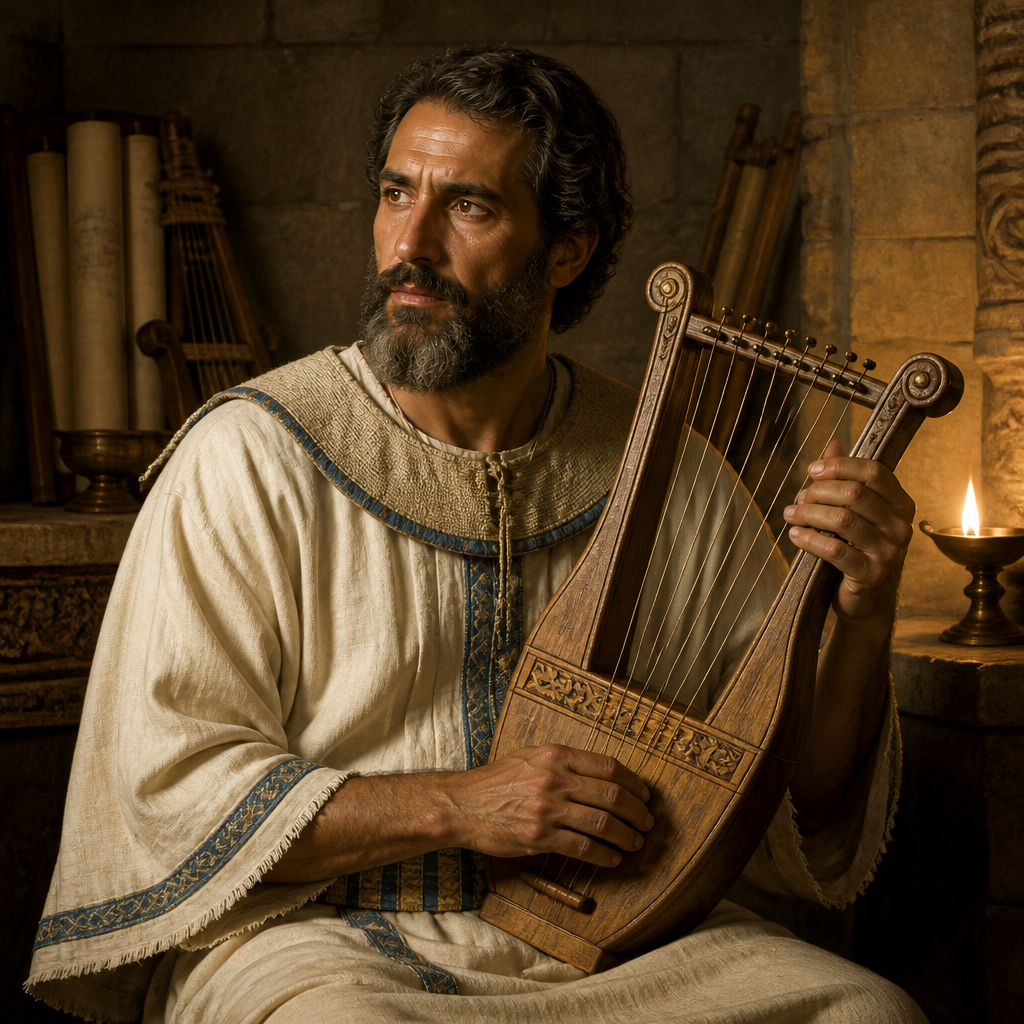
When the lots were cast, the seventeenth lot fell to Joshbekashah. This specific designation meant that he was responsible for leading his division in the service of the house of the Lord. The record in 1 Chronicles 25:24 specifies that his division consisted of twelve men, including his own sons and brothers. This suggests that Joshbekashah served as a conductor, teacher, and lead musician, ensuring that the "cymbals, harps, and lyres" were played in accordance with the royal and divine requirements.
Relationship to Other Biblical Figures
Joshbekashah’s primary relationships were defined by his kinship with the other Levite musicians. He worked in close coordination with his father, Heman, who remained the overarching authority for his sons' musical service. Furthermore, his work would have brought him into regular contact with the other two great musical families of the era: the sons of Asaph and the sons of Jeduthun. Within the specific roster of the seventeenth division, he maintained a paternal and fraternal authority over the twelve men assigned to his charge, blending familial ties with professional religious duties.
Spiritual Significance
While the biblical text provides few personal details about Joshbekashah’s character, his inclusion in the sacred register underscores the importance of order and dedication in Israelite worship. The name "Joshbekashah" is often analyzed by scholars for its unique linguistic structure, with some suggesting it forms part of a larger liturgical poem or petition when read alongside the names of his brothers, though the Chronicler presents him strictly as a historical individual.
His life signifies the transition of worship from the spontaneous or local practices of the period of the Judges to the highly structured, nationalized liturgy of the Jerusalem Temple. By fulfilling his role as the head of the seventeenth division, Joshbekashah contributed to the "prophesying with lyres" that was central to the spiritual health of the United Monarchy, illustrating that technical skill and hereditary duty were considered high callings before God.
Joshbekashah represents the biblical principle of 'service by lot,' where individual talent was submitted to a larger divine order. His role in the seventeenth division highlights the continuity of the Levite service and the importance of music as a vehicle for prophecy and prayer in the Hebrew tradition. His presence in the genealogies of 1 Chronicles serves as a witness to the meticulous preservation of the identities of those who facilitated the public worship of God during the transition into the United Monarchy.
Frequently Asked Questions
Who was Joshbekashah's father?
Joshbekashah was the son of Heman, who was known as the king’s seer and a prominent Levite singer.
What was Joshbekashah's specific job in the Temple?
He was a leader of the seventeenth division of musicians, responsible for playing cymbals, harps, and lyres in the sanctuary.
How many people were in Joshbekashah's service group?
According to 1 Chronicles 25:24, his division consisted of 12 men, including his sons and brothers.
What tribe did Joshbekashah belong to?
He belonged to the Tribe of Levi, the tribe designated for priestly and sanctuary duties in Israel.
Which king organized Joshbekashah's division?
King David, along with his military commanders and the seer Heman, organized the musicians into the twenty-four divisions.
Family & Relationships
Parents
 Heman the SingerFather1 Chronicles 25:4Stated
 JoshbekashahThis page
 BukkiahBrother1 Chronicles 25:4Stated
 EliathahBrother1 Chronicles 25:4Stated
 GiddaltiBrother1 Chronicles 25:4Stated
 Hanani, Musician of the United MonarchyBrother1 Chronicles 25:4Stated
 Hananiah, Levite Musician of the United MonarchyBrother1 Chronicles 25:4Stated
 HothirBrother1 Chronicles 25:4Stated
 Jerimoth, Levite Musician of the United MonarchyBrother1 Chronicles 25:4Stated
 MahaziothBrother1 Chronicles 25:4Stated
 MallothiBrother1 Chronicles 25:4Stated
 Mattaniah, Son of Heman the SingerBrother1 Chronicles 25:4Stated
 Romamti-ezerBrother1 Chronicles 25:4Stated
 Shebuel, Son of Heman the SingerBrother1 Chronicles 25:4Stated
 Uzziel, Son of Heman the SingerBrother1 Chronicles 25:4Stated
Connected Figures
Family
Father · 1 Chronicles 25:4
A prominent Levite singer, musician, and king's seer during the United Monarchy, appointed by David to lead the worship in the house of the LORD.
United MonarchyFirst: 1 Chronicles 6:3311 versesMusician, Singer, King's SeerLevi
Brother · 1 Chronicles 25:4
A Levite musician and son of Heman the Singer who was appointed by King David to lead the sixth division of temple musicians.
United MonarchyFirst: 1 Chronicles 25:42 versesLevite musician and division leaderLevi
Brother · 1 Chronicles 25:4
A Levite musician and son of Heman the Singer who served in the temple during the reign of King David.
United MonarchyFirst: 1 Chronicles 25:42 versesLevitical MusicianLevi
Brother · 1 Chronicles 25:4
A Levite musician and son of Heman the king's seer, appointed by lot to lead the twenty-second division of temple musicians during the reign of King David.
United MonarchyFirst: 1 Chronicles 25:43 versesMusician and Levitical leaderLevi
Brother · 1 Chronicles 25:4
A Levite musician and son of Heman the Singer who served in the temple under King David's organized worship system.
United MonarchyFirst: 1 Chronicles 25:42 versesLevite MusicianLevi
Brother · 1 Chronicles 25:4
Hananiah was a Levite musician and son of Heman who served as the leader of the sixteenth division of temple musicians during the reign of King David.
United MonarchyFirst: 1 Chronicles 25:42 versesMusician and Leader of the 16th DivisionLevi
Brother · 1 Chronicles 25:4
A Levite musician and son of Heman the Singer who served in the temple worship during the reign of King David in the United Monarchy era.
United MonarchyFirst: 1 Chronicles 25:42 versesLevite MusicianLevi
Brother · 1 Chronicles 25:4
A Levite musician and son of Heman the king's seer, Jerimoth was chosen by lot to lead the fifteenth division of musicians in the temple during the reign of King David.
United MonarchyFirst: 1 Chronicles 25:42 versesLevite Musician and Division LeaderLevi
Brother · 1 Chronicles 25:4
A Levite musician and son of Heman the king's seer, appointed by lot to lead the twenty-third division of temple music during the reign of King David.
United MonarchyFirst: 1 Chronicles 25:42 versesLevite Musician and Division LeaderLevi
Brother · 1 Chronicles 25:4
Mallothi was a Levite musician and son of Heman the king's seer, appointed to lead the nineteenth division of sanctuary singers during the United Monarchy.
United MonarchyFirst: 1 Chronicles 25:42 versesLevite Musician and Division LeaderLevi
Brother · 1 Chronicles 25:4
A Levite musician and son of Heman the King's Seer, Mattaniah served in the sanctuary as a leader of the ninth musical division during the United Monarchy.
United MonarchyFirst: 1 Chronicles 25:42 versesLevite Musician and LeaderLevi
Brother · 1 Chronicles 25:4
A Levite musician and son of Heman the Singer who served in the temple during the reign of King David and led the twenty-fourth division of sanctuary music.
United MonarchyFirst: 1 Chronicles 25:42 versesLevite Musician and Division LeaderLevi
Mentions by Book
- 1 Chronicles2
Scripture References
All 2 indexed verses, in canonical order, from the Berean Standard Bible.
1 Chronicles · 2
- 1 Chronicles 25:4
From the sons of Heman: Bukkiah, Mattaniah, Uzziel, Shebuel, Jerimoth, Hananiah, Hanani, Eliathah, Giddalti, Romamti-ezer, Joshbekashah, Mallothi, Hothir, and Mahazioth.
- 1 Chronicles 25:24
the seventeenth to Joshbekashah, his sons, and his brothers—12 in all;