Romamti-ezer
Who was Romamti-ezer in the Bible?
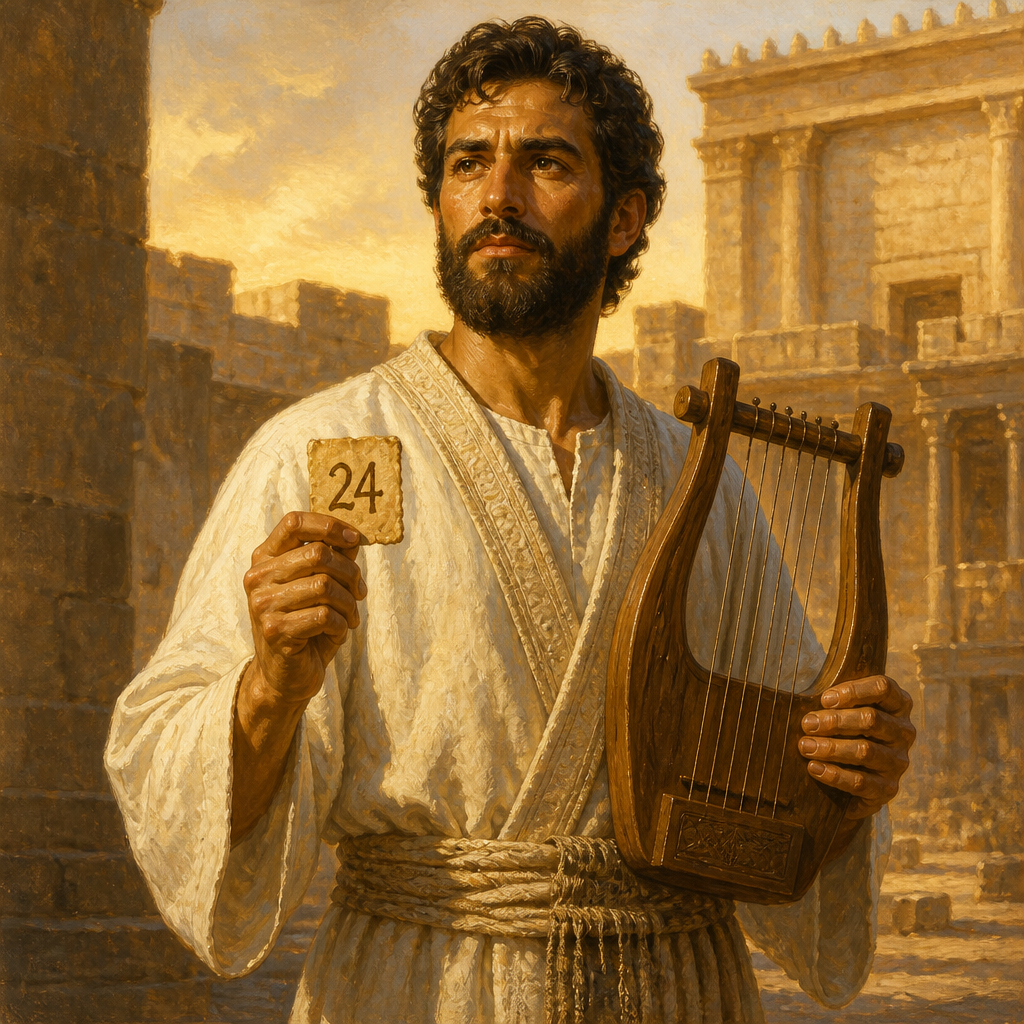
A Levite musician and son of Heman the Singer who served in the temple during the reign of King David and led the twenty-fourth division of sanctuary music.
Romamti-ezer was a member of the tribe of Levi who served during the United Monarchy and the late reign of King David. As one of the fourteen sons of Heman, the king’s seer, he was integrated into the highly structured musical ministry of the sanctuary. The record of his life is preserved exclusively within the genealogical and administrative accounts of 1 Chronicles, which detail the organization of the tabernacle (and later temple) worship systems.
His role was not merely performance-based but was a formal office within the religious hierarchy of Israel. Romamti-ezer was chosen by lot to lead a division of musicians, ensuring that the praise of the LORD remained constant and orderly. His service reflects the high value placed on professional sacred music during the monarchical period, a tradition that defined the spiritual atmosphere of Jerusalem for generations.
Background and Family
Romamti-ezer was born into a prestigious lineage of the tribe of Levi. His father, Heman the Singer, was not only a primary leader of the sanctuary music alongside Asaph and Jeduthun but was also identified as the "king’s seer in the words of God" (1 Chronicles 25:5). According to the biblical text, God granted Heman fourteen sons and three daughters to "exalt his horn," suggesting that Romamti-ezer and his siblings were viewed as a divine blessing and a means of strengthening the Levite ministry.
Romamti-ezer grew up among a large brotherhood of musicians, including Bukkiah, Mattaniah, Uzziel, Shebuel, Jerimoth, Hananiah, Hanani, Eliathah, Giddalti, Joshbekashah, Mallothi, Hothir, and Mahazioth. This family unit formed the core of the Hemanite musical guild, serving under their father's direction in the house of the Lord.
Major Life Events
The primary recorded event of Romamti-ezer’s life is his selection for the twenty-fourth and final musical lot during King David’s reorganization of the Levite duties. To ensure order in the sanctuary service, the musicians were divided into twenty-four groups. Each group was responsible for specific times of service, preventing any single family from becoming overwhelmed while ensuring the continuity of worship.
According to 1 Chronicles 25:31, when the lots were cast, the twenty-fourth lot fell to Romamti-ezer. Upon receiving this assignment, he became the leader of a group consisting of twelve men, comprised of his own sons and brothers. This detail highlights the apprenticeship model of the Levite ministry, where the skills of sacred music were passed directly from father to son.
Relationship to Other Biblical Figures
Romamti-ezer’s life was defined by his proximity to the spiritual and political leadership of Israel. He served under the authority of his father, Heman, who in turn operated under the direct command of King David. His name appears in a list of siblings who were all dedicated to the same craft, suggesting a life of communal service rather than individual prominence. As a member of the final division, he represented the completion of the musical order established by David, Zadok, and Ahimelech.
Spiritual Significance
While the biblical record of Romamti-ezer is brief, his inclusion in the sacred text underscores the theological importance of "order" (Hebrew: mishpat) in worship. His name, which may be translated as "I have exalted help," reflects a life dedicated to the public exaltation of God through liturgy. The fact that he was the head of the twenty-fourth division signifies that even the final lot was a position of honor and responsibility. In the biblical worldview, his role was essential for the maintenance of the covenant relationship between the LORD and Israel, as music was considered a form of prophecy and a means of drawing the presence of God to the sanctuary.
Romamti-ezer represents the institutionalization of worship in Israel. His inclusion in the twenty-four divisions of musicians demonstrates that God’s service requires both divine calling (as seen in Heman's seer status) and human organization. He serves as a reminder that every individual, even those in the final division, has a specific and necessary role in the community of faith.
Furthermore, his life illustrates the fulfillment of God's promise to Heman. The biblical narrator notes that the many sons of Heman were a sign of God exalting Heman's power. Romamti-ezer is thus a living testament to God's favor upon those who dedicated their lives to the ministry of the sanctuary.
Frequently Asked Questions
What does the name Romamti-ezer mean?
The name is generally understood from Hebrew roots to mean 'I have exalted help' or 'Help is exalted.'
Which tribe did Romamti-ezer belong to?
He belonged to the tribe of Levi, specifically from the line of musicians through his father Heman.
What was Romamti-ezer's specific job in the temple?
He was a musician and the leader of the twenty-fourth division of sanctuary singers, leading a group of twelve relatives.
Who was Romamti-ezer's father?
His father was Heman the Singer, who was also known as the king's seer.
How many brothers did Romamti-ezer have?
He had thirteen brothers mentioned in the lists of 1 Chronicles 25.
Family & Relationships
Parents
 Heman the SingerFather1 Chronicles 25:4Stated
 Romamti-ezerThis page
 BukkiahBrother1 Chronicles 25:4Stated
 EliathahBrother1 Chronicles 25:4Stated
 GiddaltiBrother1 Chronicles 25:4Stated
 Hanani, Musician of the United MonarchyBrother1 Chronicles 25:4Stated
 Hananiah, Levite Musician of the United MonarchyBrother1 Chronicles 25:4Stated
 HothirBrother1 Chronicles 25:4Stated
 Jerimoth, Levite Musician of the United MonarchyBrother1 Chronicles 25:4Stated
 JoshbekashahBrother1 Chronicles 25:4Stated
 MahaziothBrother1 Chronicles 25:4Stated
 MallothiBrother1 Chronicles 25:4Stated
 Mattaniah, Son of Heman the SingerBrother1 Chronicles 25:4Stated
 Shebuel, Son of Heman the SingerBrother1 Chronicles 25:4Stated
 Uzziel, Son of Heman the SingerBrother1 Chronicles 25:4Stated
Connected Figures
Family
Father · 1 Chronicles 25:4
A prominent Levite singer, musician, and king's seer during the United Monarchy, appointed by David to lead the worship in the house of the LORD.
United MonarchyFirst: 1 Chronicles 6:3311 versesMusician, Singer, King's SeerLevi
Brother · 1 Chronicles 25:4
A Levite musician and son of Heman the Singer who was appointed by King David to lead the sixth division of temple musicians.
United MonarchyFirst: 1 Chronicles 25:42 versesLevite musician and division leaderLevi
Brother · 1 Chronicles 25:4
A Levite musician and son of Heman the Singer who served in the temple during the reign of King David.
United MonarchyFirst: 1 Chronicles 25:42 versesLevitical MusicianLevi
Brother · 1 Chronicles 25:4
A Levite musician and son of Heman the king's seer, appointed by lot to lead the twenty-second division of temple musicians during the reign of King David.
United MonarchyFirst: 1 Chronicles 25:43 versesMusician and Levitical leaderLevi
Brother · 1 Chronicles 25:4
A Levite musician and son of Heman the Singer who served in the temple under King David's organized worship system.
United MonarchyFirst: 1 Chronicles 25:42 versesLevite MusicianLevi
Brother · 1 Chronicles 25:4
Hananiah was a Levite musician and son of Heman who served as the leader of the sixteenth division of temple musicians during the reign of King David.
United MonarchyFirst: 1 Chronicles 25:42 versesMusician and Leader of the 16th DivisionLevi
Brother · 1 Chronicles 25:4
A Levite musician and son of Heman the Singer who served in the temple worship during the reign of King David in the United Monarchy era.
United MonarchyFirst: 1 Chronicles 25:42 versesLevite MusicianLevi
Brother · 1 Chronicles 25:4
A Levite musician and son of Heman the king's seer, Jerimoth was chosen by lot to lead the fifteenth division of musicians in the temple during the reign of King David.
United MonarchyFirst: 1 Chronicles 25:42 versesLevite Musician and Division LeaderLevi
Brother · 1 Chronicles 25:4
A Levite musician and son of Heman the king's seer, appointed by King David to lead the seventeenth division of sanctuary singers.
United MonarchyFirst: 1 Chronicles 25:42 versesLevite MusicianLevi
Brother · 1 Chronicles 25:4
A Levite musician and son of Heman the king's seer, appointed by lot to lead the twenty-third division of temple music during the reign of King David.
United MonarchyFirst: 1 Chronicles 25:42 versesLevite Musician and Division LeaderLevi
Brother · 1 Chronicles 25:4
Mallothi was a Levite musician and son of Heman the king's seer, appointed to lead the nineteenth division of sanctuary singers during the United Monarchy.
United MonarchyFirst: 1 Chronicles 25:42 versesLevite Musician and Division LeaderLevi
Brother · 1 Chronicles 25:4
A Levite musician and son of Heman the King's Seer, Mattaniah served in the sanctuary as a leader of the ninth musical division during the United Monarchy.
United MonarchyFirst: 1 Chronicles 25:42 versesLevite Musician and LeaderLevi
Mentions by Book
- 1 Chronicles2
Scripture References
All 2 indexed verses, in canonical order, from the Berean Standard Bible.
1 Chronicles · 2
- 1 Chronicles 25:4
From the sons of Heman: Bukkiah, Mattaniah, Uzziel, Shebuel, Jerimoth, Hananiah, Hanani, Eliathah, Giddalti, Romamti-ezer, Joshbekashah, Mallothi, Hothir, and Mahazioth.
- 1 Chronicles 25:31
and the twenty-fourth to Romamti-ezer, his sons, and his brothers—12 in all.