Giddalti
Who was Giddalti in the Bible?
A Levite musician and son of Heman the king's seer, appointed by lot to lead the twenty-second division of temple musicians during the reign of King David.
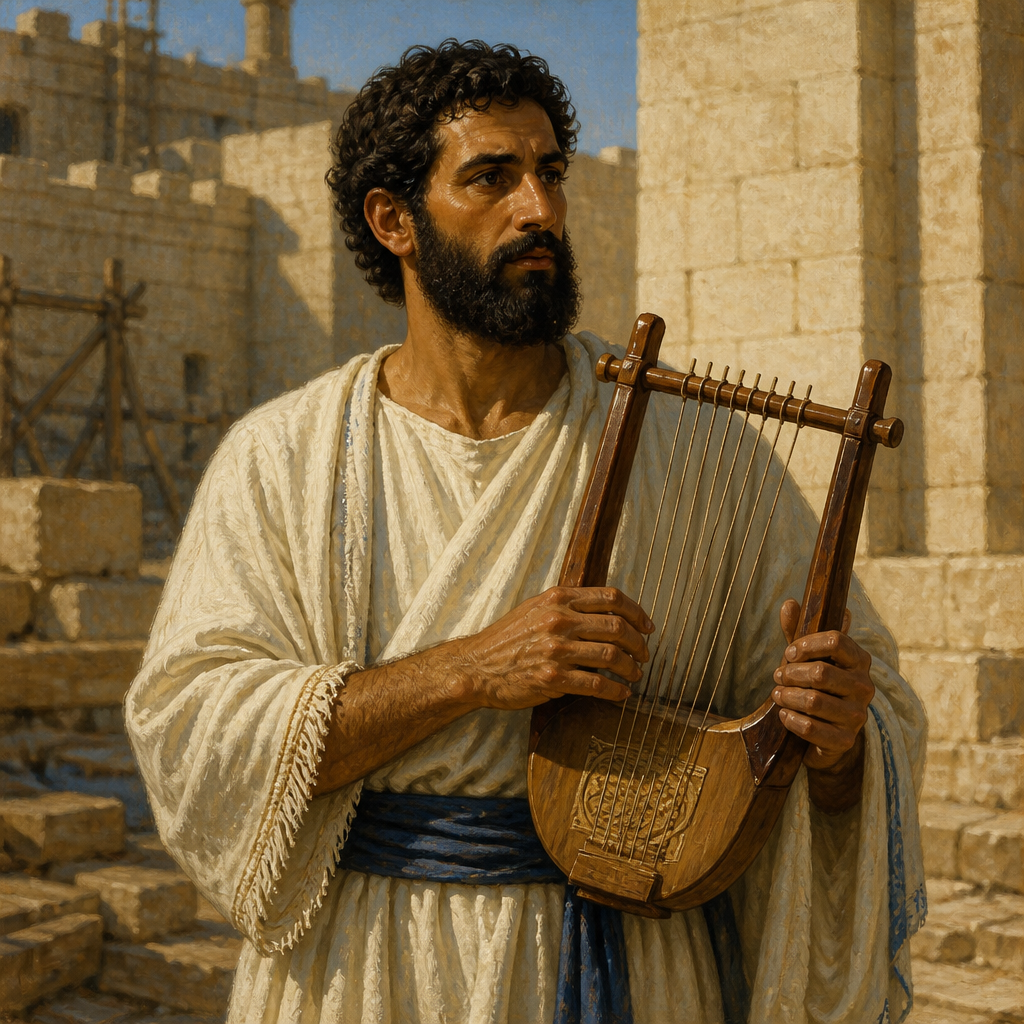
Giddalti was a member of the tribe of Levi who served as a prominent musician during the United Monarchy and the late United Monarchy transition. He is specifically identified as one of the fourteen sons of Heman, the king’s seer. Under the administrative and spiritual reorganization of King David, Giddalti was designated as a leader in the liturgical ministry of the Tabernacle and the planned Temple.
His role was centered on the musical worship of Israel, a duty that was considered a sacred service rather than a mere artistic endeavor. Giddalti’s inclusion in the biblical record serves to highlight the meticulous organization of the Levitical priesthood and the high value placed on professional, dedicated worship in the history of Israel’s religious life.
Background and Family
Giddalti was born into the Tribe of Levi, specifically within the lineage of the Kohathites. His father was Heman the singer, a man described as the "king’s seer in the words of God" (1 Chronicles 25:5). According to the biblical record, Heman was blessed with fourteen sons and three daughters to "exalt his horn," signifying the strength and favor God bestowed upon his household.
Giddalti grew up in a massive musical household alongside his thirteen brothers: Bukkiah, Mattaniah, Uzziel, Shebuel, Jerimoth, Hananiah, Hanani, Eliathah, Romamti-ezer, Joshbekashah, Mallothi, Hothir, and Mahazioth. This family formed the core of the vocal and instrumental ministry of the sanctuary, under the direct supervision of their father and the king.
Major Life Events
The primary recorded event in Giddalti’s life occurs in 1 Chronicles 25, where King David and the commanders of the army set apart the sons of Asaph, Heman, and Jeduthun for the ministry of prophesying with harps, lyres, and cymbals.
To ensure order and fairness in the temple service, David cast lots to determine the rotation of duties among the twenty-four divisions of musicians. Though Giddalti was among the younger sons of Heman, the lot fell to him for the twenty-second rotation. As the leader of this division, Giddalti was responsible for a group consisting of twelve men, comprised of his own sons and brothers. This rotation ensured that the praise and worship of the Lord remained constant and expertly handled throughout the year.
Relationship to Other Biblical Figures
Giddalti’s primary relationship is to his father, Heman, and his grandfather, Samuel the prophet (as established in the broader genealogy of Heman in 1 Chronicles 6). His life was defined by his fraternal bond with his thirteen brothers, all of whom were similarly dedicated to the musical service. He functioned under the ultimate authority of King David, whose administration institutionalized the Levitical choirs that would later serve in Solomon's Temple.
Spiritual Significance
The significance of Giddalti lies in the concept of "ordered worship." The biblical text emphasizes that these musicians were not merely entertainers but were "prophesying" through their music. Giddalti’s name itself, when read alongside the names of his brothers in a poetic sequence (specifically the last six names), has been noted by some scholars as forming a Hebrew prayer, though the text primarily presents him as a historical individual. His life illustrates the biblical principle that every individual, regardless of their birth order, has a specific "lot" or calling within the community of faith. By faithfully leading his twelve kinsmen in the twenty-second division, Giddalti maintained the spiritual atmosphere of the nation, bridging the gap between the military administration of David and the liturgical splendor of the coming Temple era.
Giddalti represents the institutionalization of worship during the transition from the United to the United Monarchy. His inclusion in the genealogical lists of 1 Chronicles underscores the importance of the Levites in maintaining the spiritual health of Israel through music and prophecy. By serving in the twenty-second division, he demonstrates the biblical value of faithfulness in assigned duties, contributing to a larger system of praise that involved thousands of skilled ministers.
The fact that Giddalti and his brothers were under the direction of their father, Heman, and King David highlights the intersection of family, government, and religious duty. His life is a testament to the legacy of his grandfather Samuel, showing how a heritage of service to God can continue through multiple generations of a single family.
Frequently Asked Questions
What does the name Giddalti mean?
The name Giddalti (גִּדַּלְתִּי) is derived from the Hebrew root 'gadal,' meaning 'to grow' or 'to make great.' It is often translated as 'I have magnified' or 'I have nurtured.'
Which tribe did Giddalti belong to?
Giddalti belonged to the Tribe of Levi, specifically the Kohathite branch, which was traditionally responsible for the most sacred elements of the sanctuary.
What was Giddalti's specific role in the Temple?
He was a musician and a leader of the twenty-second division of temple singers. He led a group of twelve men, including his brothers and sons, in providing music for the sanctuary.
Who was Giddalti's father?
His father was Heman the Singer, who was also a seer for King David and a descendant of the prophet Samuel.
How many brothers did Giddalti have?
Giddalti had thirteen brothers, all of whom were also appointed as leaders of musical divisions in the service of the house of the Lord.
Family & Relationships
Parents
 Heman the SingerFather1 Chronicles 25:4Stated
 GiddaltiThis page
 BukkiahBrother1 Chronicles 25:4Stated
 EliathahBrother1 Chronicles 25:4Stated
 Hanani, Musician of the United MonarchyBrother1 Chronicles 25:4Stated
 Hananiah, Levite Musician of the United MonarchyBrother1 Chronicles 25:4Stated
 HothirBrother1 Chronicles 25:4Stated
 Jerimoth, Levite Musician of the United MonarchyBrother1 Chronicles 25:4Stated
 JoshbekashahBrother1 Chronicles 25:4Stated
 MahaziothBrother1 Chronicles 25:4Stated
 MallothiBrother1 Chronicles 25:4Stated
 Mattaniah, Son of Heman the SingerBrother1 Chronicles 25:4Stated
 Romamti-ezerBrother1 Chronicles 25:4Stated
 Shebuel, Son of Heman the SingerBrother1 Chronicles 25:4Stated
 Uzziel, Son of Heman the SingerBrother1 Chronicles 25:4Stated
Extended family
 SamuelGrandfather1 Samuel 1:20
Inferred
Reconstructed through Heman: 1 Chronicles 6:33 ties Samuel to Heman; 1 Chronicles 25:4 ties Heman to Giddalti. No verse states the grandson link between Samuel and Giddalti directly.Evidence: 1 Samuel 1:20
Connected Figures
Family
Father · 1 Chronicles 25:4
A prominent Levite singer, musician, and king's seer during the United Monarchy, appointed by David to lead the worship in the house of the LORD.
United MonarchyFirst: 1 Chronicles 6:3311 versesMusician, Singer, King's SeerLevi
Brother · 1 Chronicles 25:4
A Levite musician and son of Heman the Singer who was appointed by King David to lead the sixth division of temple musicians.
United MonarchyFirst: 1 Chronicles 25:42 versesLevite musician and division leaderLevi
Brother · 1 Chronicles 25:4
A Levite musician and son of Heman the Singer who served in the temple during the reign of King David.
United MonarchyFirst: 1 Chronicles 25:42 versesLevitical MusicianLevi
Brother · 1 Chronicles 25:4
A Levite musician and son of Heman the Singer who served in the temple under King David's organized worship system.
United MonarchyFirst: 1 Chronicles 25:42 versesLevite MusicianLevi
Brother · 1 Chronicles 25:4
Hananiah was a Levite musician and son of Heman who served as the leader of the sixteenth division of temple musicians during the reign of King David.
United MonarchyFirst: 1 Chronicles 25:42 versesMusician and Leader of the 16th DivisionLevi
Brother · 1 Chronicles 25:4
A Levite musician and son of Heman the Singer who served in the temple worship during the reign of King David in the United Monarchy era.
United MonarchyFirst: 1 Chronicles 25:42 versesLevite MusicianLevi
Brother · 1 Chronicles 25:4
A Levite musician and son of Heman the king's seer, Jerimoth was chosen by lot to lead the fifteenth division of musicians in the temple during the reign of King David.
United MonarchyFirst: 1 Chronicles 25:42 versesLevite Musician and Division LeaderLevi
Brother · 1 Chronicles 25:4
A Levite musician and son of Heman the king's seer, appointed by King David to lead the seventeenth division of sanctuary singers.
United MonarchyFirst: 1 Chronicles 25:42 versesLevite MusicianLevi
Brother · 1 Chronicles 25:4
A Levite musician and son of Heman the king's seer, appointed by lot to lead the twenty-third division of temple music during the reign of King David.
United MonarchyFirst: 1 Chronicles 25:42 versesLevite Musician and Division LeaderLevi
Brother · 1 Chronicles 25:4
Mallothi was a Levite musician and son of Heman the king's seer, appointed to lead the nineteenth division of sanctuary singers during the United Monarchy.
United MonarchyFirst: 1 Chronicles 25:42 versesLevite Musician and Division LeaderLevi
Brother · 1 Chronicles 25:4
A Levite musician and son of Heman the King's Seer, Mattaniah served in the sanctuary as a leader of the ninth musical division during the United Monarchy.
United MonarchyFirst: 1 Chronicles 25:42 versesLevite Musician and LeaderLevi
Brother · 1 Chronicles 25:4
A Levite musician and son of Heman the Singer who served in the temple during the reign of King David and led the twenty-fourth division of sanctuary music.
United MonarchyFirst: 1 Chronicles 25:42 versesLevite Musician and Division LeaderLevi
Mentions by Book
- 1 Samuel1
- 1 Chronicles2
Scripture References
All 3 indexed verses, in canonical order, from the Berean Standard Bible.
1 Samuel · 1
- 1 Samuel 1:20Partial
So in the course of time, Hannah conceived and gave birth to a son. She named him Samuel, saying, “Because I have asked for him from the LORD.”
Cited as evidence on a family card; added so References, Key Verses and Mentions by Book share one index.
1 Chronicles · 2
- 1 Chronicles 25:4
From the sons of Heman: Bukkiah, Mattaniah, Uzziel, Shebuel, Jerimoth, Hananiah, Hanani, Eliathah, Giddalti, Romamti-ezer, Joshbekashah, Mallothi, Hothir, and Mahazioth.
- 1 Chronicles 25:29
the twenty-second to Giddalti, his sons, and his brothers—12 in all;