Bukkiah
Who was Bukkiah in the Bible?
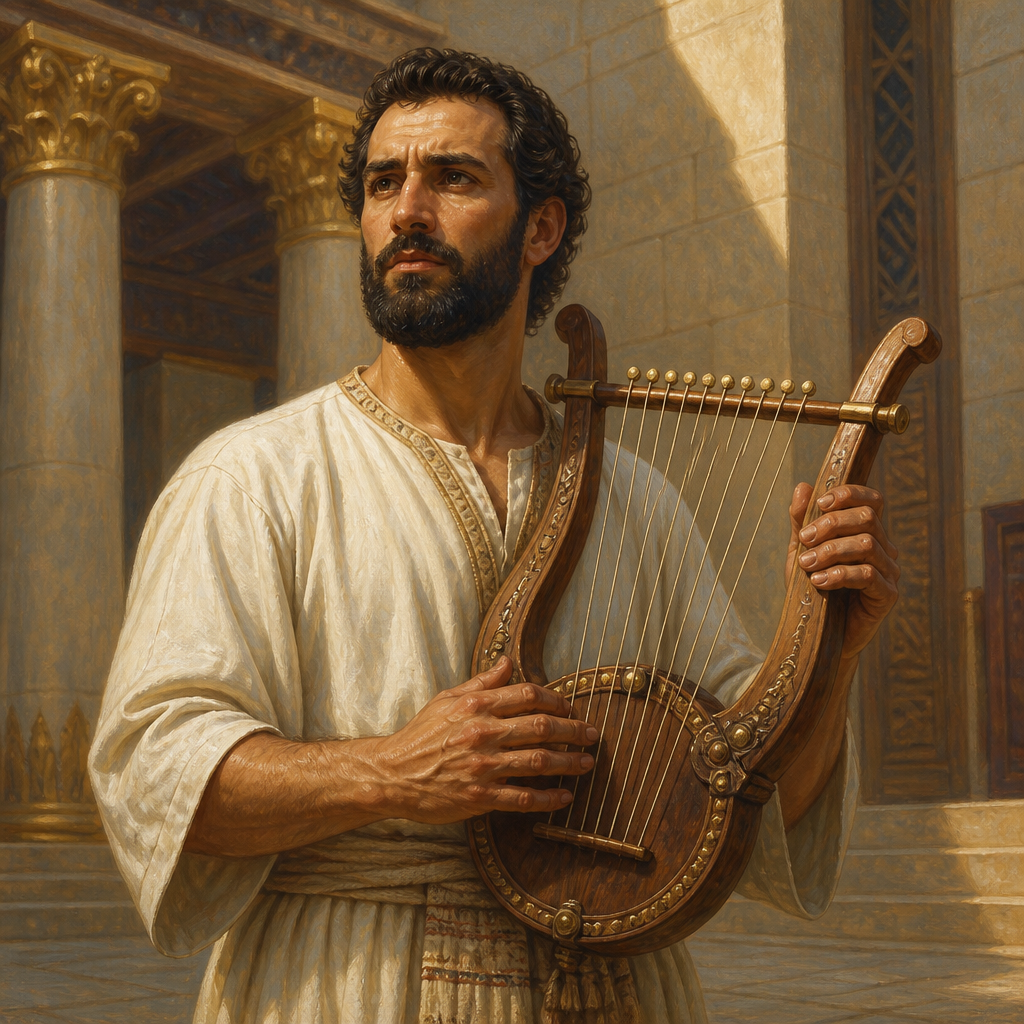
A Levite musician and son of Heman the Singer who was appointed by King David to lead the sixth division of temple musicians.
Bukkiah was a member of the tribe of Levi during the era of the United Monarchy, specifically serving during the transitional period of the late United Monarchy and early United Monarchy under the administrative arrangements of King David. As a son of Heman the Singer, Bukkiah belonged to a lineage of significant cultic importance, tasked with the musical and liturgical duties of the Jerusalem temple.
His primary historical and biblical mention occurs within the context of David's reorganization of the Levites, where the king established a formal guild of musicians to perform before the Ark of the Covenant and, later, in the planned Temple. Bukkiah is listed as one of the fourteen sons of Heman, all of whom were set apart for the ministry of music under their father’s direction.
Background and Family
Bukkiah was born into the Kohathite branch of the tribe of Levi. His father, Heman the Singer, was a prominent figure in the Davidic court, known as the "king’s seer in the matters of God" (1 Chronicles 25:5). According to the biblical record, Heman was blessed with fourteen sons and three daughters, a biological abundance interpreted by the Chronicler as a sign of divine favor to exalt Heman’s horn. Bukkiah grew up in a household where music and prophecy were inextricably linked, as his father led the musical worship with cymbals, harps, and lyres.
Bukkiah’s brothers included Mattaniah, Uzziel, Shebuel, Jerimoth, Hananiah, Hanani, Eliathah, Giddalti, Romamti-ezer, Joshbekashah, Mallothi, Hothir, and Mahazioth. This large fraternity formed the backbone of the professional musical guilds that would serve the nation for generations.
Major Life Events
The defining moment of Bukkiah’s career was his selection by lot for a specific course of service. King David, alongside the commanders of the army, set apart the sons of Asaph, Heman, and Jeduthun to prophesy with musical instruments. To ensure order and impartiality in the sanctuary, the assignments were determined by casting lots, regardless of whether a person was small or great, teacher or student.
Bukkiah was selected for the sixth lot. This appointment carried with it the responsibility of leading a group of twelve men, consisting of his own sons and brothers. As the leader of the sixth division, Bukkiah was responsible for conducting the liturgy and musical accompaniment for the sacrificial system during his designated period of the year. This system ensured that the praise of the LORD remained constant and professional within the sanctuary.
Relationship to Other Biblical Figures
Bukkiah’s identity is defined largely by his relationship to his father, Heman, and King David. As a son of Heman, he was a direct descendant of the great prophet Samuel (through Heman’s lineage as recorded in 1 Chronicles 6). His relationship with his thirteen brothers was one of professional collaboration; they were not competitors but colleagues in a highly structured religious bureaucracy. Under the supervision of King David, Bukkiah transitioned from a tribal member to a state-appointed official of the cultic worship system.
Spiritual Significance
Though the biblical text provides few details regarding Bukkiah’s personal character, his inclusion in the Genealogies of 1 Chronicles signifies the importance of his role. In the theology of the Chronicler, the establishment of the temple singers was a vital part of the restoration of Israel’s spiritual identity. Bukkiah represents the principle of vocational ministry and the orderly worship of God. His life demonstrates the biblical value placed on using artistic skill—specifically music—as a form of prophecy and service to the community. By being chosen by lot, Bukkiah’s position was seen as a divine appointment rather than a result of mere human preference, reinforcing the sanctity of his office.
Bukkiah serves as a representative of the organized Levite musicians who maintained the liturgical life of Israel. His role highlights the integration of music and prophecy in the Old Testament, as well as the meticulous administrative efforts of King David to ensure the Temple remained a center of excellence and order.
His inclusion in the biblical record preserves the history of the Kohathite lineage and emphasizes that even those with limited biographical narratives played essential roles in the continuity of Israel's worship traditions.
Frequently Asked Questions
What does the name Bukkiah mean?
The name Bukkiah (Bukkijahu) is of Hebrew origin, generally understood to mean 'proven of Yah' or 'wasting of Yahweh.'
Which tribe did Bukkiah belong to?
Bukkiah belonged to the tribe of Levi, specifically the Kohathite clan through his father Heman.
What was Bukkiah's specific job in the Temple?
He was a musician and a leader of the sixth division of singers, responsible for leading a group of twelve relatives in musical worship.
Who was Bukkiah's father?
His father was Heman the Singer, a grandson of the prophet Samuel and a chief musician under King David.
How was Bukkiah chosen for his position?
He was chosen by lot, a method used to ensure that the assignments for temple service were determined by divine will rather than human favoritism.
Family & Relationships
Parents
 Heman the SingerFather1 Chronicles 25:4Stated
 BukkiahThis page
 EliathahBrother1 Chronicles 25:4Stated
 GiddaltiBrother1 Chronicles 25:4Stated
 Hanani, Musician of the United MonarchyBrother1 Chronicles 25:4Stated
 Hananiah, Levite Musician of the United MonarchyBrother1 Chronicles 25:4Stated
 HothirBrother1 Chronicles 25:4Stated
 Jerimoth, Levite Musician of the United MonarchyBrother1 Chronicles 25:4Stated
 JoshbekashahBrother1 Chronicles 25:4Stated
 MahaziothBrother1 Chronicles 25:4Stated
 MallothiBrother1 Chronicles 25:4Stated
 Mattaniah, Son of Heman the SingerBrother1 Chronicles 25:4Stated
 Romamti-ezerBrother1 Chronicles 25:4Stated
 Shebuel, Son of Heman the SingerBrother1 Chronicles 25:4Stated
 Uzziel, Son of Heman the SingerBrother1 Chronicles 25:4Stated
Connected Figures
Family
Father · 1 Chronicles 25:4
A prominent Levite singer, musician, and king's seer during the United Monarchy, appointed by David to lead the worship in the house of the LORD.
United MonarchyFirst: 1 Chronicles 6:3311 versesMusician, Singer, King's SeerLevi
Brother · 1 Chronicles 25:4
A Levite musician and son of Heman the Singer who served in the temple during the reign of King David.
United MonarchyFirst: 1 Chronicles 25:42 versesLevitical MusicianLevi
Brother · 1 Chronicles 25:4
A Levite musician and son of Heman the king's seer, appointed by lot to lead the twenty-second division of temple musicians during the reign of King David.
United MonarchyFirst: 1 Chronicles 25:43 versesMusician and Levitical leaderLevi
Brother · 1 Chronicles 25:4
A Levite musician and son of Heman the Singer who served in the temple under King David's organized worship system.
United MonarchyFirst: 1 Chronicles 25:42 versesLevite MusicianLevi
Brother · 1 Chronicles 25:4
Hananiah was a Levite musician and son of Heman who served as the leader of the sixteenth division of temple musicians during the reign of King David.
United MonarchyFirst: 1 Chronicles 25:42 versesMusician and Leader of the 16th DivisionLevi
Brother · 1 Chronicles 25:4
A Levite musician and son of Heman the Singer who served in the temple worship during the reign of King David in the United Monarchy era.
United MonarchyFirst: 1 Chronicles 25:42 versesLevite MusicianLevi
Brother · 1 Chronicles 25:4
A Levite musician and son of Heman the king's seer, Jerimoth was chosen by lot to lead the fifteenth division of musicians in the temple during the reign of King David.
United MonarchyFirst: 1 Chronicles 25:42 versesLevite Musician and Division LeaderLevi
Brother · 1 Chronicles 25:4
A Levite musician and son of Heman the king's seer, appointed by King David to lead the seventeenth division of sanctuary singers.
United MonarchyFirst: 1 Chronicles 25:42 versesLevite MusicianLevi
Brother · 1 Chronicles 25:4
A Levite musician and son of Heman the king's seer, appointed by lot to lead the twenty-third division of temple music during the reign of King David.
United MonarchyFirst: 1 Chronicles 25:42 versesLevite Musician and Division LeaderLevi
Brother · 1 Chronicles 25:4
Mallothi was a Levite musician and son of Heman the king's seer, appointed to lead the nineteenth division of sanctuary singers during the United Monarchy.
United MonarchyFirst: 1 Chronicles 25:42 versesLevite Musician and Division LeaderLevi
Brother · 1 Chronicles 25:4
A Levite musician and son of Heman the King's Seer, Mattaniah served in the sanctuary as a leader of the ninth musical division during the United Monarchy.
United MonarchyFirst: 1 Chronicles 25:42 versesLevite Musician and LeaderLevi
Brother · 1 Chronicles 25:4
A Levite musician and son of Heman the Singer who served in the temple during the reign of King David and led the twenty-fourth division of sanctuary music.
United MonarchyFirst: 1 Chronicles 25:42 versesLevite Musician and Division LeaderLevi
Mentions by Book
- 1 Chronicles2
Scripture References
All 2 indexed verses, in canonical order, from the Berean Standard Bible.
1 Chronicles · 2
- 1 Chronicles 25:4
From the sons of Heman: Bukkiah, Mattaniah, Uzziel, Shebuel, Jerimoth, Hananiah, Hanani, Eliathah, Giddalti, Romamti-ezer, Joshbekashah, Mallothi, Hothir, and Mahazioth.
- 1 Chronicles 25:13
the sixth to Bukkiah, his sons, and his brothers—12 in all;