Hothir
Who was Hothir in the Bible?
A Levite musician and son of Heman the Singer who served in the temple worship during the reign of King David in the United Monarchy era.
Hothir was a member of the tribe of Levi and one of the fourteen sons of Heman, King David’s seer. He was part of a prestigious musical lineage dedicated to the service of the house of the Lord. During the organizational reforms of the late United Monarchy and early United Monarchy transition, Hothir was appointed as a leader over a division of musicians responsible for the ministry of song in the temple.
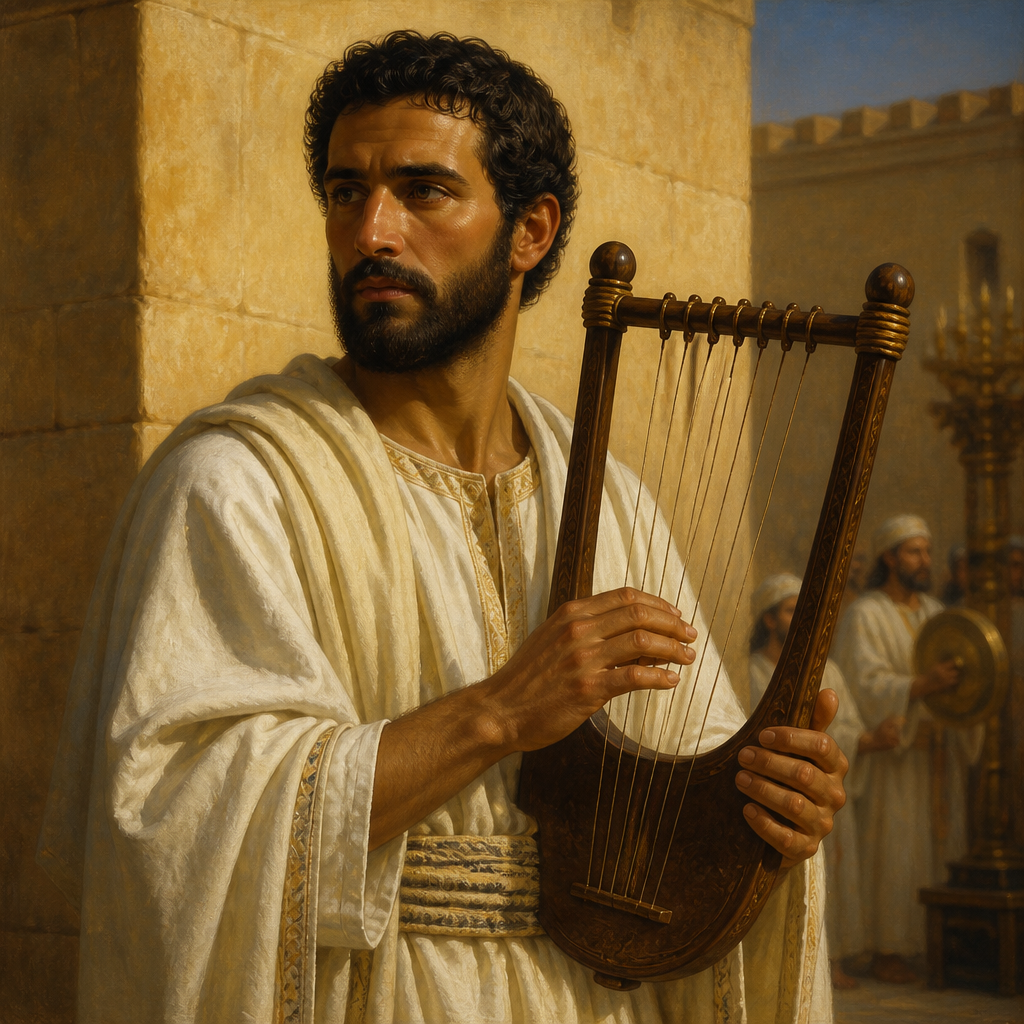
His role was not merely performance-based but was considered a prophetic ministry, as his father Heman and the other chief musicians were tasked by the king to prophesy with harps, lyres, and cymbals. Hothir’s life reflects the highly structured and spiritually significant nature of the liturgical worship established by the Davidic administration.
Background and Family
Hothir was born into the Kohathite branch of the tribe of Levi. His father was Heman the Singer, a man of significant spiritual and political standing who served as King David’s personal seer (1 Chronicles 25:5). According to the biblical record, God bestowed upon Heman fourteen sons and three daughters to exalt him, fulfilling a divine promise of blessing. Hothir was the thirteenth son listed among these brothers.
Growing up in a household dedicated to sacred music, Hothir was raised under the strict tutelage of his father. The Scripture notes that all of Heman’s sons were "under the direction of their father" for the music of the house of the LORD (1 Chronicles 25:6). This environment was one of discipline and spiritual devotion, where music was viewed as a medium for divine communication and national worship.
Major Life Events
The primary event recorded in Hothir's life is his official installation into the temple service. As King David organized the Levites into divisions to ensure orderly worship in the future temple, he utilized a system of lots to determine the order of service for the various musical families. This system ensured that no single family held a monopoly on the most desirable times of service and that the selection was viewed as being directed by God rather than human favoritism.
When the lots were cast for the twenty-four turns of service, the twenty-first lot fell to Hothir. This appointment meant that Hothir was responsible for leading a choir or musical ensemble consisting of twelve men—specifically himself, his sons, and his brothers (1 Chronicles 25:28). This group would have been responsible for the vocal and instrumental accompaniment of the daily sacrifices and festivals.
Relationship to Other Biblical Figures
Hothir’s primary relationships were defined by his large family of musicians. He served alongside his thirteen brothers: Bukkiah, Mattaniah, Uzziel, Shebuel, Jerimoth, Hananiah, Hanani, Eliathah, Giddalti, Romamti-ezer, Joshbekashah, Mallothi, and Mahazioth. The biblical text emphasizes the unity of these brothers, noting that they all worked under their father Heman and alongside the other chief musical families led by Asaph and Jeduthun.
His connection to King David is also significant, as David was the architect of the musical system Hothir served. Though Hothir is a minor figure in the grand narrative, he represents the specialized workforce required to maintain the complex religious infrastructure of the United Monarchy era.
Spiritual Significance
The name Hothir is often associated with the Hebrew root meaning "abundance" or "remnant," though its specific etymological meaning in this context is debated. The spiritual significance of Hothir lies in his participation in "prophetic music." 1 Chronicles 25:1 states that the musicians were set apart to "prophesy with lyres, harps, and cymbals."
This suggests that Hothir’s role was not merely to provide background music, but to facilitate an atmosphere where the word of God could be proclaimed and experienced by the congregation. His inclusion in the twenty-four divisions of the sanctuary also serves as a biblical model for the order and beauty of holiness in communal worship. Though he appears in only two verses, Hothir stands as a testament to the biblical principle that every individual, regardless of how briefly they are mentioned in the historical record, plays a specific and divinely appointed role in the service of God.
Hothir's significance is found in the formalization of Hebrew worship. As a leader of the twenty-first division of musicians, he represents the meticulous detail God required for the service of the Tabernacle and later the Temple. His inclusion in the genealogy of Heman highlights the fulfillment of God's blessing toward those who serve Him faithfully.
Furthermore, Hothir represents the 'prophetic' dimension of music in the Bible. His ministry was not just artistic but was considered a form of 'prophesying,' indicating that music was a primary vehicle for teaching and experiencing the presence of God during the era of the United Monarchy.
Frequently Asked Questions
Who was Hothir's father?
Hothir was the son of Heman the Singer, who was King David's seer and a leader of the temple musicians.
What was Hothir's role in the temple?
Hothir was a Levite musician who led the twenty-first division of singers and instrumentalists, consisting of twelve men.
Which tribe did Hothir belong to?
Hothir belonged to the Tribe of Levi, specifically the Kohathite branch.
How many brothers did Hothir have?
Hothir had thirteen brothers who were also appointed to musical service, making fourteen sons of Heman in total.
Family & Relationships
Parents
 Heman the SingerFather1 Chronicles 25:4Stated
 HothirThis page
 BukkiahBrother1 Chronicles 25:4Stated
 EliathahBrother1 Chronicles 25:4Stated
 GiddaltiBrother1 Chronicles 25:4Stated
 Hanani, Musician of the United MonarchyBrother1 Chronicles 25:4Stated
 Hananiah, Levite Musician of the United MonarchyBrother1 Chronicles 25:4Stated
 Jerimoth, Levite Musician of the United MonarchyBrother1 Chronicles 25:4Stated
 JoshbekashahBrother1 Chronicles 25:4Stated
 MahaziothBrother1 Chronicles 25:4Stated
 MallothiBrother1 Chronicles 25:4Stated
 Mattaniah, Son of Heman the SingerBrother1 Chronicles 25:4Stated
 Romamti-ezerBrother1 Chronicles 25:4Stated
 Shebuel, Son of Heman the SingerBrother1 Chronicles 25:4Stated
 Uzziel, Son of Heman the SingerBrother1 Chronicles 25:4Stated
Connected Figures
Family
Father · 1 Chronicles 25:4
A prominent Levite singer, musician, and king's seer during the United Monarchy, appointed by David to lead the worship in the house of the LORD.
United MonarchyFirst: 1 Chronicles 6:3311 versesMusician, Singer, King's SeerLevi
Brother · 1 Chronicles 25:4
A Levite musician and son of Heman the Singer who was appointed by King David to lead the sixth division of temple musicians.
United MonarchyFirst: 1 Chronicles 25:42 versesLevite musician and division leaderLevi
Brother · 1 Chronicles 25:4
A Levite musician and son of Heman the Singer who served in the temple during the reign of King David.
United MonarchyFirst: 1 Chronicles 25:42 versesLevitical MusicianLevi
Brother · 1 Chronicles 25:4
A Levite musician and son of Heman the king's seer, appointed by lot to lead the twenty-second division of temple musicians during the reign of King David.
United MonarchyFirst: 1 Chronicles 25:43 versesMusician and Levitical leaderLevi
Brother · 1 Chronicles 25:4
A Levite musician and son of Heman the Singer who served in the temple under King David's organized worship system.
United MonarchyFirst: 1 Chronicles 25:42 versesLevite MusicianLevi
Brother · 1 Chronicles 25:4
Hananiah was a Levite musician and son of Heman who served as the leader of the sixteenth division of temple musicians during the reign of King David.
United MonarchyFirst: 1 Chronicles 25:42 versesMusician and Leader of the 16th DivisionLevi
Brother · 1 Chronicles 25:4
A Levite musician and son of Heman the king's seer, Jerimoth was chosen by lot to lead the fifteenth division of musicians in the temple during the reign of King David.
United MonarchyFirst: 1 Chronicles 25:42 versesLevite Musician and Division LeaderLevi
Brother · 1 Chronicles 25:4
A Levite musician and son of Heman the king's seer, appointed by King David to lead the seventeenth division of sanctuary singers.
United MonarchyFirst: 1 Chronicles 25:42 versesLevite MusicianLevi
Brother · 1 Chronicles 25:4
A Levite musician and son of Heman the king's seer, appointed by lot to lead the twenty-third division of temple music during the reign of King David.
United MonarchyFirst: 1 Chronicles 25:42 versesLevite Musician and Division LeaderLevi
Brother · 1 Chronicles 25:4
Mallothi was a Levite musician and son of Heman the king's seer, appointed to lead the nineteenth division of sanctuary singers during the United Monarchy.
United MonarchyFirst: 1 Chronicles 25:42 versesLevite Musician and Division LeaderLevi
Brother · 1 Chronicles 25:4
A Levite musician and son of Heman the King's Seer, Mattaniah served in the sanctuary as a leader of the ninth musical division during the United Monarchy.
United MonarchyFirst: 1 Chronicles 25:42 versesLevite Musician and LeaderLevi
Brother · 1 Chronicles 25:4
A Levite musician and son of Heman the Singer who served in the temple during the reign of King David and led the twenty-fourth division of sanctuary music.
United MonarchyFirst: 1 Chronicles 25:42 versesLevite Musician and Division LeaderLevi
Mentions by Book
- 1 Chronicles2
Scripture References
All 2 indexed verses, in canonical order, from the Berean Standard Bible.
1 Chronicles · 2
- 1 Chronicles 25:4
From the sons of Heman: Bukkiah, Mattaniah, Uzziel, Shebuel, Jerimoth, Hananiah, Hanani, Eliathah, Giddalti, Romamti-ezer, Joshbekashah, Mallothi, Hothir, and Mahazioth.
- 1 Chronicles 25:28
the twenty-first to Hothir, his sons, and his brothers—12 in all;