Mahazioth
Who was Mahazioth in the Bible?
A Levite musician and son of Heman the king's seer, appointed by lot to lead the twenty-third division of temple music during the reign of King David.
Mahazioth was a member of the tribe of Levi who served during the United Monarchy era, specifically functioning within the organized musical guilds of the Temple in Jerusalem. He is identified as one of the fourteen sons of Heman, who was known as the king's seer in matters pertaining to God. Within the liturgical structure established by King David, Mahazioth held a position of significant responsibility as a leader of song.
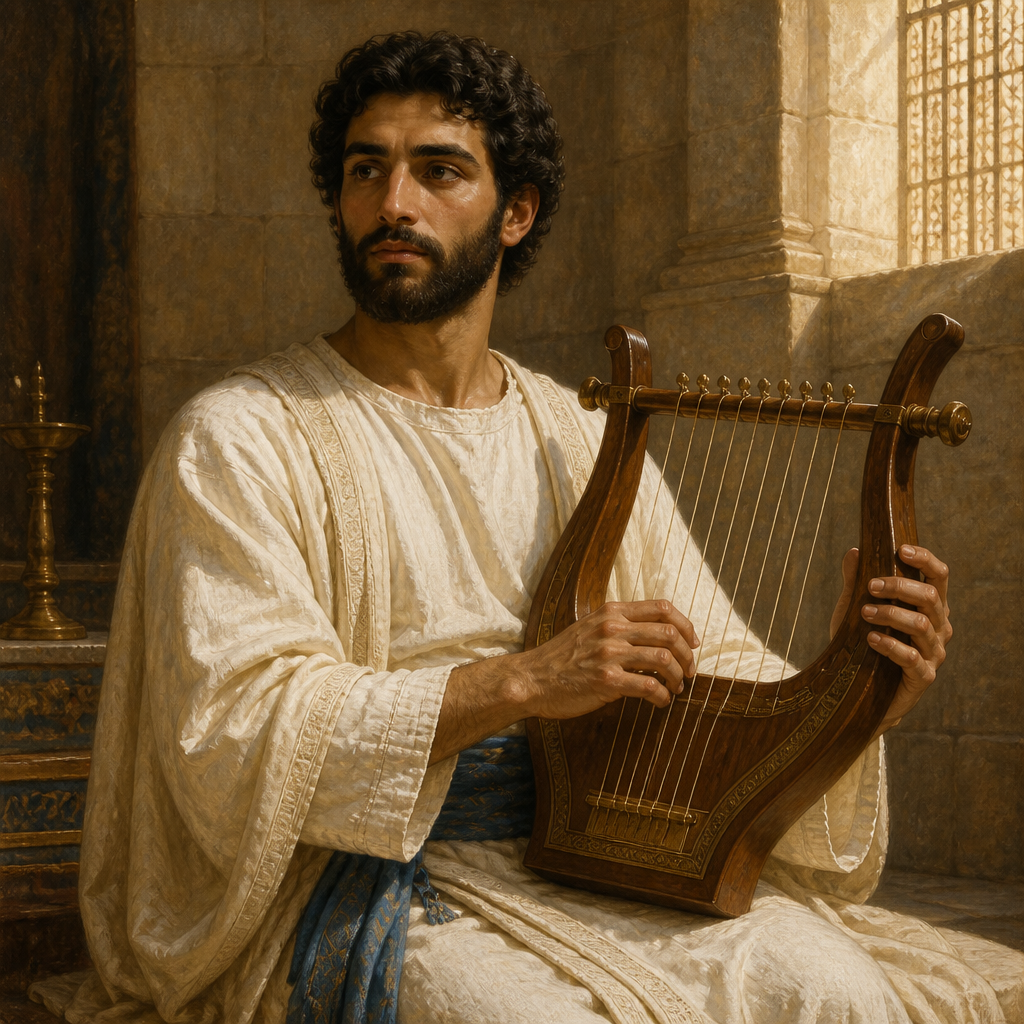
His role was not merely performance-based but was part of a divinely sanctioned prophetic ministry of music. According to the chronicler, Mahazioth and his family were set apart to prophesy with harps, lyres, and cymbals. His life reflects the high degree of organization and specialization present in the religious life of Israel during the height of the Davidic administration.
Background and Family
Mahazioth was born into a prestigious lineage within the tribe of Levi. His father, Heman, was a prominent figure in the Israelite cultic system, described in 1 Chronicles 25:5 as the "king’s seer." Heman was granted fourteen sons and three daughters by God, a mark of divine favor intended to "exalt him." Mahazioth was the youngest of these fourteen sons, appearing last in the genealogical list provided in 1 Chronicles 25:4.
His brothers included Bukkiah, Mattaniah, Uzziel, Shebuel, Jerimoth, Hananiah, Hanani, Eliathah, Giddalti, Romamti-ezer, Joshbekashah, Mallothi, and Hothir. Growing up in such a household, Mahazioth would have been immersed in the traditions of choral and instrumental music from an early age, as his father and uncles (Asaph and Jeduthun) were the primary architects of the Tabernacle's musical liturgy under King David’s direction.
Major Life Events
The defining moment of Mahazioth’s recorded life occurs during the transition of the Israelite monarchy toward the building of the First Temple. King David, along with the commanders of the army, set apart the sons of Heman for special service. This was not a casual appointment but a formal selection process designed to ensure that the house of the Lord would be served by skilled and consecrated individuals.
According to 1 Chronicles 25:8, lots were cast to determine the order of service among the musicians, regardless of age or status—small and great, teacher and student alike. Though Mahazioth was the youngest son, the lot fell to him for the twenty-third division of the musical rotation. This rotation system ensured that the worship of the LORD remained continuous and professional. Mahazioth was responsible for a group consisting of twelve men, including his own sons and brothers, over whom he exercised leadership and instruction.
Relationship to Other Biblical Figures
Mahazioth’s primary relationships are defined by his familial ties to the house of Heman. As a Levite, he served under the broader authority of the high priesthood, but his immediate supervisor was his father. The text notes that all the sons of Heman were "under the direction of their father" for the music of the house of the LORD (1 Chronicles 25:6).
He worked in parallel with the families of Asaph and Jeduthun. This collaborative environment suggests a life spent in close quarters with other Levite families, maintaining the instruments and learning the complex repertoire of psalms and prophetic songs that characterized the era. His inclusion in the list of the twenty-four divisions places him alongside other notable figures of the Davidic era who were tasked with institutionalizing Israel's worship.
Spiritual Significance
The significance of Mahazioth lies in the concept of "prophetic music." The Chronicler records that these musicians were chosen to "prophesy with lyres, harps, and cymbals" (1 Chronicles 25:1). This indicates that Mahazioth’s role was not merely aesthetic but was considered a medium for divine communication and spiritual warfare.
Furthermore, the mention of Mahazioth specifically as the leader of the twenty-third lot demonstrates the biblical principle of order and divine sovereignty. In a system where forty thousand Levites were available for service, the naming of Mahazioth underscores the importance of the individual within the collective service of God. His life serves as a testament to the transition of Israelite worship from the mobile Tabernacle to the permanent Temple, where artistry and devotion were formally wedded through the Levite guilds.
Mahazioth represents the institutionalization of worship in Israel. As the leader of the twenty-third division of musicians, he exemplifies how the Levites maintained the spiritual atmosphere of the nation through disciplined, organized liturgical service. His inclusion in the biblical record highlights the value placed on skill (the 'teacher and student' mentioned in 1 Chronicles 25:8) and the belief that music was a prophetic endeavor.
Theologically, Mahazioth's role illustrates the concept of 'order' in the sanctuary. By serving in his appointed lot, he contributed to the seamless rotation of praise that King David established to mirror the heavenly court. His life demonstrates that even those mentioned briefly in the genealogies played an essential role in the religious stability of the United Monarchy.
Frequently Asked Questions
Who was Mahazioth's father?
Mahazioth was the son of Heman, who was identified as the king's seer and a leader of the temple musicians.
What tribe did Mahazioth belong to?
Mahazioth belonged to the tribe of Levi, specifically the branch tasked with the musical ministry of the sanctuary.
What was Mahazioth's specific job in the Temple?
He was a musician and a leader of the twenty-third division of temple singers, overseeing a group of twelve relatives including his sons and brothers.
How many siblings did Mahazioth have?
He had thirteen brothers and three sisters, all of whom were children of Heman.
In which book of the Bible is Mahazioth mentioned?
Mahazioth is mentioned exclusively in the book of 1 Chronicles, specifically in chapter 25.
Family & Relationships
Parents
 Heman the SingerFather1 Chronicles 25:4Stated
 MahaziothThis page
 BukkiahBrother1 Chronicles 25:4Stated
 EliathahBrother1 Chronicles 25:4Stated
 GiddaltiBrother1 Chronicles 25:4Stated
 Hanani, Musician of the United MonarchyBrother1 Chronicles 25:4Stated
 Hananiah, Levite Musician of the United MonarchyBrother1 Chronicles 25:4Stated
 HothirBrother1 Chronicles 25:4Stated
 Jerimoth, Levite Musician of the United MonarchyBrother1 Chronicles 25:4Stated
 JoshbekashahBrother1 Chronicles 25:4Stated
 MallothiBrother1 Chronicles 25:4Stated
 Mattaniah, Son of Heman the SingerBrother1 Chronicles 25:4Stated
 Romamti-ezerBrother1 Chronicles 25:4Stated
 Shebuel, Son of Heman the SingerBrother1 Chronicles 25:4Stated
 Uzziel, Son of Heman the SingerBrother1 Chronicles 25:4Stated
Connected Figures
Family
Father · 1 Chronicles 25:4
A prominent Levite singer, musician, and king's seer during the United Monarchy, appointed by David to lead the worship in the house of the LORD.
United MonarchyFirst: 1 Chronicles 6:3311 versesMusician, Singer, King's SeerLevi
Brother · 1 Chronicles 25:4
A Levite musician and son of Heman the Singer who was appointed by King David to lead the sixth division of temple musicians.
United MonarchyFirst: 1 Chronicles 25:42 versesLevite musician and division leaderLevi
Brother · 1 Chronicles 25:4
A Levite musician and son of Heman the Singer who served in the temple during the reign of King David.
United MonarchyFirst: 1 Chronicles 25:42 versesLevitical MusicianLevi
Brother · 1 Chronicles 25:4
A Levite musician and son of Heman the king's seer, appointed by lot to lead the twenty-second division of temple musicians during the reign of King David.
United MonarchyFirst: 1 Chronicles 25:43 versesMusician and Levitical leaderLevi
Brother · 1 Chronicles 25:4
A Levite musician and son of Heman the Singer who served in the temple under King David's organized worship system.
United MonarchyFirst: 1 Chronicles 25:42 versesLevite MusicianLevi
Brother · 1 Chronicles 25:4
Hananiah was a Levite musician and son of Heman who served as the leader of the sixteenth division of temple musicians during the reign of King David.
United MonarchyFirst: 1 Chronicles 25:42 versesMusician and Leader of the 16th DivisionLevi
Brother · 1 Chronicles 25:4
A Levite musician and son of Heman the Singer who served in the temple worship during the reign of King David in the United Monarchy era.
United MonarchyFirst: 1 Chronicles 25:42 versesLevite MusicianLevi
Brother · 1 Chronicles 25:4
A Levite musician and son of Heman the king's seer, Jerimoth was chosen by lot to lead the fifteenth division of musicians in the temple during the reign of King David.
United MonarchyFirst: 1 Chronicles 25:42 versesLevite Musician and Division LeaderLevi
Brother · 1 Chronicles 25:4
A Levite musician and son of Heman the king's seer, appointed by King David to lead the seventeenth division of sanctuary singers.
United MonarchyFirst: 1 Chronicles 25:42 versesLevite MusicianLevi
Brother · 1 Chronicles 25:4
Mallothi was a Levite musician and son of Heman the king's seer, appointed to lead the nineteenth division of sanctuary singers during the United Monarchy.
United MonarchyFirst: 1 Chronicles 25:42 versesLevite Musician and Division LeaderLevi
Brother · 1 Chronicles 25:4
A Levite musician and son of Heman the King's Seer, Mattaniah served in the sanctuary as a leader of the ninth musical division during the United Monarchy.
United MonarchyFirst: 1 Chronicles 25:42 versesLevite Musician and LeaderLevi
Brother · 1 Chronicles 25:4
A Levite musician and son of Heman the Singer who served in the temple during the reign of King David and led the twenty-fourth division of sanctuary music.
United MonarchyFirst: 1 Chronicles 25:42 versesLevite Musician and Division LeaderLevi
Mentions by Book
- 1 Chronicles2
Scripture References
All 2 indexed verses, in canonical order, from the Berean Standard Bible.
1 Chronicles · 2
- 1 Chronicles 25:4
From the sons of Heman: Bukkiah, Mattaniah, Uzziel, Shebuel, Jerimoth, Hananiah, Hanani, Eliathah, Giddalti, Romamti-ezer, Joshbekashah, Mallothi, Hothir, and Mahazioth.
- 1 Chronicles 25:30
the twenty-third to Mahazioth, his sons, and his brothers—12 in all;