Eliathah
Who was Eliathah in the Bible?
A Levite musician and son of Heman the Singer who served in the temple during the reign of King David.
Eliathah was a member of the tribe of Levi who lived during the United Monarchy era of ancient Israel. As one of the fourteen sons of Heman the king's seer, he was integrated into the highly structured system of liturgical music established by King David. His name, which may be translated as 'God has come,' reflects the spiritual heritage of his family line.
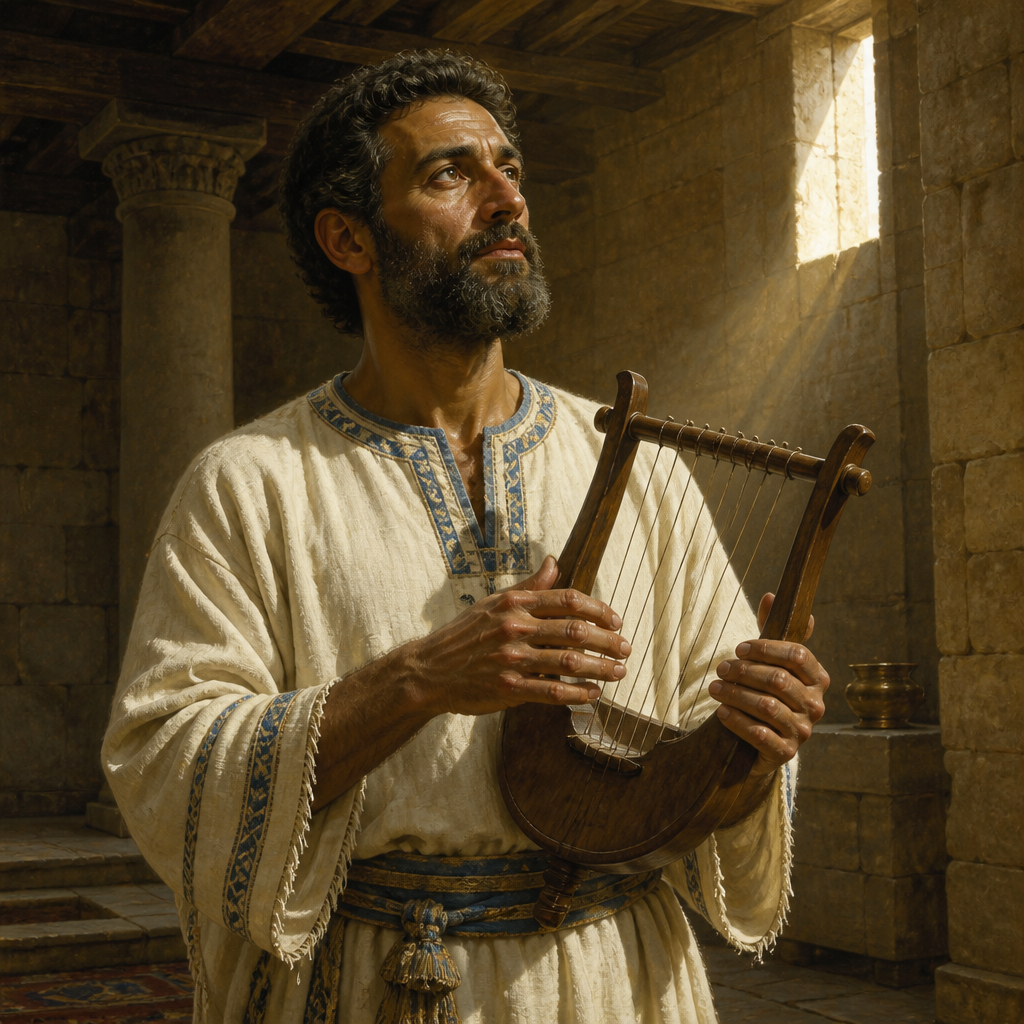
In the biblical record, Eliathah is primarily identified by his specific role within the twenty-four divisions of musicians. These divisions were tasked with the ministry of prophecy and praise through instruments such as cymbals, harps, and lyres. Eliathah’s inclusion in these lists underscores the importance of hereditary service and organized worship in the post-tabernacle and pre-temple transition of Israel's religious life.
Background and Family
Eliathah was a son of Heman the Singer, who is described in the biblical text as the 'king’s seer in the words of God' (1 Chronicles 25:5). Heman was a grandson of the prophet Samuel, making Eliathah a descendant of one of Israel’s most prominent spiritual lineages. He grew up in a household specifically designated for musical excellence; according to the chronicler, God gave Heman fourteen sons and three daughters to 'exalt his horn,' signifying a blessing of strength and status through a large family.
Eliathah’s siblings included Bukkiah, Mattaniah, Uzziel, Shebuel, Jerimoth, Hananiah, Hanani, Giddalti, Romamti-ezer, Joshbekashah, Mallothi, Hothir, and Mahazioth. This cohort of brothers formed the core of the musical guilds that would sustain the spiritual atmosphere of the Jerusalem sanctuary.
Major Life Events
The primary biographical event recorded for Eliathah is his appointment to the twentieth division of the temple musicians. During the latter years of King David's reign, the king organized the Levites into specific courses to ensure that the service of the Lord would be conducted in an orderly and continuous fashion. The musicians were divided by lot, a process intended to reflect the divine will rather than human preference.
When the lots were cast, the twentieth lot fell to Eliathah. Each of these divisions consisted of twelve men, comprising the primary individual, his sons, and his brothers. This structure ensured that Eliathah was not merely a solo performer but a leader of a small ensemble of twelve skilled relatives dedicated to the service of the sanctuary.
Relationship to Other Biblical Figures
Eliathah’s life was defined by his relationship to his father, Heman, and his service under King David. Heman was one of the three primary musical leaders appointed by David, alongside Asaph and Ethan (or Jeduthun). Consequently, Eliathah worked in a professional environment alongside the children of Asaph and Jeduthun, contributing to a massive collective of 288 trained musicians (1 Chronicles 25:7).
Spiritual Significance
While Eliathah is a minor figure in terms of narrative action, his presence in the genealogies of 1 Chronicles 25 signifies the biblical value placed on 'prophesying with harps, lyres, and cymbals.' The text suggests that the music Eliathah and his brothers produced was not merely aesthetic entertainment but a form of prophetic ministry directed toward God. His life represents the consecration of artistic talent to the service of the covenant community, illustrating that every individual role—down to the twentieth lot—was essential to the liturgical wholeness of Israel.
Eliathah's significance lies in the preservation of his name within the sacred registers of the Levites, demonstrating that individual service within the temple was recorded and valued. He represents the transition of Israel's worship from the nomadic tabernacle to the institutionalized temple service under the Davidic covenant.
Theologically, Eliathah is part of a larger picture of divine order. By serving in the twentieth division, he participated in a system where music was considered a 'service' (Avodah) equivalent to the sacrificial system. His inclusion in the 12-man unit highlights the biblical theme of familial cooperation in spiritual duties.
Frequently Asked Questions
What does the name Eliathah mean?
The name Eliathah is Hebrew for 'God has come' or 'Thou art my God.'
Which tribe did Eliathah belong to?
Eliathah belonged to the tribe of Levi, specifically the family of Kohath through his father Heman.
What was Eliathah's role in the Bible?
He was a temple musician who led the twentieth division of singers and instrumentalists during the reign of King David.
Who was Eliathah's father?
His father was Heman the Singer, the king's seer and a grandson of the prophet Samuel.
How many musicians were in Eliathah's division?
Eliathah's division consisted of 12 men in total, including his sons and brothers.
Family & Relationships
Parents
 Heman the SingerFather1 Chronicles 25:4Stated
 EliathahThis page
 BukkiahBrother1 Chronicles 25:4Stated
 GiddaltiBrother1 Chronicles 25:4Stated
 Hanani, Musician of the United MonarchyBrother1 Chronicles 25:4Stated
 Hananiah, Levite Musician of the United MonarchyBrother1 Chronicles 25:4Stated
 HothirBrother1 Chronicles 25:4Stated
 Jerimoth, Levite Musician of the United MonarchyBrother1 Chronicles 25:4Stated
 JoshbekashahBrother1 Chronicles 25:4Stated
 MahaziothBrother1 Chronicles 25:4Stated
 MallothiBrother1 Chronicles 25:4Stated
 Mattaniah, Son of Heman the SingerBrother1 Chronicles 25:4Stated
 Romamti-ezerBrother1 Chronicles 25:4Stated
 Shebuel, Son of Heman the SingerBrother1 Chronicles 25:4Stated
 Uzziel, Son of Heman the SingerBrother1 Chronicles 25:4Stated
Connected Figures
Family
Father · 1 Chronicles 25:4
A prominent Levite singer, musician, and king's seer during the United Monarchy, appointed by David to lead the worship in the house of the LORD.
United MonarchyFirst: 1 Chronicles 6:3311 versesMusician, Singer, King's SeerLevi
Brother · 1 Chronicles 25:4
A Levite musician and son of Heman the Singer who was appointed by King David to lead the sixth division of temple musicians.
United MonarchyFirst: 1 Chronicles 25:42 versesLevite musician and division leaderLevi
Brother · 1 Chronicles 25:4
A Levite musician and son of Heman the king's seer, appointed by lot to lead the twenty-second division of temple musicians during the reign of King David.
United MonarchyFirst: 1 Chronicles 25:43 versesMusician and Levitical leaderLevi
Brother · 1 Chronicles 25:4
A Levite musician and son of Heman the Singer who served in the temple under King David's organized worship system.
United MonarchyFirst: 1 Chronicles 25:42 versesLevite MusicianLevi
Brother · 1 Chronicles 25:4
Hananiah was a Levite musician and son of Heman who served as the leader of the sixteenth division of temple musicians during the reign of King David.
United MonarchyFirst: 1 Chronicles 25:42 versesMusician and Leader of the 16th DivisionLevi
Brother · 1 Chronicles 25:4
A Levite musician and son of Heman the Singer who served in the temple worship during the reign of King David in the United Monarchy era.
United MonarchyFirst: 1 Chronicles 25:42 versesLevite MusicianLevi
Brother · 1 Chronicles 25:4
A Levite musician and son of Heman the king's seer, Jerimoth was chosen by lot to lead the fifteenth division of musicians in the temple during the reign of King David.
United MonarchyFirst: 1 Chronicles 25:42 versesLevite Musician and Division LeaderLevi
Brother · 1 Chronicles 25:4
A Levite musician and son of Heman the king's seer, appointed by King David to lead the seventeenth division of sanctuary singers.
United MonarchyFirst: 1 Chronicles 25:42 versesLevite MusicianLevi
Brother · 1 Chronicles 25:4
A Levite musician and son of Heman the king's seer, appointed by lot to lead the twenty-third division of temple music during the reign of King David.
United MonarchyFirst: 1 Chronicles 25:42 versesLevite Musician and Division LeaderLevi
Brother · 1 Chronicles 25:4
Mallothi was a Levite musician and son of Heman the king's seer, appointed to lead the nineteenth division of sanctuary singers during the United Monarchy.
United MonarchyFirst: 1 Chronicles 25:42 versesLevite Musician and Division LeaderLevi
Brother · 1 Chronicles 25:4
A Levite musician and son of Heman the King's Seer, Mattaniah served in the sanctuary as a leader of the ninth musical division during the United Monarchy.
United MonarchyFirst: 1 Chronicles 25:42 versesLevite Musician and LeaderLevi
Brother · 1 Chronicles 25:4
A Levite musician and son of Heman the Singer who served in the temple during the reign of King David and led the twenty-fourth division of sanctuary music.
United MonarchyFirst: 1 Chronicles 25:42 versesLevite Musician and Division LeaderLevi
Mentions by Book
- 1 Chronicles2
Scripture References
All 2 indexed verses, in canonical order, from the Berean Standard Bible.
1 Chronicles · 2
- 1 Chronicles 25:4
From the sons of Heman: Bukkiah, Mattaniah, Uzziel, Shebuel, Jerimoth, Hananiah, Hanani, Eliathah, Giddalti, Romamti-ezer, Joshbekashah, Mallothi, Hothir, and Mahazioth.
- 1 Chronicles 25:27
the twentieth to Eliathah, his sons, and his brothers—12 in all;