Abigail, Sister of David
Who was Abigail, Sister of David, in the Bible?
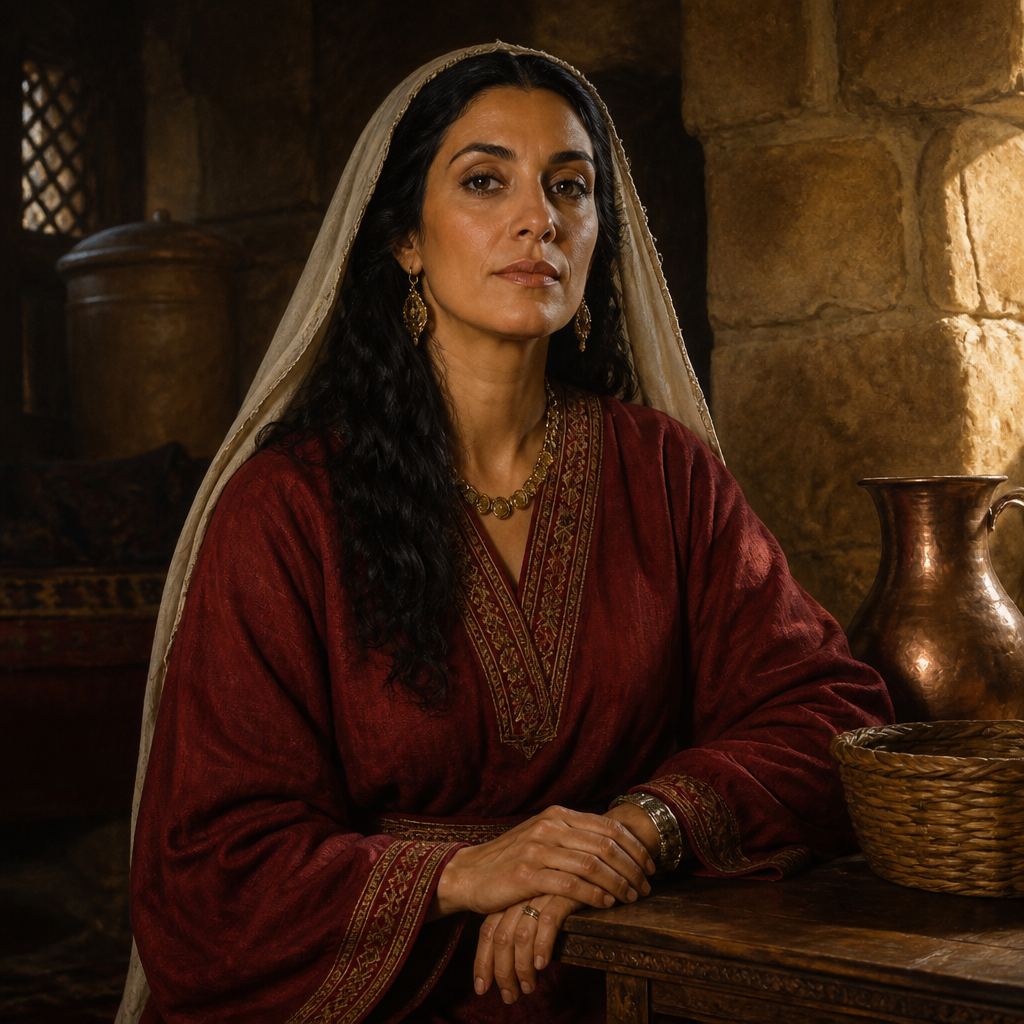
Abigail was a daughter of Nahash or Jesse, a sister to King David, and the mother of Amasa, the commander of Absalom's rebel army.
This is one of 2 people named Abigail in the Bible. See all 2 →
Abigail was a prominent woman within the family of Jesse during the establishment of the United Monarchy in Israel. As a sister to King David and Zeruiah, she occupied a central position in the royal lineage of Judah. Her life is inextricably linked to the complex military and political dynamics of David’s reign, particularly through her son, Amasa.
While her direct actions are not recorded in the biblical narrative, her genealogical placement is critical for understanding the familial rivalries that defined the later years of David’s rule. Her marriage to Jether (or Ithra) the Ishmaelite highlights the cross-cultural alliances and historical complexities present within the early Israelite monarchy, providing essential context for the eventual civil war between David and his son Absalom.
Background and Family
Abigail’s heritage presents a significant genealogical puzzle within the Old Testament record. According to 1 Chronicles 2:16-17, she is listed as a sister to Zeruiah and the seven sons of Jesse, including David, Eliab, and Abinadab. This account identifies her firmly as a member of the tribe of Judah and a daughter of Jesse. However, 2 Samuel 17:25 identifies her as the "daughter of Nahash."
Scholars have long debated this discrepancy. Some suggest that Nahash was another name for Jesse, or perhaps that Abigail and Zeruiah were David’s half-sisters, born to his mother through a previous marriage to a man named Nahash. Regardless of the specific biological detail, the text is clear that Abigail was recognized as a sibling to the king, placing her in the inner circle of the emerging Judean royalty.
Major Life Events
The primary event associated with Abigail in the biblical text is her marriage to Jether (also called Ithra), who is identified as an Ishmaelite in 1 Chronicles 2:17 and 2 Samuel 17:25. This union resulted in the birth of a son, Amasa.
While Abigail herself does not appear in the narrative of the rebellion, her son Amasa becomes a central figure during Absalom’s revolt against King David. Because of his relationship to Abigail, Amasa was David's nephew and a cousin to Joab (the son of Zeruiah). Absalom exploited this familial tie by appointing Amasa as the commander of the rebel army in place of Joab. This set the stage for a tragic internal family conflict, as the two sons of David’s sisters—Joab and Amasa—faced each other on the battlefield.
Relationship to Other Biblical Figures
Abigail serves as a bridge between the various factions of David's house. Her sister, Zeruiah, was the mother of David’s most formidable generals: Joab, Abishai, and Asahel. In contrast, Abigail’s son Amasa eventually led the opposition against these very men.
The text notes that after the rebellion was crushed and Absalom was killed, David attempted to reconcile with the northern tribes and replace the ruthless Joab by offering the generalship to Amasa, citing their shared blood through Abigail. However, this move led to Amasa’s brutal assassination at the hands of Joab, highlighting the violent jealousy that plagued Abigail's extended family.
Spiritual Significance
In the biblical record, Abigail represents the structural importance of women in maintaining the Davidic line and the political landscape of the United Monarchy. Though her personal voice is silent in scripture, her identity defines the status and legitimacy of her son. Her presence in the genealogies of Chronicles and the histories of Samuel underscores that the messianic line of David was not a sterile list of names, but a complex web of human relationships, international marriages, and internal conflicts. Her inclusion ensures that the reader understands the deep-seated familial roots of the tragedies that nearly toppled the throne of Israel.
Abigail’s significance lies primarily in her role as a genealogical link between King David and his nephew Amasa. Her presence in the text explains the complex loyalties and betrayals that occurred during Absalom's rebellion, providing a rationale for why Amasa was given command of the rebel forces and why David later sought to promote him over Joab.
Theologically, her marriage to Jether the Ishmaelite serves as a reminder of the ethnic diversity present within the family of David. Her inclusion in the sparse genealogical records of the United Monarchy emphasizes that the history of Israel's kings was a family history, where the destinies of the nation were often decided by the domestic ties of sisters and cousins.
Frequently Asked Questions
Was Abigail the daughter of Jesse or Nahash?
The Bible provides two accounts: 1 Chronicles 2 identifies her as a daughter of Jesse, while 2 Samuel 17 calls her the daughter of Nahash. Some scholars believe Nahash was a previous husband of David’s mother, making Abigail David's half-sister.
Who was Abigail's husband?
She was married to Jether (also known as Ithra), who is identified as an Ishmaelite.
Who was Abigail's son?
Her son was Amasa, who became the commander of Absalom's army during his rebellion against King David.
How was Abigail related to King David?
She is described as a sister of David, though whether they shared the same father or only the same mother remains a subject of scholarly debate.
What happened to Abigail's son Amasa?
Amasa was eventually murdered by his cousin Joab (the son of Abigail’s sister Zeruiah) after David attempted to make Amasa the head of his army.
Family & Relationships
Parents
 JesseFather1 Chronicles 2:12Stated
 Nahash, Parent of AbigailParent2 Samuel 17:25Stated
 Jether, Father of AmasaHusband2 Samuel 17:25Stated
 Abigail, Sister of DavidThis page
 DavidBrother1 Chronicles 2:15–16Stated
 Abinadab, Son of JesseBrother1 Chronicles 2:13–16Stated
 Eliab, Brother of DavidBrother1 Chronicles 2:12Stated
 ZeruiahSister1 Chronicles 2:16Stated
 Shimeah, Brother of DavidBrother1 Chronicles 2:12Stated
 Elihu, Brother of DavidBrother1 Chronicles 2:16
Inferred
Reconstructed through David and Jether: 1 Chronicles 27:18 ties Elihu to David; 1 Kings 2:32 ties David to Jether (itself an inferred link); 1 Chronicles 2:17 ties Jether to Abigail (itself an inferred link). No verse states the sister link between Elihu and Abigail directly.Evidence: 1 Chronicles 2:16
 Nethanel, Brother of DavidBrother1 Chronicles 2:14–16Stated
 Ozem, Brother of DavidBrother1 Chronicles 2:15–16Stated
 RaddaiBrother1 Chronicles 2:14–16Stated
Children
 Amasa, Nephew of DavidSon1 Chronicles 2:17Stated
Connected Figures
Family
Father · 1 Chronicles 2:12
The father of King David and a resident of Bethlehem, Jesse is a pivotal link in the genealogy of the Davidic dynasty and the Messianic line.
United MonarchyFirst: Ruth 4:1752 versesShepherdJudah
Parent · 2 Samuel 17:25
A figure mentioned in the genealogy of King David’s family, identified as the parent of Abigail and Zeruiah.
United MonarchyFirst: 2 Samuel 17:252 versesParent in the house of Jesse
Husband · 2 Samuel 17:25
Jether was an Ishmaelite who married David's sister Abigail and fathered Amasa, the commander of the armies of Judah.
Son · 1 Chronicles 2:17
Amasa was a military commander and nephew of King David who served as general under Absalom and later briefly replaced Joab before his assassination.
United MonarchyFirst: 2 Samuel 17:2513 versesMilitary Commander
Brother · 1 Chronicles 2:15–16
The second king of the United Monarchy of Israel, a shepherd-warrior and psalmist known as a man after God's own heart.
United MonarchyFirst: Ruth 4:17998 versesKing of Israel, Shepherd, Musician, WarriorJudah
Brother · 1 Chronicles 2:13–16
The second-born son of Jesse and elder brother of King David who served in the army of King Saul during the Philistine wars.
United MonarchyFirst: 1 Samuel 16:812 versesSoldierJudah
Brother · 1 Chronicles 2:12
Eliab was the firstborn son of Jesse of Bethlehem and the eldest brother of King David, known for his imposing stature and service in King Saul's army.
United MonarchyFirst: 1 Samuel 16:615 versesSoldierJudah
Sister · 1 Chronicles 2:16
The sister of King David and mother of his three most powerful military leaders, Joab, Abishai, and Asahel, during the United Monarchy.
United MonarchyFirst: 1 Samuel 26:638 versesMatriarch of the Davidic Royal FamilyJudah
Brother · 1 Chronicles 2:12
The third son of Jesse and an elder brother of King David, Shimeah served in the army of Saul and was the father of the shrewd Jonadab and the warrior Jonathan.
United MonarchyFirst: 2 Samuel 13:316 versesSoldierJudah
Brother · 1 Chronicles 2:16
A son of Jesse and brother of King David who served as the tribal leader of Judah during the United Monarchy.
United MonarchyFirst: 1 Chronicles 27:1814 versesPrince of JudahJudah
Brother · 1 Chronicles 2:14–16
Nethanel was the fourth son of Jesse and an elder brother of King David during the era of the United Monarchy.
Brother · 1 Chronicles 2:15–16
Ozem was the sixth son of Jesse and a biological brother of King David within the tribe of Judah during the United Monarchy.
Categories
Mentions by Book
- 1 Samuel1
- 2 Samuel4
- 1 Kings2
- 1 Chronicles7
Scripture References
All 14 indexed verses, in canonical order, from the Berean Standard Bible.
1 Samuel · 1
- 1 Samuel 17:13Partial
The three older sons of Jesse had followed Saul into battle: The firstborn was Eliab, the second was Abinadab, and the third was Shammah.
Cited as evidence on a family card; added so References, Key Verses and Mentions by Book share one index.
2 Samuel · 4
- 2 Samuel 13:3Partial
Now Amnon had a friend named Jonadab, the son of David’s brother Shimeah. Jonadab was a very shrewd man,
Cited as evidence on a family card; added so References, Key Verses and Mentions by Book share one index.
- 2 Samuel 13:32Partial
But Jonadab, the son of David’s brother Shimeah, spoke up: “My lord must not think they have killed all the sons of the king, for only Amnon is dead. In fact, Absalom has planned this since the day Amnon violated his sister Tamar.
Cited as evidence on a family card; added so References, Key Verses and Mentions by Book share one index.
- 2 Samuel 17:25
Absalom had appointed Amasa over the army in place of Joab. Amasa was the son of a man named Ithra, the Ishmaelite who had married Abigail, the daughter of Nahash and sister of Zeruiah the mother of Joab.
- 2 Samuel 21:21Partial
and when he taunted Israel, Jonathan the son of David’s brother Shimei killed him.
Cited as evidence on a family card; added so References, Key Verses and Mentions by Book share one index.
1 Kings · 2
- 1 Kings 2:5Partial
Moreover, you know what Joab son of Zeruiah did to me—what he did to Abner son of Ner and Amasa son of Jether, the two commanders of the armies of Israel. He killed them in peacetime to avenge the blood of war. He stained with the blood of war the belt around his waist and the sandals on his feet.
Cited as evidence on a family card; added so References, Key Verses and Mentions by Book share one index.
- 1 Kings 2:32Partial
The LORD will bring his bloodshed back upon his own head, for without the knowledge of my father David he struck down two men more righteous and better than he when he put to the sword Abner son of Ner, commander of Israel’s army, and Amasa son of Jether, commander of Judah’s army.
Cited as evidence on a family card; added so References, Key Verses and Mentions by Book share one index.
1 Chronicles · 7
- 1 Chronicles 2:13Partial
Jesse was the father of Eliab his firstborn; Abinadab was born second, Shimea third,
Cited as evidence on a family card; added so References, Key Verses and Mentions by Book share one index.
- 1 Chronicles 2:14Partial
Nethanel fourth, Raddai fifth,
Cited as evidence on a family card; added so References, Key Verses and Mentions by Book share one index.
- 1 Chronicles 2:15Partial
Ozem sixth, and David seventh.
Cited as evidence on a family card; added so References, Key Verses and Mentions by Book share one index.
- 1 Chronicles 2:16
Their sisters were Zeruiah and Abigail. And the three sons of Zeruiah were Abishai, Joab, and Asahel.
- 1 Chronicles 2:17
Abigail was the mother of Amasa, whose father was Jether the Ishmaelite.
- 1 Chronicles 20:7Partial
and when he taunted Israel, Jonathan the son of David’s brother Shimei killed him.
Cited as evidence on a family card; added so References, Key Verses and Mentions by Book share one index.
- 1 Chronicles 27:18Partial
over Judah was Elihu, one of David’s brothers; over Issachar was Omri son of Michael;
Cited as evidence on a family card; added so References, Key Verses and Mentions by Book share one index.
Others Named Abigail
Compare all 2 bearers →Abigail, Wife of David1 Samuel 25:3
An intelligent and beautiful woman from Carmel who averted a massacre through diplomacy and later became one of King David’s primary wives.