Eliab, Brother of David
Who was Eliab, Brother of David, in the Bible?
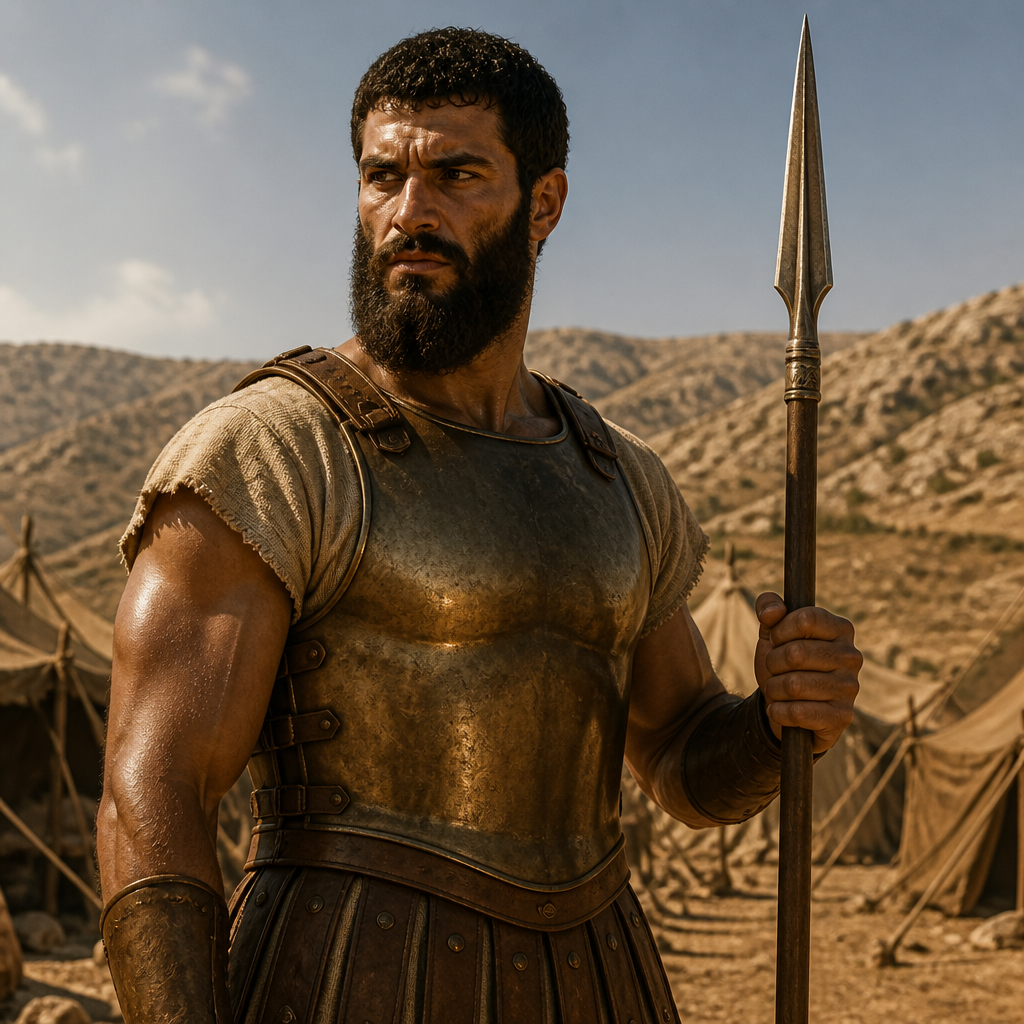
Eliab was the firstborn son of Jesse of Bethlehem and the eldest brother of King David, known for his imposing stature and service in King Saul's army.
This is one of 5 people named Eliab in the Bible. See all 5 →
Eliab, the son of Jesse, lived during the period of the United Monarchy in Israel. As the firstborn of eight sons, he held a position of natural prominence within his family and his tribe, Judah. He is first introduced in the biblical narrative when the prophet Samuel visits Bethlehem to secretly anoint a successor to King Saul. Eliab's physical appearance was so impressive that even a seasoned prophet initially mistook him for God’s chosen king.
Despite his physical advantages, Eliab is primarily remembered for his presence in the Valley of Elah during the confrontation with Goliath. As a soldier in the army of Israel, his interactions with his youngest brother, David, reveal the domestic tensions and the differing perspectives on faith and courage that existed within Jesse’s household. His lineage continued to be noted in later historical records, particularly regarding his descendants' marriage into the royal line of Judah.
Background and Family
Eliab was the eldest son of Jesse the Bethlehemite, a member of the Tribe of Judah. The genealogical records in 1 Chronicles 2:13 confirm his status as the firstborn, followed by his brothers Abinadab, Shimea (also spelled Shimeah), Nethanel, Raddai, Ozem, and David. He also had sisters named Zeruiah and Abigail. The biblical record mentions a relationship to Nahash in 2 Samuel 17:25, which has led to scholarly discussion regarding whether Eliab and his siblings shared the same mother or father as Abigail and Zeruiah, though Eliab is consistently identified as Jesse’s son.
Major Life Events
The Visit of Samuel
Eliab first appears in 1 Samuel 16 when the LORD instructs Samuel to go to Bethlehem to anoint a new king. When Jesse’s sons are presented to the prophet, Eliab is the first to stand before him. Samuel, seeing Eliab’s height and striking appearance, concluded, “Surely here before the LORD is His anointed” (1 Samuel 16:6). However, God famously corrected the prophet, stating that He does not look at the outward appearance but at the heart, ultimately rejecting Eliab in favor of the youngest brother, David.
The Conflict with Goliath
During the Philistine invasion led by the giant Goliath, Eliab and his two next oldest brothers, Abinadab and Shammah, followed King Saul into battle. While the Israelite army stood paralyzed by fear in the Valley of Elah, David arrived at the camp to bring provisions. Upon hearing David inquiring about the reward for killing the Philistine, Eliab’s “anger burned against David” (1 Samuel 17:28). He publicly rebuked David, accusing him of pride, neglect of his duties as a shepherd, and having a “wickedness of heart.” This confrontation highlights the contrast between Eliab’s traditional military perspective and David’s faith-driven confidence.
Relationship to Other Biblical Figures
Beyond his role as David’s eldest brother, Eliab’s legacy is preserved through his daughter, Abihail. According to 2 Chronicles 11:18, Abihail married Jerimoth, a son of David, and their daughter Mahalath eventually married King Rehoboam. Through this union, Eliab’s lineage remained closely integrated with the Davidic dynasty. Additionally, 1 Chronicles 27:18 mentions an Elihu, a brother of David, as a leader of the tribe of Judah; many scholars identify this Elihu as Eliab himself, suggesting he eventually held a position of tribal authority during David’s reign.
Spiritual Significance
Eliab serves as a primary biblical example of the limitation of human judgment based on physical attributes. His rejection by God in 1 Samuel 16 establishes a recurring theme in Scripture: the elevation of the younger over the elder and the heart’s condition over physical prowess. Furthermore, his harsh treatment of David in the camp serves as a foil to David’s character, illustrating that even those closest to God’s chosen leaders may fail to perceive the divine purpose at work due to jealousy or conventional thinking.
Eliab’s significance lies in his role as the 'rejected firstborn,' a motif that echoes throughout Genesis and the histories of Israel. His story reinforces the theological principle that divine election is not based on birthright or physical strength, but on the hidden qualities of the heart known only to God. His interaction with David also provides a domestic context for David's rise, showing that David's greatest challenges often began within his own family.
Additionally, Eliab represents the traditional military establishment of Israel under Saul—men who were physically capable but spiritually hesitant. By contrasting Eliab’s anger with David’s zeal, the text emphasizes that true leadership in Israel required a spiritual vision that Eliab, despite his impressive stature, lacked.
Frequently Asked Questions
Was Eliab ever king of Israel?
No. Although the prophet Samuel initially thought Eliab was the chosen one because of his appearance, God explicitly rejected him, and his youngest brother David was anointed instead.
What did Eliab say to David in the Valley of Elah?
Eliab accused David of being conceited and having a 'wicked heart,' questioning why he had left his few sheep in the wilderness just to watch the battle.
Who were Eliab's parents?
Eliab was the son of Jesse of Bethlehem. While the Bible focuses on Jesse, 2 Samuel 17:25 mentions Nahash in connection with his sisters, though Jesse is his primary recorded father.
Did Eliab have children?
Yes, the Bible records that Eliab had a daughter named Abihail, who became part of the royal family through marriage.
Is Eliab and Elihu the same person?
It is widely believed by scholars that the 'Elihu' mentioned in 1 Chronicles 27:18 as a chief of the tribe of Judah is the same person as Eliab, David's eldest brother.
Family & Relationships
Parents
 JesseFather1 Chronicles 2:13Stated
 Eliab, Brother of DavidThis page
 DavidBrother1 Samuel 17:13–14Stated
 Abinadab, Son of JesseBrother1 Samuel 17:13Stated
 ZeruiahSister1 Chronicles 2:12Stated
 Abigail, Sister of DavidSister1 Chronicles 2:12Stated
 Shimeah, Brother of DavidBrother1 Chronicles 2:13Stated
 Elihu, Brother of DavidBrother1 Samuel 17:28
Inferred
Reconstructed through Abihail and David: 2 Chronicles 11:18 ties Eliab to Abihail; 2 Chronicles 11:18 ties Abihail to David (itself an inferred link); 1 Chronicles 27:18 ties David to Elihu. No verse states the brother link between Eliab and Elihu directly.Evidence: 1 Samuel 17:28; 1 Chronicles 27:18
 Nethanel, Brother of DavidBrother1 Chronicles 2:12Stated
 Ozem, Brother of DavidBrother1 Chronicles 2:12Stated
 RaddaiBrother1 Chronicles 2:12Stated
Children
 Abihail, Daughter of EliabDaughter2 Chronicles 11:18Stated
Connected Figures
Family
Father · 1 Chronicles 2:13
The father of King David and a resident of Bethlehem, Jesse is a pivotal link in the genealogy of the Davidic dynasty and the Messianic line.
United MonarchyFirst: Ruth 4:1752 versesShepherdJudah
Daughter · 2 Chronicles 11:18
A woman of the tribe of Judah and the daughter of Eliab, notable as the mother of Mahalath in the royal lineage of King David.
Divided MonarchyFirst: 2 Chronicles 11:183 versesNoblewomanJudah
Brother · 1 Samuel 17:13–14
The second king of the United Monarchy of Israel, a shepherd-warrior and psalmist known as a man after God's own heart.
United MonarchyFirst: Ruth 4:17998 versesKing of Israel, Shepherd, Musician, WarriorJudah
Brother · 1 Samuel 17:13
The second-born son of Jesse and elder brother of King David who served in the army of King Saul during the Philistine wars.
United MonarchyFirst: 1 Samuel 16:812 versesSoldierJudah
Sister · 1 Chronicles 2:12
The sister of King David and mother of his three most powerful military leaders, Joab, Abishai, and Asahel, during the United Monarchy.
United MonarchyFirst: 1 Samuel 26:638 versesMatriarch of the Davidic Royal FamilyJudah
Sister · 1 Chronicles 2:12
Abigail was a daughter of Nahash or Jesse, a sister to King David, and the mother of Amasa, the commander of Absalom's rebel army.
Brother · 1 Chronicles 2:13
The third son of Jesse and an elder brother of King David, Shimeah served in the army of Saul and was the father of the shrewd Jonadab and the warrior Jonathan.
United MonarchyFirst: 2 Samuel 13:316 versesSoldierJudah
Brother · 1 Samuel 17:28
A son of Jesse and brother of King David who served as the tribal leader of Judah during the United Monarchy.
United MonarchyFirst: 1 Chronicles 27:1814 versesPrince of JudahJudah
Brother · 1 Chronicles 2:12
Nethanel was the fourth son of Jesse and an elder brother of King David during the era of the United Monarchy.
Brother · 1 Chronicles 2:12
Ozem was the sixth son of Jesse and a biological brother of King David within the tribe of Judah during the United Monarchy.
Brother · 1 Chronicles 2:12
Raddai was a son of Jesse and a brother of King David, belonging to the tribe of Judah during the United Monarchy.
Categories
Mentions by Book
- 1 Samuel5
- 2 Samuel3
- 1 Chronicles6
- 2 Chronicles1
Scripture References
All 15 indexed verses, in canonical order, from the Berean Standard Bible.
1 Samuel · 5
- 1 Samuel 16:6
When they arrived, Samuel saw Eliab and said, “Surely here before the LORD is His anointed.”
- 1 Samuel 16:7Partial
But the LORD said to Samuel, “Do not consider his appearance or height, for I have rejected him; the LORD does not see as man does. For man sees the outward appearance, but the LORD sees the heart.”
Cited as a key verse; added so References, Key Verses and Mentions by Book share one index.
- 1 Samuel 17:13
The three older sons of Jesse had followed Saul into battle: The firstborn was Eliab, the second was Abinadab, and the third was Shammah.
- 1 Samuel 17:14Partial
And David was the youngest. The three oldest had followed Saul,
Cited as evidence on a family card; added so References, Key Verses and Mentions by Book share one index.
- 1 Samuel 17:28Partial
Now when David’s oldest brother Eliab heard him speaking to the men, his anger burned against David. “Why have you come down here?” he asked. “And with whom did you leave those few sheep in the wilderness? I know your pride and wickedness of heart—you have come down to see the battle!”
2 Samuel · 3
- 2 Samuel 13:3Partial
Now Amnon had a friend named Jonadab, the son of David’s brother Shimeah. Jonadab was a very shrewd man,
Cited as evidence on a family card; added so References, Key Verses and Mentions by Book share one index.
- 2 Samuel 13:32Partial
But Jonadab, the son of David’s brother Shimeah, spoke up: “My lord must not think they have killed all the sons of the king, for only Amnon is dead. In fact, Absalom has planned this since the day Amnon violated his sister Tamar.
Cited as evidence on a family card; added so References, Key Verses and Mentions by Book share one index.
- 2 Samuel 21:21Partial
and when he taunted Israel, Jonathan the son of David’s brother Shimei killed him.
Cited as evidence on a family card; added so References, Key Verses and Mentions by Book share one index.
1 Chronicles · 6
- 1 Chronicles 2:13
Jesse was the father of Eliab his firstborn; Abinadab was born second, Shimea third,
- 1 Chronicles 2:14Partial
Nethanel fourth, Raddai fifth,
Cited as evidence on a family card; added so References, Key Verses and Mentions by Book share one index.
- 1 Chronicles 2:15Partial
Ozem sixth, and David seventh.
Cited as evidence on a family card; added so References, Key Verses and Mentions by Book share one index.
- 1 Chronicles 2:16Partial
Their sisters were Zeruiah and Abigail. And the three sons of Zeruiah were Abishai, Joab, and Asahel.
Cited as evidence on a family card; added so References, Key Verses and Mentions by Book share one index.
- 1 Chronicles 20:7Partial
and when he taunted Israel, Jonathan the son of David’s brother Shimei killed him.
Cited as evidence on a family card; added so References, Key Verses and Mentions by Book share one index.
- 1 Chronicles 27:18Partial
over Judah was Elihu, one of David’s brothers; over Issachar was Omri son of Michael;
Cited as evidence on a family card; added so References, Key Verses and Mentions by Book share one index.
2 Chronicles · 1
- 2 Chronicles 11:18
And Rehoboam married Mahalath, who was the daughter of David’s son Jerimoth and of Abihail, the daughter of Jesse’s son Eliab.
Others Named Eliab
Compare all 5 bearers →Eliab, Leader of ZebulunNumbers 1:9
Eliab son of Helon was the tribal leader and military commander of the tribe of Zebulun during the Israelites' wilderness wanderings following the Exodus from Egypt.
Eliab, Gadite Warrior of the Divided Monarchy1 Chronicles 12:9
Eliab was a high-ranking Gadite warrior who joined David's forces.
Eliab, Levite Musician of the United Monarchy1 Chronicles 15:18
Eliab was a Levite musician appointed to play the harp during the transport of the Ark of the Covenant to Jerusalem and subsequent Tabernacle worship.
Eliab, Father of Dathan and AbiramNumbers 16:1
Eliab was a Reubenite whose sons, Dathan and Abiram, led a famous rebellion against the leadership of Moses and Aaron in the wilderness.