Ishmael, Son of Abraham
Ishmael was the firstborn son of Abraham through Hagar, the forefather of the Ishmaelite tribes, and a patriarch whom God promised would father twelve princes.
Ishmael stands as a pivotal figure in the patriarchal narratives of Genesis, representing the intersection of human initiative and divine providence. Born to Abraham and Hagar, the Egyptian maidservant of Sarah, his name—meaning 'God hears'—was bestowed by an angel before his birth, signaling that his life and the plight of his mother were recognized by the Almighty. Though he was not the son of the covenantal promise through whom the lineage of Israel would be established, Ishmael received his own distinct blessing and promise of greatness.
As the progenitor of the Ishmaelites, his legacy extends through the desert regions of the ancient Near East. The biblical record traces his life from a miraculous survival in the wilderness of Beersheba to his role as a tribal leader and his eventual participation in the burial of his father, Abraham. His story serves as a testament to God’s concern for the descendants of Abraham beyond the line of Isaac, establishing Ishmael as a significant patriarch in his own right.
Background and Family
The origins of Ishmael are rooted in the domestic tensions of Abraham’s household. When Sarah (then Sarai) remained childless despite God's promises of offspring to Abraham (then Abram), she followed the custom of the time by offering her Egyptian maidservant, Hagar, to her husband to bear a child on her behalf (Genesis 16:1–3). This union resulted in the conception of Ishmael. During Hagar’s pregnancy, conflict arose between her and Sarah, leading Hagar to flee into the wilderness. It was there that the Angel of the LORD appeared to her, commanding her to return and naming the child Ishmael, "for the LORD has heard your cry of affliction" (Genesis 16:11).
Ishmael was born when Abraham was eighty-six years old. For thirteen years, he was Abraham's only son and clearly held a place of deep affection in his father's heart. When God later reaffirmed the covenant and specified that Sarah would bear a son named Isaac, Abraham’s immediate reaction was to plead, "O that Ishmael might live under Your blessing!" (Genesis 17:18). In response, God promised that while the covenant would be established through Isaac, Ishmael would also be blessed, made fruitful, and become the father of twelve rulers and a great nation.
Major Life Events
Circumcision and Displacement
At the age of thirteen, Ishmael was circumcised alongside his father, Abraham, as a sign of the covenant given to Abraham’s household (Genesis 17:25–26). However, the birth of Isaac changed the dynamics of the family. During the celebration of Isaac’s weaning, Sarah witnessed Ishmael "mocking" (or playing with) Isaac and demanded that Hagar and Ishmael be expelled to ensure that Ishmael would not share in the inheritance. Though distressed, Abraham complied after receiving divine reassurance that Ishmael would be preserved (Genesis 21:9–13).
Survival in the Wilderness
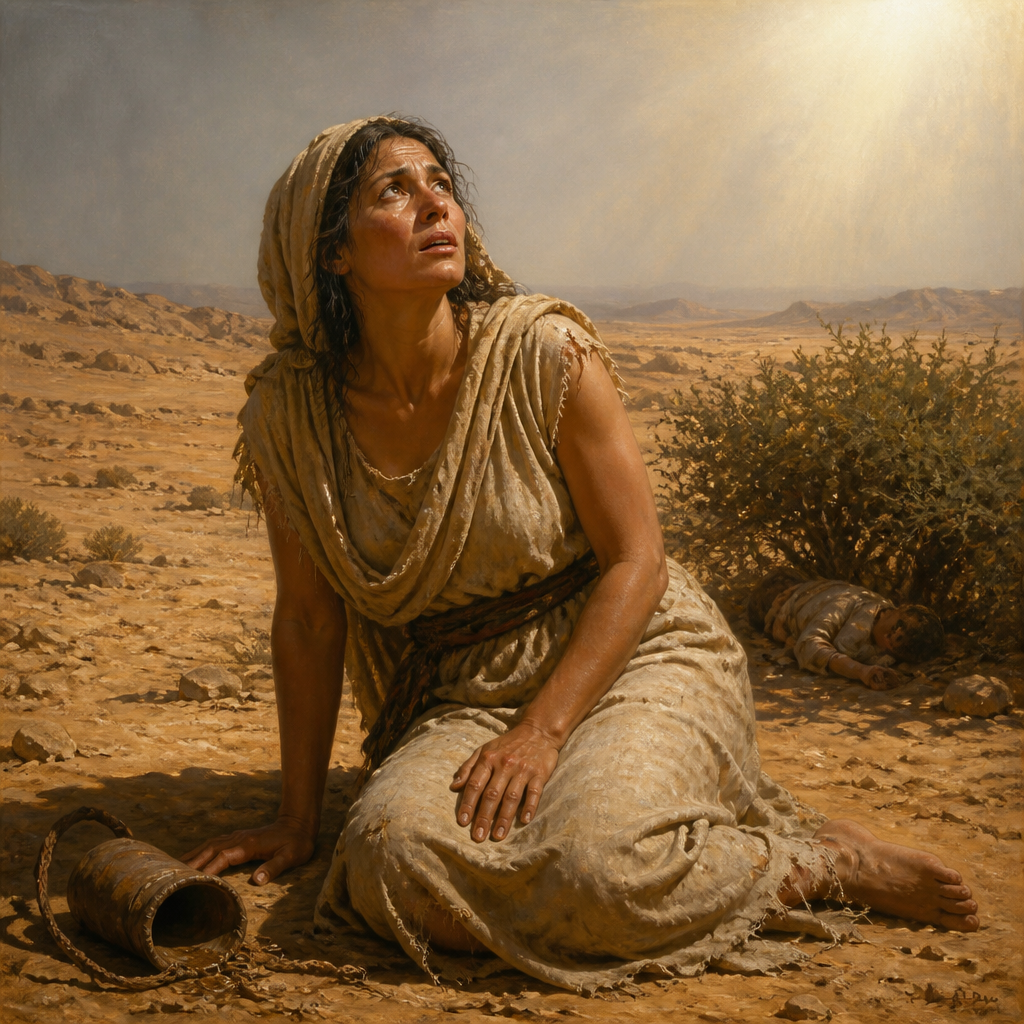
Sent away with only bread and a skin of water, Hagar and Ishmael wandered in the Desert of Beersheba. When their resources were exhausted, Hagar placed the boy under a bush and wept, unable to watch him die. According to Genesis 21:17–19, God heard the boy crying and sent an angel to comfort Hagar, reiterating the promise of Ishmael’s future greatness. God then opened her eyes to see a well of water, saving their lives. Ishmael grew up in the Wilderness of Paran, becoming a skilled archer. His mother eventually secured a wife for him from Egypt.
Later Years and Death
Despite the earlier estrangement, Ishmael remained connected to his family. Following the death of Abraham, Ishmael joined his brother Isaac to bury their father in the cave of Machpelah (Genesis 25:9). This act of shared mourning suggests a degree of reconciliation or at least a recognition of their shared paternal bond. Ishmael lived to the age of 137. The biblical text records that he "breathed his last and died, and was gathered to his people" (Genesis 25:17), a phrasing typically reserved for the patriarchs of the faith.
Relationship to Other Biblical Figures
Ishmael’s primary relationships are defined by his position as Abraham’s firstborn. He was a half-brother to Isaac and later to the six sons Abraham had with Keturah (Zimran, Jokshan, Medan, Midian, Ishbak, and Shuah). His progeny, the Ishmaelites, are frequently mentioned in later biblical history, often as traders or desert-dwelling people. For instance, it was a caravan of Ishmaelites who purchased Joseph from his brothers and took him to Egypt (Genesis 37:25–28). Furthermore, Ishmael’s daughter Mahalath (also called Basemath) married his nephew Esau, the son of Isaac, further intertwining the lineages of the two brothers (Genesis 28:9; 36:3).
Spiritual Significance
In the biblical narrative, Ishmael represents the fulfillment of God’s promise to multiply Abraham’s descendants beyond the specific line of the promised Seed. While Isaac is the son of the promise through whom the Messiah would eventually come, Ishmael is the recipient of a secondary but significant blessing. His life demonstrates that God’s providence extends to those who are cast out or marginalized by human conflict. The twelve princes born to Ishmael (Nebaioth, Kedar, Adbeel, Mibsam, Mishma, Dumah, Massa, Hadad, Tema, Jetur, Naphish, and Kedemah) mirror the twelve tribes of Israel, reinforcing his status as a major patriarchal figure in the history of the ancient Near East.
Spiritual Significance
Theologically, Ishmael serves as a reminder that God’s mercy and hearing ear are not confined to a single lineage. His name itself, 'God hears,' is a permanent marker of divine attention to human suffering. While the Genesis narrative focuses on the covenant line through Isaac, the preservation and prosperity of Ishmael highlight that God remains faithful to His word concerning all of Abraham's offspring.
Furthermore, Ishmael’s story illustrates the complexities of the patriarchal family and the consequences of human attempts to fulfill divine promises through their own means. Yet, even within these complications, Ishmael is never portrayed as cursed; rather, he is a man under divine protection who thrives in the wilderness and maintains a respectful, if distant, relationship with the covenant family.
Frequently Asked Questions
What does the name Ishmael mean?
The name Ishmael (Hebrew: Yishma'el) means 'God hears' or 'God will hear.' It was given by the Angel of the LORD to Hagar because God had heard her cry of affliction.
Who were the twelve sons of Ishmael?
According to Genesis 25:13–15, his twelve sons (who became princes) were Nebaioth, Kedar, Adbeel, Mibsam, Mishma, Dumah, Massa, Hadad, Tema, Jetur, Naphish, and Kedemah.
Why did Sarah want Ishmael sent away?
Sarah saw Ishmael mocking her son Isaac during a feast and feared that Ishmael would claim a portion of the inheritance that she believed belonged solely to Isaac.
Was Ishmael present at Abraham's funeral?
Yes. Genesis 25:9 records that Isaac and Ishmael together buried their father Abraham in the cave of Machpelah.
How long did Ishmael live?
Ishmael lived to be 137 years old before he died and was 'gathered to his people.'
Connected Figures


Categories
Mentions by Book
- Genesis19
- 1 Chronicles5
- 2 Samuel1
- Judges1
- Psalms1
Family & Relationships
Child
Genesis 16:11
Child
Genesis 16:11
Child
Genesis 16:11
Child
Genesis 16:11
Child
Genesis 16:11
Child
Genesis 16:11
Child
Genesis 16:11
Child
Genesis 16:11
Child
Genesis 16:11
Child
Genesis 16:11
Child
Genesis 16:11
Child
Genesis 16:11
Child
Genesis 16:11
Sibling
Genesis 16:11
Sibling
Genesis 16:11
Sibling
Genesis 16:11
Sibling
Genesis 16:11
Sibling
Genesis 16:11
Sibling
Genesis 16:11
Sibling
Genesis 16:11
Parent
Genesis 11:26
Parent
Genesis 16:1
Sibling
Genesis 17:19
Sibling
Genesis 25:2
Sibling
Genesis 25:2
Sibling
Genesis 25:2
Sibling
Genesis 25:2
Sibling
Genesis 25:2
Sibling
Genesis 25:2
Others Named Ishmael
Ishmael, father of Zebadiah2 Chronicles 19:11
A Judean man of the Divided Monarchy whose son, Zebadiah, served as the royal administrator under King Jehoshaphat.
Ishmael son of Jehohanan2 Chronicles 23:1
A military commander and son of Jehohanan who joined the high priest Jehoiada in the successful coup to overthrow Queen Athaliah and crown Joash king of Judah.
Ishmael, Son of Azel1 Chronicles 8:38
A Benjamite descendant of King Saul and one of the six sons of Azel, listed in the genealogical records of the Divided Monarchy.
Ishmael son of Nethaniah2 Kings 25:23
A member of the Davidic royal family who assassinated Gedaliah, the Babylonian-appointed governor of Judah, following the fall of Jerusalem.
Ishmael, descendant of PashhurEzra 10:22
A priest and descendant of Pashhur who was among those who married foreign women and later pledged to separate from them during the reforms of Ezra.