Hadad, Son of Ishmael
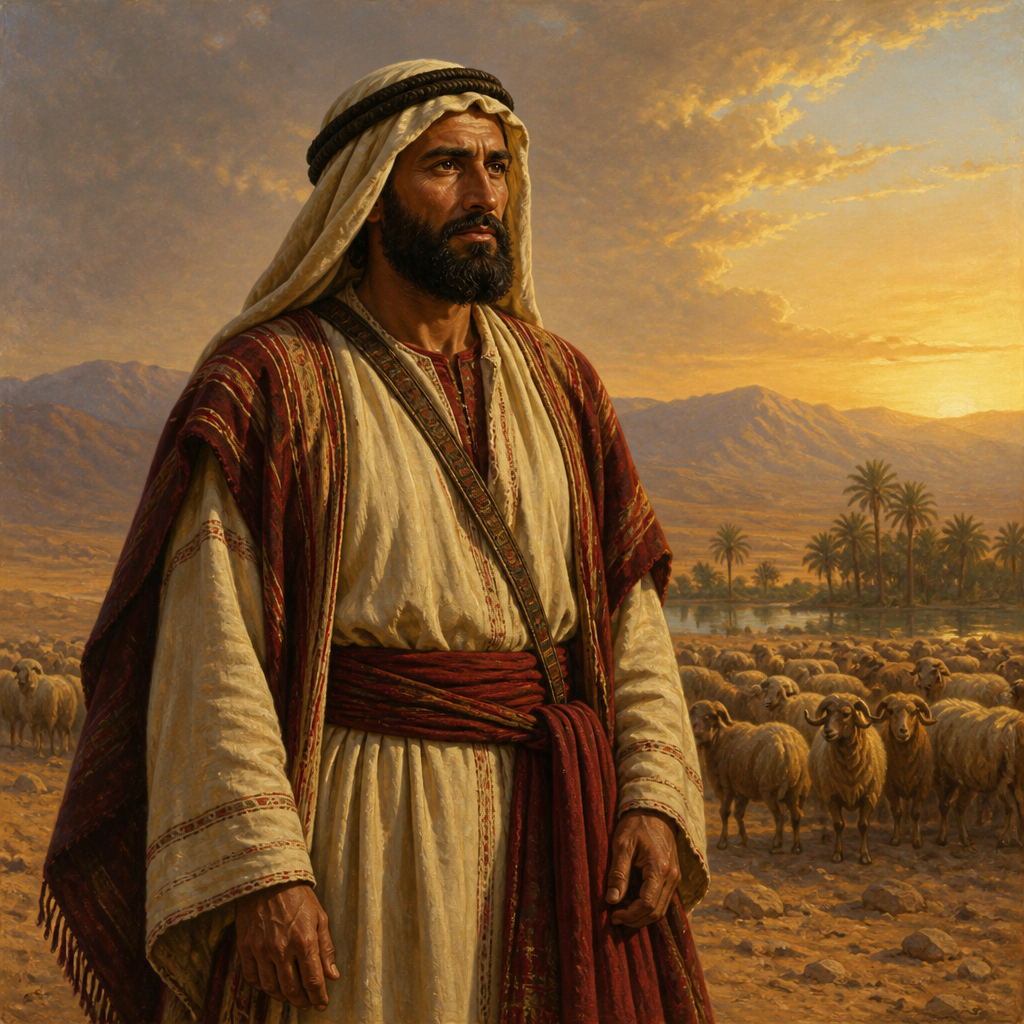
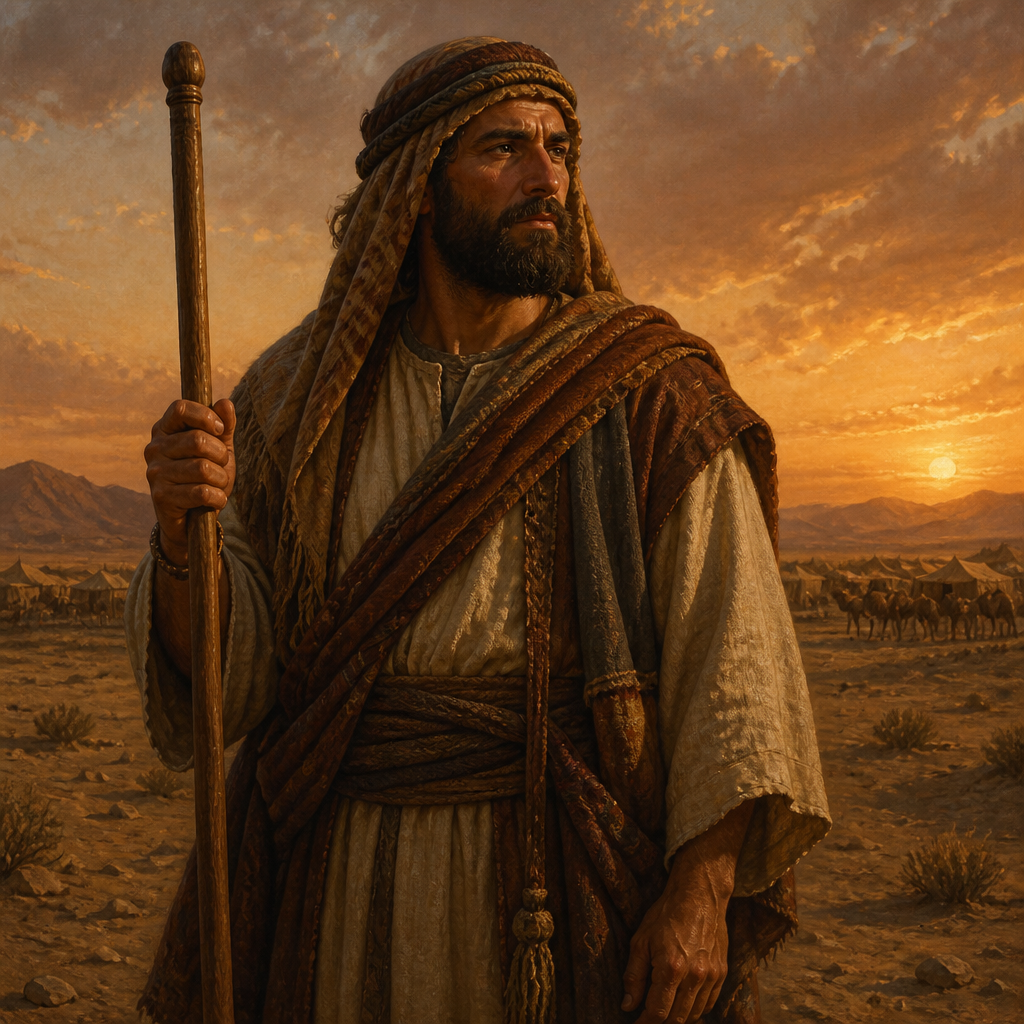
Hadad was one of the twelve sons of Ishmael and a grandson of the patriarch Abraham, serving as a tribal chieftain in the Arabian peninsula.
Hadad is identified in the Hebrew Bible as one of the twelve sons of Ishmael and a grandson of the patriarch Abraham through Hagar. As a member of the generation following the immediate family of Abraham, Hadad represents the fulfillment of the divine promise given to Ishmael: that he would become the father of twelve princes and a great nation. His name appears within the genealogical records of the Book of Genesis and is reiterated in the historical chronicles of Israel.
Historically and geographically, Hadad is associated with the nomadic and semi-nomadic tribes of the Arabian desert. While the biblical text provides little detail regarding his personal life or specific actions, his inclusion in the sacred genealogies serves to document the expansion of Abrahamic descendants and the specific lineage of the Ishmaelite peoples who inhabited the eastern wilderness and the northern Arabian regions.
Background and Family
Hadad appears in the biblical record as the eighth or ninth listed son of Ishmael, depending on the manuscript tradition (Genesis 25:15 and 1 Chronicles 1:30). He was born to Ishmael, the firstborn son of Abraham, and his Egyptian mother. As a grandson of Abraham, Hadad was part of a sprawling family tree that branched out from the Levant into the surrounding arid regions. He grew up alongside eleven brothers: Nebaioth, Kedar, Adbeel, Mibsam, Mishma, Dumah, Massa, Tema, Jetur, Naphish, and Kedemah. He also had at least one sister, Mahalath, who later married their cousin Esau.
The biblical text explicitly identifies these twelve sons as "twelve princes according to their nations" (Genesis 25:16). This indicates that Hadad was not merely an individual but the progenitor and leader of a distinct clan or tribal entity within the Ishmaelite confederation.
Major Life Events
There are no narrative accounts of Hadad’s personal exploits, speeches, or interactions within the text of the Old Testament. His life is recorded primarily within the framework of the "Toledot" (generations) of Ishmael. The primary significance of his life, from a scriptural perspective, is his role in the fulfillment of God's covenantal words to Hagar and Abraham regarding Ishmael's future.
According to the record in Genesis 25, Hadad and his brothers occupied the territory from Havilah to Shur, which is opposite Egypt in the direction of Assyria. This suggests a life characterized by the management of livestock, trade, and the navigation of the desert landscapes of the Arabian Peninsula. Following the death of Abraham, Hadad is implied to have been among those who settled in these eastern lands, living in defiance or independence "over against all his kinsmen."
Relationship to Other Biblical Figures
Hadad’s primary relationships are defined by his immediate kin. He is a nephew of Isaac and a cousin to Jacob and Esau. His connection to the broader biblical narrative is genealogical; he facilitates the transition from the singular family of Abraham to the multi-national reality of the Near East. His brothers, particularly Kedar and Nebaioth, are often mentioned in later prophetic literature to represent the wealth and nomadic power of Arabia, and as a son of Ishmael, Hadad shares in this cultural and historical identity.
Spiritual Significance
The theological importance of Hadad lies in the concept of God’s faithfulness to non-covenantal lines. While the primary redemptive focus of the Bible follows the line of Isaac, the detailed naming of Hadad and his brothers demonstrates that the Ishmaelites remained under the providential eye of God. The mention of Hadad ensures the reader recognizes that God kept His specific promise to make Ishmael "fruitful" and to "multiply him exceedingly" (Genesis 17:20).
In the context of the Chronicler's work (1 Chronicles 1), Hadad's name appears to remind the post-exilic community of the vastness of the human family and the specific origins of their neighbors, grounding the identity of the Arabian tribes in a shared ancestral history with Israel.
Spiritual Significance
Hadad serves as a vital link in the genealogical record that confirms the fulfillment of God's promise to Ishmael in Genesis 17. By being named as one of the twelve princes, Hadad represents the divine provision and multiplication of Abraham's wider family, ensuring that even those outside the primary line of the Messianic covenant were accounted for and established as nations.
Furthermore, his presence in the genealogies of 1 Chronicles establishes a historical framework for the Arabian tribes. The inclusion of Hadad underscores the biblical theme that all nations and tribes have a specific place within the historical record and are recognized by the Creator, regardless of their central or peripheral role in the history of Israel.
Frequently Asked Questions
Who was Hadad's father?
Hadad was the son of Ishmael, making him a grandson of Abraham and Hagar.
How many siblings did Hadad have?
Hadad had eleven brothers (Nebaioth, Kedar, Adbeel, Mibsam, Mishma, Dumah, Massa, Tema, Jetur, Naphish, and Kedemah) and at least one sister named Mahalath.
What does the name Hadad mean?
In the context of the Ishmaelite lineage, the name is often associated with the root for 'sharpness' or potentially 'clamor,' though its specific meaning in ancient Arabic dialects is debated.
Where did Hadad and his tribe live?
They inhabited the region between Havilah and Shur, located in the northern Arabian Peninsula and the wilderness areas east of Egypt.
Is Hadad mentioned in the New Testament?
No, Hadad is only mentioned in the Old Testament genealogical records of Genesis and 1 Chronicles.
Connected Figures

Categories
Mentions by Book
- 1 Chronicles1
- Genesis1
Family & Relationships
Sibling
Genesis 25:15
Sibling
Genesis 25:15
Sibling
Genesis 25:15
Sibling
Genesis 25:15
Sibling
Genesis 25:15
Sibling
Genesis 25:15
Sibling
Genesis 25:15
Sibling
Genesis 25:15
Sibling
Genesis 25:15
Sibling
Genesis 25:15
Sibling
Genesis 25:15
Sibling
Genesis 25:15
Sibling
Genesis 25:13
Sibling
Genesis 25:14
Parent
Genesis 16:11
Sibling
Genesis 25:15
Sibling
Genesis 25:13
Sibling
Genesis 25:15
Sibling
Genesis 28:9
Sibling
Genesis 25:14
Sibling
Genesis 25:13
Sibling
Genesis 25:14
Sibling
Genesis 25:15
Sibling
Genesis 25:13
Sibling
Genesis 25:15
Others Named Hadad
Hadad, Husband of Mehetabel1 Chronicles 1:50
Hadad was the last listed king of Edom prior to the rise of the Israelite monarchy, ruling from the city of Pau with his wife Mehetabel.
Hadad son of Bedad, King of EdomGenesis 36:35
An early Edomite king who gained prominence by defeating the Midianites in the territory of Moab before the establishment of the Israelite monarchy.
Hadad the Edomite1 Kings 11:14
A prince of the royal house of Edom who escaped David’s conquest and returned from Egypt to become a major adversary of King Solomon.