Mibsam, Son of Ishmael
A son of Ishmael and one of the twelve tribal princes who descended from Abraham, serving as a patriarchal figure in the Arabian peninsula.
Mibsam was the fourth son of Ishmael and a grandson of the patriarch Abraham and his Egyptian wife Hagar. As a member of the direct lineage of Ishmael, Mibsam is identified in the biblical record as one of the twelve princes mentioned in the divine promise given to Abraham regarding Ishmael's future. His name is associated with the early expansion of nomadic and semi-nomadic tribes across the desert regions of the ancient Near East.
Historically and genealogically, Mibsam represents a branch of the Ishmaelite confederation. The biblical account places him within the chronological framework of the Patriarchal Period, documenting his birth and lineage as a fulfillment of God's blessing to multiply Ishmael's descendants into a great nation. While the specific deeds of Mibsam are not detailed in the narrative, his inclusion in the sacred genealogies underscores his status as a tribal founder.
Background and Family
Mibsam appears in the biblical record as the fourth son of Ishmael, born into the prominent household of the first son of Abraham. His lineage is established in the "Generations of Ishmael" (Toledot), a specific genealogical section in the Book of Genesis that outlines the fulfillment of God's promises to Hagar and Abraham. According to Genesis 25:13, Mibsam was the younger brother of Nebaioth, Kedar, and Adbeel, and the older brother to eight other siblings, including Mishma, Dumah, Massa, Hadad, Tema, Jetur, Naphish, and Kedemah.
Mibsam’s family structure was defined by the twelve sons of Ishmael, who were specifically described as "twelve princes according to their nations" (Genesis 25:16). This designation suggests that Mibsam was not merely an individual, but the progenitor of a distinct clan or tribe. His sister, Mahalath (or Basemath), later became a wife to his cousin Esau, further intertwining the Ishmaelite lineage with the Edomite descendants of Isaac.
Major Life Events
The biblical text does not provide a narrative account of Mibsam’s individual life, travels, or personal interactions. Instead, his "life" is documented through his position in the genealogical records of Genesis and 1 Chronicles. His birth occurred during the Patriarchal Period, a time characterized by the migration of pastoralist groups throughout the Levant and Arabia. As a son of Ishmael, Mibsam would have participated in the nomadic lifestyle of his father, moving between the wilderness of Paran and the surrounding regions.
The primary mention of Mibsam in Genesis 25:13 serves to confirm that Ishmael’s descendants were indeed multiplying as God had promised. Centuries later, the author of 1 Chronicles 1:29 re-established this lineage, ensuring that Mibsam's name remained in the permanent record of the people who shaped the ethnic and political landscape of the ancient Near East.
Relationship to Other Biblical Figures
Mibsam’s primary relationship is to his father, Ishmael, and his grandfather, Abraham. His identity is inextricably linked to the covenantal side-story of Hagar, the Egyptian servant who was promised that her son’s offspring would be too numerous to count. Mibsam is also closely grouped with his brothers; in both biblical citations, he is listed immediately after Adbeel and before Mishma. This consistent ordering suggests his specific rank in the birth order of Ishmael’s twelve sons. Furthermore, his relationship to his siblings defined the early Ishmaelite confederacy, which occupied the territory from Havilah to Shur, near the border of Egypt.
Spiritual Significance
While Mibsam is a silent figure in the biblical narrative, his existence carries theological weight regarding the faithfulness of God’s word. In Genesis 17:20, God told Abraham, "As for Ishmael, I have heard you: I will surely bless him; I will make him fruitful and will greatly increase his numbers. He will be the father of twelve rulers, and I will make him into a great nation." Mibsam stands as physical evidence of that realized promise.
In the broader context of biblical history, Mibsam represents the non-covenantal yet blessed branch of Abraham’s family. Though the Messianic line continued through Isaac, Mibsam and his brothers remained part of the divine providence, establishing the nations of the East that would later interact with Israel throughout the Old Testament period. His name, which may be related to the Hebrew word for "sweet smell" or "fragrance" (besem), reflects the cultural richness of the Arabian tribes he helped establish.
Spiritual Significance
Mibsam’s significance lies in his role as a tribal patriarch and a fulfillment of the divine promise to multiply Ishmael’s descendants. As one of the twelve princes of Ishmael, he represents the administrative and biological realization of God's blessing to Hagar and Abraham. His inclusion in the genealogies of both Genesis and 1 Chronicles ensures that the origins of the Arabian tribes are recognized within the biblical historical framework.
Theologically, Mibsam serves as a reminder that God’s promises extend beyond the primary line of the covenant. His presence in the text validates the historical reality of the Ishmaelite nations and provides a genealogical map for the ethnic groups surrounding ancient Israel, grounding the narrative of the Patriarchs in a wider geographical and social reality.
Frequently Asked Questions
Who was Mibsam’s father?
Mibsam was the son of Ishmael, who was the firstborn son of the patriarch Abraham.
How many brothers did Mibsam have?
Mibsam had eleven brothers: Nebaioth, Kedar, Adbeel, Mishma, Dumah, Massa, Hadad, Tema, Jetur, Naphish, and Kedemah. He also had at least one sister, Mahalath.
What does the name Mibsam mean?
The name Mibsam (מִבְשָׂם) is thought to mean 'sweet smell' or 'fragrant,' derived from a root shared with the word for balsam or spice.
Where did Mibsam’s descendants live?
As one of the twelve Ishmaelite princes, Mibsam's descendants settled in the regions of northern Arabia and the wilderness areas between Egypt and Mesopotamia.
In which books of the Bible is Mibsam mentioned?
Mibsam is mentioned in two books: Genesis (chapter 25) and 1 Chronicles (chapter 1).
Connected Figures
Ishmael, Son of Abraham
Father
Abraham
Grandfather
Kedar
Brother
Nebaioth
Brother
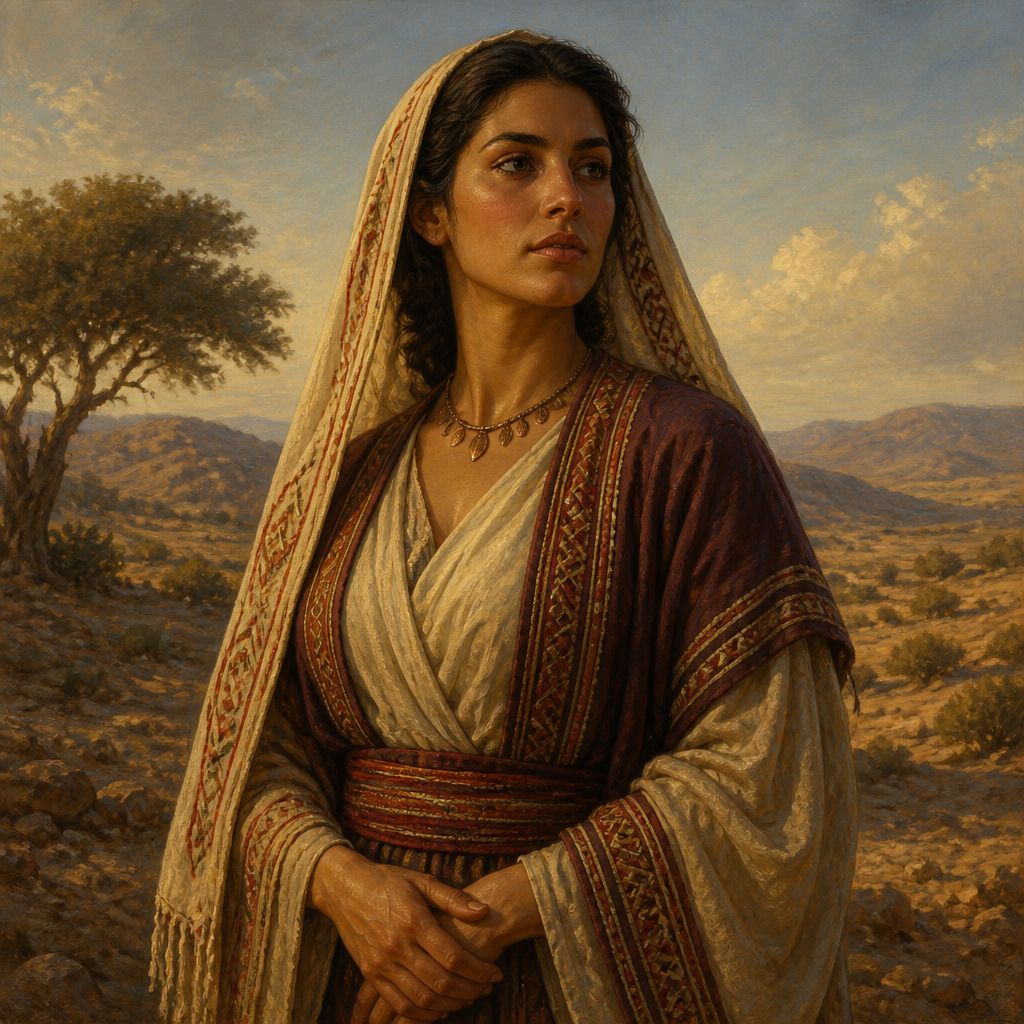
Mahalath, Wife of Esau
Sister
Categories
Mentions by Book
- 1 Chronicles1
- Genesis1
Family & Relationships
Sibling
Genesis 25:13
Sibling
Genesis 25:13
Sibling
Genesis 25:13
Sibling
Genesis 25:13
Sibling
Genesis 25:13
Sibling
Genesis 25:13
Sibling
Genesis 25:13
Sibling
Genesis 25:13
Sibling
Genesis 25:13
Sibling
Genesis 25:13
Sibling
Genesis 25:13
Sibling
Genesis 25:13
Sibling
Genesis 25:13
Sibling
Genesis 25:14
Sibling
Genesis 25:15
Parent
Genesis 16:11
Sibling
Genesis 25:15
Sibling
Genesis 25:13
Sibling
Genesis 25:15
Sibling
Genesis 28:9
Sibling
Genesis 25:14
Sibling
Genesis 25:14
Sibling
Genesis 25:15
Sibling
Genesis 25:13
Sibling
Genesis 25:15
Others Named Mibsam
Mibsam, Son of Shallum1 Chronicles 4:25
Mibsam was a member of the tribe of Simeon during the Divided Monarchy, recorded in the genealogies of 1 Chronicles.