Eliphaz, Son of Esau
Who was Eliphaz, Son of Esau, in the Bible?
Eliphaz was the firstborn son of Esau and Adah, serving as a foundational patriarch and chief within the nation of Edom.
This is one of 2 people named Eliphaz in the Bible. See all 2 →
Eliphaz, the son of Esau, stands as a pivotal figure in the genealogical records of the patriarchal era, representing the primary branch of the Edomite lineage. As the firstborn son of Esau and his wife Adah (the daughter of Elon the Hittite), Eliphaz occupied a position of preeminence among the descendants of Isaac’s eldest son. His life and offspring are meticulously documented in the Book of Genesis and 1 Chronicles, serving to establish the historical and political identity of the Edomite tribes that would eventually inhabit the mountainous region of Seir.
While the biblical record does not preserve individual narratives regarding his personal character or specific life events, his significance is framed through his role as a progenitor. Through his sons and his concubine Timna, Eliphaz became the ancestor of several major clans, including the infamous Amalekites. His listing among the 'chiefs' of Edom underscores the transition of Esau’s household from a nomadic family unit into a structured tribal confederacy that would often interact, and sometimes conflict, with the nation of Israel.
Background and Family
Eliphaz was born during the Patriarchs to Esau and Adah. The biblical record in Genesis 36:4 and 36:10 explicitly identifies him as the firstborn of Esau’s sons. His mother, Adah, was a Canaanite woman of Hittite descent, whose marriage to Esau was noted in earlier chapters as a source of grief to Isaac and Rebekah. Despite this domestic tension, Eliphaz emerged as the lead figure in the next generation of Esau’s household.
He grew up in a complex family environment. His father, Esau, had multiple wives, resulting in several half-siblings for Eliphaz, including Reuel (son of Basemath) and Jeush, Jalam, and Korah (sons of Oholibamah). According to Genesis 36:6-8, the wealth of Esau and his brother Jacob grew so great that the land could not support them both, leading Esau to move his entire household, including Eliphaz, to the hill country of Seir. It was in this region that Eliphaz would establish his own prominence.
Major Life Events
The biblical accounts concerning Eliphaz focus almost exclusively on his genealogical output and his status as a tribal leader. The narrative record in Genesis 36:11-12 lists five primary sons born to Eliphaz: Teman, Omar, Zepho, Gatam, and Kenaz. These sons did not merely represent individuals but became the eponymous ancestors of the various Edomite clans.
A significant footnote in his biography involves his relationship with Timna, who is identified as the sister of Lotan the Horite. Though the text distinguishes her as a concubine rather than a wife, she bore Eliphaz a son named Amalek. This specific branch of the family would go on to form the Amalekite nation, who became the perennial enemies of the Israelites during the Exodus and the Monarchy.
Genesis 36:15-16 designates Eliphaz as a 'chief' (Hebrew: allup). This term suggests a position of military and administrative authority over a specific territorial district. As the firstborn of Esau, the 'Chiefs of Eliphaz' held a primary status in the land of Edom, suggesting that his branch of the family was the most influential during the early formation of the Edomite state.
Relationship to Other Biblical Figures
Eliphaz is the direct link between the Patriarchs of Israel and the nation of Edom. As the grandson of Isaac and the great-grandson of Abraham, he shared the biological heritage of the covenant family, though he stood outside the specific line of promise designated through Jacob. His relationship with his brother Reuel and his half-brothers created a multifaceted tribal network.
His most notable connection in terms of later biblical history is his fatherhood of Amalek. By fathering Amalek through Timna, Eliphaz unknowingly initiated the lineage that would eventually lead to the first nation to attack the Israelites after they crossed the Red Sea (Exodus 17). This connection highlights the deep-seated familial roots of the regional conflicts that would persist for centuries in the Levant.
Spiritual Significance
In the context of the biblical narrative, Eliphaz represents the fulfillment of God’s promises to Esau. In Genesis 27:39-40, Isaac blessed Esau, stating that he would dwell away from the earth’s richness but would live by the sword and eventually break his brother's yoke. The rise of Eliphaz as a powerful chief with numerous sons who commanded territories illustrates the material success and expansion of Esau’s line.
Furthermore, the detailed record of Eliphaz’s descendants serves a specific literary and theological purpose within the Pentateuch. It demonstrates that while the narrative focus remains on the 'chosen' line of Jacob, the 'non-chosen' lines are not forgotten by God. The inclusion of Eliphaz in the chronicles of the Bible validates the historical reality of the nations surrounding Israel and provides a genealogical map that explains the ethnic and political landscape of the Ancient Near East during the time of the Exodus and the Conquest of Canaan.
Theologically, Eliphaz serves as a testament to the sovereign fulfillment of God's word regarding the descendants of Abraham who were not of the line of Jacob. His role as the 'Chief' of the firstborn line of Esau establishes the legitimacy and organized structure of the Edomite nation, which God commanded Israel to respect during their wilderness wanderings.
However, his significance is also shadowed by the mention of his son Amalek. By documenting that Amalek was a grandson of Esau through Eliphaz, the Bible provides a crucial genealogical context for the divine judgment later pronounced against the Amalekites. Eliphaz thus represents the historical bridge between the shared patriarchal ancestors and the distinct, often adversarial, national identities of Israel and Edom.
Frequently Asked Questions
Who was the mother of Eliphaz?
Eliphaz was the son of Adah, who was one of the wives of Esau and the daughter of Elon the Hittite.
How many sons did Eliphaz have?
According to Genesis 36 and 1 Chronicles 1, Eliphaz had six sons: Teman, Omar, Zepho, Gatam, Kenaz, and Amalek.
Was Eliphaz a king?
The Bible refers to Eliphaz as a 'chief' (Hebrew: allup), which denotes a tribal leader or commander, rather than a 'king' (melek).
What is the connection between Eliphaz and the Amalekites?
Eliphaz fathered Amalek through his concubine Timna. Amalek became the ancestor of the Amalekite people, who were frequent enemies of Israel.
Where did Eliphaz live?
Eliphaz lived in the land of Edom, specifically in the region of Mount Seir, after his father Esau relocated the family away from Canaan.
Family & Relationships
Parents
 Adah, Wife of EsauMotherGenesis 36:4Stated
 EsauFatherGenesis 36:10Stated
 TimnaConcubineGenesis 36:12Stated
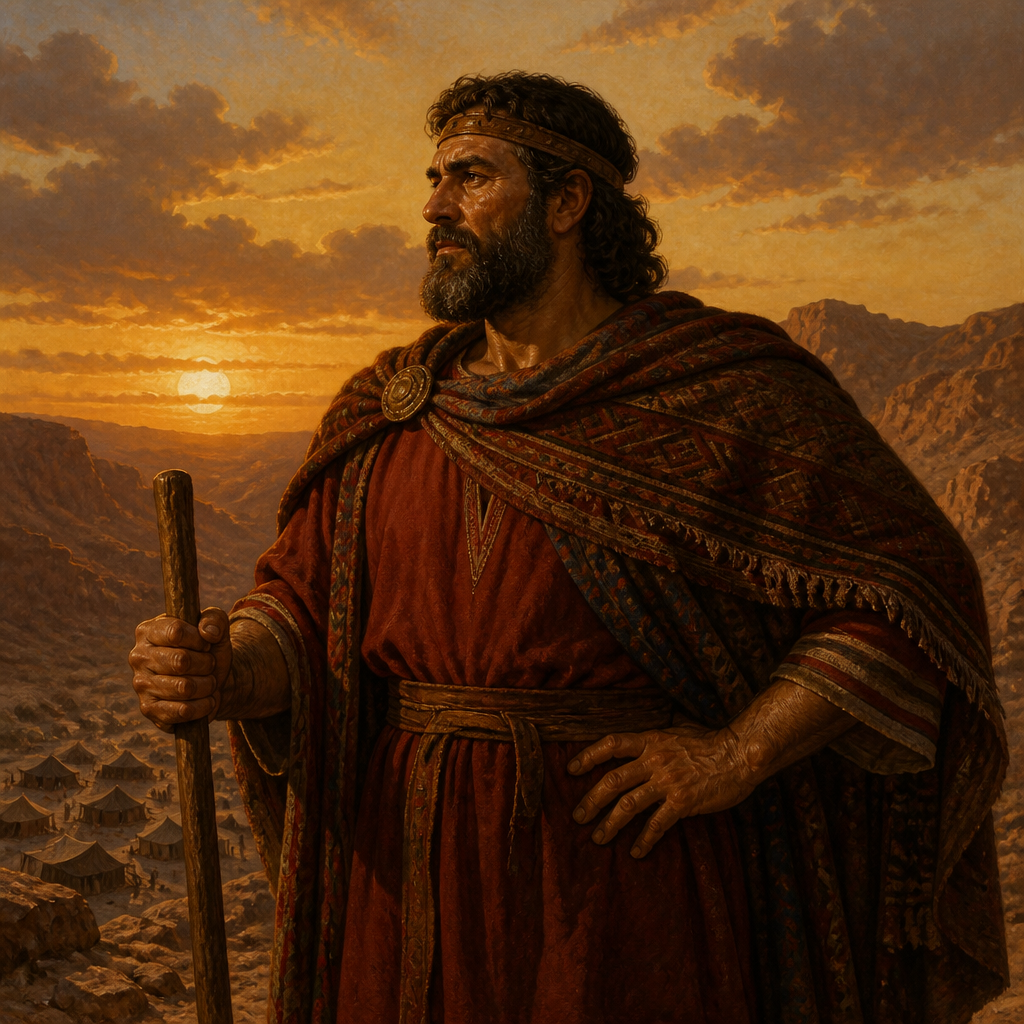 Eliphaz, Son of EsauThis page
 JalamBrotherGenesis 36:4–5Stated
 Jeush, Son of EsauBrotherGenesis 36:4–5Stated
 Korah, Son of EsauBrotherGenesis 36:4–5Stated
 Reuel, Son of EsauBrotherGenesis 36:4Stated
Children
 AmalekSonGenesis 36:12Stated
 GatamSonGenesis 36:11Stated
 Kenaz, Son of EliphazSonGenesis 36:11Stated
 Korah, Grandson of AdahSonGenesis 36:4–5Stated
 OmarSonGenesis 36:11Stated
 TemanSonGenesis 36:11Stated
 ZephoSonGenesis 36:11Stated
Extended family
 Elon the HittiteGrandfatherGenesis 36:2
Inferred
Reconstructed through Adah: Genesis 36:4 ties Eliphaz to Adah; Genesis 36:2 ties Adah to Elon. No verse states the grandfather link between Eliphaz and Elon directly.Evidence: Genesis 36:2; Genesis 36:4
Connected Figures
Family
Mother · Genesis 36:4
A Canaanite woman from the Hittite tribe who became a wife of Esau and a foundational matriarch of the Edomite nation through her son Eliphaz.
PatriarchsFirst: Genesis 26:346 versesMatriarch of Edom
Father · Genesis 36:10
The firstborn son of Isaac and Rebekah, a skillful hunter and the progenitor of the Edomites, known for selling his birthright for a bowl of stew.
PatriarchsFirst: Genesis 25:2573 versesSkillful hunter, man of the field, Chief
Concubine · Genesis 36:12
An Edomite woman of noble Horite descent who became the mother of Amalek and is listed among the chiefs of Edom.
PatriarchsFirst: Genesis 36:1210 versesChief / Tribal Matriarch
Son · Genesis 36:12
Amalek was a grandson of Esau and a tribal chief in the land of Edom during the Patriarchs.
Son · Genesis 36:11
An Edomite patriarch and chieftain, Gatam was the son of Eliphaz and grandson of Esau.
Son · Genesis 36:11
An Edomite chief and grandson of Esau, Kenaz was a prominent tribal leader within the line of Eliphaz during the Patriarchs.
Son · Genesis 36:4–5
An Edomite chief and son of Eliphaz who served as a tribal leader in the land of Edom during the Patriarchs.
Son · Genesis 36:11
Omar was an Edomite chief and a grandson of Esau, identified as a son of Eliphaz in the genealogies of Genesis and 1 Chronicles.
Son · Genesis 36:11
A grandson of Esau and a chief of Edom, Teman was the eponymous ancestor of a region and people renowned for their wisdom in the ancient Near East.
PatriarchsFirst: Genesis 36:118 versesChief of Edom
Son · Genesis 36:11
Zepho was an Edomite leader and patriarch, the son of Eliphaz and grandson of Esau, who served as a chief among the descendants of Seir.
Brother · Genesis 36:4–5
Jalam was a son of Esau and Oholibamah who became a prominent tribal chief and patriarch in the land of Edom.
Brother · Genesis 36:4–5
A son of Esau and Oholibamah who became a prominent clan leader and chief among the Edomites in the land of Seir.
Categories
Mentions by Book
- Genesis9
- 1 Chronicles2
Scripture References
All 11 indexed verses, in canonical order, from the Berean Standard Bible.
Genesis · 9
- Genesis 36:2Partial
Esau took his wives from the daughters of Canaan: Adah daughter of Elon the Hittite, Oholibamah daughter of Anah and granddaughter of Zibeon the Hivite,
Cited as evidence on a family card; added so References, Key Verses and Mentions by Book share one index.
- Genesis 36:3Partial
and Basemath daughter of Ishmael and sister of Nebaioth.
Cited as evidence on a family card; added so References, Key Verses and Mentions by Book share one index.
- Genesis 36:4
And Adah bore Eliphaz to Esau, Basemath gave birth to Reuel,
- Genesis 36:5Partial
and Oholibamah gave birth to Jeush, Jalam, and Korah. These were the sons of Esau, who were born to him in the land of Canaan.
Cited as evidence on a family card; added so References, Key Verses and Mentions by Book share one index.
- Genesis 36:10
These are the names of Esau’s sons: Eliphaz son of Esau’s wife Adah, and Reuel son of Esau’s wife Basemath.
- Genesis 36:11
The sons of Eliphaz were Teman, Omar, Zepho, Gatam, and Kenaz.
- Genesis 36:12Partial
Additionally, Timna, a concubine of Esau’s son Eliphaz, gave birth to Amalek. These are the grandsons of Esau’s wife Adah.
- Genesis 36:15
These are the chiefs among the sons of Esau. The sons of Eliphaz the firstborn of Esau: Chiefs Teman, Omar, Zepho, Kenaz,
- Genesis 36:16
Korah, Gatam, and Amalek. They are the chiefs of Eliphaz in the land of Edom, and they are the grandsons of Adah.
1 Chronicles · 2
- 1 Chronicles 1:35
The sons of Esau: Eliphaz, Reuel, Jeush, Jalam, and Korah.
- 1 Chronicles 1:36
The sons of Eliphaz: Teman, Omar, Zepho, Gatam, and Kenaz; and by Timna, Amalek.
Others Named Eliphaz
Compare all 2 bearers →Eliphaz the TemaniteJob 2:11
The eldest and most prominent of Job’s three friends who engaged in a series of theological debates with the suffering patriarch.