Omar
Who was Omar in the Bible?
Omar was an Edomite chief and a grandson of Esau, identified as a son of Eliphaz in the genealogies of Genesis and 1 Chronicles.
Omar is a figure appearing in the genealogical records of the Patriarchs, specifically within the lineage of Esau, the twin brother of Jacob. As a son of Eliphaz, Omar represents one of the foundational branches of the Edomite people, who settled in the region of Mount Seir. The biblical record identifies him not only as a descendant of Abraham and Isaac but also as a 'chief' (Hebrew: 'alluph') over a clan or territory.
While his individual life and specific deeds are not detailed in the narrative portions of the Pentateuch, his inclusion in the historical records of both Genesis and 1 Chronicles underscores his role in the geopolitical landscape of the ancient Near East. As part of the transition from the patriarchal families to the formation of distinct nations, Omar stands as a representative of the early political structure of Edom before the rise of their monarchy.
Background and Family
Omar is primarily situated within the biblical text as a member of the third generation of the descendants of Isaac. According to the genealogical records found in Genesis 36 and 1 Chronicles 1, he was the son of Eliphaz, who was the firstborn son of Esau and his wife Adah. This placement establishes Omar as a grandson of Esau and a great-grandson of the patriarch Isaac.
The biblical text lists Omar alongside several brothers and half-brothers, including Teman, Zepho, Gatam, Kenaz, Korah, and Amalek. These siblings and their respective descendants formed the core of the Edomite tribal system. The record in Genesis 36:11 specifically identifies him as part of the immediate family of Eliphaz, while verse 15 elevates his status to that of a 'chief' (alluph). This term implies a position of tribal leadership, suggesting that the clan originating from Omar held specific territorial or political influence within the land of Edom.
Major Life Events
The biblical record does not provide a narrative account of Omar’s personal life, his birth, or his death. His presence in the Bible is strictly genealogical. However, his historical footprint is found in the transition of Esau's family from a nomadic household to a settled tribal confederacy. As one of the 'sons of Eliphaz,' Omar would have been part of the migration or expansion of Esau's wealth and livestock away from his brother Jacob, as the land could not support both of their vast holdings (Genesis 36:6-8).
Relationship to Other Biblical Figures
Omar’s most significant relationships are defined by his ancestry. He is a direct descendant of the Abrahamic line through Isaac, though he belongs to the branch that was not the primary carrier of the covenant promise (which passed through Jacob). He is closely associated with his brother Teman, who is often linked in the Bible with wisdom and a specific region in Edom. Through his father Eliphaz, Omar is also connected to the wider narrative of the rivalry and eventual reconciliation between Esau and Jacob.
Spiritual Significance
In a scholarly and theological context, Omar serves as a testament to the fulfillment of God’s promises to the patriarchs. God promised Abraham that he would be the father of many nations (Genesis 17:4) and told Rebekah that two nations were in her womb (Genesis 25:23). The detailed listing of Omar and his brothers demonstrates the historical realization of these prophecies. Even though the Edomites often stood in opposition to Israel, the preservation of their lineage in the Hebrew Scriptures highlights their shared heritage and the sovereignty of God over the development of nations surrounding the Promised Land. Omar represents a branch of the family tree that, while distinct from the line of the Messiah, remained part of the recorded history of the ancient world.
The inclusion of Omar in the biblical genealogies serves two primary purposes: confirming the fulfillment of God's promise to make Esau a great nation and providing a historical framework for the neighbors of Israel. By recording the names of specific chiefs like Omar, the text affirms that the Edomites were not merely a nameless collective, but a structured society with a documented lineage that traces back to the Patriarchs.
Theologically, Omar’s presence in the text illustrates the biblical interest in 'all the families of the earth.' While the narrative focus remains on the line of Jacob, the meticulous record of Omar and his kin demonstrates that the non-covenantal lines were still viewed as significant within the divine order and historical record of the Ancient Near East.
Frequently Asked Questions
Who was Omar's father?
Omar was the son of Eliphaz, who was the firstborn son of Esau.
What does the name 'Omar' mean in Hebrew?
The name Omar (אוֹמָר) is derived from a root meaning 'eloquent' or 'speaker.'
What was Omar's role in Edom?
The Bible describes Omar as a 'chief' (alluph), indicating he was a tribal leader or the head of a significant clan within the Edomite nation.
In which books of the Bible is Omar mentioned?
Omar is mentioned in the books of Genesis (chapter 36) and 1 Chronicles (chapter 1).
Was Omar related to the Israelites?
Yes, as a grandson of Esau, he was a first cousin once removed to the sons of Jacob (Israel), making the Edomites and Israelites 'brother' nations.
Family & Relationships
Parents
 Eliphaz, Son of EsauFatherGenesis 36:11Stated
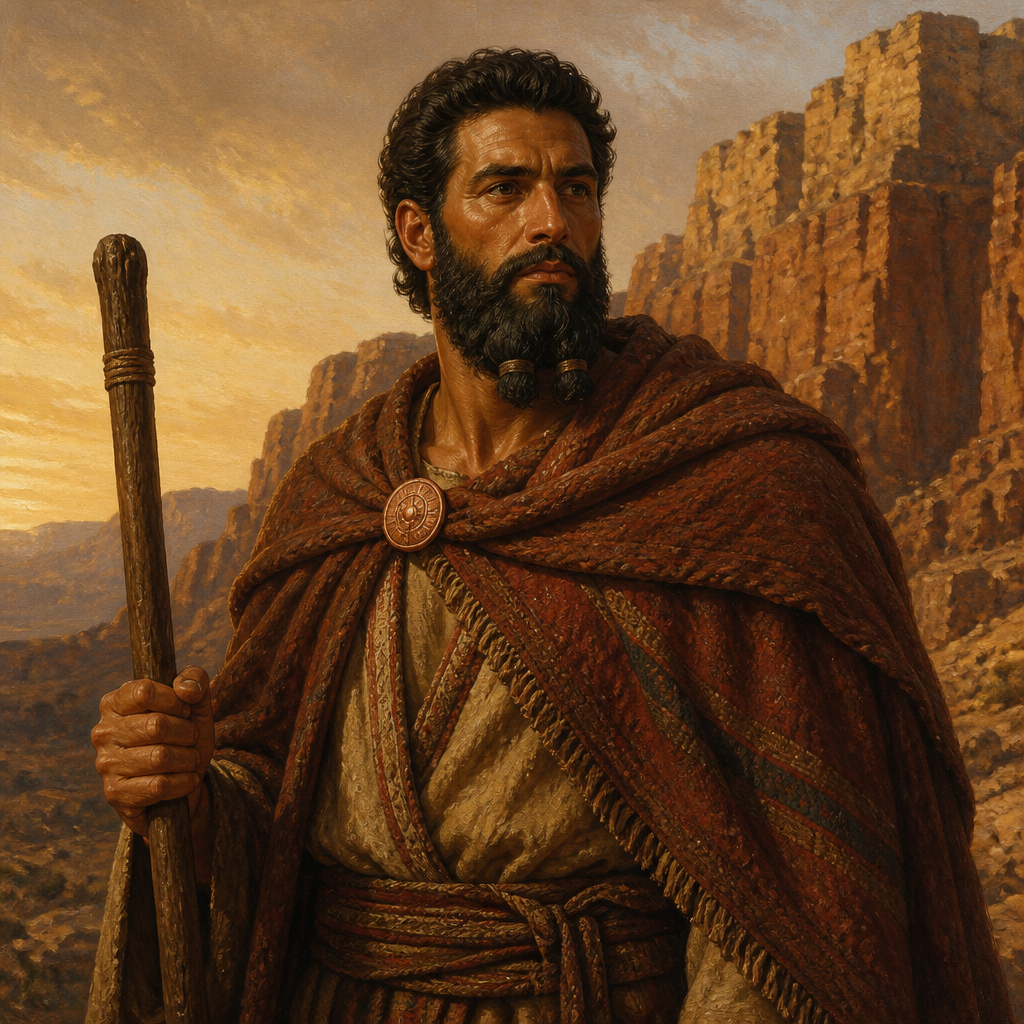 OmarThis page
 AmalekBrotherGenesis 36:11–12Stated
 GatamBrotherGenesis 36:11Stated
 Kenaz, Son of EliphazBrotherGenesis 36:11Stated
 Korah, Grandson of AdahBrotherGenesis 36:15–16Stated
 TemanBrotherGenesis 36:11Stated
 ZephoBrotherGenesis 36:11Stated
Extended family
 Adah, Wife of LamechGrandmotherGenesis 4:19
Inferred
Reconstructed through Eliphaz and Esau: Genesis 36:11 ties Omar to Eliphaz; Genesis 36:10 ties Eliphaz to Esau; Genesis 36:10 ties Esau to Adah. No verse states the grandmother link between Omar and Adah directly.Evidence: Genesis 4:19
 EsauGrandfatherGenesis 36:12
Inferred
Reconstructed through Eliphaz: Genesis 36:11 ties Omar to Eliphaz; Genesis 36:10 ties Eliphaz to Esau. No verse states the grandfather link between Omar and Esau directly.Evidence: Genesis 36:12; Genesis 36:11
Connected Figures
Family
Father · Genesis 36:11
Eliphaz was the firstborn son of Esau and Adah, serving as a foundational patriarch and chief within the nation of Edom.
PatriarchsFirst: Genesis 36:411 versesChief and Patriarch
Brother · Genesis 36:11–12
Amalek was a grandson of Esau and a tribal chief in the land of Edom during the Patriarchs.
Brother · Genesis 36:11
An Edomite patriarch and chieftain, Gatam was the son of Eliphaz and grandson of Esau.
Brother · Genesis 36:11
An Edomite chief and grandson of Esau, Kenaz was a prominent tribal leader within the line of Eliphaz during the Patriarchs.
Brother · Genesis 36:15–16
An Edomite chief and son of Eliphaz who served as a tribal leader in the land of Edom during the Patriarchs.
Brother · Genesis 36:11
A grandson of Esau and a chief of Edom, Teman was the eponymous ancestor of a region and people renowned for their wisdom in the ancient Near East.
PatriarchsFirst: Genesis 36:118 versesChief of Edom
Brother · Genesis 36:11
Zepho was an Edomite leader and patriarch, the son of Eliphaz and grandson of Esau, who served as a chief among the descendants of Seir.
Grandmother · Genesis 4:19
Adah was the first wife of Lamech and the second woman named in the Bible after Eve, playing a pivotal role in the antediluvian genealogy of Cain.
Grandfather · Genesis 36:12
The firstborn son of Isaac and Rebekah, a skillful hunter and the progenitor of the Edomites, known for selling his birthright for a bowl of stew.
PatriarchsFirst: Genesis 25:2573 versesSkillful hunter, man of the field, Chief
Categories
Mentions by Book
- Genesis5
- 1 Chronicles1
Scripture References
All 6 indexed verses, in canonical order, from the Berean Standard Bible.
Genesis · 5
- Genesis 4:19Partial
And Lamech married two women, one named Adah and the other Zillah.
Cited as evidence on a family card; added so References, Key Verses and Mentions by Book share one index.
- Genesis 36:11
The sons of Eliphaz were Teman, Omar, Zepho, Gatam, and Kenaz.
- Genesis 36:12Partial
Additionally, Timna, a concubine of Esau’s son Eliphaz, gave birth to Amalek. These are the grandsons of Esau’s wife Adah.
Cited as evidence on a family card; added so References, Key Verses and Mentions by Book share one index.
- Genesis 36:15
These are the chiefs among the sons of Esau. The sons of Eliphaz the firstborn of Esau: Chiefs Teman, Omar, Zepho, Kenaz,
- Genesis 36:16Partial
Korah, Gatam, and Amalek. They are the chiefs of Eliphaz in the land of Edom, and they are the grandsons of Adah.
Cited as evidence on a family card; added so References, Key Verses and Mentions by Book share one index.
1 Chronicles · 1
- 1 Chronicles 1:36
The sons of Eliphaz: Teman, Omar, Zepho, Gatam, and Kenaz; and by Timna, Amalek.