Mishael, Son of Uzziel
Who was Mishael, Son of Uzziel, in the Bible?
A Levite during the Exodus who was tasked by Moses to remove the bodies of Nadab and Abihu from the sanctuary after they were struck down by God.
This is one of 3 people named Mishael in the Bible. See all 3 →
Mishael was a member of the tribe of Levi who lived during the pivotal era of the Egyptian Sojourn and the subsequent Wilderness wanderings. As a son of Uzziel, he was a first cousin to Moses and Aaron, placing him within the inner circle of the Levite clan tasked with the management of Israel’s sacred duties and the tabernacle.
Mishael is primarily noted in the biblical record for a solemn duty performed during the inauguration of the tabernacle services. Following the divine judgment upon Aaron’s eldest sons, Mishael and his brother were summoned by Moses to handle the remains of their cousins, ensuring the purity of the sanctuary remained intact according to the strict protocols governing the Levites.
Background and Family
Mishael was born into the Kohathite branch of the tribe of Levi during the period of Israel’s residence in Egypt or their early departure into the wilderness. He was the son of Uzziel, who is identified in Exodus 6:18–22 as the son of Kohath and the grandson of Levi. This lineage is significant, as the Kohathites were the division of Levites specifically designated to carry the most holy objects of the Tabernacle.
Mishael had several brothers mentioned in the genealogical records, including Elzaphan (or Elizaphan) and Sithri. Other passages identifying the house of Uzziel include Micah and Isshiah as kin. As the nephew of Amram (the father of Moses, Aaron, and Miriam), Mishael occupied a high social and religious standing among the Hebrews, serving as a first cousin to the nation’s primary leaders.
Major Life Events
The most significant event recorded in Mishael's life occurs in Leviticus 10. Following the dedication of the Tabernacle, Aaron’s sons Nadab and Abihu offered "unauthorized fire" before the Lord, which resulted in their immediate death by divine fire. Because Aaron and his surviving sons, Eleazar and Ithamar, were prohibited from mourning or leaving the sanctuary lest they also die and bring wrath upon the congregation, a proxy was needed to handle the ritual impurity of the corpses.
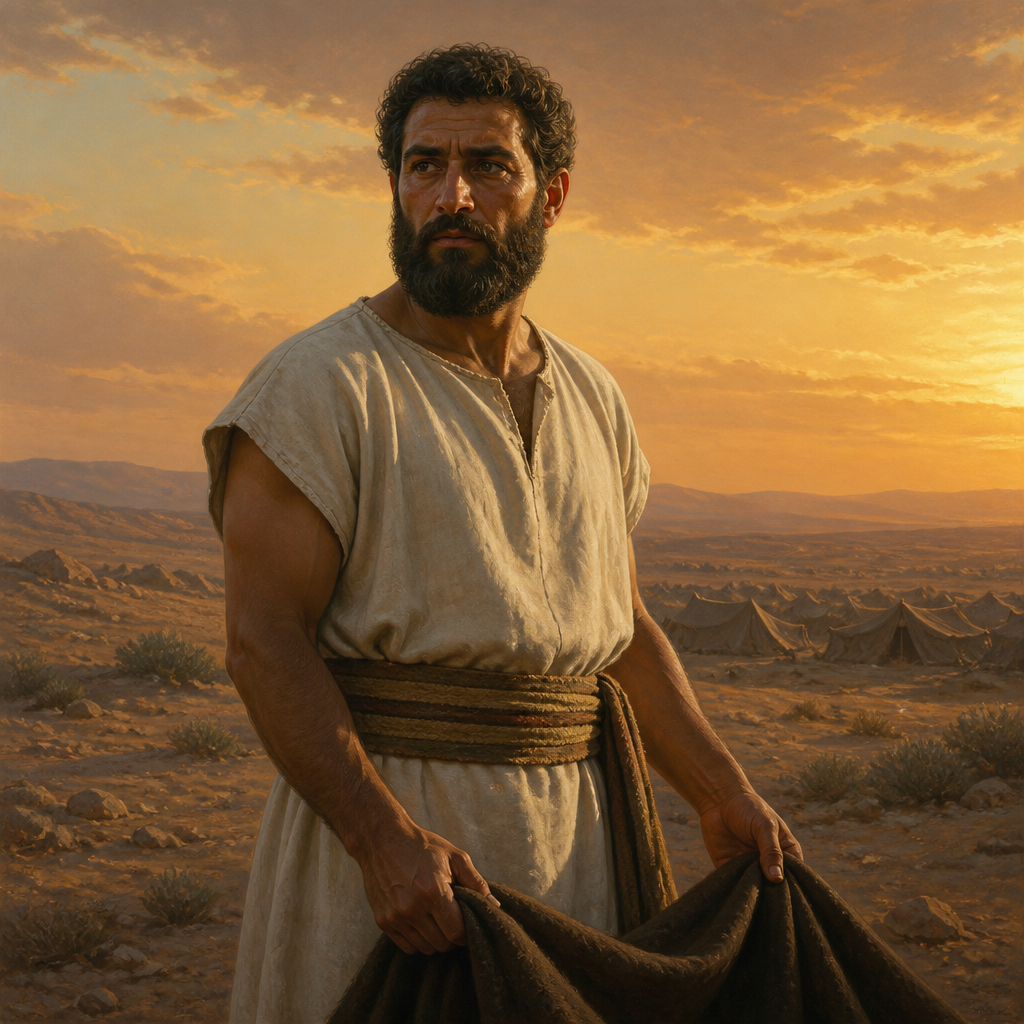
Moses summoned Mishael and his brother Elzaphan to perform this task. He commanded them: “Come forward; carry your cousins outside the camp, away from the front of the sanctuary” (Leviticus 10:4). Mishael and his brother obeyed, carrying the bodies by their tunics to a location outside the camp. This act was both a physical labor and a significant ritual service, as it preserved the sanctity of the newly established priesthood by insulating Aaron from the defilement of the dead.
Relationship to Other Biblical Figures
Mishael’s life is defined by his proximity to the founders of the Israelite religious system. As the son of Aaron’s uncle, Uzziel, he served as a secondary tier of leadership. While Aaron’s line held the specific office of the priesthood (cohen), Mishael and his brothers represented the broader Levite service that supported the sacrificial system. His relationship with Moses was one of direct obedience; he acted as a reliable kinsman who could be trusted with sensitive, somber duties that the immediate family of the deceased was forbidden to touch.
Spiritual Significance
Though his mentions are brief, Mishael represents the necessity of order and holiness within the community of Israel. His role in Leviticus 10 highlights the gravity of the Tabernacle laws. The biblical narrative uses Mishael to demonstrate that even in moments of family tragedy, the requirements of God’s holiness take precedence. By removing the bodies of Nadab and Abihu, Mishael assisted in the restoration of ritual purity to the camp, allowing the interrupted religious life of Israel to continue under the shadow of divine judgment.
Mishael serves as a historical example of the Levite's role as a guardian of the sanctuary's purity. His specific task in removing the bodies of Nadab and Abihu underscores the strict separation between the holy and the profane that characterized the Mosaic Law. In the theological framework of the Pentateuch, Mishael acts as a necessary agent of restoration, performing a duty that the high priest was ritually unable to perform, thereby illustrating the collaborative nature of the Levite service.
His inclusion in the genealogies of Exodus 6 further establishes the legitimacy of the Kohathite line. By documenting Mishael and his brothers, the text reinforces the structure of the tribal leadership that would govern Israel for generations. His life serves as a testament to the quiet, often grim, but essential service required of those called to support the work of the Lord.
Frequently Asked Questions
Who was Mishael's father?
Mishael was the son of Uzziel, who was the son of Kohath and the grandson of Levi.
What tribe did Mishael belong to?
Mishael belonged to the tribe of Levi, specifically the clan of the Kohathites.
What specific task did Moses give to Mishael?
Moses commanded Mishael and his brother Elzaphan to carry the bodies of their cousins, Nadab and Abihu, out of the camp after they were killed by God for offering unauthorized fire.
How was Mishael related to Aaron the High Priest?
Mishael was Aaron’s first cousin. His father, Uzziel, was the brother of Aaron's father, Amram.
In which books of the Bible is this Mishael mentioned?
This Mishael is mentioned in the books of Exodus (6:22) and Leviticus (10:4).
Family & Relationships
Parents
 Uzziel, Son of KohathFatherExodus 6:22Stated
 Mishael, Son of UzzielThis page
 SithriBrotherExodus 6:22Stated
 Elizaphan, Son of UzzielBrotherExodus 6:22Stated
 Isshiah, Son of UzzielBrotherExodus 6:22
Inferred
Reconstructed through Uzziel: Exodus 6:22 ties Mishael to Uzziel; 1 Chronicles 23:20 ties Uzziel to Isshiah. No verse states the brother link between Mishael and Isshiah directly.Evidence: Exodus 6:22; 1 Chronicles 23:20
 Micah, Son of UzzielBrotherExodus 6:22
Inferred
Reconstructed through Uzziel: 1 Chronicles 23:20 ties Micah to Uzziel; Exodus 6:22 ties Uzziel to Mishael. No verse states the brother link between Micah and Mishael directly.Evidence: Exodus 6:22; 1 Chronicles 23:20
Extended family
 AaronCousinExodus 6:22
Inferred
Reconstructed through Amram and Uzziel: Exodus 6:20 ties Aaron to Amram; Exodus 6:18 ties Amram to Uzziel; Exodus 6:22 ties Uzziel to Mishael. No verse states the cousin link between Aaron and Mishael directly.Evidence: Exodus 6:22
Connected Figures
Family
Father · Exodus 6:22
A prominent Levite of the Kohathite branch and paternal uncle to Moses and Aaron during the Egyptian Sojourn and Exodus.
Brother · Exodus 6:22
Sithri was a Levite of the Kohathite clan and a son of Uzziel, born during the Egyptian sojourn and identified in the genealogies of the Exodus.
Brother · Exodus 6:22
A Levite leader of the Kohathite clan during the Exodus who served as a chief under Moses and performed the solemn duty of removing Nadab and Abihu from the sanctuary.
Egypt and WildernessFirst: Leviticus 10:44 versesLeader of the KohathitesLevi
Brother · Exodus 6:22
Isshiah was a Levite of the Kohathite clan and the son of Uzziel, recognized as a family head during the reorganization of the sanctuary service.
Egypt and WildernessFirst: 1 Chronicles 23:203 versesLevite head of a paternal houseLevi
Brother · Exodus 6:22
A Levite of the Kohathite clan and the firstborn son of Uzziel, appointed to organized service within the Tabernacle during the wilderness period.
Egypt and WildernessFirst: 1 Chronicles 23:204 versesLevite leaderLevi
Cousin · Exodus 6:22
The first High Priest of Israel, elder brother of Moses, and primary spokesman for the Israelites during the Exodus from Egypt.
Egypt and WildernessFirst: Exodus 4:14338 versesHigh Priest, ProphetLevi
Categories
Mentions by Book
- Exodus1
- Leviticus1
- 1 Chronicles1
Scripture References
All 3 indexed verses, in canonical order, from the Berean Standard Bible.
Exodus · 1
- Exodus 6:22
The sons of Uzziel were Mishael, Elzaphan, and Sithri.
Leviticus · 1
- Leviticus 10:4
Moses summoned Mishael and Elzaphan, sons of Aaron’s uncle Uzziel, and said to them, “Come here; carry the bodies of your cousins outside the camp, away from the front of the sanctuary.”
1 Chronicles · 1
- 1 Chronicles 23:20Partial
The sons of Uzziel: Micah was the first and Isshiah the second.
Cited as evidence on a family card; added so References, Key Verses and Mentions by Book share one index.
Others Named Mishael
Compare all 3 bearers →Mishael, Supporter of EzraNehemiah 8:4
Mishael was a prominent Jewish leader who stood beside Ezra the scribe during the public reading of the Law in post-exilic Jerusalem.
Mishael, Companion of DanielDaniel 1:6
Mishael was a noble youth from Judah who was taken into Babylonian captivity and miraculously survived a fiery furnace after refusing to worship a golden idol.