Pharaoh, Father of Bithiah
An Egyptian monarch of the Divided Monarchy whose daughter, Bithiah, married Mered of the tribe of Judah.
The figure identified as Pharaoh in 1 Chronicles 4:18 is a monarch of Egypt reigning during the period of the Divided Monarchy. Unlike other rulers of the same title who appear as antagonists or central political figures in the biblical narrative, this Pharaoh is mentioned exclusively within the genealogical records of the tribe of Judah. His presence in the text serves to establish the lineage and royal connections of a specific Judean family.
This Pharaoh is distinguished by his daughter, Bithiah, who joined the household of a Judean man named Mered. This domestic arrangement implies a unique moment of diplomatic or social intersection between the Egyptian crown and the southern kingdom of Judah. The record of this Pharaoh is brief, providing a glimpse into the genealogical diversity and the high-status marriages occurring within the line of Caleb.
Background and Family
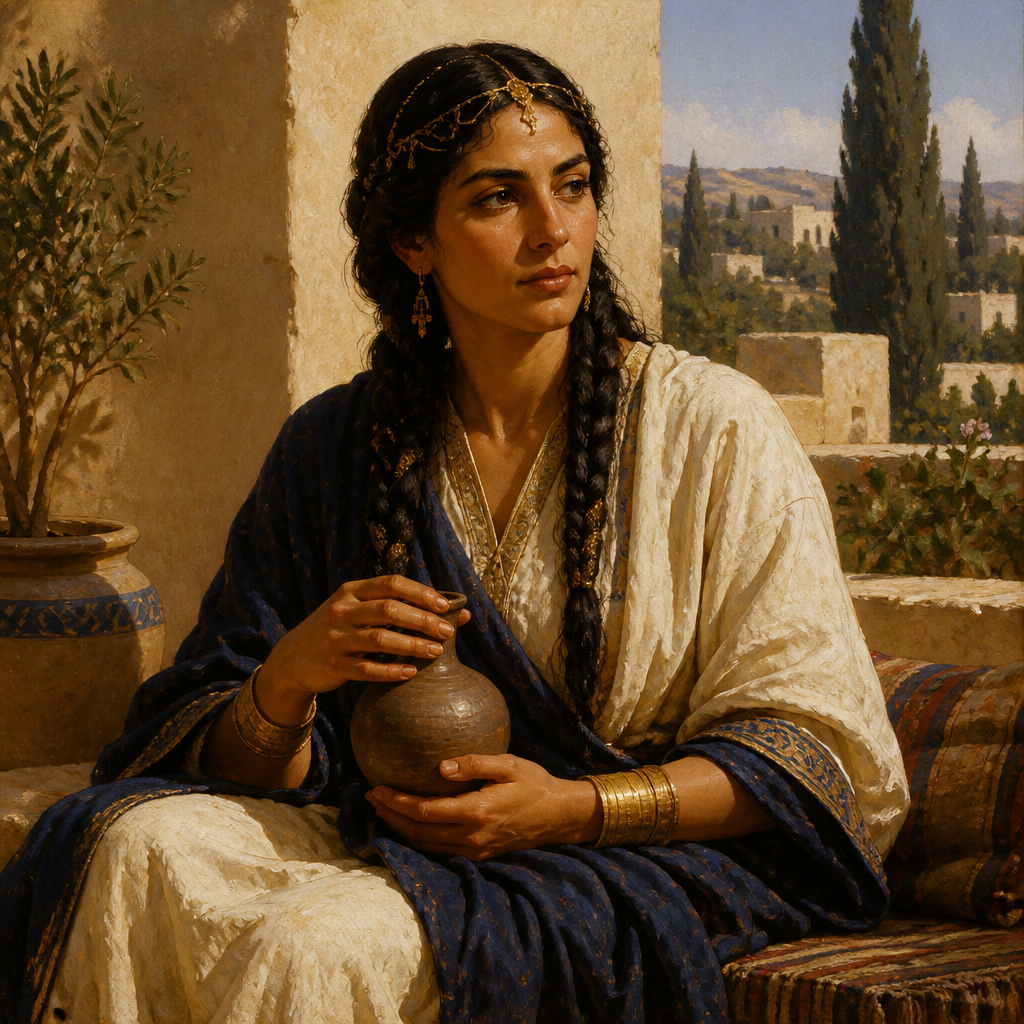
The biblical record concerning this specific Pharaoh is found solely in the genealogical accounts of the tribe of Judah, specifically within the lineage of Caleb, the son of Jephunneh. According to 1 Chronicles 4:18, this Pharaoh was the father of a woman named Bithiah. The name Bithiah is of particular interest to scholars as it translates to "daughter of Yahweh," suggesting a potential conversion to the faith of Israel or a name bestowed upon her following her marriage into the Judean community.
This Pharaoh’s primary relevance in the text is as the father-in-law to Mered, a member of the tribe of Judah. The passage notes that Bithiah was one of two wives belonging to Mered; the other was a Judean woman. Through Bithiah, the lineage of this Pharaoh extended into the clans of Judah, specifically through her sons Jered, Heber, and Jekuthiel. These sons are identified as the founders or "fathers" of the settlements of Gedor, Soco, and Zanoah, respectively.
Major Life Events
The text of 1 Chronicles does not provide a narrative account of this Pharaoh's reign, his military campaigns, or his political achievements. His "major event" in the biblical canon is the marriage of his daughter to Mered. While the Bible does not explicitly state the circumstances, such a marriage suggests a period of relative peace or formal alliance between the Egyptian court and the Judean nobility during the Divided Monarchy. The mention of this Pharaoh is strictly genealogical, serving to validate the status of Mered’s offspring and their inheritance within the land of Judah.
Relationship to Other Biblical Figures
This Pharaoh is defined entirely by his relationship to his daughter, Bithiah, and his son-in-law, Mered. The relationship is notable because it places an Egyptian royal descendant directly within the heart of the Judean tribal structure. Unlike the adversarial relationships often depicted between the kings of Egypt and the people of Israel, this Pharaoh represents a point of genealogical integration. His grandsons—Jered, Heber, and Jekuthiel—became significant figures in the Judean landscape, establishing prominent towns that would remain relevant throughout the history of the southern kingdom.
Spiritual Significance
The inclusion of this Pharaoh in the Judean genealogies highlights the theme of inclusion within the biblical narrative. Even during the Divided Monarchy, a period often characterized by strict national boundaries, the grace and providence of God are seen extending to those outside the covenant community. By recording Pharaoh’s daughter as part of Mered’s family, the chronicler acknowledges that the heritage of Judah was enriched by diverse origins. The fact that his daughter’s name (Bithiah) honors the God of Israel suggests a spiritual legacy that transcended her Egyptian royal upbringing, marking this Pharaoh as a progenitor of a family that helped build the infrastructure of the promised land.
Spiritual Significance
The primary biblical significance of this Pharaoh lies in his genealogical contribution to the tribe of Judah. By providing a daughter who married into the line of Caleb, he becomes a link in the chain of the people of God. His mention reinforces the high social standing of Mered and provides historical context for the settlement of Gedor, Soco, and Zanoah.
Theologically, this Pharaoh represents the sovereign hand of God working through international relations to build the nation of Israel. Though he is a foreign monarch, his household contributes to the population and stability of the Judean heartland during the Divided Monarchy.
Frequently Asked Questions
Which Pharaoh is mentioned in 1 Chronicles 4:18?
This Pharaoh is the father of Bithiah, who married Mered of the tribe of Judah. He lived during the era of the Divided Monarchy.
Who was this Pharaoh's daughter?
His daughter was Bithiah, whose name means 'daughter of Yahweh.' She was one of the wives of Mered.
What tribe was this Pharaoh associated with through marriage?
Through his daughter Bithiah's marriage to Mered, he was associated with the tribe of Judah.
Who were the grandsons of this Pharaoh?
His grandsons through Bithiah were Jered (father of Gedor), Heber (father of Soco), and Jekuthiel (father of Zanoah).
Is this the same Pharaoh who oppressed the Israelites in Exodus?
No. This Pharaoh is a different individual appearing in the genealogical records of 1 Chronicles during the Divided Monarchy period, centuries after the Exodus.
Connected Figures
Categories
Mentions by Book
- 1 Chronicles1
Family & Relationships
Child
1 Chronicles 4:18
Others Named Pharaoh
Pharaoh, Father-in-law of Solomon1 Kings 3:1
An Egyptian monarch of the 21st Dynasty who forged a strategic political alliance with King Solomon through marriage and the conquest of Gezer.
Pharaoh, Oppressor of the IsraelitesExodus 1:11
The Egyptian monarch who enslaved the Israelites, ordered the infanticide of Hebrew male infants, and unsuccessfully sought to execute Moses.
Pharaoh, Contemporary of AbramGenesis 12:15
An Egyptian monarch during the Patriarchal Period who briefly took Sarai into his palace before being afflicted by divine plagues.
Pharaoh, Subject of Divine JudgmentJeremiah 25:19
An Egyptian monarch during the Divided Monarchy named by the prophet Jeremiah as a recipient of the cup of God's wrath among the nations.
Pharaoh, unreliable ally of Hezekiah2 Kings 18:21
An Egyptian monarch during the Divided Monarchy whom Judah mistakenly trusted for military protection against the Assyrian Empire.
Pharaoh, Patron of JosephGenesis 37:36
The Egyptian monarch who elevated Joseph from a dungeon to the second-highest office in the land after receiving divine warnings through dreams of a coming famine.
Pharaoh, King of the ExodusExodus 3:10
The stubborn monarch of Egypt who resisted the divine command to release the Israelites, ultimately succumbing after ten plagues and the destruction of his army.