Hiram, King of Tyre
A Phoenician monarch who served as a critical ally to both King David and King Solomon, providing essential materials and labor for the construction of the Jerusalem Temple.
Hiram, the King of Tyre, stands as one of the most significant foreign allies to the nation of Israel during the height of the United Monarchy. Reigning from the Phoenician city-state of Tyre in modern-day Lebanon, Hiram established a durable diplomatic and economic partnership with the Davidic dynasty. His reign is characterized by maritime expansion, architectural excellence, and a unique religious recognition of Yahweh as the God of Israel, despite his own status as a foreign ruler.
Hiram’s contributions were foundational to the physical infrastructure of the Israelite kingdom. He provided the specialized labor, high-quality timber, and vast quantities of gold necessary for the most prestigious building projects in Jerusalem, including the royal palace of David and the First Temple. Through his naval expertise and trade agreements, Hiram helped transform Israel from a regional power into a central hub of international commerce and wealth.
Background and Context
Hiram was the ruler of Tyre, a major Phoenician seaport known for its maritime prowess and its abundance of natural resources, specifically the prized cedars of Lebanon. During the 10th century BC, as the United Monarchy of Israel consolidated its power under King David, Hiram recognized the strategic advantage of an alliance with his southern neighbor. The biblical record identifies Hiram as a "friend of David," a relationship that predated the reign of Solomon and set the stage for decades of peaceful cooperation between the two nations (1 Kings 5:1).
Unlike many surrounding nations that frequently entered into conflict with Israel, Hiram’s Tyre maintained a strictly symbiotic relationship. The Phoenicians possessed the nautical and architectural skills that the Israelites lacked, while Israel controlled the inland trade routes and produced the agricultural surpluses necessary to feed the urban population of Tyre.
Major Life Events
Alliance with King David
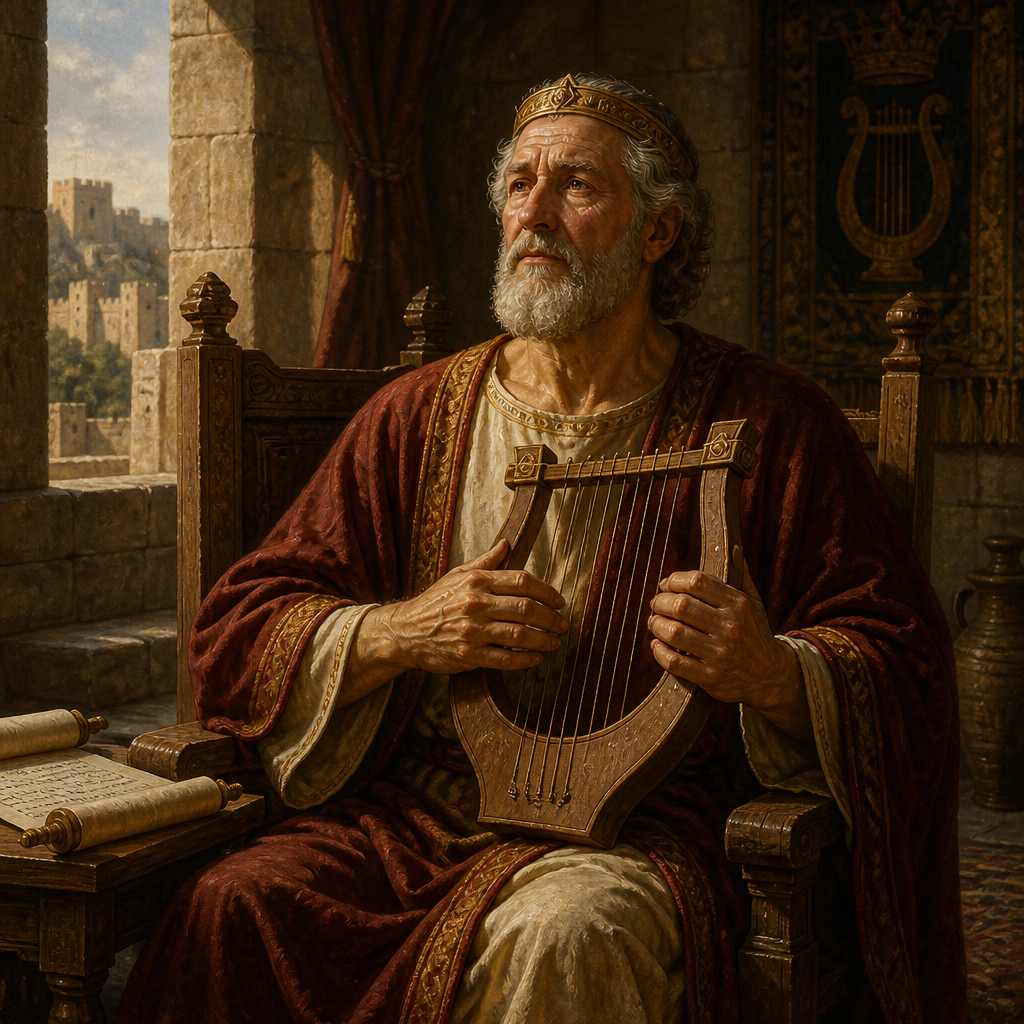
Hiram first enters the biblical narrative during the reign of David. Following David's capture of Jerusalem and his establishment as king over all Israel, Hiram sent envoys to the new capital. Recognizing David’s growing influence, Hiram provided cedar logs, along with skilled carpenters and stonemasons, to build a royal palace for David (2 Samuel 5:11; 1 Chronicles 14:1). This act was more than a gift; it was a formal recognition of David’s legitimacy and the beginning of a long-term diplomatic treaty.
Cooperation with King Solomon
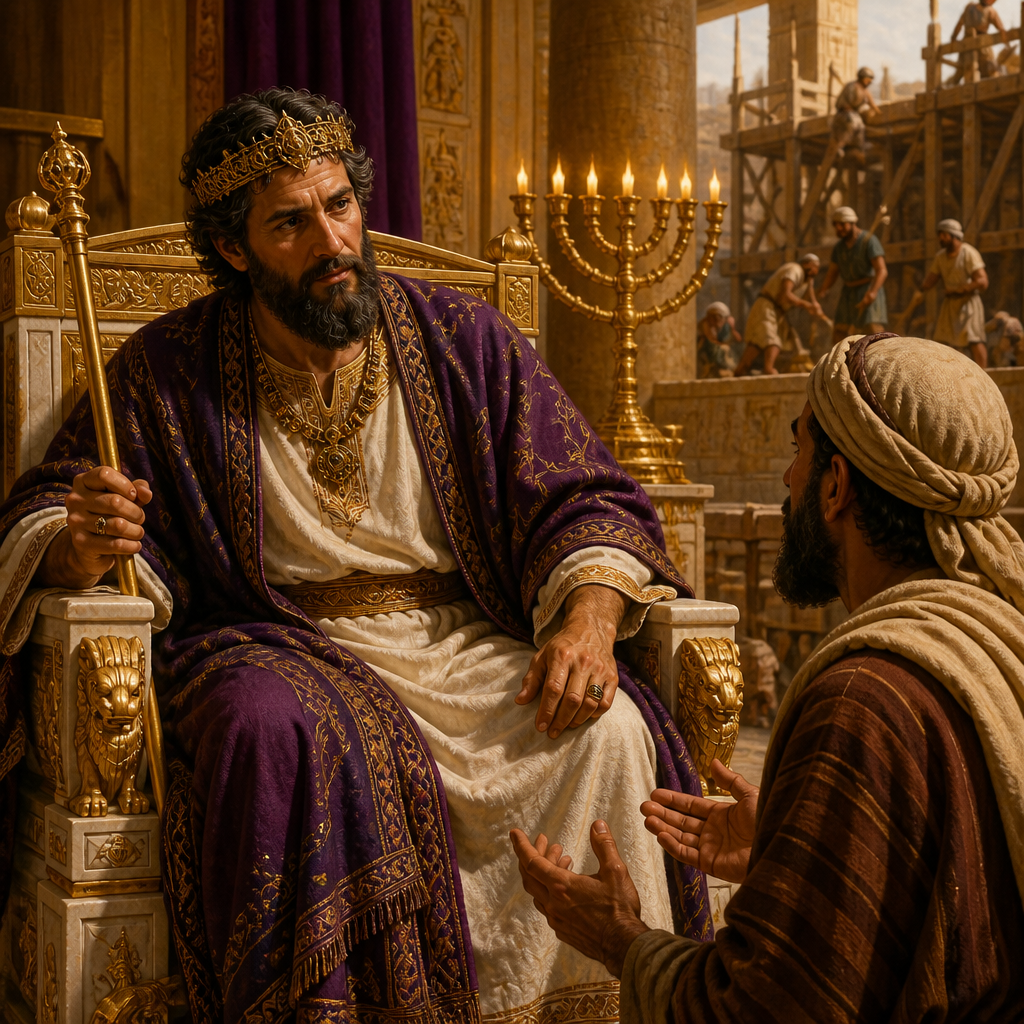
Upon the death of David, Hiram sent a delegation to Solomon to affirm their continued alliance. Solomon, intending to fulfill his father’s dream of building a permanent house for the Lord, petitioned Hiram for assistance. Hiram’s response was one of great joy. He praised the Lord for giving David a wise son and agreed to supply all the cedar and cypress timber needed for the Temple (1 Kings 5:7-8).
The logistical arrangement was massive: Hiram’s servants felled the trees in Lebanon and floated them as rafts down the Mediterranean coast to a location Solomon designated. In exchange, Solomon provided Hiram with an annual payment of 20,000 cors of wheat and 20,000 baths of pure olive oil to sustain the royal household of Tyre (1 Kings 5:11). This partnership culminated in the joint labor force of Solomon’s and Hiram’s builders, along with the Gebalites, who prepared the foundations of the Temple (1 Kings 5:18).
Economic and Naval Ventures
Beyond the construction of the Temple, Hiram and Solomon entered into significant commercial ventures. They established a joint fleet of "ships of Tarshish" that sailed from the port of Ezion-geber. Hiram provided experienced sailors to man the ships alongside Solomon’s men. These expeditions, which occurred every three years, brought back immense wealth, including 450 talents of gold from Ophir, as well as silver, ivory, exotic animals (apes and peacocks), and precious stones (1 Kings 10:22; 2 Chronicles 8:18).
The Galilee Land Grant
Later in their relationship, Solomon attempted to compensate Hiram for his vast contributions of gold and timber by giving him twenty towns in the land of Galilee. However, when Hiram went to inspect the towns, he was not pleased with them, famously referring to the region as "Cabul," a term suggesting dissatisfaction (1 Kings 9:12-13). Despite this disagreement, the alliance remained intact, and Hiram continued to support Solomon’s financial endeavors, sending an additional 120 talents of gold.
Relationship to Other Biblical Figures
Hiram’s primary relationships were with the two greatest kings of the United Monarchy. With David, Hiram was a loyal contemporary who assisted in the transition of Israel from a tribal confederacy to a settled kingdom. With Solomon, Hiram functioned as an elder statesman and a commercial partner. Their relationship was defined by a formal treaty (1 Kings 5:12) and a mutual respect for wisdom. Hiram’s letters to Solomon, recorded in 2 Chronicles, reflect a high level of literacy and diplomatic protocol, showing that he viewed Solomon as a peer in both intellect and divine favor.
Spiritual Significance
While Hiram was not an Israelite, the biblical text presents him as a figure who recognized the sovereignty of Yahweh. Upon hearing of Solomon’s wisdom, Hiram exclaimed, “Blessed be the LORD, the God of Israel, who made the heavens and the earth!” (2 Chronicles 2:12). This acknowledgement is significant in the Old Testament as an example of a Gentile ruler recognizing the God of Israel as the Creator.
Hiram’s role in building the Temple is also theologically profound. The use of foreign materials and foreign labor to build the dwelling place of the God of Israel suggests a universal dimension to the Temple. It underscores the biblical theme that while Israel was the chosen people, their God was the Lord of all nations, and the beauty of the earth—symbolized by the cedars of Lebanon and the gold of Ophir—was to be dedicated to His glory.
Spiritual Significance
Hiram, King of Tyre, is biblically significant as the primary facilitator of the physical construction of the First Temple in Jerusalem. His involvement demonstrates the geopolitical stability of the United Monarchy and the extent to which the Davidic and Solomonic kingdoms were respected by neighboring powers. By providing the specialized materials and skilled labor that Israel lacked, Hiram enabled the fulfillment of the covenantal promise that a house would be built for the Name of the LORD.
Theologically, Hiram represents the inclusion of the nations in the service of Yahweh. His willingness to supply his best resources for the Temple, coupled with his verbal praise of the God of Israel, serves as a precursor to the prophetic vision of all nations bringing their wealth to Jerusalem to worship the true God. His partnership with Solomon is portrayed as a golden era of peace and international cooperation rooted in divine wisdom.
Frequently Asked Questions
What did Hiram give to King David?
Hiram sent envoys to David along with cedar logs, carpenters, and stonemasons to build a royal palace for him in Jerusalem.
How did Hiram react to Solomon's request for help with the Temple?
Hiram rejoiced greatly, praising the LORD for giving David a wise son, and agreed to provide all the cedar and cypress timber Solomon required.
What did Solomon give Hiram in exchange for his resources?
Solomon provided Hiram's household with an annual supply of 20,000 cors of wheat and 20,000 baths of pure olive oil, and later offered him twenty towns in Galilee.
What was the 'Land of Cabul'?
This was the name Hiram gave to the twenty towns in Galilee given to him by Solomon, indicating his dissatisfaction with the quality of the land.
Did Hiram help with Solomon's navy?
Yes, Hiram provided experienced sailors to serve in Solomon’s fleet, helping to bring back gold, silver, ivory, and precious woods from distant lands like Ophir.
Connected Figures
Categories
Mentions by Book
- 1 Kings14
- 2 Chronicles7
- 1 Chronicles1
- 2 Samuel1
Others Named Hiram
Hiram, Artisan of the Temple1 Kings 7:13
A master craftsman from Tyre commissioned by King Solomon to execute the intricate bronze work and sacred vessels for the First Temple in Jerusalem.