Benaiah, Son of Jehoiada
A mighty man of valor who served as the commander of King David's elite bodyguard and eventually became the commander-in-chief of King Solomon's army.
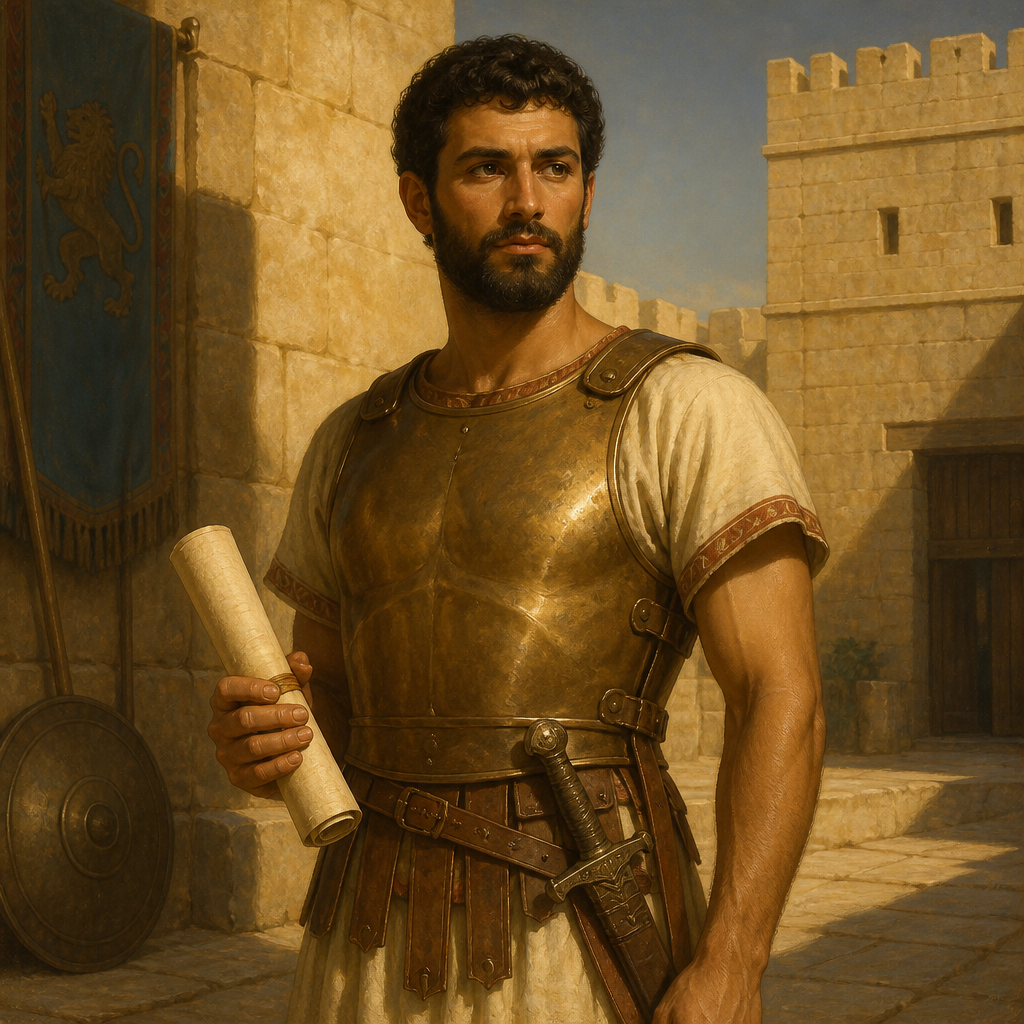
Benaiah, the son of Jehoiada, was one of the most prominent military and administrative figures during the transition from the reign of King David to King Solomon. As a high-ranking officer in David’s army, he initially gained fame as a warrior of exceptional physical prowess and bravery. Unlike Joab, who often operated with personal political motives, Benaiah was characterized by his unwavering loyalty to the Davidic line, serving as the captain of the Cherethites and Pelethites—the king’s elite bodyguard.
His role shifted from a specialized military commander to a central political figure during the succession crisis at the end of David’s life. Benaiah was instrumental in ensuring Solomon’s ascension to the throne, standing against the rebellion of Adonijah. Under Solomon's reign, Benaiah was elevated to the highest military office in Israel, replacing Joab as the commander of the entire army. His career represents the institutionalization of the Israelite military during the height of the United Monarchy.
Background and Family
Benaiah was the son of Jehoiada, a man identified in 1 Chronicles 27:5 as a priest. This lineage suggests that Benaiah came from a levitical background, though his life was defined by the sword rather than the altar. He was a native of Kabzeel, a town in the southern reaches of Judah. Benaiah’s father, Jehoiada, was himself described as a "man of valor," indicating a family tradition of military excellence. Benaiah eventually had a son named Ammizabad, who served as an officer under his father’s command in the division system established by David.
Major Life Events
Exploits of Valor
Benaiah’s reputation was forged through three specific acts of legendary bravery recorded in both 2 Samuel and 1 Chronicles. First, he struck down two of Moab’s greatest champions (often translated as "lion-like men"). Second, he performed the highly unusual feat of descending into a pit on a snowy day to kill a lion, a task that required both immense strength and psychological fortitude. Third, he defeated an Egyptian giant who was armed with a massive spear. Despite being armed only with a staff, Benaiah wrenched the spear from the giant’s hand and killed him with his own weapon. These deeds earned him a place of honor alongside David’s "Three Mighty Men," though he was technically ranked just below them.
The Succession of Solomon
As King David neared death, his eldest surviving son, Adonijah, attempted to seize the throne. While the long-standing military commander Joab joined Adonijah’s faction, Benaiah remained steadfastly loyal to David’s choice of Solomon. Alongside Nathan the prophet and Zadok the priest, Benaiah formed the core loyalist group that intervened to crown Solomon at Gihon Spring. Benaiah’s verbal response to David’s order—"Amen! May the Lord, the God of my lord the king, so declare it"—serves as a rare biblical example of a military officer expressing deep theological alignment with the divine covenant of kingship.
Commander of the Army
Upon Solomon’s consolidation of power, Benaiah served as the king's primary enforcer of justice. Following Solomon’s instructions, Benaiah executed the threats to the new regime, including Adonijah, Shimei, and Joab. The execution of Joab was particularly significant; Benaiah confronted the elder general at the horns of the altar in the Tabernacle. When Joab refused to leave the sacred space, Benaiah carried out the execution there on Solomon's orders, effectively ending the old military guard. Consequently, Solomon appointed Benaiah as the commander-in-chief over the entire army of Israel, a position he held into Solomon's peak years.
Relationship to Other Biblical Figures
Benaiah’s career is defined by his relationships with two kings and one rival. To David, he was the ultimate protector, the man entrusted with the king’s personal safety through the Cherethites and Pelethites. To Solomon, he was the loyal executor and the military foundation of the new administration. His relationship with Joab, however, was one of professional contrast. Joab represented the older, often chaotic era of David’s early wars, while Benaiah represented the disciplined, royalist order of the established monarchy. By replacing Joab, Benaiah signaled the transition from a tribal militia-style leadership to a formalized state military.
Spiritual Significance
While primarily a military figure, Benaiah’s levitical ancestry and his role in the establishment of the Solomonian peace carry spiritual weight. He is portrayed as a man who recognized that the authority of the king was ultimately derived from the God of Israel. His refusal to join Adonijah’s self-exaltation highlights the virtue of discernment and faithfulness to God's anointed. In the broader biblical narrative, Benaiah serves as a model of the "mighty man" whose physical prowess is tempered by obedience to the established divine order.
Spiritual Significance
Theologically, Benaiah represents the concept of 'consecrated strength.' As the son of a priest who becomes a general, he bridges the gap between the religious and the civil/military spheres of the United Monarchy. His presence in the narrative ensures that Solomon’s rise is seen not just as a political maneuver, but as an act supported by the loyal military establishment who sought to honor David's wishes and God's choice.
Furthermore, Benaiah’s exploits—such as killing the lion in the pit—have often been used in homiletics to illustrate the importance of facing 'fearsome' situations with courage. Within the canon, he serves as a necessary foil to Joab; where Joab’s violence was often vengeful and unauthorized, Benaiah’s violence was judicial and carried out under the direct authority of the king, symbolizing the 'firmly established' kingdom described at the end of 1 Kings 2.
Frequently Asked Questions
Who were the Cherethites and Pelethites that Benaiah commanded?
They were King David's elite personal bodyguard, likely composed of foreign mercenaries who were directly loyal to the king rather than to a specific Israelite tribe. Benaiah was their captain throughout David's reign.
What is the significance of Benaiah killing a lion on a snowy day?
This detail highlights his extreme bravery and physical skill. Lions were dangerous predators, and snow would have made the footing treacherous and the animal more desperate, emphasizing that Benaiah did not shy away from difficult or dangerous circumstances.
Why did Benaiah kill Joab at the altar?
King Solomon ordered the execution of Joab for his past murders of Abner and Amasa. Joab fled to the Tabernacle seeking sanctuary, but Solomon ruled that his crimes were so severe that the altar could not protect him, and Benaiah carried out the sentence.
Was Benaiah a priest?
While Benaiah is called the 'son of Jehoiada the priest,' he functioned as a military commander. His levitical lineage is mentioned to show his high social standing and perhaps to explain his close alignment with Zadok the priest.
How did Benaiah die?
The Bible does not record the details of Benaiah's death. The last mentions of him in 1 Kings and 1 Chronicles show him in a position of high honor and command during the reign of Solomon.
Connected Figures

David
King whom Benaiah served as bodyguard captain
Solomon
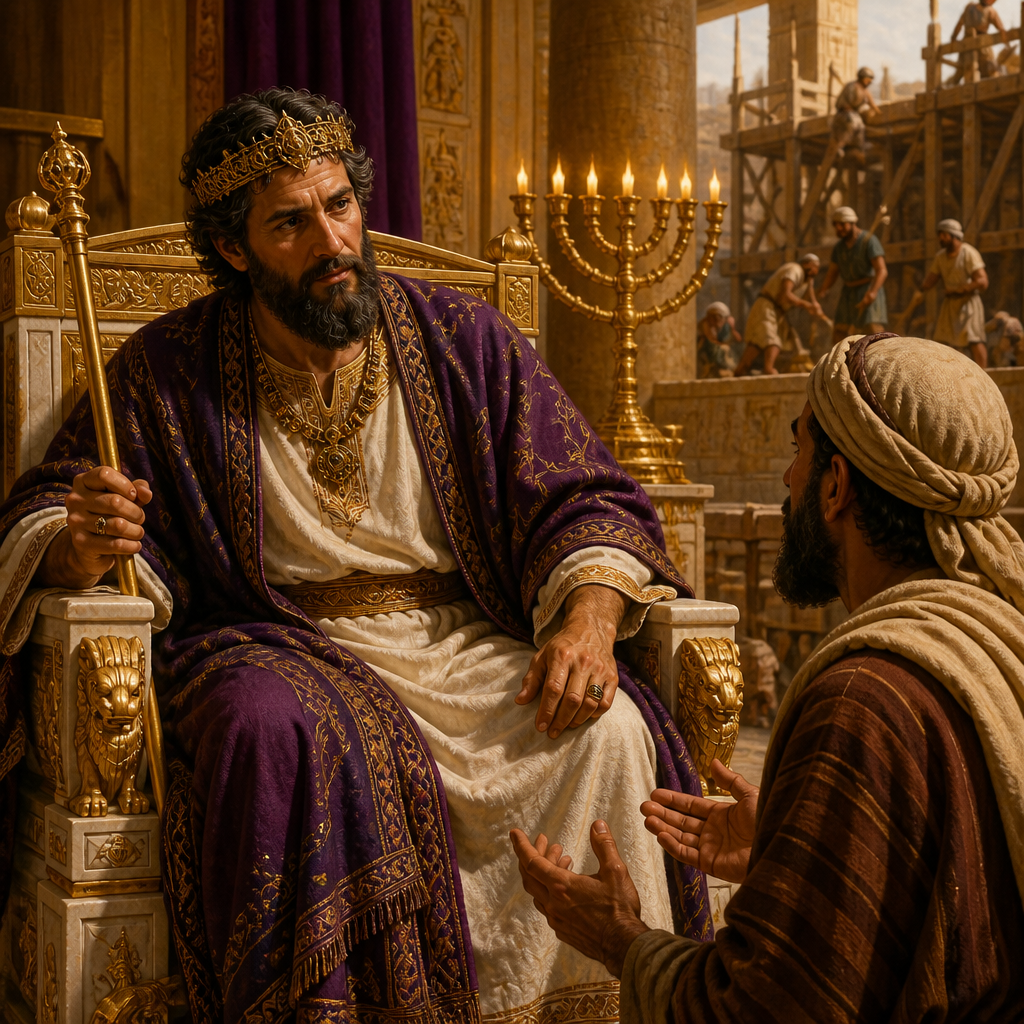
King who promoted Benaiah to Army Commander
Jehoiada
Father
Joab
Predecessor and rival whom Benaiah executed
Ammizabad
Son
Categories
Mentions by Book
- 1 Kings14
- 1 Chronicles5
- 2 Samuel4
Family & Relationships
Child
2 Samuel 8:18
Parent
2 Samuel 8:18
Others Named Benaiah
Benaiah, Descendant of BaniEzra 10:35
An Israelite during the post-exilic period who complied with Ezra’s decree to dissolve marriages to foreign wives to preserve the holiness of the returning community.
Benaiah, Overseer under Hezekiah2 Chronicles 31:13
A Levite or temple official appointed as an overseer of tithes and offerings during the religious reforms of King Hezekiah.
Benaiah, Priest of the Divided Monarchy1 Chronicles 15:18
A Levite priest who played the trumpet before the ark of the covenant during the reign of King David.
Benaiah, Descendant of NeboEzra 10:43
An Israelite who returned from the Babylonian exile and complied with Ezra's decree to put away his foreign wife.
Benaiah, Ancestor of Jahaziel2 Chronicles 20:14
A Levite of the Divided Monarchy and a descendant of Asaph, Benaiah is recorded in the lineage of the prophet Jahaziel during the reign of King Jehoshaphat.
Benaiah, Tribal Chief of Simeon1 Chronicles 4:36
A leader and descendant within the tribe of Simeon mentioned in the genealogical records of the Divided Monarchy.
Benaiah the Pirathonite2 Samuel 23:30
An Ephraimite warrior from Pirathon who served as one of King David's elite 'Thirty' and commanded a division of 24,000 men.
Benaiah, Descendant of Pahath-moabEzra 10:30
An Israelite during the post-exilic period who was among those instructed by Ezra to dissolve marriages with foreign women to maintain the spiritual purity of the returning community.
Benaiah, Descendant of ParoshEzra 10:25
An Israelite from the family of Parosh who was among those required to separate from foreign wives during Ezra's post-exilic reforms.
Benaiah, Father of PelatiahEzekiel 11:1
A man living during the Babylonian exile whose son, Pelatiah, was a leader of the people in Jerusalem and the subject of a specific judgment vision by Ezekiel.
Benaiah, Father of Jehoiada1 Chronicles 27:34
A high-ranking counselor or leader during the transition from the United Monarchy to the early Divided Monarchy who fathered a royal advisor.