Benaiah, Overseer under Hezekiah
A Levite or temple official appointed as an overseer of tithes and offerings during the religious reforms of King Hezekiah.
Benaiah was a government and temple official serving during the reign of King Hezekiah of Judah. He is specifically identified in the biblical record as one of the ten overseers appointed to manage the vast quantities of tithes, offerings, and dedicated gifts brought by the people of Judah to the Temple in Jerusalem. His service occurred during a period of significant national spiritual renewal and administrative reorganization in the late 8th century BC.
While Benaiah is mentioned only briefly, his role was essential to the infrastructure of Hezekiah’s reforms. As an assistant to the chief administrators Conaniah and Shimei, Benaiah helped ensure that the Levites and priests were properly supported, allowing them to focus entirely on their ritual duties and the teaching of the Law. His inclusion in the genealogical and administrative records of 2 Chronicles highlights the structured and transparent nature of Hezekiah’s financial management of the sanctuary.
Background and Family
The biblical record for this Benaiah is found exclusively within the administrative lists of King Hezekiah’s reign in the book of 2 Chronicles. While his specific tribal lineage is not explicitly stated in the immediate context of 2 Chronicles 31:13, the nature of his work—overseeing sacred offerings in the temple—strongly suggests he was of the tribe of Levi. He served during the Divided Monarchy, a time when the Southern Kingdom of Judah was asserting its religious identity in the face of Assyrian pressure and the recent fall of the Northern Kingdom of Israel.
Major Life Events
The primary event defining Benaiah’s career was the great religious reform initiated by King Hezekiah. After the king purified the Temple and reinstated the Passover, he commanded the people of Jerusalem to provide the portion due to the priests and Levites. The response was so overwhelming that heaps of grain, wine, oil, honey, and tithes accumulated from the third month through the seventh month.
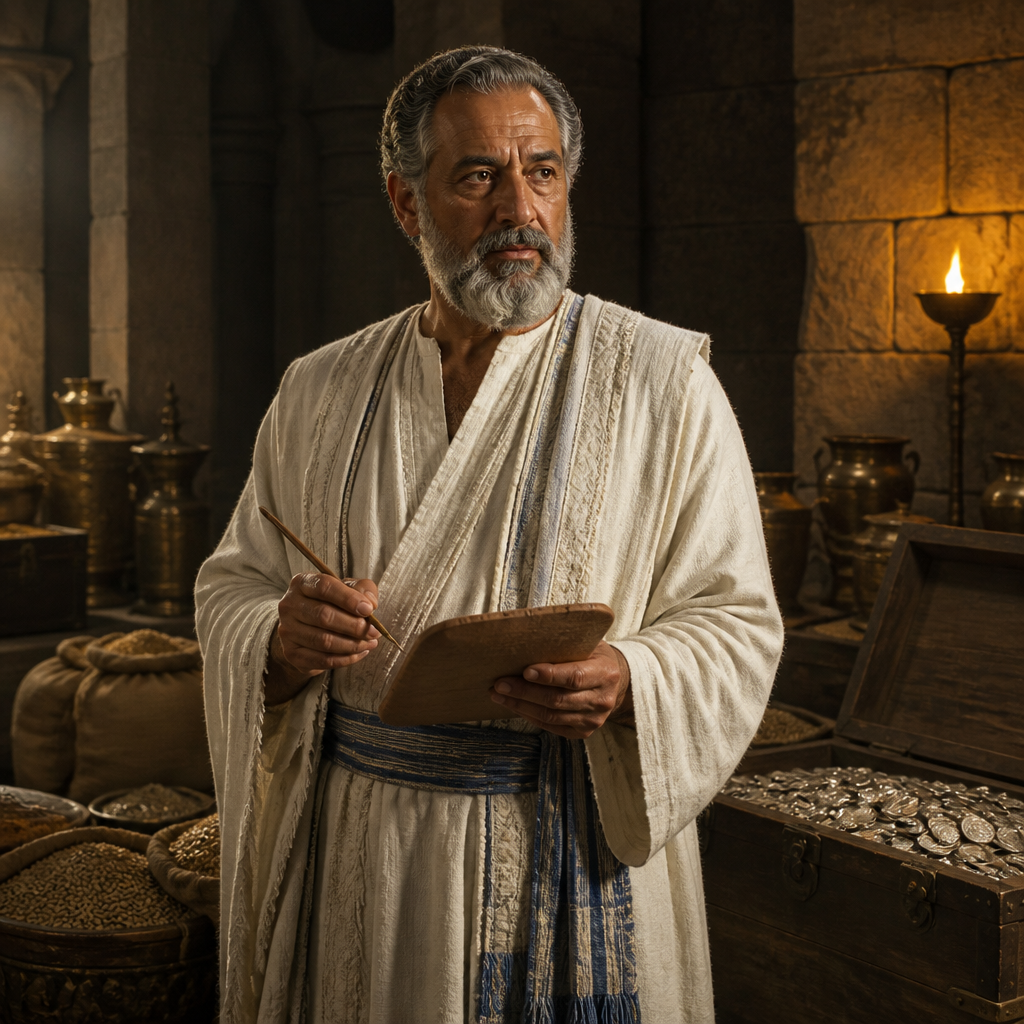
To manage this abundance, Hezekiah appointed a hierarchy of officials. Benaiah was selected as one of ten specific overseers who served under the authority of Conaniah and his brother Shimei. This appointment was not merely a royal decree but a collaborative effort between the civil government and the religious establishment, as Benaiah was appointed by both King Hezekiah and Azariah, the chief official of the house of God. Benaiah’s responsibility involved the logistics of storage, accounting, and distribution of these resources to ensure the sustainability of the temple staff.
Relationship to Other Biblical Figures
Benaiah operated within a specific chain of command. He was subordinate to Conaniah and Shimei, who were the primary treasurers. He worked alongside nine other named overseers: Jehiel, Azaziah, Nahath, Asahel, Jerimoth, Jozabad, Eliel, Ismachiah, and Mahath. Collectively, these men represented the administrative backbone of the Judean priesthood. His ultimate superiors were King Hezekiah, the reforming monarch, and Azariah, who likely served as the High Priest during this era.
Spiritual Significance
Benaiah’s role, though administrative, carries significant theological weight in the context of the Chronicler’s history. His work facilitated the restoration of the "service of the house of the LORD." By managing the material needs of the Levites, Benaiah and his colleagues enabled the spiritual leaders to "devote themselves to the Law of the LORD" (2 Chronicles 31:4). His life illustrates the biblical principle that administrative integrity and organized stewardship are vital companions to spiritual revival. The meticulous recording of his name serves as a testament to the importance God places on those who serve in the background to maintain the order and sanctity of His worship.
Spiritual Significance
Benaiah represents the essential administrative support required for large-scale spiritual reform. His service ensured that the revival sparked by Hezekiah's leadership did not fail due to logistical negligence or financial mismanagement. In the biblical narrative, Benaiah stands as a model of the 'helper' or 'administrator' whose work protects the integrity of the sanctuary's resources.
Theologically, his inclusion in the text reinforces the idea that every role within the community of faith—whether the king who leads the reform or the overseer who counts the grain—is worthy of record and essential to the health of the covenant relationship between God and His people.
Frequently Asked Questions
What was Benaiah's specific job?
He was an overseer responsible for managing the tithes, offerings, and consecrated gifts brought to the temple under King Hezekiah's administration.
When did Benaiah live?
He lived during the Divided Monarchy, specifically during the reign of King Hezekiah of Judah (late 8th century BC).
Who were Benaiah's supervisors?
He worked under Conaniah and Shimei, who were the lead officials appointed by King Hezekiah and Azariah the chief priest.
Is Benaiah mentioned in the New Testament?
No, this Benaiah is only mentioned in the Old Testament book of 2 Chronicles.
Connected Figures
Hezekiah
King and Appointing Authority
Conaniah
Immediate Superior/Supervisor
Azariah
Chief Official of the House of God
Shimei
Supervisor
Categories
Mentions by Book
- 2 Chronicles1
Others Named Benaiah
Benaiah, Descendant of BaniEzra 10:35
An Israelite during the post-exilic period who complied with Ezra’s decree to dissolve marriages to foreign wives to preserve the holiness of the returning community.
Benaiah, Priest of the Divided Monarchy1 Chronicles 15:18
A Levite priest who played the trumpet before the ark of the covenant during the reign of King David.
Benaiah, Descendant of NeboEzra 10:43
An Israelite who returned from the Babylonian exile and complied with Ezra's decree to put away his foreign wife.
Benaiah, Son of Jehoiada2 Samuel 8:18
A mighty man of valor who served as the commander of King David's elite bodyguard and eventually became the commander-in-chief of King Solomon's army.
Benaiah, Ancestor of Jahaziel2 Chronicles 20:14
A Levite of the Divided Monarchy and a descendant of Asaph, Benaiah is recorded in the lineage of the prophet Jahaziel during the reign of King Jehoshaphat.
Benaiah, Tribal Chief of Simeon1 Chronicles 4:36
A leader and descendant within the tribe of Simeon mentioned in the genealogical records of the Divided Monarchy.
Benaiah the Pirathonite2 Samuel 23:30
An Ephraimite warrior from Pirathon who served as one of King David's elite 'Thirty' and commanded a division of 24,000 men.
Benaiah, Descendant of Pahath-moabEzra 10:30
An Israelite during the post-exilic period who was among those instructed by Ezra to dissolve marriages with foreign women to maintain the spiritual purity of the returning community.
Benaiah, Descendant of ParoshEzra 10:25
An Israelite from the family of Parosh who was among those required to separate from foreign wives during Ezra's post-exilic reforms.
Benaiah, Father of PelatiahEzekiel 11:1
A man living during the Babylonian exile whose son, Pelatiah, was a leader of the people in Jerusalem and the subject of a specific judgment vision by Ezekiel.
Benaiah, Father of Jehoiada1 Chronicles 27:34
A high-ranking counselor or leader during the transition from the United Monarchy to the early Divided Monarchy who fathered a royal advisor.