Javan
Javan was a son of Japheth and a grandson of Noah, recognized in the Table of Nations as the foundational patriarch of the Greek people and various maritime nations.
Javan is a significant figure in the primeval history of the Bible, appearing in the genealogical records of Genesis and 1 Chronicles. As the fourth son of Japheth and the grandson of Noah, he occupies a central place in the 'Table of Nations,' a biblical framework that accounts for the post-flood repopulation of the earth and the origins of diverse ethnic groups. The name Javan is widely understood by scholars to be the Hebrew equivalent of 'Ionia,' the region of the western coast of Asia Minor settled by Greeks.
While Javan is not a character involved in narrative action, his identity is inextricably linked to the 'Greeks' (Hellenes) throughout the Old and New Testaments. In the Hebrew Bible, his name is used both for the individual patriarch and as a geographical and ethnic designation for the Greek-speaking world. By the time of the New Testament, the term 'Greek' (G1672) derived from Javan's lineage represents the broader Gentile world in contrast to the Jewish people, serving as a primary category in the early Church's theology of universal salvation.
Background and Family
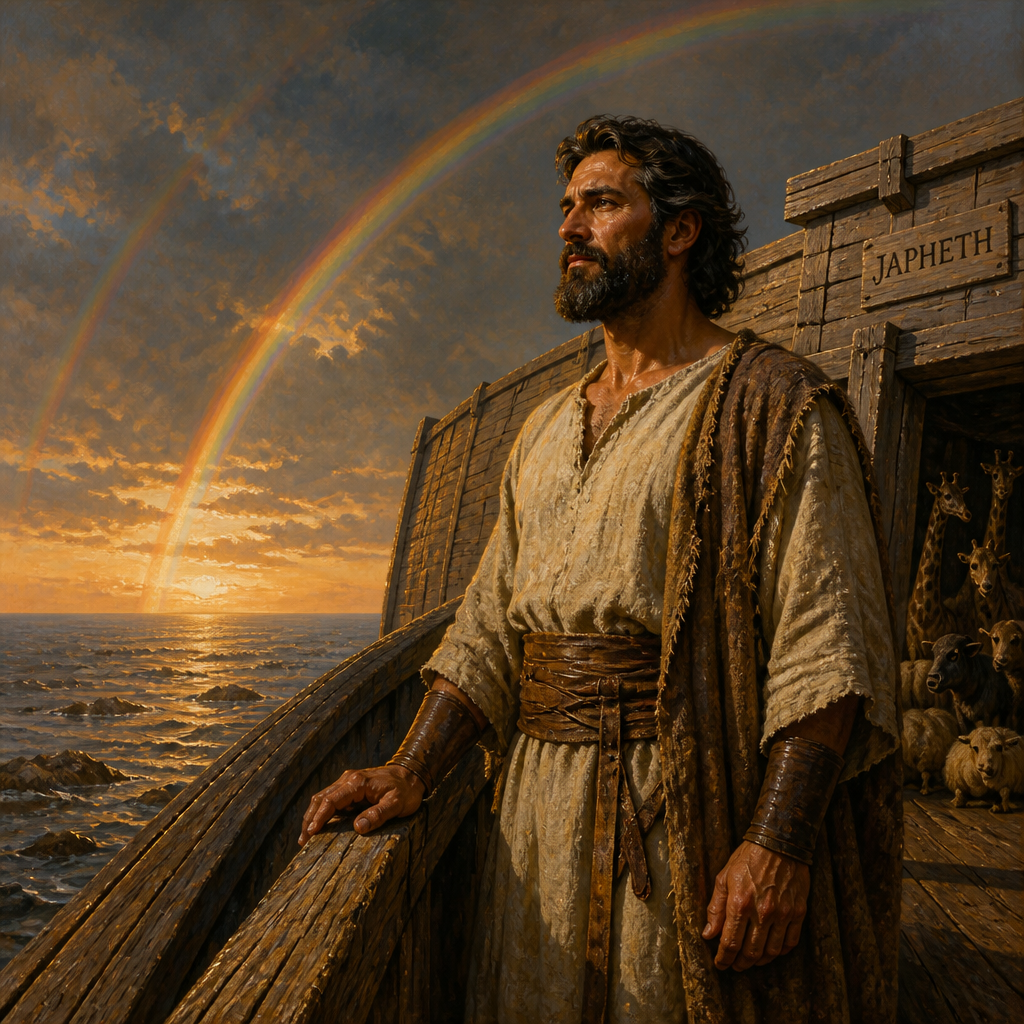
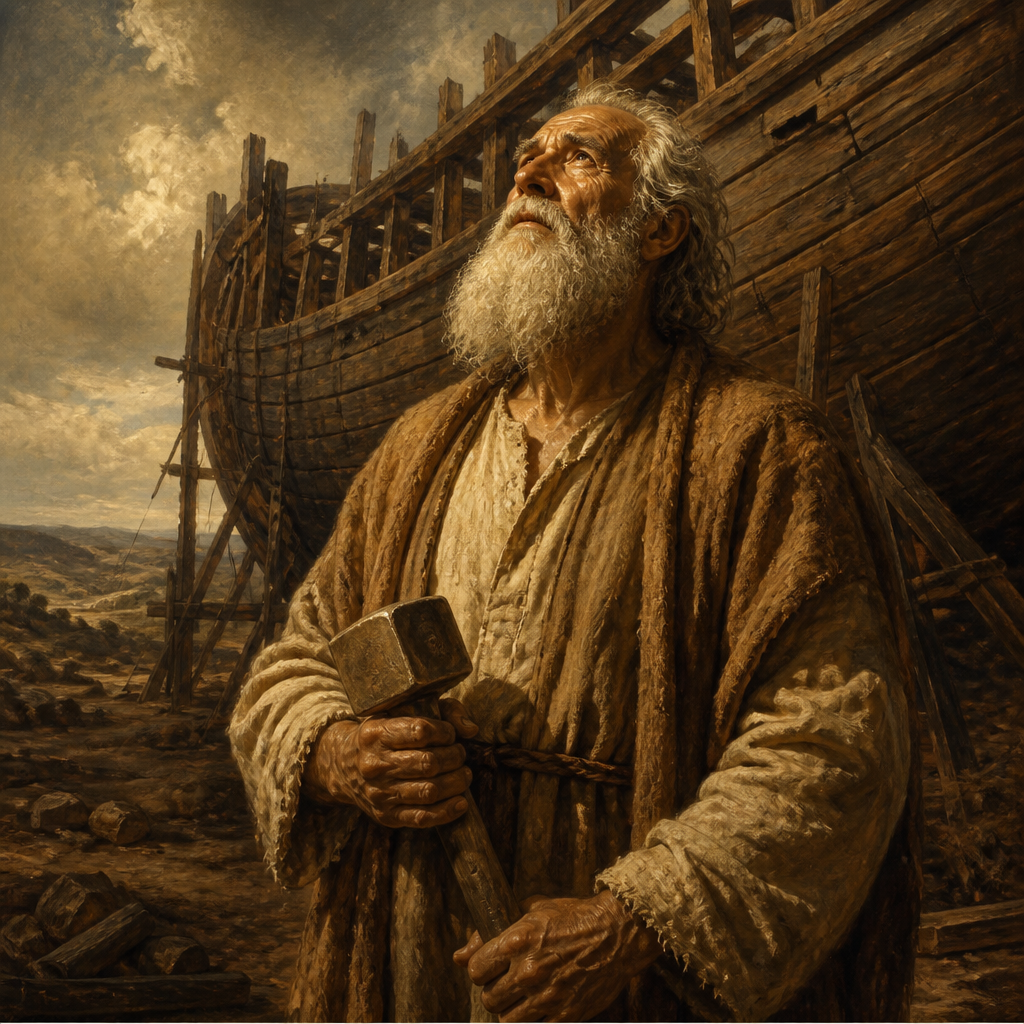
The biblical record of Javan begins in the aftermath of the Great Flood. According to Genesis 10:2, Javan was the son of Japheth, who was one of the three sons of Noah. He was born into a large family that would eventually populate the 'isles of the Gentiles' or the maritime regions of the Mediterranean. Javan had six brothers: Gomer, Magog, Madai, Tubal, Meshech, and Tiras. Together, these seven sons of Japheth are traditionally associated with the peoples of the north and west, moving away from the Mesopotamian cradle toward Europe and Asia Minor.
Javan himself became the father of four distinct groups, listed in Genesis 10:4 and 1 Chronicles 1:7: Elishah, Tarshish, the Kittites (Kittim), and the Rodanites (Dodanim). These names are historically significant, as they correspond to known locations and peoples in antiquity. Elishah is often linked to Cyprus or parts of North Africa; Tarshish to the far western Mediterranean (possibly Spain); Kittim to Cyprus and the Italian peninsula; and the Rodanites to the island of Rhodes. This lineage establishes Javan as the progenitor of the seafaring nations that defined the Mediterranean basin.
Major Life Events
As a figure from the Patriarchal period before the call of Abraham, Javan’s 'life events' are recorded not as a biography of personal actions, but through the expansion and activities of his descendants. The Bible tracks the trajectory of Javan’s name from a genealogical entry to a geopolitical entity. In the book of Joel, Javan is mentioned in a historical-prophetic context regarding the slave trade, where the people of Judah and Jerusalem were sold to the 'Greeks' (Javanites) to be sent far from their homeland (Joel 3:6).
By the time of the New Testament, the legacy of Javan has fully transitioned into the cultural and ethnic designation of the 'Greeks.' The historical events involving Javan in this era focus on the interaction between the Gospel and the Greek-speaking world. This includes the appearance of Greeks at the feast in Jerusalem who sought to see Jesus (John 12:20) and the massive influx of Greek converts during the missionary journeys of Paul and Barnabas in cities like Iconium, Ephesus, and Thessalonica (Acts 14:1, 19:10).
Relationship to Other Biblical Figures
Javan stands in a pivotal position between the world of the ancient Patriarchs and the world of the Apostles. As the son of Japheth, he is a direct link to the survival of humanity through the Flood. His brothers—such as Madai (ancestor of the Medes) and Gomer (linked to the Cimmerians)—represent the neighboring powers that would interact with Israel throughout the Old Testament.
In the New Testament, the 'sons of Javan' (Greeks) are frequently contrasted with the 'sons of Israel' (Jews). Figures like Timothy and Titus serve as bridges between these two worlds. Timothy was the son of a Jewish mother and a 'Greek' father (Acts 16:1-3), embodying the intersection of Javan’s lineage with the Abrahamic covenant. Similarly, Titus, a Greek, became a test case for the early Church’s decision not to compel Gentile converts to undergo circumcision (Galatians 2:3).
Spiritual Significance
The theological importance of Javan lies in the transition from national particularism to spiritual universalism. In the Old Testament, Javan and his descendants represented the far-off nations, the ends of the earth that were nonetheless under God’s sovereignty. The prophets looked forward to a time when even the distant coastlands would hear of God’s glory.
In the New Testament, 'Greek' (the legacy of Javan) becomes a theological category representing all non-Jews. The Apostle Paul uses the term to argue for the equality of all people under the Gospel. He famously declares that 'there is no difference between Jew and Greek' because the same Lord is Lord of all (Romans 10:12). In the spiritual body of Christ, the ancestral distinction of Javan is erased: 'Here there is no Greek or Jew... but Christ is all and is in all' (Colossians 3:11). Thus, Javan’s lineage, which began as a separate branch of the human family after the Flood, is brought back into union with the rest of humanity through the baptism of the Holy Spirit (1 Corinthians 12:13).
Spiritual Significance
Javan's primary significance is as the biblical archetype for the Gentile world, specifically the Western, Hellenistic civilizations. As a grandson of Noah, he represents the divine plan for the diversification of humanity into nations and languages. His presence in the Table of Nations ensures that the Greek world is not seen as outside of God's creative order, but as a specific branch of humanity with a designated heritage.
Theologically, the inclusion of the 'Greeks' (Javan's descendants) in the New Testament church marks the fulfillment of the promise that all nations would be blessed through the seed of Abraham. By breaking down the 'middle wall of partition' between the Jew and the Greek, the New Testament uses Javan's identity to demonstrate the power of the Gospel to create a new humanity that transcends ethnic and ancestral origins.
Frequently Asked Questions
Who were the sons of Javan?
According to Genesis 10:4 and 1 Chronicles 1:7, Javan had four sons: Elishah, Tarshish, the Kittites (Kittim), and the Rodanites (Dodanim).
What nationality does Javan represent?
Javan is the Hebrew name for Greece. He is considered the progenitor of the Ionian Greeks and the various seafaring peoples of the Mediterranean.
Where is Javan first mentioned in the Bible?
Javan is first mentioned in the 'Table of Nations' in Genesis 10:2 as one of the sons of Japheth.
What is the relationship between Javan and the New Testament Greeks?
The New Testament 'Greeks' are the ethnic and cultural descendants of Javan. The terms are linguistically and genealogically linked, with Javan being the root of the Hellenic identity.
Is Javan mentioned in the prophets?
Yes, Javan is mentioned in Joel 3:6, where the prophet speaks of the people of Judah being sold to the Greeks (Javanites).
Connected Figures
Categories
Mentions by Book
- Acts10
- Romans6
- 1 Corinthians4
- 1 Chronicles2
- Galatians2
- Genesis2
- John2
- Colossians1
- Joel1
- Mark1
Family & Relationships
Child
Genesis 10:2
Child
Genesis 10:2
Child
Tarshish, Great-grandson of Noah
Genesis 10:2
Child
Genesis 10:2
Sibling
Genesis 10:2
Sibling
Genesis 10:2
Sibling
Genesis 10:2
Sibling
Genesis 10:2
Sibling
Genesis 10:2
Sibling
Genesis 10:2
Sibling
Genesis 10:2
Parent
Genesis 5:32
Sibling
Genesis 10:2
Sibling
Genesis 10:2
Sibling
Genesis 10:2
Sibling
Genesis 10:2
Sibling
Genesis 10:2