Elishah
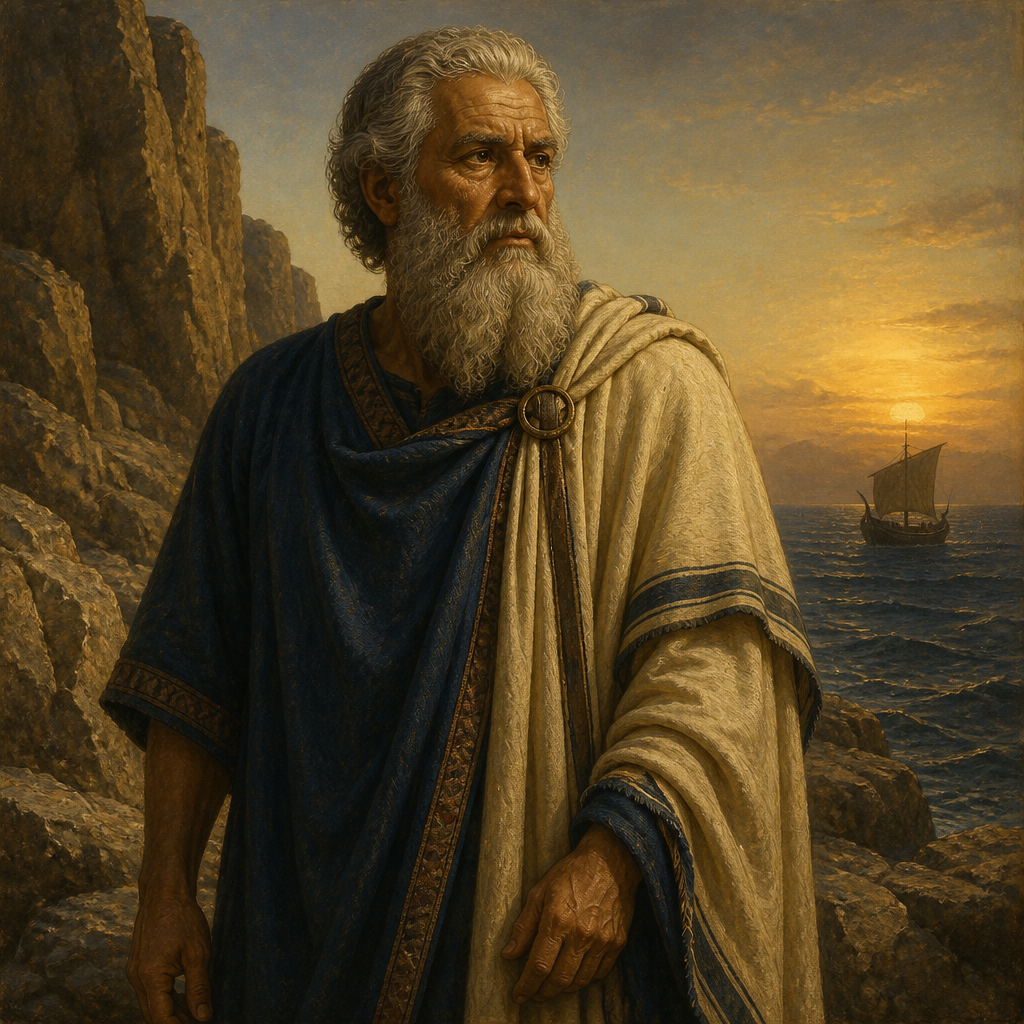
Elishah was a descendant of Noah through the line of Japheth and Javan, identified as a progenitor of seafaring peoples in the Primeval History.
Elishah is a figure appearing in the early genealogical records of the Hebrew Bible, specifically within the Table of Nations found in the book of Genesis. As the son of Javan and grandson of Japheth, he occupies a central position in the post-diluvian repopulation of the earth. His name represents both an individual and the lineage that sprang from him, contributing to the diversity of the early human family following the Great Flood.
The biblical record concerning Elishah is brief but foundational, serving to map the geographic and ancestral origins of the nations known to the ancient Israelites. While his personal biography is not detailed in the scriptures, his inclusion in the foundational genealogies of Genesis and 1 Chronicles underscores his importance in the biblical narrative of human dispersal and the fulfillment of the command to be fruitful and multiply.
Background and Family
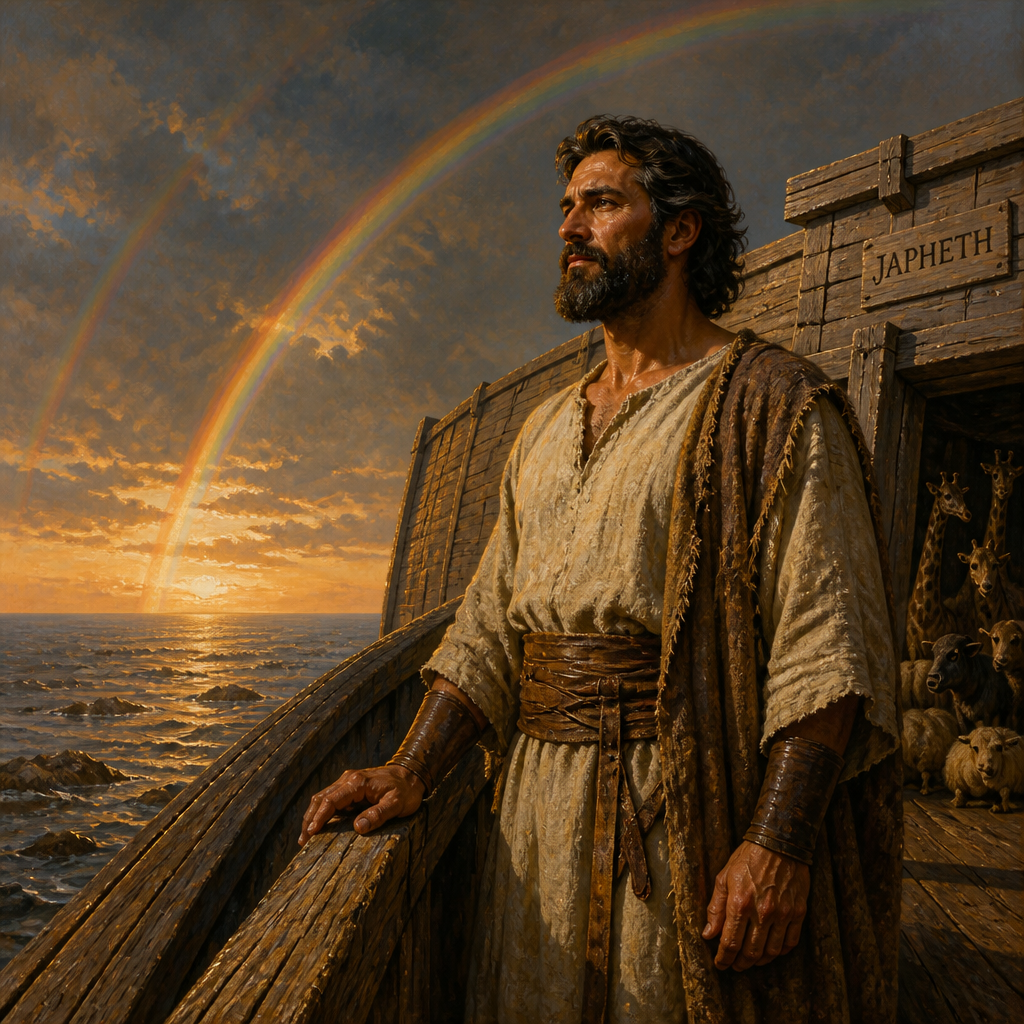
Elishah is introduced in the Primeval History as a member of the third generation following the Flood. According to Genesis 10:4, he is the first-named son of Javan. His father, Javan, was one of the seven sons of Japheth, who was in turn one of the three sons of Noah. This lineage places Elishah within the Japhetic branch of the human family, which the biblical text traditionally associates with the peoples of the coastlands and the northern and western regions relative to Canaan.
Elishah is listed alongside his brothers: Tarshish, the Kittites (Kittim), and the Rodanites (Dodanim). These siblings are collectively described as the source of the "maritime peoples" or "coastland peoples" who spread out into their territories by their clans and nations, each with its own language. The specific mention of Elishah as the firstborn of Javan suggests a position of seniority or primary importance among these seafaring lineages.
Major Life Events
The biblical text does not record specific biographical events, dialogues, or the lifespan of Elishah. His existence is defined primarily by his genealogical placement. He represents the transition from the immediate family of Noah to the formation of distinct ethnic and geographic entities. The primary "event" associated with Elishah is the migration and settlement of his descendants. The Genesis account notes that from the sons of Javan, the maritime nations spread out into their lands (Genesis 10:5). Therefore, Elishah’s legacy is tied to the movement of people away from the Mesopotamian cradle toward the Mediterranean and surrounding islands.
Relationship to Other Biblical Figures
Elishah’s primary relationships are defined by his immediate kin. As a grandson of Japheth, he is a nephew to figures such as Gomer, Magog, and Madai. His brothers—Tarshish, Kittim, and Dodanim—are often associated with significant locations in later biblical history (such as the trading port of Tarshish or the island of Cyprus/Kittim). Unlike some of his cousins who are linked to land-based powers like the Medes or the Cimmerians, Elishah and his brothers are distinctly identified with the sea.
In the broader context of the Table of Nations, Elishah stands in parallel to the descendants of Ham (such as Cush and Mizraim) and Shem (such as Elam and Asshur). This framework establishes Elishah as an integral part of the global human tapestry, connected by blood to all other post-flood survivors but distinct in his geographic destiny.
Spiritual Significance
The spiritual significance of Elishah lies in his role within the divine mandate to fill the earth. By naming specific descendants like Elishah, the biblical author emphasizes that the spread of nations was not a chaotic accident but a structured fulfillment of God’s blessing upon Noah’s family. Elishah represents the sovereignty of God over the origins of all ethnicities.
Furthermore, the inclusion of Elishah in 1 Chronicles 1:7 reaffirms the continuity of God's plan from the creation of the world through the history of Israel. By preserving his name in the chronicles of the people of God, the text asserts that the maritime nations and distant coastlands are part of the shared history of humanity under the Creator. Even the most distant islands, represented by the lineage of Elishah, are accounted for in the sacred record of the world's inhabitants.
Spiritual Significance
Elishah serves as a vital link in the Table of Nations, representing the diversification of the human race after the Flood. His inclusion signifies that the Mediterranean and maritime peoples are recognized within the biblical worldview as descendants of Noah, under the specific blessing of Japheth. This provides a theological basis for the unity of mankind and the reach of divine providence to the furthest coastlands.
His presence in both Genesis and 1 Chronicles underscores the importance of genealogy in establishing the identity and heritage of the ancient world. While he remains a silent figure in the text, he embodies the historical reality of migration and the fulfillment of the command to inhabit the whole earth.
Frequently Asked Questions
Who was Elishah's father?
Elishah was the son of Javan, as recorded in Genesis 10:4 and 1 Chronicles 1:7.
Which of Noah's sons was Elishah descended from?
Elishah was a descendant of Noah through the line of Japheth.
Who were Elishah's brothers?
His brothers were Tarshish, the Kittites (Kittim), and the Rodanites (Dodanim).
Where did Elishah's descendants settle?
The Bible describes Elishah's descendants as part of the maritime or coastland peoples who spread out into their own territories and nations.
In which books of the Bible is Elishah mentioned?
Elishah is mentioned in two books: Genesis and 1 Chronicles.
Connected Figures
Categories
Mentions by Book
- 1 Chronicles1
- Genesis1
Family & Relationships
Sibling
Tarshish, Great-grandson of Noah
Genesis 10:4
Sibling
Genesis 10:4
Sibling
Genesis 10:4
Sibling
Genesis 10:4
Parent
Genesis 10:2
Sibling
Genesis 10:4
Sibling
Tarshish, Great-grandson of Noah
Genesis 10:4