Meshech
A son of Japheth and grandson of Noah, identified as a primary progenitor of nations in the post-diluvian Table of Nations.
Meshech is a figure found in the Primeval History of the Bible, specifically appearing in the genealogical records following the Great Flood. He is documented as the sixth son of Japheth, who was one of the three sons of Noah. His placement in the biblical narrative serves to categorize the dispersal of humanity and the establishment of distinct ethnic and linguistic groups as they spread across the earth.
While his personal biography is not detailed in the text, Meshech’s presence in the Table of Nations is significant for understanding the biblical worldview regarding the origin of peoples. In the chronological framework of the Bible, he belongs to the earliest generations of the post-Flood era, a time defined by the reconstruction of human society and the fulfillment of the mandate to multiply and fill the earth.
Background and Family
Meshech is introduced in the Book of Genesis within a section commonly referred to by scholars as the "Table of Nations." According to Genesis 10:2, he is the son of Japheth. His brothers are listed as Gomer, Magog, Madai, Javan, Tubal, and Tiras. This familial structure places Meshech as a grandson of Noah, situating him in the second generation born after the global Deluge. The text provides a symmetrical listing of these seven sons, suggesting they were the foundational heads of various clans or territories.
Major Life Events
The biblical record for Meshech is strictly genealogical. There are no specific narratives detailing his personal life, his travels, or his specific interactions with his siblings or father. His primary "event" in the biblical record is his inclusion in the foundational registry of the human race. The occurrence of his name in 1 Chronicles 1:5 serves as a formal reiteration of the Genesis record, confirming his status in the priestly and historical traditions of Israel as a legitimate ancestor of the Japhetic line.
The sons of Japheth: Gomer, Magog, Madai, Javan, Tubal, Meshech, and Tiras. (Genesis 10:2)
Relationship to Other Biblical Figures
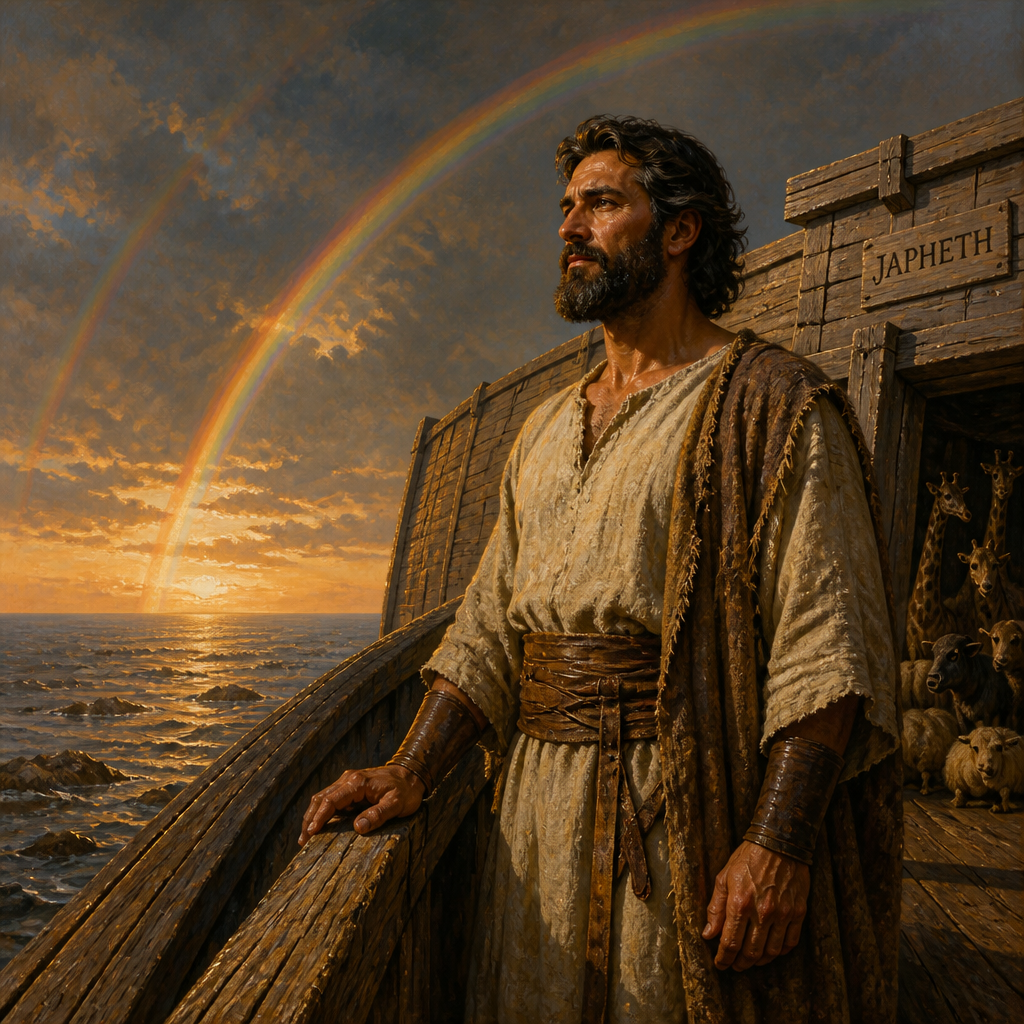
Meshech is consistently paired with his brother Tubal in the genealogical lists. This pairing is significant as it suggests a close geographical or cultural proximity between the descendants of these two brothers. As a son of Japheth, Meshech is part of the branch of Noah’s family that the Bible generally associates with the "maritime peoples" or those who spread into the northern and western regions relative to the Land of Canaan. His relationship to his father Japheth aligns him with the blessing pronounced by Noah in Genesis 9:27, where it was prophesied that God would "enlarge Japheth."
Spiritual Significance
In the context of Primeval History, Meshech represents the sovereignty of God over the lineage of man. By meticulously recording names like Meshech, the biblical authors emphasize that every nation and tribe has a specific origin traced back to a common ancestor and, ultimately, to the creative act of God. Though his individual character remains unknown, his inclusion in the canon signifies that his life played a role in the unfolding of the divine plan to repopulate the world. He stands as a link in the chain of human history, connecting the era of the patriarch Noah to the wider world of the ancient Near East.
Spiritual Significance
Meshech’s primary significance lies in his role as a representative of the Japhetic lineage. In biblical theology, the Table of Nations (Genesis 10) demonstrates that all humanity is related, descending from the family of Noah. Meshech serves as a vital data point in the biblical assertion that the diversity of nations is not accidental but is rooted in a documented ancestry overseen by God.
Furthermore, his placement alongside figures like Magog and Tubal establishes a framework for later prophetic literature, though the Primeval figure himself remains a silent participant in the genealogy. His presence in both Genesis and 1 Chronicles underscores the continuity of Israel’s historical record from the creation of the world through the development of the nations.
Frequently Asked Questions
Who was Meshech’s father?
Meshech was the son of Japheth, making him a grandson of Noah.
How many times is this Meshech mentioned in the Bible?
This specific figure is mentioned twice: once in Genesis 10:2 and once in 1 Chronicles 1:5.
Who were the brothers of Meshech?
His brothers were Gomer, Magog, Madai, Javan, Tubal, and Tiras.
What era did Meshech live in?
Meshech lived during the Primeval History period, specifically the generations immediately following the Great Flood.
Does the Bible record any words spoken by Meshech?
No, the Bible does not record any dialogue or specific actions for Meshech; he is known only through genealogical records.
Connected Figures
Categories
Mentions by Book
- 1 Chronicles1
- Genesis1
Family & Relationships
Sibling
Genesis 10:2
Sibling
Genesis 10:2
Sibling
Genesis 10:2
Sibling
Genesis 10:2
Sibling
Genesis 10:2
Sibling
Genesis 10:2
Sibling
Genesis 10:2
Parent
Genesis 5:32
Sibling
Genesis 10:2
Sibling
Genesis 10:2
Sibling
Genesis 10:2
Sibling
Genesis 10:2
Sibling
Genesis 10:2