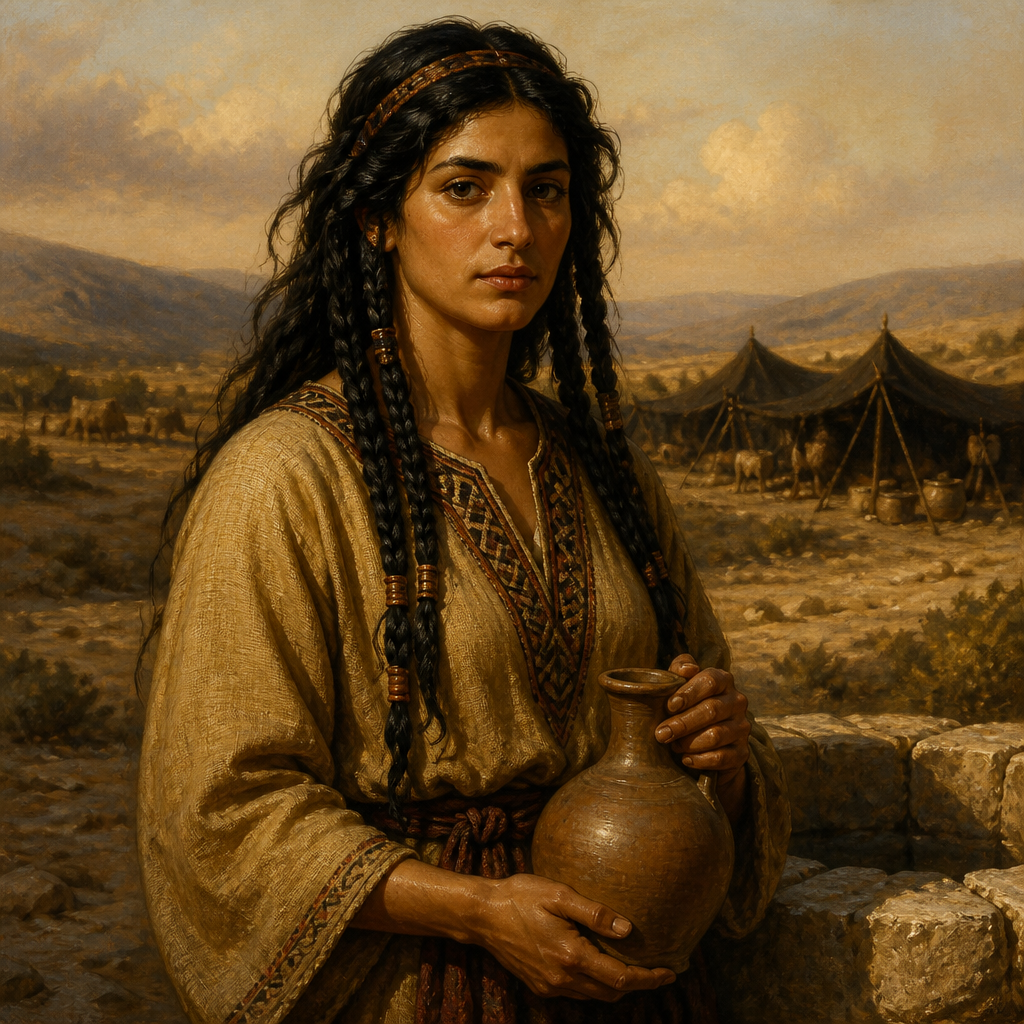
The Canaanite Woman (Wife of Simeon)
Who was the Canaanite Woman (Wife of Simeon) in the Bible?
A woman from the land of Canaan who married Simeon, son of Jacob, and became the mother of Shaul.
In the genealogical records of the Patriarchal Period, specifically within the lineage of the twelve sons of Israel, a woman identified only by her ethnicity appears as a distinct figure in the family of Simeon. While the majority of Jacob's sons married within their extended kin or from groups deemed culturally acceptable, the biblical record makes a specific point to identify one of Simeon’s wives as a 'Canaanite woman.' This distinction sets her and her son, Shaul, apart from the other members of the tribe.
Historically, this woman represents the interaction between the early Israelites and the local populations of the Levant during the era of the Patriarchs. Her presence in the sacred text is noted during two critical moments of transition: the migration of Jacob’s household into Egypt and the formal census of the clans that would eventually form the nation of Israel. Despite the brevity of her mention, she is an essential link in the genealogy of the tribe of Simeon, marking a unique branch of the family tree.
Background and Family
The Canaanite woman lived during the Patriarchal Period, a time when the descendants of Abraham were transitioning from nomadic sojourners to a burgeoning tribal federation. She became a partner to Simeon, the second son of Jacob and Leah. The biblical text in Genesis 46:10 lists the sons of Simeon who accompanied Jacob into Egypt: Jemuel, Jamin, Ohad, Jachin, Zohar, and Shaul. Crucially, the text adds a qualifying phrase to the final name, identifying Shaul as 'the son of a Canaanite woman.'
This specific identification suggests that Simeon had multiple wives or partners, but this woman is singled out because her ethnic background differed from the others. While the mothers of the other five sons are not named or described, the inclusion of her origin serves to explain the unique heritage of Shaul’s lineage within the Simeonite clan.
Major Life Events
Because the biblical narrative focuses primarily on the male heads of households during this era, the specific biographical details of the Canaanite woman’s life—such as her birth, her personal name, or the circumstances of her meeting Simeon—are not recorded. Her 'events' are defined by her motherhood and her inclusion in the migration to Egypt.
Her son, Shaul, is listed among those who went down to Egypt to escape the famine during the time of Joseph's viziership. By being included in this list, the Canaanite woman is indirectly placed within the narrative of the preservation of the house of Israel. Her presence in the record in Exodus 6:15, which repeats the genealogy during the time of Moses, confirms that her descendants maintained a distinct identity as the 'clans of Simeon' even centuries after her death.
Relationship to Other Biblical Figures
Her primary recorded relationship is with Simeon, a man known for his volatile temperament and his role in the violence at Shechem (Genesis 34). As his partner, she was a daughter-in-law to the patriarch Jacob. Her son, Shaul, represents the integration of Canaanite blood into the direct line of the promise given to Abraham. This relationship is significant because it highlights that the early formation of Israel was not entirely insulated from the surrounding nations, even during the foundational Patriarchal era.
Spiritual Significance
The spiritual and theological weight of the Canaanite woman lies in her role as the mother of a distinct clan within Israel. By labeling Shaul specifically as her son, the text acknowledges the diversity present within the twelve tribes from their inception. In the context of the Pentateuch, where intermarriage with Canaanites was often viewed with caution or outright prohibition in later law, her presence in the foundational genealogy serves as a reminder of the complex realities of the Patriarchal family. She is a figure of inclusion, ensuring that even those from the 'outside' nations contributed to the biological and cultural tapestry of the chosen people.
The Canaanite woman’s significance is primarily genealogical and sociological. Her mention in Genesis and Exodus ensures that the origins of the clan of Shaul are accurately preserved, highlighting a specific instance of intermarriage during the Patriarchal Period. This demonstrates that the early Israelites interacted and formed domestic bonds with the local populations of Canaan before their descent into Egypt.
Theologically, she represents the historical reality that the 'people of God' included individuals of diverse origins from the very beginning. Her inclusion in the sacred record, despite the general biblical tension regarding Canaanite influences, suggests an administrative honesty in the text regarding the mixed ancestry of certain tribal branches.
Frequently Asked Questions
Who was the Canaanite woman in the Old Testament?
She was the wife or partner of Simeon, the son of Jacob, and the mother of his son Shaul.
What tribe did she belong to?
Her specific tribe is unknown, but she is identified ethnically as a Canaanite, the indigenous people of the land where Jacob’s family lived.
Why is she mentioned in the Bible?
She is mentioned to identify the maternal lineage of Shaul, one of the sons of Simeon, distinguishing him from his brothers in the tribal genealogies.
Where is she mentioned in the Bible?
Her primary mentions are found in Genesis 46:10 and Exodus 6:15.
Family & Relationships
 Simeon, Son of JacobHusbandGenesis 46:10
Inferred
Genesis 46:10 calls Shaul the son of a Canaanite woman. No marriage is recorded.Evidence: Genesis 46:10
 The Canaanite Woman (Wife of Simeon)This page
Children
 Shaul, Son of the Canaanite WomanSonGenesis 46:10Stated
Connected Figures
Family
Husband · Genesis 46:10
Simeon was the second son of Jacob and Leah, a founding patriarch of Israel known for his volatile temperament and the eventual dispersal of his tribe within Judah.
PatriarchsFirst: Genesis 29:3319 versesPatriarch, shepherdSimeon
Son · Genesis 46:10
Shaul was the son of Simeon and a Canaanite woman, serving as a founding tribal head and the progenitor of the Shaulite clan during the Egyptian sojourn.
Categories
Mentions by Book
- Genesis1
- Exodus1
Scripture References
All 2 indexed verses, in canonical order, from the Berean Standard Bible.
Genesis · 1
- Genesis 46:10
The sons of Simeon: Jemuel, Jamin, Ohad, Jachin, Zohar, and Shaul the son of a Canaanite woman.
Exodus · 1
- Exodus 6:15
The sons of Simeon were Jemuel, Jamin, Ohad, Jachin, Zohar, and Shaul, the son of a Canaanite woman. These were the clans of Simeon.