Michael, the Chief Prince
A celestial prince and archangel who serves as the spiritual guardian of Israel and leader of the heavenly armies against spiritual forces.
Michael, whose name translates to 'Who is like God?', is presented in the biblical text as a powerful celestial being and a 'chief prince' of the heavenly host. Unlike human figures, Michael operates within the spiritual realm, particularly during the era of the Exile and Return, providing support to other messengers and acting as a defender for the people of Israel during periods of intense geopolitical and spiritual distress.
His role is characterized by warfare against spiritual adversaries and the protection of the righteous. He is specifically identified as the 'prince' of the Jewish people, standing watch over them against the spiritual 'princes' of opposing nations like Persia. His appearances are consistently associated with times of significant conflict, either in the prophetic visions of the Old Testament or the apocalyptic descriptions of the New Testament.
Background and Spiritual Role
Michael is introduced in the Book of Daniel as one of the 'chief princes' (Daniel 10:13). The biblical narrative situates him within a complex spiritual hierarchy where he serves as a primary advocate for the nation of Israel. During the Exilic period, as the Jewish people lived under foreign dominion, the text suggests that Michael functioned as their spiritual representative and defender against the supernatural forces influencing the kingdoms of the world.
In the Danielic accounts, Michael is not merely a messenger but a combatant. He is described as coming to the aid of a heavenly messenger who was detained by the 'prince of the kingdom of Persia.' This suggests that Michael possesses a unique authority and power among the heavenly beings, capable of overcoming high-ranking spiritual opposition that others could not.
Major Life Events
The Conflict in the Persian Era
During the third year of Cyrus king of Persia, Daniel received a vision that caused him great mourning. A heavenly being appeared to Daniel, explaining that he had been prevented from arriving for twenty-one days due to the opposition of the 'prince of Persia.' Michael intervened to help this messenger, allowing the revelation to reach Daniel. The messenger later notes that 'no one has the courage to support me against these, except Michael your prince' (Daniel 10:21), highlighting Michael's solitary and vital role in the spiritual defense of Israel during the Return from Exile.
The Time of Distress
The prophecy in Daniel 12:1 identifies Michael as 'the great prince who stands watch over your people.' He is predicted to 'rise up' during a future time of unprecedented distress. His intervention is linked directly to the deliverance of 'everyone whose name is found written in the book,' cementing his role as a guardian of the faithful during terminal periods of history.
Disputing with the Devil
In the New Testament, the book of Jude provides a brief but significant detail regarding a dispute between Michael and the devil. The text states that they 'disputed over the body of Moses' (Jude 1:9). Notably, despite his power, Michael is depicted as operating under divine authority, refusing to bring a 'slanderous charge' against his opponent, instead stating, 'The Lord rebuke you!'
The War in Heaven
The Book of Revelation depicts Michael in his most prominent martial role. A 'war broke out in heaven' in which Michael and his angels fought against a dragon (identified as the devil or Satan). Michael’s forces prevail, resulting in the dragon being cast out of heaven to the earth. This event is portrayed as a pivotal moment in the cosmic struggle between good and evil (Revelation 12:7-9).
Relationship to Other Biblical Figures
As a celestial being, Michael does not have human lineage or earthly relationships. However, he is closely associated with the prophet Daniel, to whom his deeds are revealed. He is also described as leading 'his angels,' indicating a commander-subordinate relationship within the heavenly host. In the epistle of Jude, he is explicitly given the title 'archangel,' a term signifying a high-ranking or chief angel.
Spiritual Significance
Theologically, Michael represents the active protection of God over His covenant people. His name itself—a rhetorical question 'Who is like God?'—serves as a constant reminder of God's incomparable sovereignty. Michael’s actions demonstrate that the struggles of the people of God are not merely physical or political but are mirrored in a spiritual reality. His refusal to act outside of God's direct rebuke in the matter of Moses' body serves as a model of humility and reliance on divine justice rather than personal vitriol.
Spiritual Significance
Michael serves as the ultimate example of a heavenly warrior and advocate. His significance lies in his dual role as the protector of Israel during the Exilic and Post-Exilic periods and as the leader of the heavenly armies in apocalyptic literature. He bridges the Old and New Testaments as a consistent figure of divine intervention against the forces of darkness.
Theologically, Michael underscores the reality of a spiritual conflict occurring alongside human history. His presence provides assurance that God provides specific, powerful agencies to guard the faithful, even when they are under the thumb of earthly empires. His title as 'archangel' and his submission to the Lord's authority in Jude 1:9 establish him as a model of high-ranking celestial obedience.
Frequently Asked Questions
Is Michael a human being or an angel?
Michael is an angel, specifically identified as an 'archangel' in Jude 1:9 and one of the 'chief princes' in Daniel 10:13.
What does the name Michael mean?
The name Michael (Miyka’el) is a Hebrew rhetorical question meaning 'Who is like God?'
What is Michael's specific role regarding Israel?
He is described in Daniel 10:21 and 12:1 as 'your prince' and the 'great prince who stands watch' over the people of Israel.
Which books of the Bible mention this Michael?
He is mentioned in the books of Daniel, Jude, and Revelation.
What was the result of Michael's war against the dragon?
According to Revelation 12:7-9, Michael and his angels defeated the dragon and his angels, and they were cast out of heaven.
Connected Figures
Daniel
Prophet who received visions of Michael
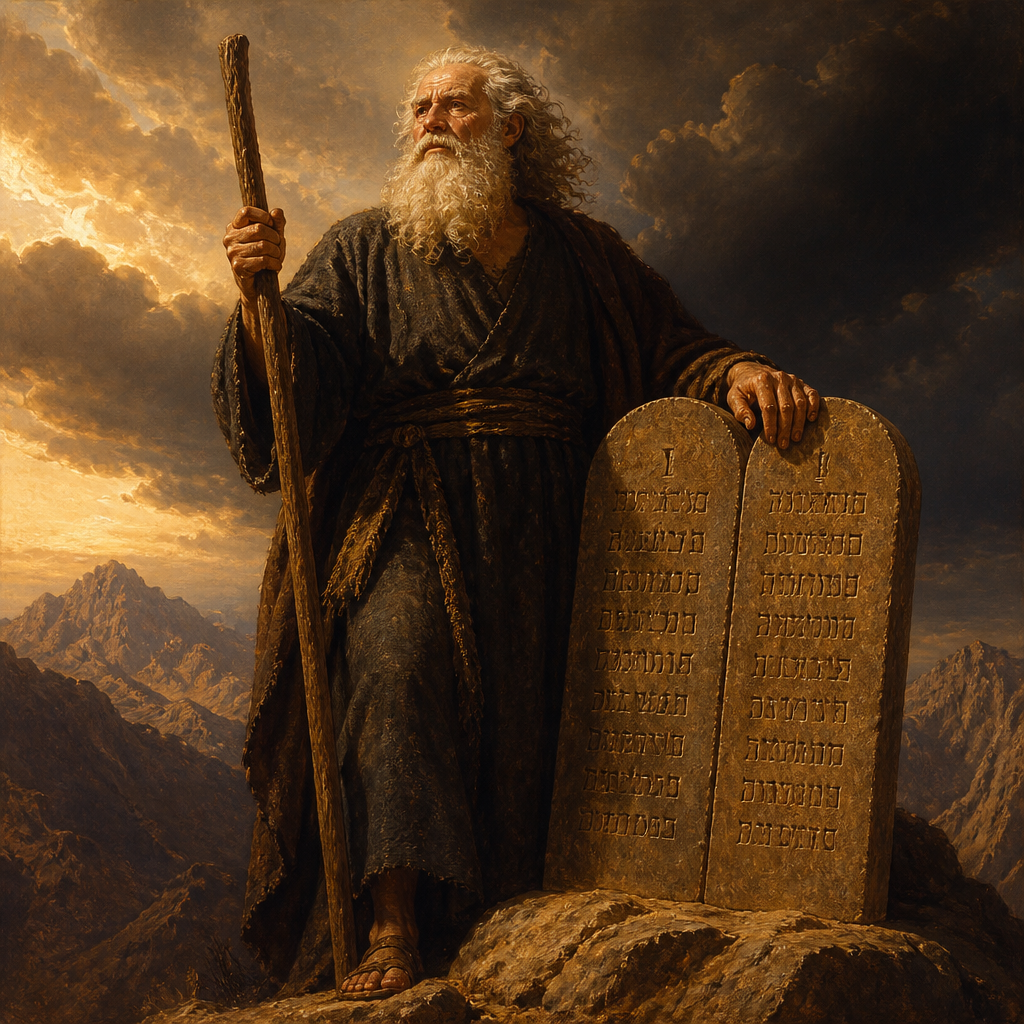
Moses
The figure over whose body Michael disputed with the devil
Categories
Mentions by Book
- Daniel3
- Jude1
- Revelation1
Others Named Michael
Michael, Son of Izrahiah1 Chronicles 7:3
A tribal chief of Issachar during the Divided Monarchy, noted for his leadership and membership in a family of five renowned heads of households.
Michael, Levite of the Divided Monarchy1 Chronicles 6:40
A Levite of the Kohathite line during the Divided Monarchy who served in the ancestry of the temple singer Asaph.
Michael, Son of Abihail1 Chronicles 5:13
A prominent kinsman and head of a family within the tribe of Gad during the era of the Divided Monarchy.
Michael, Son of Jehoshaphat2 Chronicles 21:2
A prince of Judah and son of King Jehoshaphat who was tragically murdered by his brother Jehoram during a royal purge.
Michael, Son of Jeshishai1 Chronicles 5:14
A descendant of Gad and the son of Jeshishai, Michael is recorded in the genealogical records of the Transjordan tribes during the era of the Divided Monarchy.
Michael, Father of ZebadiahEzra 8:8
Michael was a descendant of Shephatiah whose son, Zebadiah, led a group of eighty men during the second wave of the Jewish return from Babylonian exile under Ezra.
Michael, Son of Beriah1 Chronicles 8:16
A member of the tribe of Benjamin and son of Beriah, Michael was a family head recorded in the genealogical registers of the Egyptian sojourn era.
Michael, Manassite Chief of Thousands1 Chronicles 12:20
A high-ranking military leader from the tribe of Manasseh who defected from King Saul to join David at Ziklag.
Michael, Father of SethurNumbers 13:13
A member of the tribe of Asher and the father of Sethur, one of the twelve scouts sent by Moses to explore the land of Canaan.
Michael, Father of Omri1 Chronicles 27:18
A man of the tribe of Issachar during the Divided Monarchy whose son, Omri, served as a tribal leader under King David.