Michael, Father of Zebadiah
Who was Michael, Father of Zebadiah, in the Bible?
Michael was a descendant of Shephatiah whose son, Zebadiah, led a group of eighty men during the second wave of the Jewish return from Babylonian exile under Ezra.
This is one of 11 people named Michael in the Bible. See all 11 →
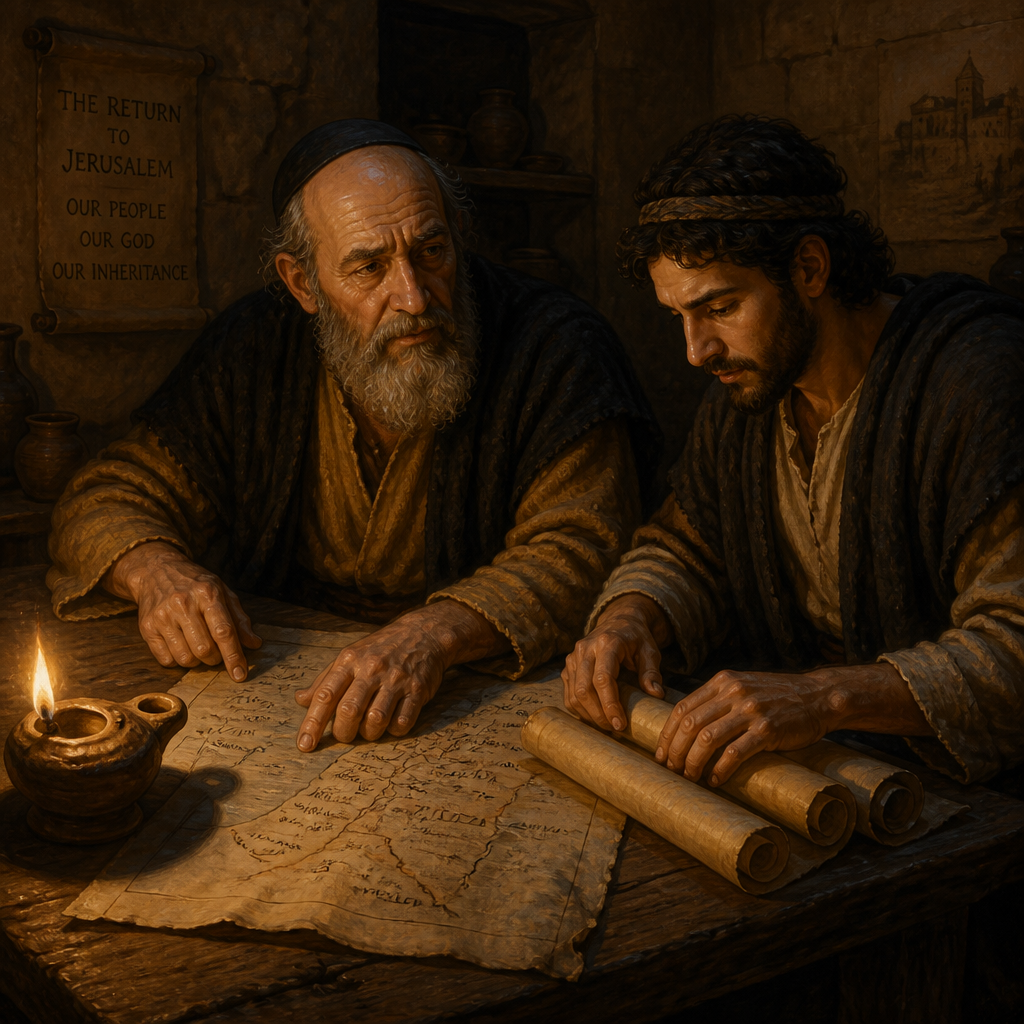
Michael is a figure mentioned in the biblical record of the Post-Exilic Period, specifically within the genealogical and census lists of Ezra 8. While his own life is not detailed through narrative action, he is identified as a member of the clan of Shephatiah, a significant family group within the returning Jewish community. Michael’s historical importance is primarily established through his son, Zebadiah, who acted as a representative and leader of his household during a pivotal moment in Israel's restoration.
Following the initial return led by Zerubbabel, a second group of exiles prepared to journey from Babylon to Jerusalem under the leadership of the priest and scribe Ezra. Michael is cited as the father of one of the chief men who joined this mission. His inclusion in this list highlights his family's commitment to the religious and national revival of Judah following the Babylonian Captivity.
Background and Family
Michael was a member of the descendants of Shephatiah. In the genealogical structures of post-exilic Israel, being associated with the line of Shephatiah suggests a family of considerable size and influence. According to the census in Ezra 2:4, the family of Shephatiah was among the first to return to Jerusalem with Zerubbabel, numbering 372 people at that time. Michael represents a later branch of this family that remained in Babylon until the mid-fifth century BC.
His name, Michael, translates to "Who is like God?"—a common theophoric name in Hebrew culture that reflects a theological affirmation of the uniqueness and sovereignty of Yahweh. In the context of the Exile and Return, such names often served as a testament to the enduring faith of the Jewish people while living in a polytheistic foreign land.
Major Life Events
The biblical record does not preserve the specific biography of Michael, but rather focuses on his legacy through his son, Zebadiah. In 458 BC, during the seventh year of King Artaxerxes I of Persia, Ezra organized a return of Israelites to Jerusalem to reinforce the temple worship and the teaching of the Law.
Zebadiah, identified specifically as the "son of Michael," is listed as one of the family heads who answered this call. Michael’s role in this event is paternal and ancestral; he is the man from whom the leader of this specific company descended. Under Zebadiah’s leadership, eighty men from Michael's family line made the arduous journey from the rivers of Babylon back to the ancestral homeland. This journey was not merely a relocation but a hazardous act of faith, as Ezra famously refused a royal escort, trusting instead in the protection of God.
Relationship to Other Biblical Figures
Michael is directly linked to two primary figures: his son Zebadiah and his ancestor Shephatiah. Zebadiah served as a lieutenant of sorts to Ezra the Scribe, representing one of the lay families of Israel alongside the priestly and Levite classes. By being listed in Ezra 8:8, Michael is placed within the inner circle of the restoration movement.
While Michael himself may have been deceased by the time the journey commenced, or perhaps was too elderly to travel, his identity was the necessary credential for Zebadiah to claim his place in the assembly of the returning exiles. The meticulous record-keeping of Ezra ensured that Michael’s name was preserved to validate his son's lineage and right to participate in the restoration of the Judean community.
Spiritual Significance
The significance of Michael, Father of Zebadiah, lies in the preservation of the covenant community during the Exile. The fact that his family remained identifiable and committed to the God of Israel after decades in Babylon is a testament to the social and religious continuity of the Jewish people.
In the Book of Ezra, the listing of fathers like Michael emphasizes the concept of the "holy seed" and the importance of individual families in the collective work of God. Michael represents the quiet, foundational generation that raised children like Zebadiah to value their heritage enough to leave the relative stability of Persia for the ruins of Jerusalem. His presence in the text reinforces the theme that every individual and family head played a role in the fulfillment of the prophetic promises regarding the end of the Babylonian captivity.
Michael serves as a vital link in the genealogical continuity of Israel during the Post-Exilic Period. His inclusion in the list of Ezra 8 demonstrates the administrative and spiritual rigor with which the returning exiles documented their ancestry to ensure the purity and order of the restored nation. His legacy is defined by his son's leadership and the eighty men who represented their house in the trek to Jerusalem.
Frequently Asked Questions
Who was Michael's son?
Michael's son was Zebadiah, a leader among the descendants of Shephatiah who returned to Jerusalem with Ezra.
Which tribe did Michael belong to?
The Bible does not explicitly state Michael's tribe, but he is identified as a descendant of Shephatiah, a family group associated with the returning exiles of Judah.
When did Michael live?
Michael lived during the Exile and Return era (Post-Exilic Period), likely during the late 6th or early 5th century BC, as his son returned to Jerusalem in 458 BC.
How many men accompanied Michael's son to Jerusalem?
Eighty men accompanied Zebadiah, son of Michael, on the journey from Babylon to Jerusalem.
What does the name Michael mean?
The name Michael is a rhetorical question in Hebrew meaning 'Who is like God?'
Family & Relationships
 Michael, Father of ZebadiahThis page
Children
 Zebadiah, Son of MichaelSonEzra 8:8Stated
Connected Figures
Family
Son · Ezra 8:8
A leader of the clan of Shephatiah who accompanied Ezra from Babylon to Jerusalem during the post-exilic return to Judah.
Categories
Mentions by Book
- Ezra1
Scripture References
All 1 indexed verse, in canonical order, from the Berean Standard Bible.
Ezra · 1
- Ezra 8:8
from the descendants of Shephatiah, Zebadiah son of Michael, and with him 80 men;
Others Named Michael
Compare all 11 bearers →Michael, Son of Izrahiah1 Chronicles 7:3
A tribal chief of Issachar during the Egypt and Wilderness era, noted for his leadership and membership in a family of five renowned heads of households.
Michael, Levite of the United Monarchy1 Chronicles 6:40
A Levite of the Kohathite line during the United Monarchy who served in the ancestry of the temple singer Asaph.
Michael, Son of Abihail1 Chronicles 5:13
A prominent kinsman and head of a family within the tribe of Gad during the era of the Divided Monarchy.
Michael, Son of Jehoshaphat2 Chronicles 21:2
A prince of Judah and son of King Jehoshaphat who was tragically murdered by his brother Jehoram during a royal purge.
Michael, Son of Jeshishai1 Chronicles 5:14
A descendant of Gad and the son of Jeshishai, Michael is recorded in the genealogical records of the Transjordan tribes during the era of the Divided Monarchy.
Michael, the Chief PrinceDaniel 10:13
A celestial prince and archangel who serves as the spiritual guardian of Israel and leader of the heavenly armies against spiritual forces.
Michael, Son of Beriah1 Chronicles 8:16
A member of the tribe of Benjamin and son of Beriah, Michael was a family head recorded in the genealogical registers of the Divided Monarchy.
Michael, Manassite Chief of Thousands1 Chronicles 12:20
A high-ranking military leader from the tribe of Manasseh who defected from King Saul to join David at Ziklag.
Michael, Father of SethurNumbers 13:13
A member of the tribe of Asher and the father of Sethur, one of the twelve scouts sent by Moses to explore the land of Canaan.
Michael, Father of Omri1 Chronicles 27:18
Served as a tribal leader under King David.