Michael, Son of Abihail
Who was Michael, Son of Abihail, in the Bible?
A prominent kinsman and head of a family within the tribe of Gad during the era of the Divided Monarchy.
This is one of 11 people named Michael in the Bible. See all 11 →
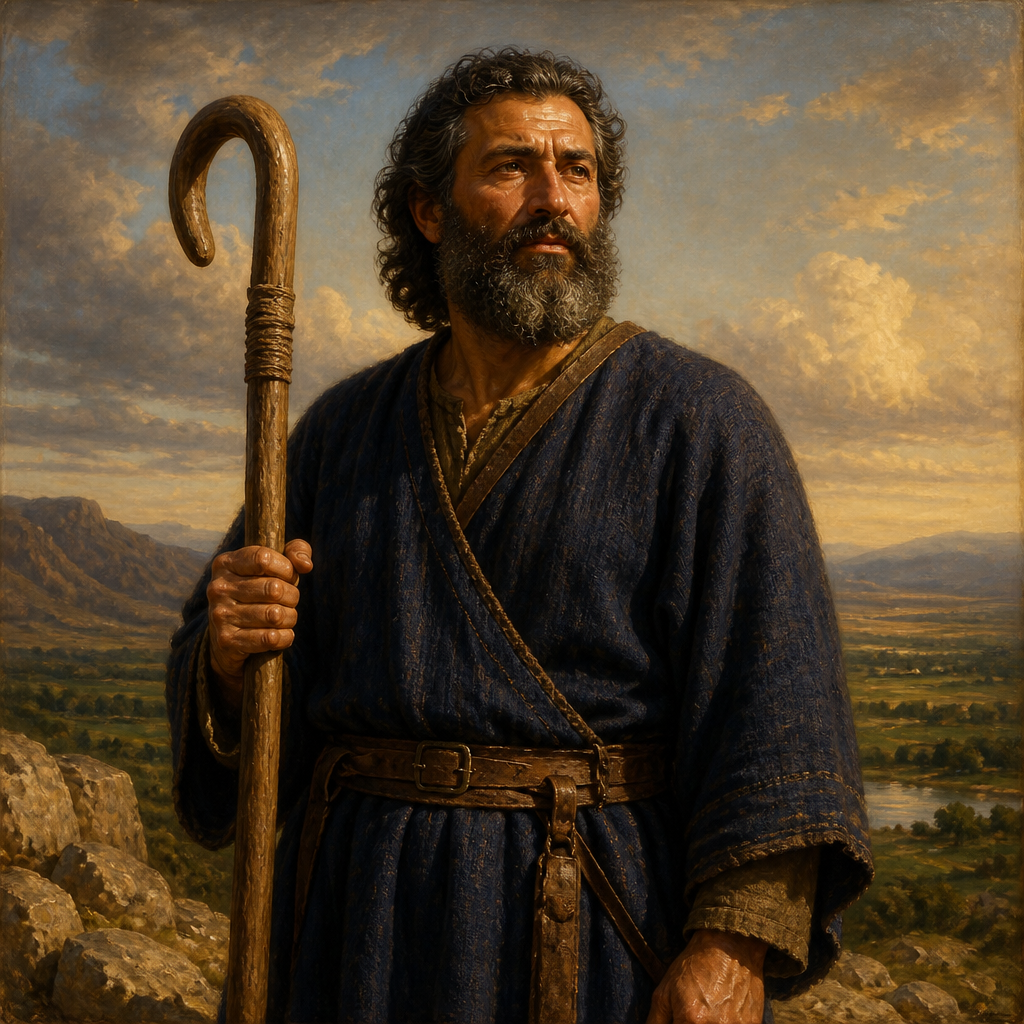
Michael, son of Abihail, was a member of the tribe of Gad who lived during the period of the Divided Monarchy. He is identified in the genealogical records of 1 Chronicles as one of seven brothers who served as heads of their respective households. His lineage is meticulously preserved to establish the territorial and familial integrity of the Gadites who settled in the region of Bashan.
While the biblical record regarding this specific Michael is brief, his inclusion in the sacred text serves a vital purpose in documenting the tribal distribution of Israel. He is listed alongside his brothers—Meshullam, Sheba, Jorai, Jacan, Zia, and Eber—representing the strength and organization of the Gadite families during a time of significant national transition.
Background and Family
Michael was a descendant of Gad, the seventh son of Jacob. Specifically, he is identified as the son of Abihail. The genealogical context provided in 1 Chronicles 5 placing him within the administrative and territorial framework of the Divided Monarchy, likely during the reigns of Jotham king of Judah and Jeroboam II king of Israel, when genealogical enrollments were conducted (1 Chronicles 5:17).
He was one of seven brothers, a number that often signifies completeness in Hebrew literature. These brothers—Michael, Meshullam, Sheba, Jorai, Jacan, Zia, and Eber—are described as "kinsmen by families" or "heads of their father’s houses." This designation suggests that Michael was not merely a private citizen but a leader of a substantial family unit within the tribe, responsible for the governance and heritage of his immediate kin.
Major Life Events
The primary historical event surrounding Michael is the formal census and genealogical recording mentioned in the surrounding verses of 1 Chronicles 5. During the 8th century BC, the trans-Jordanic tribes, including Gad, were required to formalize their lineages. Michael’s name was recorded to ensure his family’s claim to the lands of Bashan and the surrounding suburbs.
As a Gadite, Michael lived in a frontier region that was often subject to military pressure from the north and east. His life would have been characterized by the agrarian and pastoral lifestyle typical of the Bashan plateau, known for its rich soil and livestock. His role as a family head meant he would have been involved in tribal councils and the defense of Gadite territory.
Relationship to Other Biblical Figures
Michael’s primary recorded relationships are horizontal (his siblings) and paternal (his father, Abihail). The text explicitly lists him first among the seven brothers, which may suggest seniority or a position of particular prominence among the sons of Abihail.
Their kinsmen by families were Michael, Meshullam, Sheba, Jorai, Jacan, Zia, and Eber—seven in all. (1 Chronicles 5:13)
He is distinct from other men named Michael in the Gadite genealogy, such as the Michael mentioned in the following verse (1 Chronicles 5:14), who represents a different generation or branch of the family tree. This Michael is firmly rooted in the immediate household of Abihail.
Spiritual Significance
The preservation of Michael’s name in the biblical canon underscores the theological importance of individual and tribal identity within the covenant community of Israel. For the post-exilic audience reading Chronicles, names like Michael’s provided a bridge to their pre-exilic heritage, affirming that God remembered even the specific families of the trans-Jordanic tribes.
In a broader sense, Michael represents the "silent majority" of faithful Israelites who maintained their tribal heritage and familial duties during the turbulent years of the Divided Monarchy. His life reflects the biblical value placed on the family unit as the foundational building block of the nation of Israel.
Michael’s significance lies in his role as a representative of the tribe of Gad during the Divided Monarchy. His inclusion in the genealogical records of 1 Chronicles 5 demonstrates the meticulous nature of Israelite record-keeping and the importance of tribal land allotments. Theologically, he signifies God's attentiveness to the individual members of the covenant community, ensuring that their names and lineages were preserved for future generations even after the upheaval of the Assyrian invasions.
Furthermore, as a head of a household, Michael embodies the social structure of ancient Israel where spiritual and social life was organized around the 'father's house.' His presence in the text confirms the continued vitality of the tribe of Gad in the Bashan region during the 8th century BC, serving as a historical marker for the tribal boundaries established centuries earlier.
Frequently Asked Questions
Who was Michael's father?
Michael was the son of Abihail, a descendant of Gad.
Which tribe did Michael belong to?
Michael belonged to the tribe of Gad, specifically residing in the region of Bashan.
How many brothers did Michael have?
According to 1 Chronicles 5:13, Michael had six brothers: Meshullam, Sheba, Jorai, Jacan, Zia, and Eber.
When did Michael live?
Michael lived during the Divided Monarchy, specifically during the era when the genealogies of Gad were recorded, roughly during the 8th century BC.
Family & Relationships
Parents
 Abihail, Gadite of the Divided MonarchyFather1 Chronicles 5:14Stated
 Michael, Son of AbihailThis page
 Eber, Son of AbihailBrother1 Chronicles 5:13Stated
 JacanBrother1 Chronicles 5:13Stated
 JoraiBrother1 Chronicles 5:13Stated
 Meshullam, Son of AbihailBrother1 Chronicles 5:13Stated
 Sheba, Gadite of the Divided MonarchyBrother1 Chronicles 5:13Stated
 ZiaBrother1 Chronicles 5:13Stated
Connected Figures
Family
Father · 1 Chronicles 5:14
A prominent descendant of Gad and the son of Huri, listed in the genealogies of 1 Chronicles as a father of seven notable sons.
Brother · 1 Chronicles 5:13
A Gadite chief and head of his family residing in Bashan during the Divided Monarchy period.
Brother · 1 Chronicles 5:13
Jacan was a member of the Tribe of Gad and a head of a family who lived in the land of Bashan during the era of the Divided Monarchy.
Brother · 1 Chronicles 5:13
A Gadite clan leader residing in the region of Bashan during the Divided Monarchy, identified as one of the seven sons of Abihail in the genealogical records of 1 Chronicles.
Divided MonarchyFirst: 1 Chronicles 5:132 versesHead of HouseGad
Brother · 1 Chronicles 5:13
A prominent head of a household within the tribe of Gad who lived during the era of the Divided Monarchy.
Brother · 1 Chronicles 5:13
A kinsman and family leader of the tribe of Gad who was recorded in the genealogical registers during the Divided Monarchy.
Brother · 1 Chronicles 5:13
Zia was a member of the Tribe of Gad during the Divided Monarchy, listed as one of the seven sons of Abihail in the genealogical records of Bashan.
Divided MonarchyFirst: 1 Chronicles 5:132 versesTribal kinsmanGad
Categories
Mentions by Book
- 1 Chronicles2
Scripture References
All 2 indexed verses, in canonical order, from the Berean Standard Bible.
1 Chronicles · 2
- 1 Chronicles 5:13
Their kinsmen by families were Michael, Meshullam, Sheba, Jorai, Jacan, Zia, and Eber—seven in all.
- 1 Chronicles 5:14
These were the sons of Abihail son of Huri, the son of Jaroah, the son of Gilead, the son of Michael, the son of Jeshishai, the son of Jahdo, the son of Buz.
Cited as evidence on a family card; added so References, Key Verses and Mentions by Book share one index.
Others Named Michael
Compare all 11 bearers →Michael, Son of Izrahiah1 Chronicles 7:3
A tribal chief of Issachar during the Egypt and Wilderness era, noted for his leadership and membership in a family of five renowned heads of households.
Michael, Levite of the United Monarchy1 Chronicles 6:40
A Levite of the Kohathite line during the United Monarchy who served in the ancestry of the temple singer Asaph.
Michael, Son of Jehoshaphat2 Chronicles 21:2
A prince of Judah and son of King Jehoshaphat who was tragically murdered by his brother Jehoram during a royal purge.
Michael, Son of Jeshishai1 Chronicles 5:14
A descendant of Gad and the son of Jeshishai, Michael is recorded in the genealogical records of the Transjordan tribes during the era of the Divided Monarchy.
Michael, Father of ZebadiahEzra 8:8
Michael was a descendant of Shephatiah whose son, Zebadiah, led a group of eighty men during the second wave of the Jewish return from Babylonian exile under Ezra.
Michael, the Chief PrinceDaniel 10:13
A celestial prince and archangel who serves as the spiritual guardian of Israel and leader of the heavenly armies against spiritual forces.
Michael, Son of Beriah1 Chronicles 8:16
A member of the tribe of Benjamin and son of Beriah, Michael was a family head recorded in the genealogical registers of the Divided Monarchy.
Michael, Manassite Chief of Thousands1 Chronicles 12:20
A high-ranking military leader from the tribe of Manasseh who defected from King Saul to join David at Ziklag.
Michael, Father of SethurNumbers 13:13
A member of the tribe of Asher and the father of Sethur, one of the twelve scouts sent by Moses to explore the land of Canaan.
Michael, Father of Omri1 Chronicles 27:18
Served as a tribal leader under King David.