Jeshua, Son of Azaniah
A prominent Levite who served as a leader and supervisor during the Jewish return from the Babylonian exile and the rebuilding of the Temple.
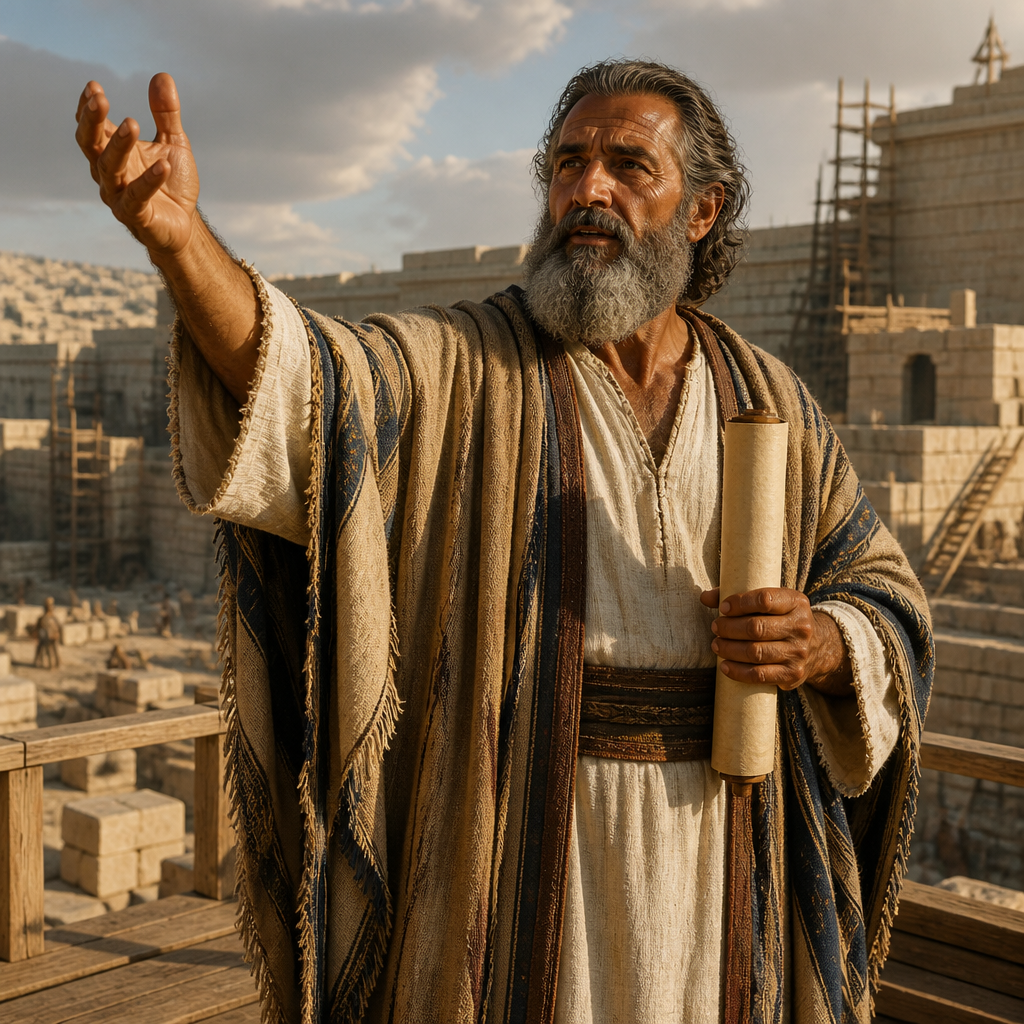
Jeshua, the son of Azaniah, was a key Levite official during the pivotal era of the Exile and Return. He was among the initial group of Israelites who returned to Jerusalem from Babylon under the leadership of Zerubbabel and Jeshua the priest. His role was primarily administrative and liturgical, ensuring the proper oversight of the Temple reconstruction and the instruction of the people in the Law of Moses.
As a member of the tribe of Levi, Jeshua belonged to a family line associated with Kadmiel and Hodaviah. His service spanned the early restoration period described in the Book of Ezra through the religious reforms led by Ezra and Nehemiah. He is consistently identified as a representative of the Levites during major national gatherings, including the reading of the Law and the subsequent renewal of the covenant.
Background and Family
Jeshua was the son of Azaniah (Nehemiah 10:9). His lineage is firmly rooted in the Levitical order, specifically within the branch associated with Kadmiel and the descendants of Hodaviah (also referred to as Hodevah). The biblical record first identifies him in the census of those returning from the Babylonian captivity, noting that the combined descendants of Jeshua and Kadmiel numbered 74 individuals (Ezra 2:40, Nehemiah 7:43). This numbering suggests that Jeshua was the head of a significant ancestral house within the tribe of Levi, rather than merely an isolated individual.
Major Life Events
The Temple Restoration
During the second year of the return to Jerusalem, Jeshua played a critical role in the physical restoration of the spiritual center of Israel. According to Ezra 3:9, Jeshua, along with his sons and brothers, joined with other Levites to "supervise those working on the house of God." This supervision was essential for maintaining the sanctity and architectural integrity of the Temple site during a time of significant political and social pressure.
Public Instruction of the Law
Years later, during the governorship of Nehemiah, Jeshua appears as a primary educator of the populace. In Nehemiah 8:7, when the scribe Ezra brought the Law before the assembly, Jeshua was among the select Levites who "instructed the people in the Law as they stood in their places." His task was likely to translate or explain the Hebrew text to the returnees—many of whom had spent their lives speaking Aramaic in Babylon—ensuring the community understood their ancestral requirements.
The National Confession and Covenant
Jeshua’s leadership reached its zenith during the solemn assembly described in Nehemiah 9. He was one of the Levites who stood on the "raised platform" to lead the people in a loud, public cry to the Lord (Nehemiah 9:4). Following this, he was among those who called the assembly to worship, saying, "Stand up and bless the LORD your God from everlasting to everlasting" (Nehemiah 9:5). This event culminated in the signing of a formal covenant to keep the Law, in which Jeshua, son of Azaniah, was one of the primary signatories (Nehemiah 10:9).
Relationship to Other Biblical Figures
Jeshua worked in close coordination with several major figures of the restoration era. He is frequently paired with Kadmiel, suggesting a long-standing partnership between their two Levitical houses. He operated under the spiritual authority of Ezra and the civil authority of Nehemiah. Additionally, Nehemiah 12:8 records that he served alongside Binnui, Sherebiah, and others who "led the songs of thanksgiving," indicating a collaborative relationship with the musicians and choir leaders of the newly re-established Temple service.
Spiritual Significance
The life of Jeshua, son of Azaniah, reflects the biblical theme of restoration through order and education. As a Levite, he represented the bridge between the old pre-exilic traditions and the new post-exilic reality. His commitment to supervising the Temple construction underscores the priority of worship in the life of the nation, while his role in teaching the Law highlights the necessity of scriptural literacy for a sustained relationship with God. By participating in the national confession and the sealing of the covenant, Jeshua modeled the repentant and obedient posture that the prophets called for during the return from exile.
Spiritual Significance
Jeshua, son of Azaniah, serves as a model of the functional Levite who provides the necessary infrastructure for a community's spiritual health. His importance lies not in personal glory, but in his consistent presence at every major milestone of the restoration: the return, the rebuilding, the teaching, and the covenant renewal. He represents the faithful preservation of the Levitical ministry through the trauma of the Babylonian exile.
Furthermore, his participation in the public reading of the Law (Nehemiah 8) marks a significant shift in Jewish history toward a text-centered community. By helping the people understand the Law, Jeshua facilitated a democratic access to scripture that would define Judaism in the centuries to follow.
Frequently Asked Questions
Who was Jeshua's father?
Jeshua was the son of Azaniah, as recorded in Nehemiah 10:9.
What was Jeshua's tribe?
He was a member of the tribe of Levi, specifically belonging to the Levitical line that supervised the work on the house of God.
What specific job did Jeshua do during the rebuilding of the Temple?
According to Ezra 3:9, he and his family joined other Levites to supervise the workers who were rebuilding the Temple (the house of God).
Was Jeshua a singer in the Temple?
Yes, Nehemiah 12:8 lists him among the Levites who were in charge of leading the songs of thanksgiving.
How did Jeshua help the people understand the Law?
During Ezra's public reading of the Law, Jeshua stood among the people and provided instruction, likely explaining or translating the text so the assembly could understand its meaning (Nehemiah 8:7).
Connected Figures

Categories
Mentions by Book
- Nehemiah6
- Ezra2
Family & Relationships
Parent
Nehemiah 10:9
Others Named Jeshua
Jeshua, Father of EzerNehemiah 3:19
A man of the post-exilic period whose son, Ezer, served as the ruler of Mizpah and helped rebuild the walls of Jerusalem.
Jeshua, Son of Pahath-moabEzra 2:6
A head of a significant clan who returned from the Babylonian exile as part of the family of Pahath-moab.
Jeshua, Son of KadmielNehemiah 12:24
A Levite leader in post-exilic Jerusalem who directed antiphonal worship and thanksgiving during the era of the Second Temple.
Jeshua, Priest of the Divided MonarchyEzra 2:36
A high-ranking priest during the Divided Monarchy whose house served as the ninth division in the sanctuary rotation.
Jeshua, Father of JozabadEzra 8:33
A Levite during the post-exilic period whose son Jozabad assisted in the inventory of the temple treasures under Ezra.
Jeshua, Priest of the Hezekiah Reforms2 Chronicles 31:15
A faithful priest who served under Kore the Levite during King Hezekiah’s religious reforms, assisting in the equitable distribution of offerings to the priesthood.