Jeshua, Father of Jozabad
Who was Jeshua, Father of Jozabad, in the Bible?
A Levite during the post-exilic period whose son Jozabad assisted in the inventory of the temple treasures under Ezra.
This is one of 7 people named Jeshua in the Bible. See all 7 →
Jeshua was a member of the tribe of Levi who lived during the critical era of the Jewish return from Babylonian exile. While Jeshua himself is not recorded as being present at the specific weighing of the temple articles in Jerusalem, his identity serves as the primary genealogical marker for his son, Jozabad. This indicates that Jeshua was a man of recognized levitical lineage and standing within the community of the restoration.
His life coincides with the leadership of Ezra the Scribe and the efforts to re-establish proper temple worship and administrative order in Judea. As a Levite, he belonged to the class of Israelites set apart for the service of the Tabernacle and later the Temple, a role that was strictly hereditary and required documented proof of ancestry following the return from Babylon.
Background and Family
Jeshua is identified in the biblical record as a Levite, a descendant of the tribe of Levi. In the context of the post-exilic community, such lineage was essential for participation in the religious and administrative life of the newly rebuilt Jerusalem. The text explicitly identifies him as the father of Jozabad, another prominent Levite involved in the logistics of the temple during the time of Ezra. Due to the sparse nature of the genealogical record in Ezra 8:33, his specific sub-clan within the Levites is not detailed, though his name—a common variant of Joshua—reflects the popular naming conventions of the restoration period.
Major Life Events
The primary mention of Jeshua occurs in the account of Ezra’s return to Jerusalem in approximately 458 BC. After a long journey from Babylon, Ezra initiated a formal accounting of the gold, silver, and sacred vessels that had been donated by King Artaxerxes and the exiles. On the fourth day after their arrival, these treasures were weighed in the House of God.
While the text focuses on the younger generation performing the labor—specifically Jozabad son of Jeshua—it establishes Jeshua's place in the social hierarchy of the returnees. As the father of a man entrusted with the king's gold and the sacred articles of the temple, Jeshua represents the established priestly and levitical families who maintained their religious identity through decades of foreign captivity.
Relationship to Other Biblical Figures
Jeshua’s primary biblical connection is to his son, Jozabad. Jozabad is listed alongside other notable figures of the era, including Meremoth son of Uriah the priest, Eleazar son of Phinehas, and Noadiah son of Binnui. This group formed a specialized committee of priests and Levites responsible for the integrity of the temple’s wealth. By association, Jeshua is linked to the administration of Ezra, serving as the patriarchal figure for one of the key assistants in Ezra's reforms.
Spiritual Significance
In the book of Ezra, the mention of fathers like Jeshua serves a theological purpose: demonstrating the continuity of God’s covenant people. The Babylonian exile threatened to sever the links between the pre-exilic temple service and the post-exilic restoration. By recording the names of fathers and their sons, the biblical author emphasizes that the worship in the second temple was led by the rightful, divinely appointed descendants of the original levitical orders. Jeshua represents the faithfulness of the hidden generation that preserved their heritage in exile so that their children could serve in a restored Jerusalem.
Jeshua’s significance lies in his role as a link in the levitical succession during the post-exilic period. His inclusion in the text validates the legitimacy of his son, Jozabad, who was entrusted with the high-stakes task of weighing and guarding the temple’s sacred treasures. In the context of Ezra's reforms, such genealogical details were not merely social markers but legal necessities to ensure that only those of the proper tribe handled the sanctified items of the House of God.
Frequently Asked Questions
What tribe did Jeshua belong to?
Jeshua was a member of the tribe of Levi, as he is explicitly identified as the father of Jozabad the Levite in Ezra 8:33.
What was Jeshua's son known for?
His son, Jozabad, was one of the Levites who received and weighed the silver, gold, and sacred articles brought by Ezra to the temple in Jerusalem.
When did Jeshua live?
He lived during the era of the Exile and Return, specifically during the period when Ezra the Scribe led a group of exiles back to Jerusalem, around 458 BC.
What does the name Jeshua mean?
The name Jeshua (יֵשׁוּעַ) is a Hebrew name meaning 'Yahweh is Salvation' or 'He will save.'
Family & Relationships
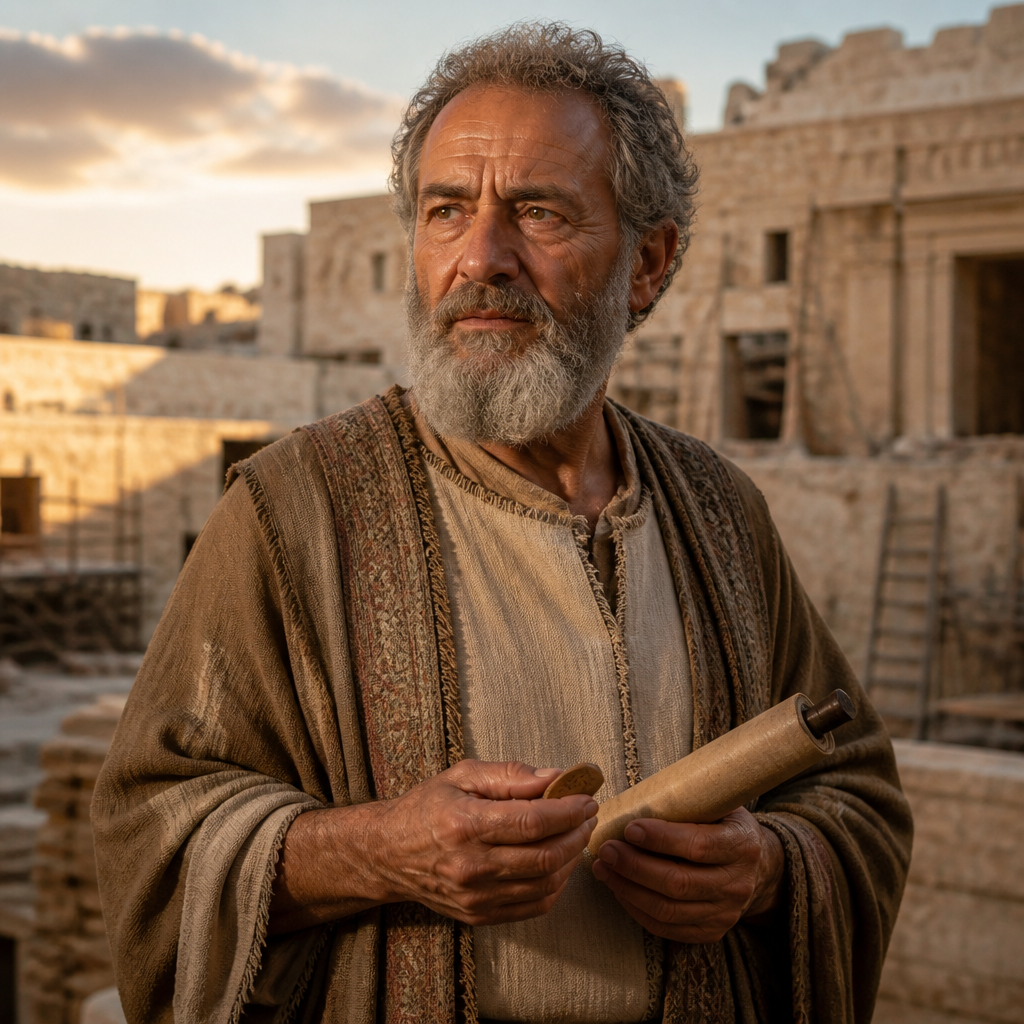 Jeshua, Father of JozabadThis page
Children
 Jozabad, Levite of the ReturnSonEzra 8:33Stated
Connected Figures
Family
Son · Ezra 8:33
A Levite during the post-exilic return to Jerusalem who assisted in the critical task of accounting for the Temple’s gold and silver vessels.
Exile and ReturnFirst: Ezra 8:331 versesTemple Administrator / LeviteLevi
Categories
Mentions by Book
- Ezra1
Scripture References
All 1 indexed verse, in canonical order, from the Berean Standard Bible.
Ezra · 1
- Ezra 8:33
On the fourth day, in the house of our God, we weighed out the silver and gold and sacred articles into the hand of Meremoth son of Uriah, the priest. Eleazar son of Phinehas was with him, along with the Levites Jozabad son of Jeshua and Noadiah son of Binnui.
Others Named Jeshua
Compare all 7 bearers →Jeshua, Father of EzerNehemiah 3:19
A man of the post-exilic period whose son, Ezer, served as the ruler of Mizpah and helped rebuild the walls of Jerusalem.
Jeshua, Son of AzaniahEzra 2:40
A prominent Levite who served as a leader and supervisor during the Jewish return from the Babylonian exile and the rebuilding of the Temple.
Jeshua, Son of Pahath-moabEzra 2:6
A head of a significant clan who returned from the Babylonian exile as part of the family of Pahath-moab.
Jeshua, Son of KadmielNehemiah 12:24
A Levite leader in post-exilic Jerusalem who directed antiphonal worship and thanksgiving during the era of the Second Temple.
Jeshua, Priest of the United Monarchy1 Chronicles 24:11
A high-ranking priest during the United Monarchy whose house served as the ninth division in the sanctuary rotation.
Jeshua, Priest of the Hezekiah Reforms2 Chronicles 31:15
A faithful priest who served under Kore the Levite during King Hezekiah’s religious reforms, assisting in the equitable distribution of offerings to the priesthood.