Jeshua, Son of Pahath-moab
Who was Jeshua, Son of Pahath-moab, in the Bible?
A head of a significant clan who returned from the Babylonian exile as part of the family of Pahath-moab.
This is one of 7 people named Jeshua in the Bible. See all 7 →
Jeshua was a prominent ancestral figure belonging to the family of Pahath-moab. He is recorded in the census of the first wave of Jewish exiles returning from Babylon to Jerusalem and Judah following the decree of Cyrus the Great. His name is inextricably linked with his brother Joab within the genealogical records of the Post-Exilic Period.
While personal biographical details regarding his specific actions or character are absent from the text, his inclusion in the sacred registers of Ezra and Nehemiah underscores his importance. These lists were vital for verifying the lineage and tribal integrity of the returning community, ensuring that those claiming inheritance in the land were of true Israelite descent.
Background and Family
Jeshua is identified as a descendant of Pahath-moab, a name that literally translates to "Governor of Moab." This suggests that his ancestors may have held administrative authority in the region of Moab during the period of the Divided Monarchy or the early years of the Babylonian hegemony. Within this large family group, Jeshua and his brother Joab formed a specific sub-branch or line of descent.
The prominence of this family is reflected in the sheer size of their returning party. According to the census, the descendants of Pahath-moab through the lines of Jeshua and Joab numbered 2,812 individuals in the initial count (Ezra 2:6) and 2,818 in the registry preserved by Nehemiah (Nehemiah 7:11). The slight discrepancy in numbers between these two records is common in ancient census data, often attributed to updates in the lists as more family members arrived or were accounted for.
Major Life Events
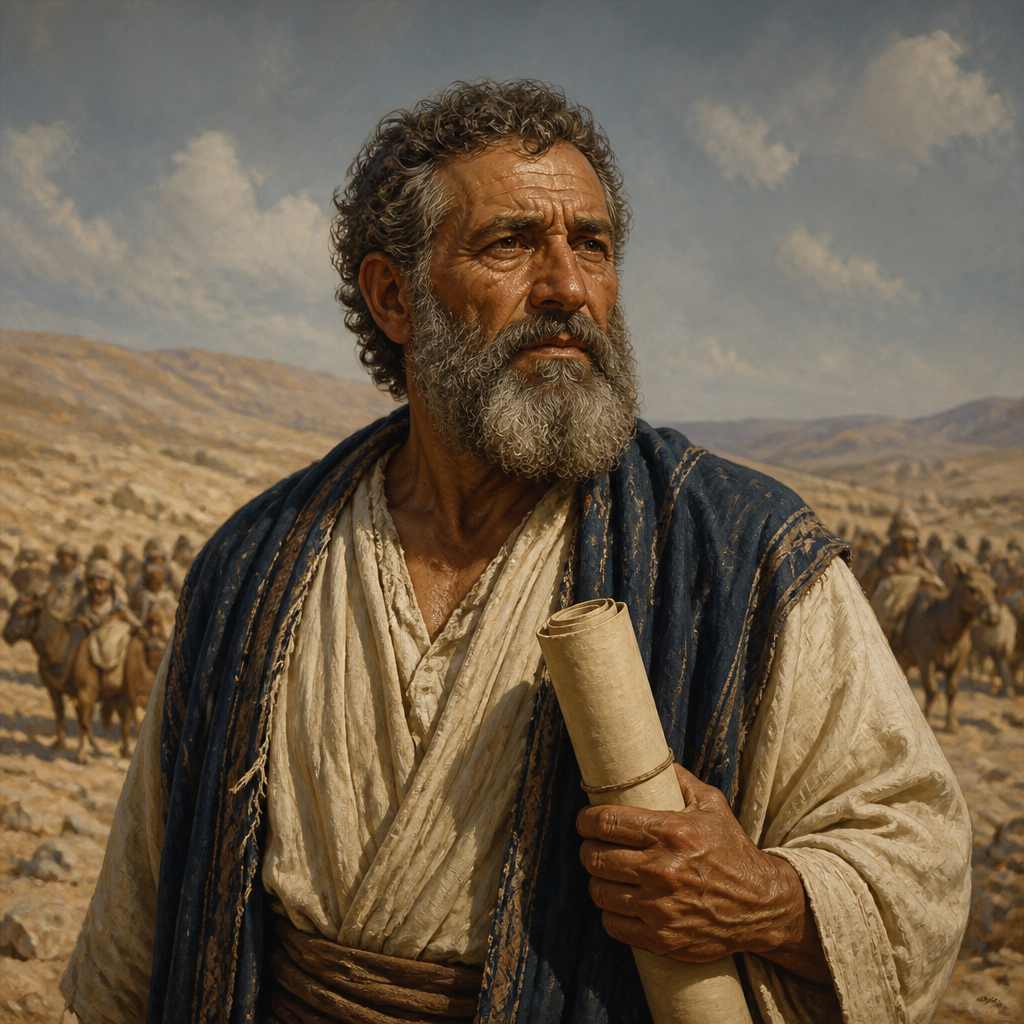
The primary historical event surrounding Jeshua is the "Return to Zion." After seventy years of captivity in Babylon, the Persian King Cyrus issued a decree allowing the Jews to return to their homeland. Jeshua, as a head of a major house, would have been among those who rose up to cross the desert and reclaim the ruins of Jerusalem.
His presence in the lists indicates that he was recognized as a legitimate leader of his household. The return was not merely a physical relocation but a spiritual restoration, and the preservation of Jeshua's name in the biblical canon serves as a legal and historical witness to his family's participation in this restoration.
Relationship to Other Biblical Figures
Jeshua is consistently paired with his sibling, Joab. The phrasing in the Hebrew text, "the descendants of Pahath-moab (through the line of Jeshua and Joab)," suggests that these two brothers were either the immediate ancestors of the group returning with Zerubbabel or were the most prominent leaders within the Pahath-moab clan at the time of the decree.
Unlike many other figures named Jeshua in the post-exilic era, this specific individual is defined solely by his familial connection to Pahath-moab rather than a priestly or levitical office. He represents the lay leadership of the returning exiles—men who were responsible for the social and economic stability of the community as they began the arduous process of rebuilding the city walls and their private dwellings.
Spiritual Significance
The spiritual significance of Jeshua, Son of Pahath-moab, lies in the concept of the "remnant." Throughout the prophetic books, God promised that a remnant of Israel would return to the land. By appearing in the registers of Ezra 2 and Nehemiah 7, Jeshua becomes a concrete fulfillment of that prophecy.
Furthermore, the meticulous recording of his name highlights the biblical emphasis on identity and heritage. For the post-exilic community, knowing who belonged to the house of Jeshua and Joab was essential for maintaining the purity of the nation and the proper distribution of ancestral lands. His name stands as a testament to the endurance of the Jewish family unit through the trials of the Babylonian exile.
Jeshua serves as a representative of the returning lay families who prioritized their heritage and the restoration of Jerusalem over their established lives in Babylon. His mention in the biblical genealogies validates the continuity of the people of Israel across the chronological gap created by the exile.
Theologically, his inclusion in the sacred text demonstrates that God preserves specific lineages and individuals, not just the nation as a collective. The preservation of his name alongside the exact count of his descendants emphasizes the value of the individual within the communal restoration of the covenant people.
Frequently Asked Questions
Who was Jeshua's father?
Jeshua was a descendant of Pahath-moab, who is listed as the ancestor or father of the line.
How many descendants of Jeshua returned to Jerusalem?
The descendants of Pahath-moab through Jeshua and Joab numbered between 2,812 and 2,818.
Which tribe did Jeshua belong to?
The biblical text does not explicitly state Jeshua's tribe, though his family was listed among the general inhabitants of Judah who returned from exile.
In which books of the Bible is this Jeshua mentioned?
He is mentioned in the books of Ezra (2:6) and Nehemiah (7:11).
Was this Jeshua a priest?
No, the biblical record identifies him as a descendant of Pahath-moab, distinguishing him from the priestly or levitical figures who shared his name.
Family & Relationships
Parents
 Pahath-moab, Ancestor of Jeshua and JoabFatherEzra 2:6Stated
 Jeshua, Son of Pahath-moabThis page
 Joab, Descendant of Pahath-moabBrotherEzra 2:6Stated
Connected Figures
Family
Father · Ezra 2:6
An ancestral figure whose large family line was central to the restoration of Jerusalem and the Jewish community after the Babylonian Exile.
Exile and ReturnFirst: Ezra 2:64 versesClan Ancestor
Brother · Ezra 2:6
An ancestral figure whose descendants were among the first group of Jewish exiles to return from Babylon to Jerusalem under Zerubbabel.
Exile and ReturnFirst: Ezra 2:62 versesPatriarchJudah
Categories
Mentions by Book
- Ezra1
- Nehemiah1
Scripture References
All 2 indexed verses, in canonical order, from the Berean Standard Bible.
Ezra · 1
- Ezra 2:6
the descendants of Pahath-moab (through the line of Jeshua and Joab), 2,812;
Nehemiah · 1
- Nehemiah 7:11
the descendants of Pahath-moab (through the line of Jeshua and Joab), 2,818;
Others Named Jeshua
Compare all 7 bearers →Jeshua, Father of EzerNehemiah 3:19
A man of the post-exilic period whose son, Ezer, served as the ruler of Mizpah and helped rebuild the walls of Jerusalem.
Jeshua, Son of AzaniahEzra 2:40
A prominent Levite who served as a leader and supervisor during the Jewish return from the Babylonian exile and the rebuilding of the Temple.
Jeshua, Son of KadmielNehemiah 12:24
A Levite leader in post-exilic Jerusalem who directed antiphonal worship and thanksgiving during the era of the Second Temple.
Jeshua, Priest of the United Monarchy1 Chronicles 24:11
A high-ranking priest during the United Monarchy whose house served as the ninth division in the sanctuary rotation.
Jeshua, Father of JozabadEzra 8:33
A Levite during the post-exilic period whose son Jozabad assisted in the inventory of the temple treasures under Ezra.
Jeshua, Priest of the Hezekiah Reforms2 Chronicles 31:15
A faithful priest who served under Kore the Levite during King Hezekiah’s religious reforms, assisting in the equitable distribution of offerings to the priesthood.