Jeshua, Priest of the Divided Monarchy
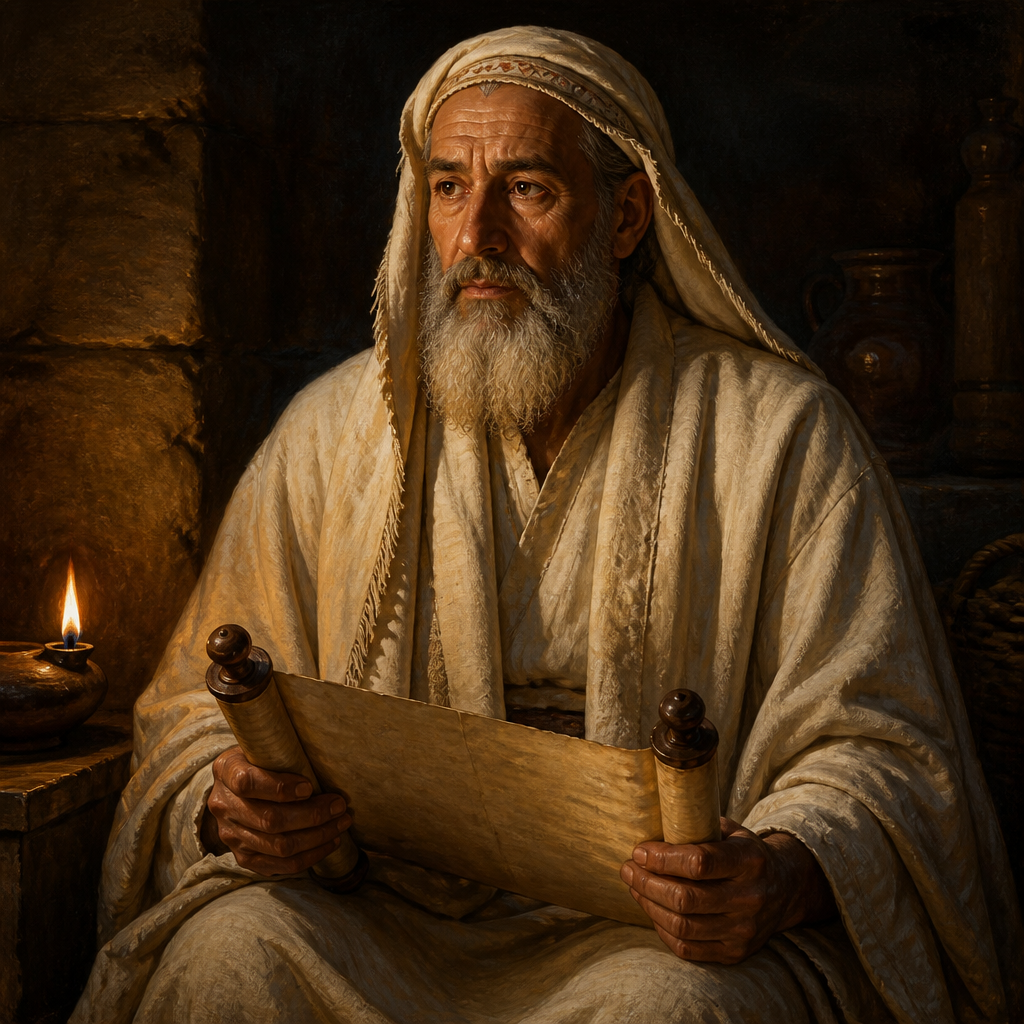
A high-ranking priest during the Divided Monarchy whose house served as the ninth division in the sanctuary rotation.
Jeshua was a prominent priest and the son of Jozadak, whose lineage was established as a foundational branch of the Hebrew priesthood. He is primarily identified through the genealogical and administrative records of the priestly orders, particularly those organized by King David and later maintained through the period of the Divided Monarchy and the restoration.
His house was designated as the ninth of twenty-four courses established to manage the duties of the sanctuary. This system ensured that the religious services of the nation remained orderly and consistent throughout the varying reigns of the kings of Judah. His descendants continued to serve in this capacity for centuries, representing a continuity of the Aaronite line.
Background and Family
Jeshua was born into the tribe of Levi, specifically belonging to the line of Aaron, the first high priest. He is explicitly identified as the son of Jozadak. In the tribal and religious hierarchy of ancient Israel, such a lineage carried significant weight, as only the descendants of Aaron were permitted to serve in the inner sanctum of the Temple. The name Jeshua itself, meaning 'Yahweh is Salvation,' reflects the religious dedication of his family.
Major Life Events
The most significant historical record of Jeshua pertains to the organization of the priestly divisions. According to 1 Chronicles 24, during the transition toward the height of the Monarchy, the priests were organized into twenty-four distinct lots to determine the order of their service in the house of the Lord. The text records that the ninth lot fell to the house of Jeshua. This system was designed to handle the vast number of Levites and to ensure that no single family was overwhelmed by the perpetual duties of sacrifice, incense burning, and temple maintenance.
While the specific day-to-day actions of Jeshua himself are not detailed in the narrative prose of the Divided Monarchy, his legacy is felt through his 'house.' His descendants are listed as one of the primary priestly groups that maintained their identity even through the upheaval of the Babylonian conquest and the subsequent return to Jerusalem. In the census recorded in Ezra 2 and Nehemiah 7, the 'descendants of Jedaiah, through the house of Jeshua,' numbered 973, indicating the significant growth and preservation of his lineage.
Relationship to Other Biblical Figures
As the son of Jozadak, Jeshua was part of a critical transition in the priestly leadership. His relationship to the broader priestly community is defined by his placement in the ninth lot, positioning him among other notable contemporary heads of priestly houses such as Jehoiarib, Jedaiah, and Shecaniah.
Later records in Ezra 10 note that some of his descendants were among those who had married foreign women during a period of spiritual compromise. This necessitated a public act of repentance and the offering of a ram as a guilt offering to restore the purity of the priestly office, showing that the house of Jeshua remained a visible and accountable part of the Judean community.
Spiritual Significance
The significance of Jeshua lies in the preservation of the divine order. The establishment of his house as the ninth division highlights the biblical theme of God as a God of order rather than confusion. By maintaining their specific lot, Jeshua and his descendants ensured that the rituals commanded in the Mosaic Law were performed without interruption.
Furthermore, the survival of his house across centuries—from the organization during the Monarchy to the return from Exile—serves as a testament to the endurance of the Aaronic covenant. The presence of his name in the genealogical records emphasizes the importance of lineage and institutional memory in the spiritual life of Israel, ensuring that the identity of the people remained rooted in their service to the Temple.
Spiritual Significance
Jeshua represents the institutional stability of the Aaronic priesthood during the Divided Monarchy. As the head of the ninth priestly division, his role was essential for the systematic administration of the Temple sacrifices and rituals. The continued mention of his house in post-exilic lists underscores the theological importance of remaining faithful to one's appointed station within the community of faith.
His lineage serves as a bridge between the early organizational reforms of the Monarchy and the restoration of worship in Jerusalem. The record of his descendants in the books of Ezra and Nehemiah highlights the complexity of maintaining holiness, as his house participated in both the preservation of the priesthood and the later communal reforms required to maintain the distinctiveness of the people of God.
Frequently Asked Questions
Who was Jeshua's father?
Jeshua was the son of Jozadak, a member of the priestly line of Aaron.
What was Jeshua's role in the Temple?
His house was assigned the ninth lot in the rotation of twenty-four priestly divisions that served in the sanctuary.
How many of his descendants returned from exile?
According to Ezra 2:36 and Nehemiah 7:39, there were 973 descendants of Jedaiah belonging to the house of Jeshua who returned to Jerusalem.
In which books of the Bible is this Jeshua mentioned?
He is mentioned in 1 Chronicles, Ezra, and Nehemiah.
Did any of Jeshua's descendants face controversy?
Yes, Ezra 10:18 records that some of his descendants had married foreign women and were required to offer a guilt offering and put away their foreign wives to maintain the purity of the priesthood.
Connected Figures
Categories
Mentions by Book
- Ezra2
- 1 Chronicles1
- Nehemiah1
Family & Relationships
Parent
Ezra 10:18
Others Named Jeshua
Jeshua, Father of EzerNehemiah 3:19
A man of the post-exilic period whose son, Ezer, served as the ruler of Mizpah and helped rebuild the walls of Jerusalem.
Jeshua, Son of AzaniahEzra 2:40
A prominent Levite who served as a leader and supervisor during the Jewish return from the Babylonian exile and the rebuilding of the Temple.
Jeshua, Son of Pahath-moabEzra 2:6
A head of a significant clan who returned from the Babylonian exile as part of the family of Pahath-moab.
Jeshua, Son of KadmielNehemiah 12:24
A Levite leader in post-exilic Jerusalem who directed antiphonal worship and thanksgiving during the era of the Second Temple.
Jeshua, Father of JozabadEzra 8:33
A Levite during the post-exilic period whose son Jozabad assisted in the inventory of the temple treasures under Ezra.
Jeshua, Priest of the Hezekiah Reforms2 Chronicles 31:15
A faithful priest who served under Kore the Levite during King Hezekiah’s religious reforms, assisting in the equitable distribution of offerings to the priesthood.