Mahli, Son of Merari
Mahli was a prominent Levite patriarch whose descendants formed a major clan responsible for the Tabernacle's structural transport during the Exodus.
Mahli appears in the biblical record as a central figure within the genealogy of the tribe of Levi, specifically during the period of the Egyptian sojourn and the subsequent wilderness wanderings. As the firstborn son of Merari, he stands as a patriarchal head of one of the primary sub-clans of the Levites. His life and lineage are detailed in the foundational censuses and genealogical records of the Pentateuch and the Chronicles, establishing his role in the sacred administration of Israel’s religious life.
While the biblical text does not provide personal narratives or dialogue for Mahli, his importance is underscored by the frequent repetition of his name in the context of the Levite divisions. His existence serves as a vital link in the chain of priestly service, ensuring that the specific duties assigned to the Merarites—the heavy lifting and maintenance of the Tabernacle—were carried out by a clearly defined and divinely sanctioned kinship group. Through his sons, Mahli’s influence extended into the eras of the judges and the monarchy, as his descendants continued to serve in the presence of the Ark of the Covenant.
Background and Family
Mahli was the son of Merari and the grandson of the patriarch Levi. According to the record in Exodus 6:19, he was born into the generation that experienced the transition from the growth of the Israelites in Egypt to the pressures of their eventual enslavement. He had one recorded brother, Mushi, and together they founded the two main branches of the Merarite family. The genealogies in 1 Chronicles 24 also suggest a relationship with Jaaziah, further complicating the lateral branches of his immediate family tree.
Mahli’s own household was significant in the development of the Levite infrastructure. He is recorded as the father of several sons, most notably Eleazar and Kish (1 Chronicles 23:21). The biblical text provides a specific detail regarding his son Eleazar, noting that he died without having sons, leaving only daughters who subsequently married the sons of their uncle Kish. This arrangement ensured that the inheritance and the name of the family remained within the Mahlite clan, adhering to the later principles established for land and tribal continuity. Another son, Libni, is mentioned in the lineage recorded in 1 Chronicles 6:29, indicating the continued growth of Mahli’s house through subsequent generations.
Major Life Events
The life of Mahli is defined by his placement within the Exodus narrative, though he is primarily viewed through the lens of his descendants, the Mahlites. As a head of a clan, Mahli would have been involved in the initial organization of the Levites under the leadership of Moses and Aaron. During the census in the Wilderness of Sinai, the Mahlites were counted among the Merarites, who numbered 6,200 males a month old or upward (Numbers 3:34).
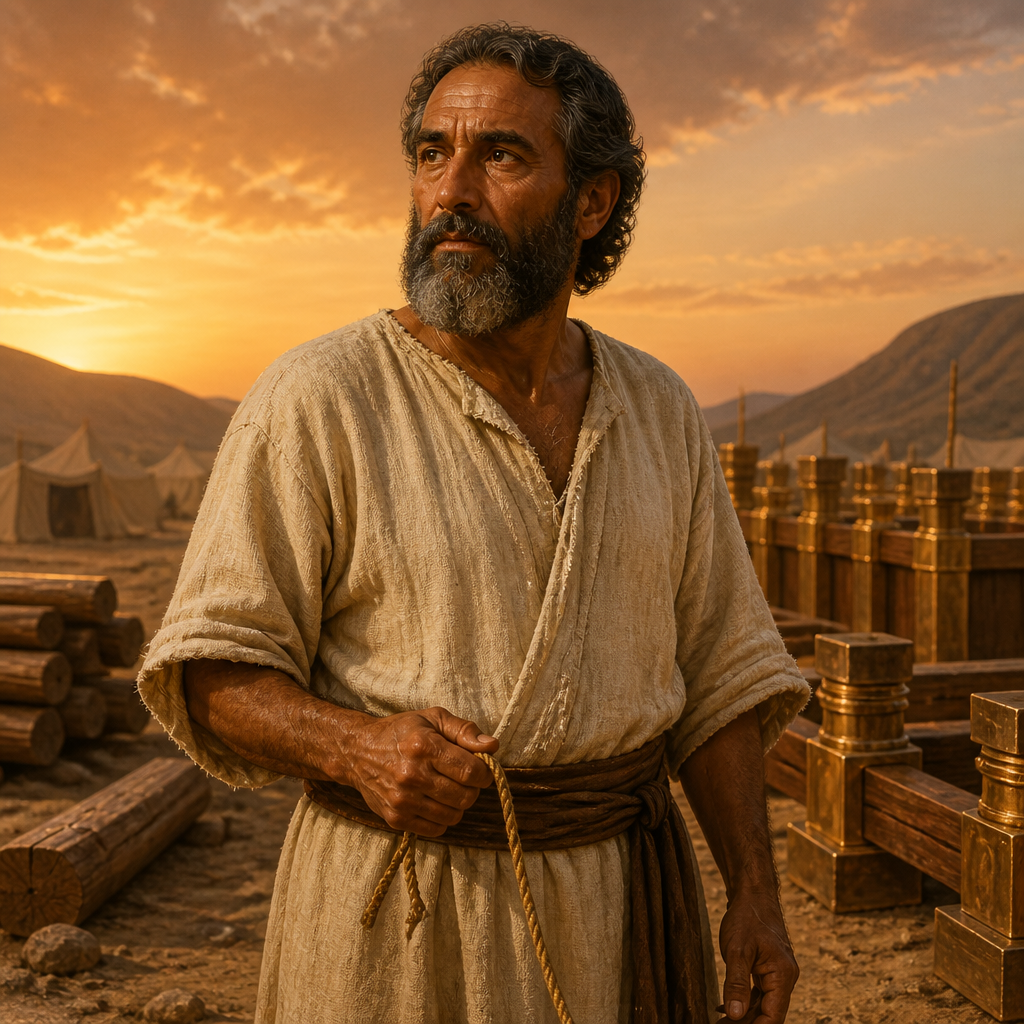
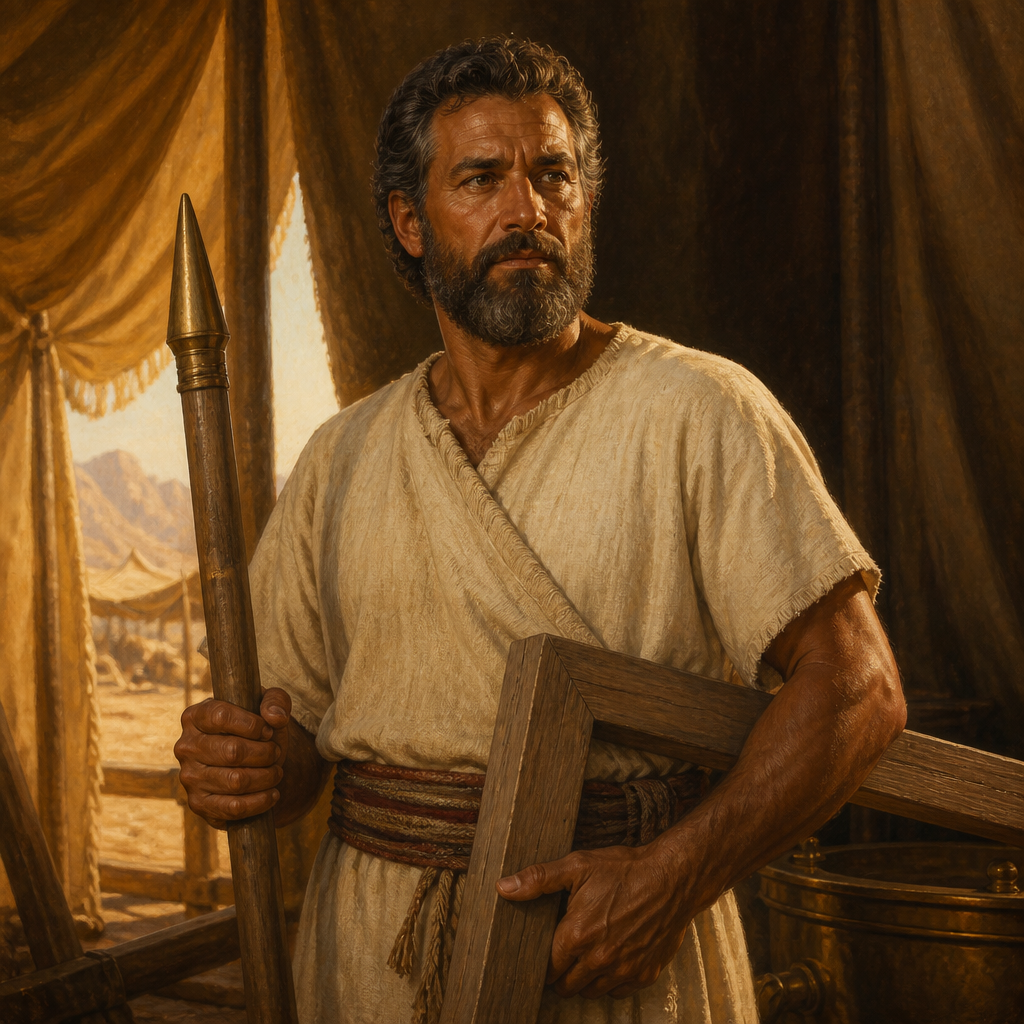
While Mahli himself is not depicted in active combat or as a prophet, his contribution was the establishment of a lineage that was physically responsible for the Tabernacle. The Merarites were tasked with the most strenuous labor of the sanctuary: the transport of the frames, crossbars, posts, bases, and all the equipment related to the Tabernacle's outer structure. As the progenitor of the Mahlite clan, Mahli provided the manpower necessary for the mobilization of the dwelling place of God throughout the forty-year wilderness journey.
Relationship to Other Biblical Figures
Mahli’s position within the Levite hierarchy placed him in close proximity to the most influential figures of early Israelite history. As a nephew of Kohath and a first cousin to Amram, he was a contemporary and relative of Moses, Aaron, and Miriam. This kinship meant that Mahli was part of the inner circle of the tribal leadership that received the Law at Sinai.
In the later biblical records, specifically in the book of Ezra, the legacy of Mahli is invoked to validate the credentials of those returning from the Babylonian exile. In Ezra 8:18, the "gracious hand of God" is credited with bringing Sherebiah, described as "a man of insight from the descendants of Mahli son of Levi," to assist in the restoration of temple worship. This highlights that even centuries after the Wilderness period, being a "son of Mahli" carried a weight of spiritual authority and liturgical expertise.
Spiritual Significance
The theological significance of Mahli lies in the biblical emphasis on order, lineage, and the sanctification of labor. In the Old Testament, God’s holiness is protected by a series of boundaries and specific roles. Mahli represents the divine appointment of specific individuals to tasks that might seem mundane—such as moving poles and bases—but are essential for the communal worship of the nation.
The sons of Merari: Mahli and Mushi. These are the clans of the Levites listed according to their fathers. (1 Chronicles 6:19)
Mahli’s inclusion in the genealogies serves to prove that God’s work is not carried out by anonymous crowds, but by families called by name. His presence in the text ensures that the transition of the Tabernacle from a mobile tent to a settled Temple in Jerusalem was grounded in an unbroken line of faithful servants. For the biblical writers, Mahli is a testament to the fact that every role within the kingdom of God, whether high priest or structural porter, is a matter of recorded divine ordinance.
Spiritual Significance
Mahli is significant as the founder of the Mahlite clan, one of the primary divisions of the tribe of Levi. His lineage was specifically designated for the physical maintenance and transportation of the Tabernacle's structural elements, emphasizing the biblical theme that every logistical task in the service of God is a sacred duty. His name persists throughout the Old Testament as a marker of legitimate Levite ancestry, reaching as far as the post-exilic reforms of Ezra, where his descendants were sought out for their 'insight' and preparation for temple service.
Frequently Asked Questions
Which tribe did Mahli belong to?
Mahli belonged to the tribe of Levi, specifically the branch of Merari, the third son of Levi.
Who were the sons of Mahli?
According to 1 Chronicles 23:21, his primary sons were Eleazar and Kish. 1 Chronicles 6:29 also lists Libni as a descendant in his line.
What happened to Mahli’s son Eleazar?
Eleazar died without having any sons; he only had daughters. These daughters married the sons of their uncle Kish, which kept the family inheritance within the Mahlite clan (1 Chronicles 23:22).
What was the responsibility of the clan of Mahli?
As part of the Merarite division of Levites, the Mahlites were responsible for the frames, crossbars, posts, and bases of the Tabernacle during the wilderness wanderings.
Is Mahli mentioned outside of the Pentateuch?
Yes, Mahli is mentioned extensively in 1 Chronicles (chapters 6, 23, and 24) and in the book of Ezra (8:18), illustrating his long-term genealogical importance.
Connected Figures
Categories
Mentions by Book
- 1 Chronicles5
- Numbers3
- Exodus1
- Ezra1
Family & Relationships
Child
Exodus 6:19
Child
Exodus 6:19
Child
Exodus 6:19
Sibling
Exodus 6:19
Sibling
Exodus 6:19
Sibling
1 Chronicles 24:26
Parent
Genesis 46:11
Sibling
Exodus 6:19
Others Named Mahli
Mahli, Grandson of Merari1 Chronicles 6:47
A Levite of the Merarite clan during the Egypt and Wilderness era, recognized as a son of Mushi and a grandson of Merari.