Mushi
Who was Mushi in the Bible?
Mushi was a prominent Levite and the eponymous founder of the Mushite clan during the era of the Egyptian Exodus and wilderness wandering.
Mushi was a son of Merari and a grandson of the patriarch Levi. He stands as a foundational figure in the genealogical record of the Levites, specifically within the Merarite line. His life spanned the pivotal transition of the Israelites from their long sojourn in Egypt through the arduous period of the wilderness wandering under the leadership of Moses and Aaron.
As a primary descendant of Levi, Mushi's significance is defined by his role in establishing one of the major sub-clans responsible for the maintenance and transportation of the Tabernacle. While the biblical narrative does not record his individual actions or dialogue, his inclusion in multiple census lists and genealogical registers underscores his importance in the organizational structure of early Israelite society and the hereditary priesthood.
Background and Family
Mushi was born into the Tribe of Levi, the third son of Jacob. Specifically, he was the son of Merari, who was one of the three primary sons of Levi (Exodus 6:19). This lineage placed Mushi in a position of significant religious responsibility, as the Levites were set apart by God for service in the sanctuary. According to the records in 1 Chronicles 6:19 and 23:21, Mushi had one prominent brother named Mahli. Later genealogical records in 1 Chronicles 24:26 also associate a sibling named Jaaziah with the Merarite line, further expanding the immediate family context of Mushi.
Mushi became a father to at least three sons: Mahli (named after Mushi's brother), Eder, and Jeremoth (1 Chronicles 23:23). Through these sons, Mushi’s lineage was secured, ensuring the continuation of his name through the "Mushite" clan. The biblical text carefully preserves these names to validate the priestly and levitical credentials of later generations, such as those serving in the Temple during the reigns of David and Solomon.
Major Life Events
The life of Mushi is primarily documented through the lenses of genealogy and national census. He lived during the era of the Egyptian bondage and the subsequent Exodus. As a son of Merari, Mushi would have been part of the initial organization of the Levites during the second year after the departure from Egypt.
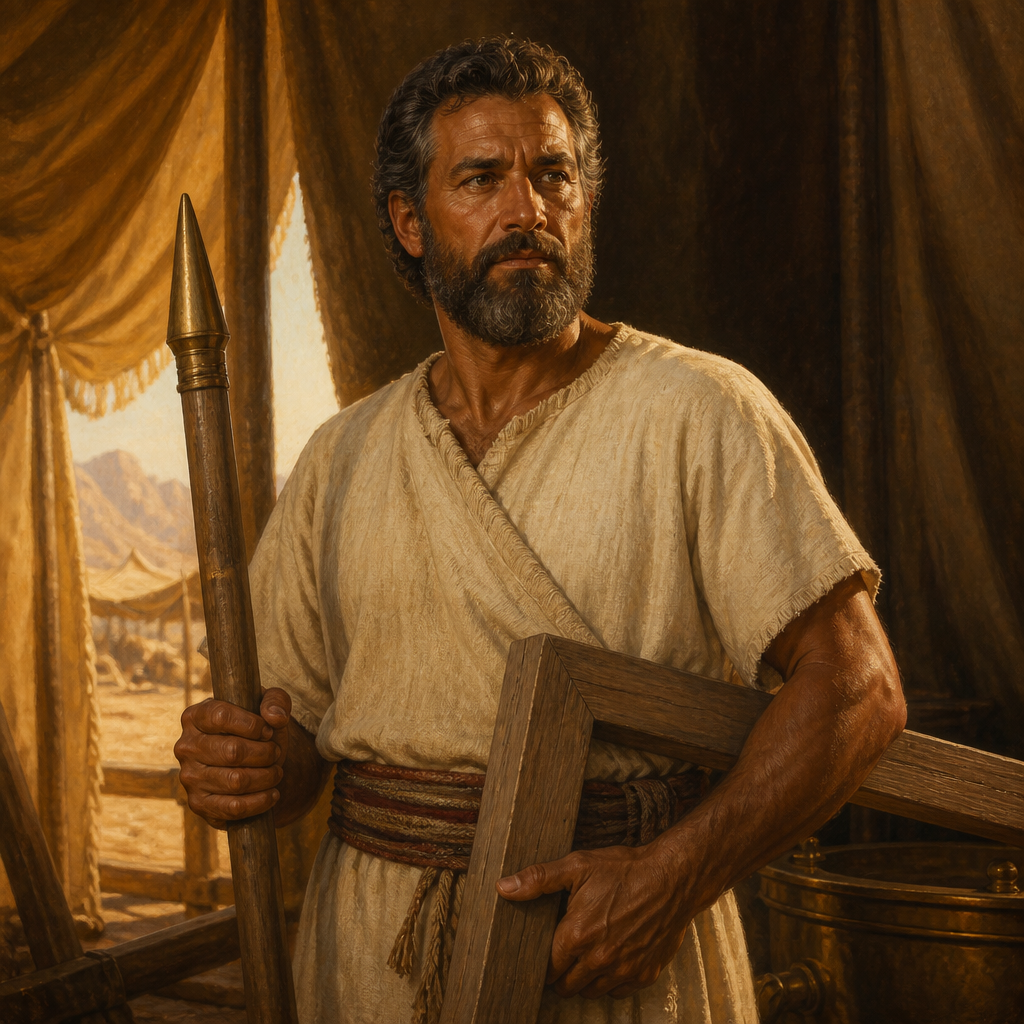
One of the most significant references to Mushi is found in Numbers 3:33, which identifies the "Mushite clan" as one of the two primary divisions of the Merarites. Under the direction of Moses, the Merarites were assigned specific duties regarding the Tabernacle. While the Kohathites carried the most sacred vessels and the Gershonites handled the curtains and coverings, the Merarites—including the descendants of Mushi—were tasked with the heavy structural elements: the frames, crossbars, posts, and bases of the Tabernacle, as well as the posts of the surrounding courtyard (Numbers 3:36-37).
Relationship to Other Biblical Figures
Mushi’s identity is inextricably linked to his father, Merari, and his brother, Mahli. In every major genealogical list in which he appears (Exodus 6, Numbers 3, 1 Chronicles 6, and 1 Chronicles 24), he is paired with Mahli. This pairing suggests a close administrative or tribal bond between the two branches of the Merarite family.
Furthermore, Mushi is a nephew to Kohath and Gershon, and a cousin to prominent figures such as Amram, the father of Moses and Aaron. This placing within the family tree highlights that Mushi was part of the immediate inner circle of the Levite tribe during its most formative years. The records in 1 Chronicles 6:47 trace the lineage of later Temple musicians back through Mushi, showing that his descendants remained active in the liturgical life of Israel for centuries, eventually serving under the direction of King David.
Spiritual Significance
The spiritual significance of Mushi lies in the biblical theme of order and divine calling. The detailed preservation of his name and the naming of the "Mushite" clan (Numbers 26:58) serve as a testament to God's specific organization of His people. In the wilderness, every individual and family had a designated place and a specific task. Mushi represents the faithful execution of "unseen" labor; while the high priests performed the sacrifices, the clans of Mushi and his kin ensured that the dwelling place of God’s presence was physically sustained and moved according to the divine will.
"From Merari came the clans of the Mahlites and Mushites; these were the Merarite clans." (Numbers 3:33)
For the biblical writers, Mushi is a link in the chain of continuity. Mushi serves as a reminder that in the biblical worldview, one's identity and service are rooted in a specific heritage and a communal responsibility to the covenant.
Mushi’s significance is primarily genealogical and organizational. As one of the two foundational heads of the Merarite Levites, his name defines a specific branch of the tribe responsible for the physical structure of the Tabernacle. His inclusion in the records of Exodus, Numbers, and 1 Chronicles emphasizes the continuity of the Levitical priesthood and the importance of ancestral heritage in maintaining the sanctity of Israel's worship.
His descendants were recognized by name centuries later, proving that the roles established in the wilderness remained central to Israel's religious identity until the exilic period.
Frequently Asked Questions
Who was Mushi's father?
Mushi was the son of Merari, making him a grandson of Levi.
Which tribe did Mushi belong to?
Mushi belonged to the Tribe of Levi.
What were the names of Mushi's sons?
According to 1 Chronicles 23:23 and 24:30, Mushi had three sons: Mahli, Eder, and Jerimoth.
What was the specific duty of Mushi's clan in the wilderness?
As part of the Merarite division, the Mushites were responsible for the transport and maintenance of the structural components of the Tabernacle, including its frames, posts, and bases.
Where is Mushi first mentioned in the Bible?
Mushi is first mentioned in Exodus 6:19 during the genealogy provided before Moses and Aaron confront Pharaoh.
Family & Relationships
Parents
 MerariFatherExodus 6:19Stated
 MushiThis page
 Mahli, Son of MerariBrotherExodus 6:19Stated
 JaaziahBrother1 Chronicles 24:26Stated
Children
 Eder, Levite of the Merarite ClanSon1 Chronicles 23:23Stated
 Jerimoth, Levite of the Egypt and Wilderness EraSon1 Chronicles 23:23Stated
 Mahli, Grandson of MerariSon1 Chronicles 6:47Stated
Connected Figures
Family
Father · Exodus 6:19
The third son of Levi and founder of the Merarite clan, tasked with the transport and maintenance of the Tabernacle's heavy structural framework during the Wilderness Wanderings.
Egypt and WildernessFirst: Genesis 46:1130 versesPatriarch and founder of the Merarite clanLevi
Son · 1 Chronicles 23:23
A Levite of the Merarite clan during the era of the Egypt and Wilderness wanderings, recorded in the genealogies of 1 Chronicles.
Egypt and WildernessFirst: 1 Chronicles 23:234 versesLeviteLevi
Son · 1 Chronicles 23:23
A Levite of the Merarite clan and son of Mushi, Jerimoth served as a head of a household during the wilderness period and tribal organization of Israel.
Egypt and WildernessFirst: 1 Chronicles 23:234 versesLevite of the Merarite ClanLevi
Son · 1 Chronicles 6:47
A Levite of the Merarite clan during the Egypt and Wilderness era, recognized as a son of Mushi and a grandson of Merari.
Egypt and WildernessFirst: 1 Chronicles 6:474 versesLeviteLevi
Brother · Exodus 6:19
Mahli was a prominent Levite patriarch whose descendants formed a major clan responsible for the Tabernacle's structural transport during the Exodus.
Egypt and WildernessFirst: Exodus 6:1910 versesLevite Clan PatriarchLevi
Brother · 1 Chronicles 24:26
A Levite of the family of Merari during the Egyptian sojourn and wilderness era, recognized as a progenitor of several priestly sub-divisions.
Egypt and WildernessFirst: 1 Chronicles 24:264 versesLeviteLevi
Categories
Mentions by Book
- Exodus1
- Numbers1
- 1 Chronicles7
Scripture References
All 9 indexed verses, in canonical order, from the Berean Standard Bible.
Exodus · 1
- Exodus 6:19
The sons of Merari were Mahli and Mushi. These were the clans of the Levites according to their records.
Numbers · 1
- Numbers 3:20
And the sons of Merari by their clans were Mahli and Mushi. These were the clans of the Levites, according to their families.
1 Chronicles · 7
- 1 Chronicles 6:19
The sons of Merari: Mahli and Mushi. These are the clans of the Levites listed according to their fathers:
- 1 Chronicles 6:47
the son of Mahli, the son of Mushi, the son of Merari, the son of Levi.
- 1 Chronicles 23:21
The sons of Merari: Mahli and Mushi. The sons of Mahli: Eleazar and Kish.
- 1 Chronicles 23:23
The sons of Mushi: Mahli, Eder, and Jeremoth—three in all.
- 1 Chronicles 24:26
The sons of Merari: Mahli and Mushi. The son of Jaaziah: Beno.
- 1 Chronicles 24:27Partial
The descendants of Merari from Jaaziah: Beno, Shoham, Zaccur, and Ibri.
Cited as evidence on a family card; added so References, Key Verses and Mentions by Book share one index.
- 1 Chronicles 24:30
And the sons of Mushi: Mahli, Eder, and Jerimoth. These were the sons of the Levites, according to their families.