Joash, Official of David
An administrative official in King David's government responsible for managing the kingdom's stores of olive oil.
Joash was a high-level official serving within the complex administrative hierarchy of King David during the era of the Divided Monarchy’s foundation. While many figures of this period are defined by military conquest or political intrigue, Joash’s role was economic and logistical, ensuring the stability and resource management of the burgeoning nation.
He is specifically recorded as the overseer of the olive oil stores, a position of significant trust given the essential nature of oil in ancient Israelite society for food, lighting, and religious rituals. His service is noted alongside other regional administrators, highlighting the organized nature of David’s domestic governance.
Background and Family
The biblical record for Joash, the official of David, is brief, appearing exclusively in the genealogical and administrative registers of 1 Chronicles. Unlike many other officials whose lineages are meticulously traced to specific tribes or fathers, the text does not provide Joash’s ancestry or his specific tribe. He is mentioned within a list of stewards who managed the king’s personal property and the national resources, placing him in the upper echelon of the Judean civil service during the 10th century BC.
Major Life Events
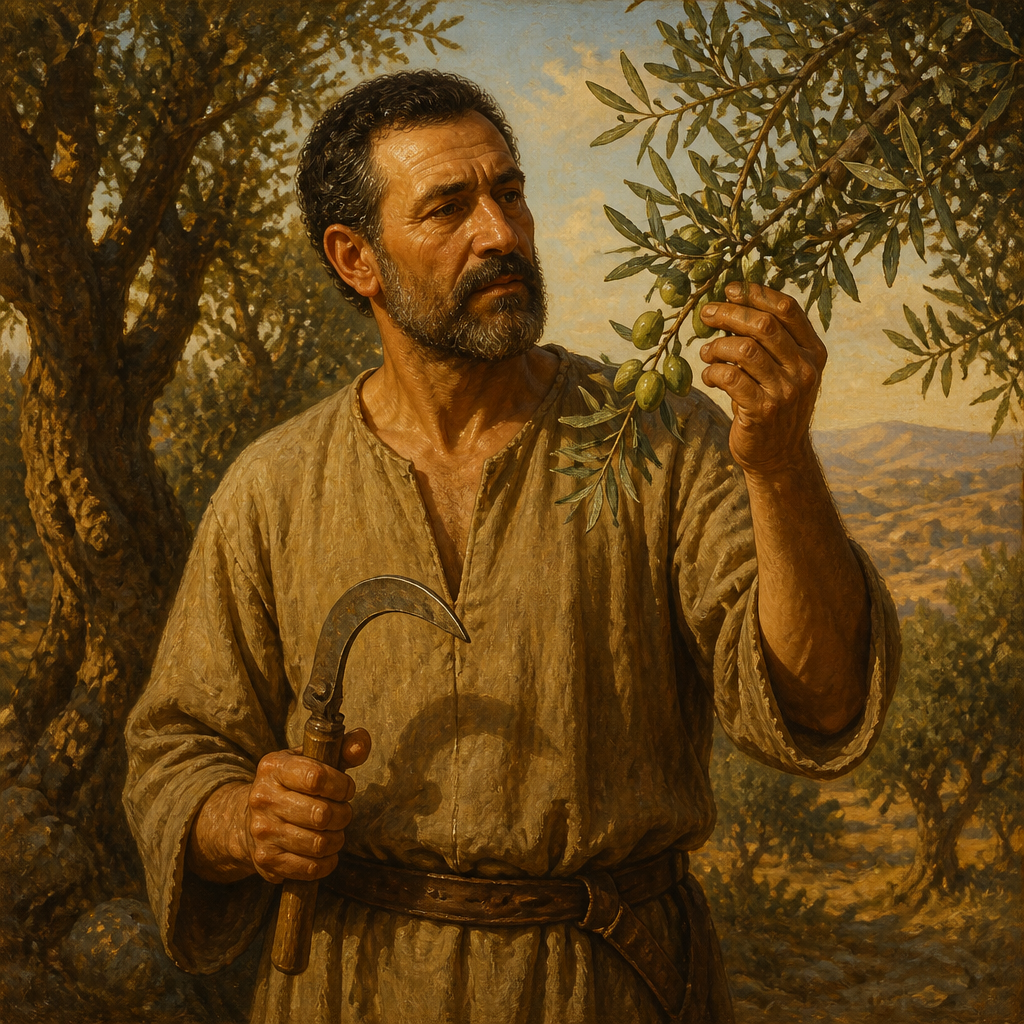
The primary record of Joash’s life is his appointment to the royal storehouses. According to 1 Chronicles 27:28, he operated alongside Baal-hanan the Gederite. While Baal-hanan was responsible for the physical trees—the olive and sycamore trees located in the foothills (the Shephelah)—Joash was tasked with the management of the resulting product.
Baal-hanan the Gederite was in charge of the olive and sycamore trees in the foothills. Joash was in charge of the stores of olive oil. (1 Chronicles 27:28)
This division of labor suggests a sophisticated supply chain. Joash would have been responsible for the collection, storage, and distribution of olive oil, ensuring that the royal vats were maintained and that the resource was protected from theft or spoilage. In an era where oil was a primary currency and a vital commodity for both daily life and tabernacle worship, Joash held a position of critical economic oversight.
Relationship to Other Biblical Figures
Joash is defined primarily by his professional relationship to King David. As one of the twelve officers listed in this section of 1 Chronicles, he was part of a specialized cabinet that reported to the king. He worked in tandem with Baal-hanan, showing a collaborative effort between the agricultural production (the groves) and the logistics of storage (the oil cellars).
Spiritual Significance
While Joash is not depicted performing miracles or delivering prophecies, his inclusion in the sacred text serves a specific historiographical purpose. It demonstrates the fulfillment of the orderly kingdom promised to the line of David. In a biblical context, his role reflects the principle of stewardship. The meticulous recording of his name alongside the oil stores signifies that every aspect of the kingdom—down to the logistics of food storage—was seen as under God’s providential arrangement through His anointed king. Joash represents the faithful, quiet service required to maintain the physical foundations of a nation dedicated to God.
Spiritual Significance
Joash’s significance lies in his role as a steward of the land's bounty during the peak of the United Monarchy. His presence in the biblical text validates the historical reality of David’s administrative sophistication and emphasizes the importance of administrative faithfulness in the biblical narrative of kingdom-building.
Frequently Asked Questions
He was the official in charge of the stores of olive oil, managing the logistics and storage of this vital resource.
He was the official in charge of the stores of olive oil, managing the logistics and storage of this vital resource.
Which book of the Bible mentions this Joash?
This specific Joash is mentioned only in the book of 1 Chronicles, specifically in chapter 27.
Who worked alongside Joash in the royal administration?
He worked alongside Baal-hanan the Gederite, who managed the olive and sycamore trees in the foothills.
What time period did Joash live in?
He lived during the 10th century BC, serving during the reign of King David during the Divided Monarchy era.
Connected Figures
Categories
Mentions by Book
- 1 Chronicles1
Others Named Joash
Joash, Son of Ahab1 Kings 22:26
A prince of the Northern Kingdom of Israel and son of King Ahab who held custodial authority over political prisoners during his father's reign.
Joash, Son of Shelah1 Chronicles 4:22
A descendant of Judah through Shelah who achieved dominion in the region of Moab during the era of the Egyptian sojourn and early wilderness records.
Joash, King of Israel2 Kings 13:9
The twelfth king of the Northern Kingdom of Israel, Joash was a military leader who defeated the Arameans three times and successfully conquered Jerusalem during a conflict with Judah.
Joash, Son of Becher1 Chronicles 7:8
Joash was a son of Becher and a grandson of the patriarch Benjamin, recorded as a tribal leader and head of a father's house during the Egyptian sojourn.
Joash, Son of Shemaah the Gibeathite1 Chronicles 12:3
A Benjamite warrior and son of Shemaah the Gibeathite who joined David’s forces at Ziklag during the Divided Monarchy era.
Joash, Father of GideonJudges 6:11
Joash was an Abiezrite patriarch and father of the judge Gideon, best known for his clever defense of his son against the devotees of Baal.
Joash, King of Judah2 Kings 11:2
The lone survivor of a royal massacre, Joash was hidden in the Temple for six years before becoming the seventh king of Judah, initially reigning with piety before a tragic moral decline.