Joash, King of Judah
The lone survivor of a royal massacre, Joash was hidden in the Temple for six years before becoming the seventh king of Judah, initially reigning with piety before a tragic moral decline.
Joash (reigned c. 835–796 BC) was the son of Ahaziah and the seventh ruler of the Southern Kingdom of Judah. His ascension to the throne is one of the most dramatic narratives in the Divided Monarchy period. As an infant, he was the sole member of the Davidic line to survive a systematic purge by his grandmother, the queen mother Athaliah. Rescued by his aunt Jehosheba and raised in secret within the precincts of the Temple by the High Priest Jehoiada, his life began as a beacon of hope for the continuation of God's covenant with the house of David.
His forty-year reign is characterized by two distinct phases: a period of spiritual reform and architectural restoration under the guidance of Jehoiada, and a subsequent period of spiritual apostasy and political failure following the priest's death. Though he is remembered for his zeal in repairing the Temple of Jerusalem, his later years were marred by the murder of his mentor’s son and a humiliating tribute paid to the Arameans, culminating in his assassination by his own servants.
Background and Family
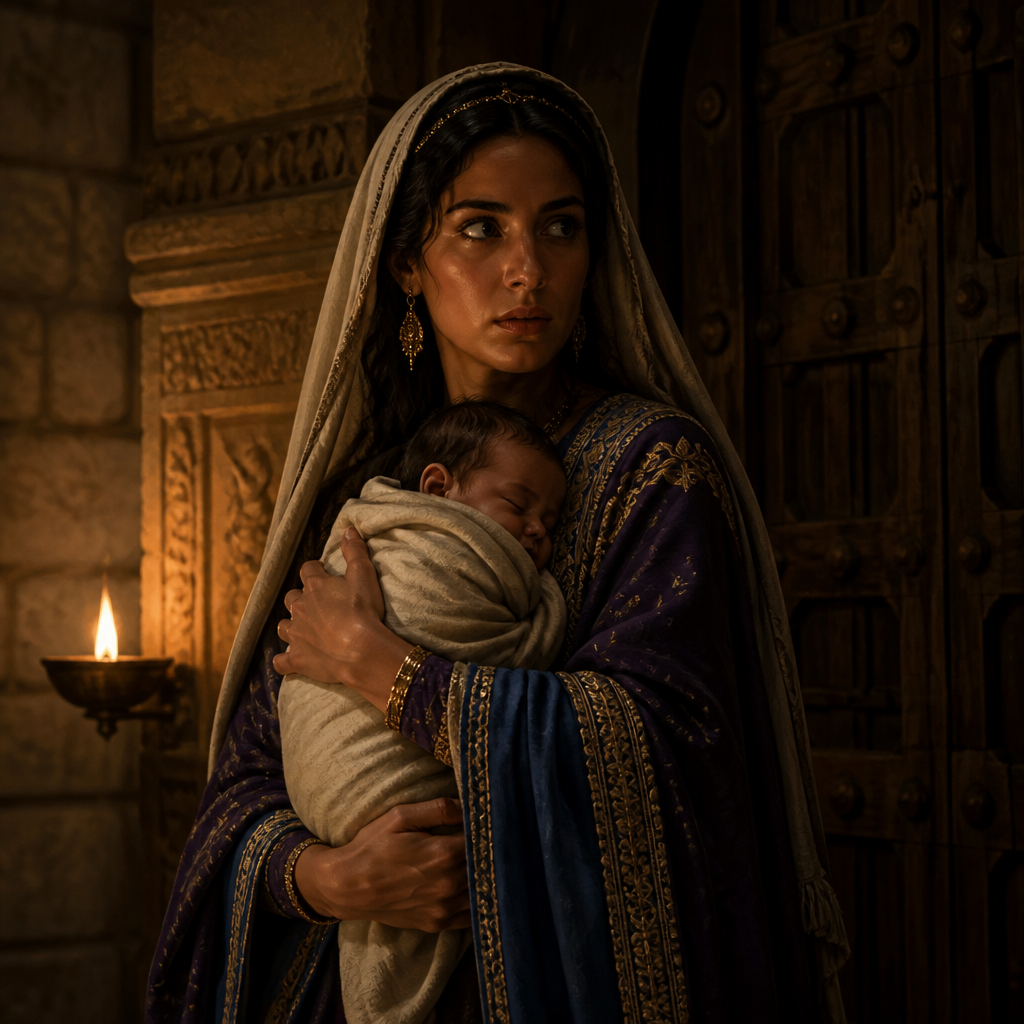
Joash was born into a period of extreme political and spiritual turmoil in the Kingdom of Judah. He was the son of King Ahaziah and Zibiah of Beersheba (2 Chronicles 24:1). Following the death of Ahaziah at the hands of Jehu, the queen mother Athaliah sought to seize the throne by exterminating the entire royal seed of the house of Judah. However, Jehosheba (also called Jehoshabeath), the sister of Ahaziah and wife of the High Priest Jehoiada, intervened by stealing the infant Joash away from the slaughter.
For six years, Joash was hidden in the Temple of the LORD while Athaliah reigned over the land. This clandestine upbringing ensured that the Davidic line—to which the Messianic promise was attached—remained intact despite the usurper’s efforts. In the seventh year, Jehoiada the priest orchestrated a coup, presenting the young Joash to the captains of the guard and the Levites. Joash was crowned and anointed in the Temple courtyard, and Athaliah was subsequently executed, restoring the legitimate monarchy to Judah.
Major Life Events
The Restoration of the Temple
Upon taking the throne at age seven, Joash was initially a model of Davidic kingship. Under the tutelage of Jehoiada, he sought to undo the damage caused by the previous idolatrous administrations. His most significant achievement was the comprehensive repair of the Temple, which had fallen into disrepair and had been pillaged by Athaliah’s sons to furnish the house of Baal.
Joash personally took charge of the fundraising for this project. He initially instructed the priests to collect money from the census and voluntary gifts, but by his twenty-third year, the work had not progressed (2 Kings 12:6). Consequently, Joash implemented a new system: a chest with a hole in its lid was placed beside the altar, where the people could directly deposit their contributions. This transparent method proved highly successful, allowing the king to hire masons and carpenters to restore the structural integrity of the house of the LORD.
Spiritual Decline and the Death of Zechariah
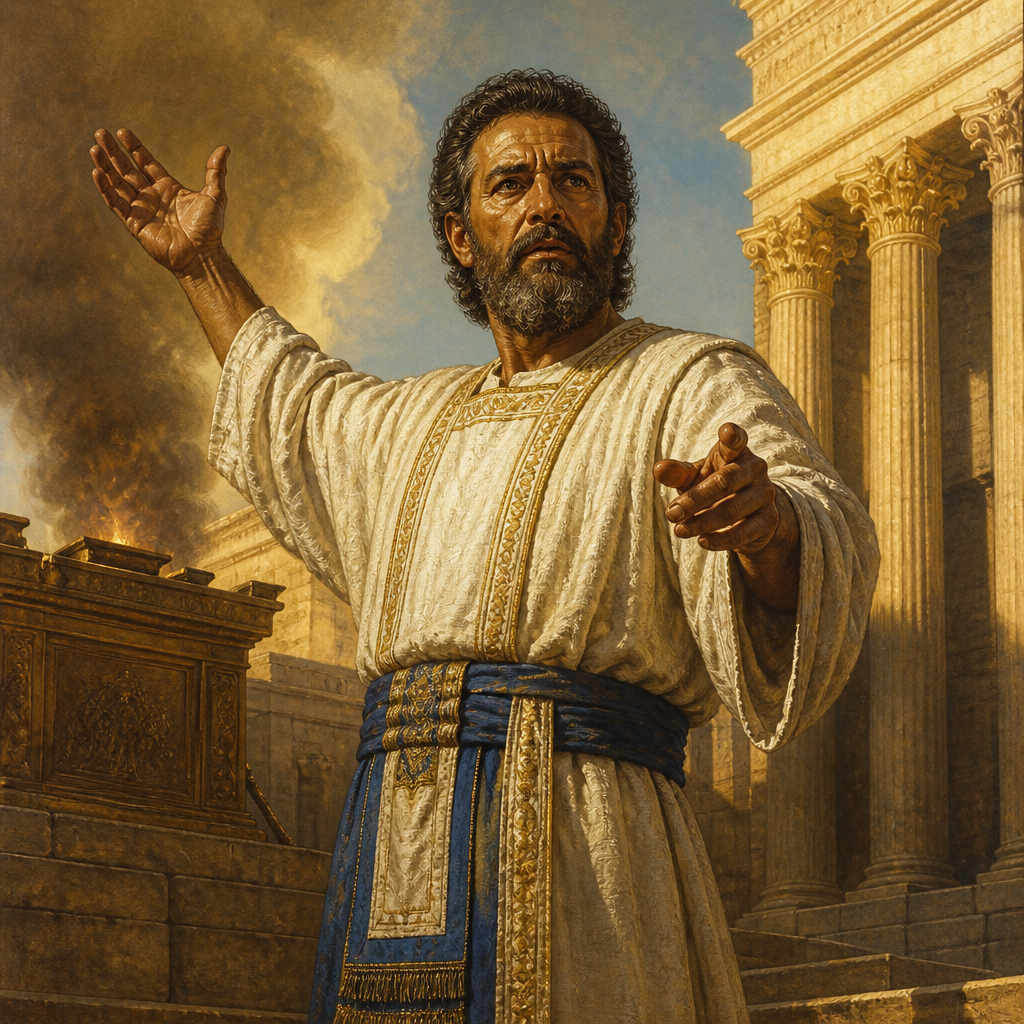
The turning point in Joash’s life occurred after the death of his mentor, Jehoiada. Without the priest’s stabilizing influence, Joash was swayed by the officials of Judah to abandon the worship of the LORD in favor of Asherah poles and idols (2 Chronicles 24:17-18). When Zechariah, the son of Jehoiada, was filled with the Spirit of God and rebuked the king and the people for their apostasy, Joash responded with staggering ingratitude. Forgetting the kindness shown to him by Jehoiada, Joash ordered that Zechariah be stoned to death in the courtyard of the Temple.
Military Defeat and Assassination
Following this spiritual collapse, Judah faced divine judgment through the Aramean army. Although the Arameans arrived with a small force, they defeated the much larger Judean army because the nation had forsaken the LORD (2 Chronicles 24:24). To prevent the total destruction of Jerusalem, Joash stripped the Temple of its sacred objects—including gold and items dedicated by his ancestors—and sent them as tribute to Hazael, the king of Aram (2 Kings 12:18).
Broken in health and status, Joash’s reign ended in violence. Two of his own servants, Jozabad and Jehozabad, conspired against him at Beth-millo. They murdered him in his bed, reportedly in retaliation for the blood of Zechariah. While he was buried in the City of David, the chronicler notes he was not buried in the tombs of the kings.
Relationship to Other Biblical Figures
Joash’s life was inextricably linked to Jehoiada the Priest, who acted as his protector, regent, and spiritual guide. Their relationship defines the "good" years of Joash's reign, illustrating the vital role of the priesthood in advising the monarchy. His aunt, Jehosheba, is also a pivotal figure, representing the courage required to preserve the royal line during the purge of Athaliah.
In his later years, his relationship with Zechariah son of Jehoiada serves as a tragic foil to his earlier relationship with the father. His son and successor, Amaziah, inherited a kingdom that had been weakened by the Aramean invasion, and the biblical record notes that while Amaziah did right in the eyes of the LORD, he followed the pattern of his father Joash by failing to remove the high places (2 Kings 14:3-4).
Spiritual Significance
The narrative of Joash serves as a profound warning regarding the nature of inherited or external faith. The biblical text emphasizes that Joash did what was right "all the days he was instructed by Jehoiada" (2 Kings 12:2). This suggests that his righteousness was largely dependent on the influence of his mentor rather than a personal, internal conviction. Once the godly mentor was removed, Joash’s true character—one susceptible to peer pressure and idolatry—was revealed.
Furthermore, the story of Joash underscores the theme of divine preservation. Despite the best efforts of the enemies of God to extinguish the line of David, the survival of Joash proves that God’s promises cannot be thwarted by human violence. His life is a testament to God's providence, yet his end is a somber reminder of the danger of spiritual complacency and the consequences of betraying one's spiritual heritage.
Spiritual Significance
Joash is a critical figure in the Divided Monarchy as he represents the survival of the Davidic dynasty when it faced its most direct threat of extinction. His coronation restored the covenantal order to Judah after a period of Baalist usurpation, and his Temple repairs set a precedent for later reformers like Josiah. However, his life is also a primary example of the 'half-hearted' kings of Judah who started well but failed to persevere in the faith.
Theologically, the murder of Zechariah at Joash's command became a landmark event of prophetic martyrdom. In the broader context of biblical history, Joash’s reign illustrates the tension between the Temple and the Palace, highlighting that a king's success was not measured by architectural achievements or longevity, but by steadfast loyalty to the LORD.
Frequently Asked Questions
How did Joash survive the massacre of the royal family?
Joash was rescued as an infant by his aunt, Jehosheba, who was the sister of King Ahaziah. She hid him and his nurse in a bedroom and later in the Temple of the LORD for six years while Queen Athaliah ruled.
What was the 'Chest of Joash'?
To fund Temple repairs, Joash had Jehoiada the priest bore a hole in the lid of a chest and place it by the altar. This allowed the people to deposit money directly, ensuring the funds were used specifically for the craftsmen and materials needed for restoration.
Why did Joash kill Zechariah?
After Jehoiada died, Joash turned to idolatry. When Zechariah, Jehoiada’s son, stood up and rebuked the king for forsaking God's commands, Joash grew angry and ordered him to be stoned to death in the Temple courtyard.
How did Joash die?
Joash was assassinated by two of his own officials, Jozabad and Jehozabad, while he was at Beth-millo. The Bible indicates this was a conspiracy to avenge the murder of Zechariah the priest.
Was Joash buried with the other kings of Judah?
Although he was buried in the City of David, 2 Chronicles 24:25 specifies that he was not buried in the royal tombs of the kings, likely due to his apostasy and the disgraceful end of his reign.
Connected Figures
Jehoiada
Mentor and High Priest
Jehosheba
Aunt and Protector
Athaliah
Grandmother and Adversary
Amaziah
Son and Successor
Zechariah son of Jehoiada
Prophet and Victim
Categories
Mentions by Book
- 2 Kings17
- 2 Chronicles8
- 1 Chronicles1
Family & Relationships
Child
2 Kings 11:2
Spouse / partner
2 Kings 11:2
Parent
2 Kings 8:24
Spouse / partner
2 Kings 14:2
Parent
2 Kings 12:1
Others Named Joash
Joash, Official of David1 Chronicles 27:28
An administrative official in King David's government responsible for managing the kingdom's stores of olive oil.
Joash, Son of Ahab1 Kings 22:26
A prince of the Northern Kingdom of Israel and son of King Ahab who held custodial authority over political prisoners during his father's reign.
Joash, Son of Shelah1 Chronicles 4:22
A descendant of Judah through Shelah who achieved dominion in the region of Moab during the era of the Egyptian sojourn and early wilderness records.
Joash, King of Israel2 Kings 13:9
The twelfth king of the Northern Kingdom of Israel, Joash was a military leader who defeated the Arameans three times and successfully conquered Jerusalem during a conflict with Judah.
Joash, Son of Becher1 Chronicles 7:8
Joash was a son of Becher and a grandson of the patriarch Benjamin, recorded as a tribal leader and head of a father's house during the Egyptian sojourn.
Joash, Son of Shemaah the Gibeathite1 Chronicles 12:3
A Benjamite warrior and son of Shemaah the Gibeathite who joined David’s forces at Ziklag during the Divided Monarchy era.
Joash, Father of GideonJudges 6:11
Joash was an Abiezrite patriarch and father of the judge Gideon, best known for his clever defense of his son against the devotees of Baal.