Rapha
Who was Rapha in the Bible?
An ancestral figure in Gath during the United Monarchy whose descendants were giants who fought against King David’s forces.
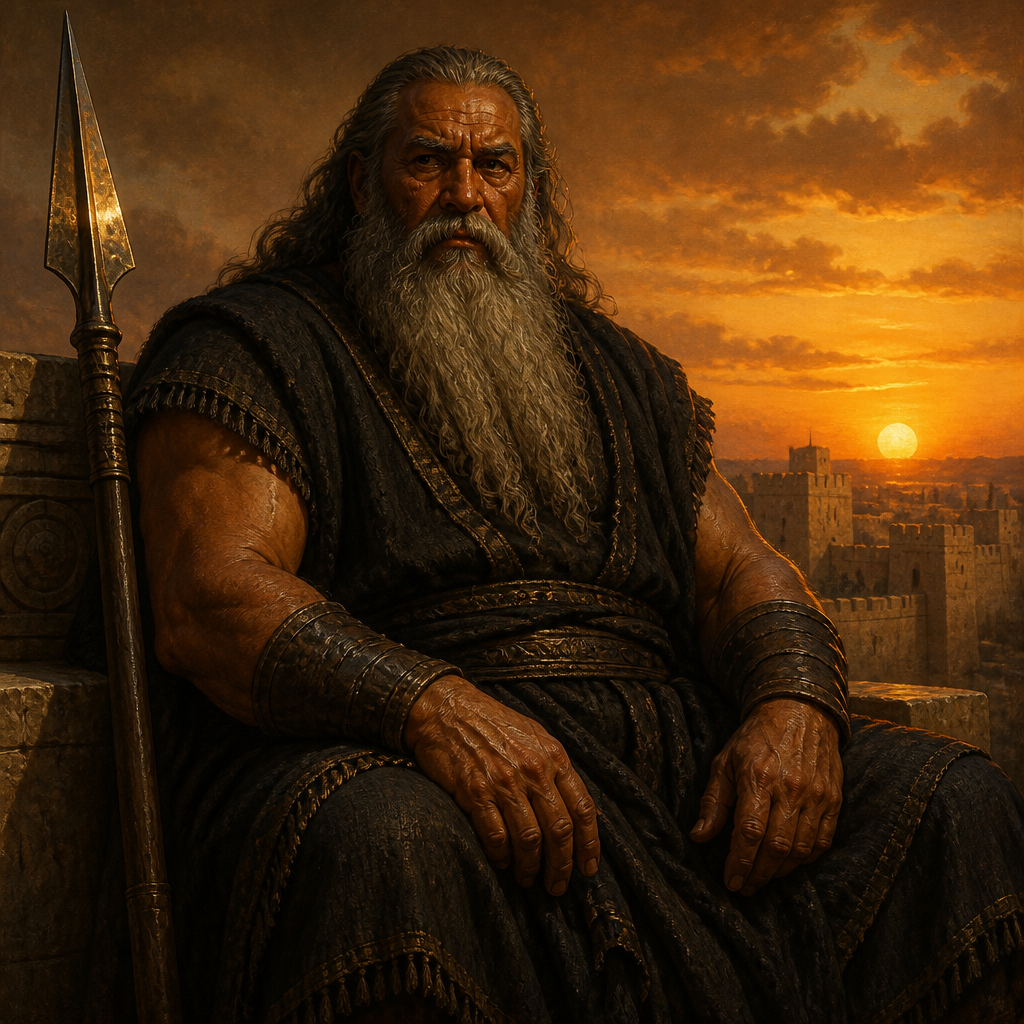
Rapha is a significant genealogical figure mentioned in the context of the Davidic wars against the Philistines. Residing or originating from the city of Gath, Rapha is identified as the progenitor of several formidable warriors characterized by their immense physical stature and exceptional prowess in combat.
The biblical record focuses on the elimination of Rapha’s offspring by David and his elite band of soldiers. The accounts found in 2 Samuel and 1 Chronicles categorize these warriors not merely as Philistine soldiers, but as a distinct ethnic or familial subset known for their genetic anomalies, such as polydactyly and extraordinary height. Rapha thus stands as the patriarchal link between the ancient, legendary races of giants and the historical enemies of the United Monarchy.
Background and Family
Rapha appears in the biblical record primarily within the genealogical notations attached to the Philistine wars of the United Monarchy (c. 10th century BC). The name is closely associated with the city of Gath, a prominent stronghold of the Philistine pentapolis. In the Masoretic Text, the term ha-Rapha (the Rapha) suggests an ancestral figure or a specific clan title. Scholarship often debates whether Rapha is a proper name of a specific individual or a titular reference to the Rephaim, an ancient race of giants mentioned earlier in the Torah and Joshua. However, the narrative structure of 2 Samuel 21 treats Rapha as the specific father or ancestor of four distinct men who challenged David’s kingdom.
The family of Rapha was defined by physical extraordinariness. His progeny included Ishbi-benob, whose spear alone weighed three hundred shekels of bronze, and Saph (also called Sippai). Most notably, the text links this lineage to the famous Goliath of Gath, who was defeated by David in his youth. The specific mention of a son with twenty-four digits—six fingers on each hand and six toes on each foot—further emphasizes the distinct biological legacy attributed to Rapha's bloodline.
Major Life Events
While Rapha is not depicted performing specific actions within the biblical text, his presence is felt through the martial exploits and eventual deaths of his children. During the reign of King David, a series of battles broke out at Gob, Gezer, and Gath. The biblical record presents these conflicts as a systematic 'mopping up' operation against the remaining giants of the land.
"Then Ishbi-benob, a descendant of Rapha, whose bronze spear weighed three hundred shekels and who was bearing a new sword, resolved to kill David." (2 Samuel 21:16)
The biblical narrative records that these descendants were not killed by David himself, but by his loyal servants and relatives. Sibbecai the Hushathite slew Saph, and Elhanan the son of Jair killed the brother of Goliath. The final mentioned descendant, the polydactyl giant, was slain by Jonathan the son of Shimeah, David’s brother. The death of these four individuals marks the end of Rapha's influence in the region, symbolizing the total subjugation of the giants by the house of David.
Relationship to Other Biblical Figures
Rapha's primary relationship to the biblical narrative is one of antagonism toward the House of David. He represents the 'old guard' of Canaanite/Philistine terrors that David’s men had to overcome to secure the borders of Israel. His sons are the primary antagonists in the latter half of 2 Samuel 21.
- Ishbi-benob: A son of Rapha who nearly succeeded in killing King David before Abishai intervened.
- Saph (Sippai): A son killed during the battle at Gob.
- Goliath: Although his famous encounter with David occurred earlier, he is categorized among the sons of Rapha in the retrospective lists of 1 Chronicles 20.
- The Unnamed Giant: A son noted for his twenty-four digits, representing the biological extremity of Rapha's line.
Spiritual Significance
Theologically, the figure of Rapha and his descendants serves as a narrative bookend to the conquest of the Promised Land. The existence of these 'descendants of Rapha' (or Rephaim) recalls the fear of the original twelve spies who felt like 'grasshoppers' compared to the giants of the land (Numbers 13:33). By recording the deaths of Rapha’s children at the hands of David’s men, the Bible illustrates the maturation of Israel's faith and military strength. Where a previous generation fled from giants, David’s 'mighty men' (Gibborim) systematically eliminated them.
Rapha also represents the physical manifestation of the 'remnant' of the old world that resisted the divinely appointed kingship of David. The detail regarding the giants' physical anomalies often serves in biblical literature to highlight their unnatural status, contrasting their brute physical power with the spiritual authority of the Lord’s anointed king. The eventual extinction of Rapha’s line in Gath signifies the transition from an era of mythic terrors to an era of established, ordered kingdom rule under the Davidic covenant.
Rapha is significant as the patriarchal source of the giants who challenged King David’s reign. In biblical theology, these descendants represent the final remnants of the Rephaim, an ancient and formidable race that the Israelites had feared since the time of the Exodus. The defeat of Rapha’s progeny by David’s subordinates highlights the shared courage of the Israelite army and the fulfillment of the conquest of the land.
Furthermore, Rapha serves as a linguistic and genealogical bridge between the legendary past and the historical monarchy. By identifying specific giants like Goliath and Ishbi-benob as 'descendants of Rapha,' the text ground these extraordinary enemies in a specific familial line, emphasizing that even the most physically imposing foes are mortal and subject to the eventual victory of God's chosen people.
Frequently Asked Questions
Was Rapha himself a giant?
While the Bible does not explicitly describe Rapha's own physical appearance, he is the father and ancestor of several men explicitly described as giants (rapha or rephaim). It is traditionally understood that he shared the great stature of his progeny.
How many sons of Rapha were killed by David's men?
The Bible identifies four specific descendants of Rapha who fell at Gath: Ishbi-benob, Saph (Sippai), Lahmi (the brother of Goliath), and an unnamed man with six fingers and six toes.
Is Rapha the same as the Rephaim?
The name Rapha (H7497) is linguistically linked to the 'Rephaim.' In many translations, 'descendant of Rapha' and 'descendant of the Rephaim' are used interchangeably, suggesting Rapha may be the eponymous ancestor of this group in Gath.
Where did Rapha live?
The biblical text associates Rapha and his descendants with the city of Gath, one of the five major cities of the Philistines.
Does Rapha appear in the New Testament?
No, Rapha is only mentioned in the Old Testament books of 2 Samuel and 1 Chronicles, specifically in the context of King David’s wars.
Family & Relationships
 RaphaThis page
Children
 GoliathSon2 Samuel 21:22Stated
 Huge Man of GathSon2 Samuel 21:16
Inferred
No verse names Rapha and Huge Man together; the son link is carried from the surrounding genealogy and is not stated in Scripture.Evidence: 2 Samuel 21:16
 Ishbi-benobSon2 Samuel 21:16
Inferred
2 Samuel 21:16 names Ishbi-benob and Rapha in the same verse but does not state a father tie between them; the link rests on the surrounding narrative.Evidence: 2 Samuel 21:16
 SaphSon2 Samuel 21:18Stated
 LahmiSon1 Chronicles 20:5–8Stated
Connected Figures
Family
Son · 2 Samuel 21:22
A champion warrior from Gath of enormous stature who served in the Philistine army during the reign of King Saul.
United MonarchyFirst: 1 Samuel 17:411 versesChampion warrior
Son · 2 Samuel 21:16
A giant warrior of Gath and descendant of Rapha, noted for having twenty-four digits and fighting against Israel during the United Monarchy.
Son · 2 Samuel 21:16
A giant of the Rapha family who nearly killed King David during the United Monarchy before being slain by Abishai.
United MonarchyFirst: 2 Samuel 21:166 versesWarrior / Giant
Son · 2 Samuel 21:18
A Philistine warrior of giant stature and a descendant of Rapha who was slain by Sibbecai the Hushathite during the wars of King David.
Son · 1 Chronicles 20:5–8
A Philistine warrior and brother of Goliath who was killed by Elhanan during the wars of King David’s reign.
United MonarchyFirst: 1 Chronicles 20:58 versesWarrior champion
Categories
Mentions by Book
- 2 Samuel4
- 1 Chronicles5
Scripture References
All 9 indexed verses, in canonical order, from the Berean Standard Bible.
2 Samuel · 4
- 2 Samuel 21:16
Then Ishbi-benob, a descendant of Rapha, whose bronze spear weighed three hundred shekels and who was bearing a new sword, resolved to kill David.
- 2 Samuel 21:18
Some time later at Gob, there was another battle with the Philistines. At that time Sibbecai the Hushathite killed Saph, a descendant of Rapha.
- 2 Samuel 21:20
And there was also a battle at Gath, where there was a man of great stature with six fingers on each hand and six toes on each foot—twenty-four in all. He too was descended from Rapha,
- 2 Samuel 21:22
So these four descendants of Rapha in Gath fell at the hands of David and his servants.
1 Chronicles · 5
- 1 Chronicles 20:4
Some time later, war broke out with the Philistines at Gezer. At that time Sibbecai the Hushathite killed Sippai, a descendant of the Rephaim, and the Philistines were subdued.
- 1 Chronicles 20:5Partial
Once again there was a battle with the Philistines, and Elhanan son of Jair killed Lahmi the brother of Goliath the Gittite, the shaft of whose spear was like a weaver’s beam.
Cited as evidence on a family card; added so References, Key Verses and Mentions by Book share one index.
- 1 Chronicles 20:6
And there was also a battle at Gath, where there was a man of great stature with six fingers on each hand and six toes on each foot—twenty-four in all. He too was descended from Rapha,
- 1 Chronicles 20:7Partial
and when he taunted Israel, Jonathan the son of David’s brother Shimei killed him.
Cited as evidence on a family card; added so References, Key Verses and Mentions by Book share one index.
- 1 Chronicles 20:8
So these descendants of Rapha in Gath fell at the hands of David and his servants.